



Two Hawai‘i Island fire dispatchers among honorees at 28th annual Daniel R. Sayre Foundation ceremony
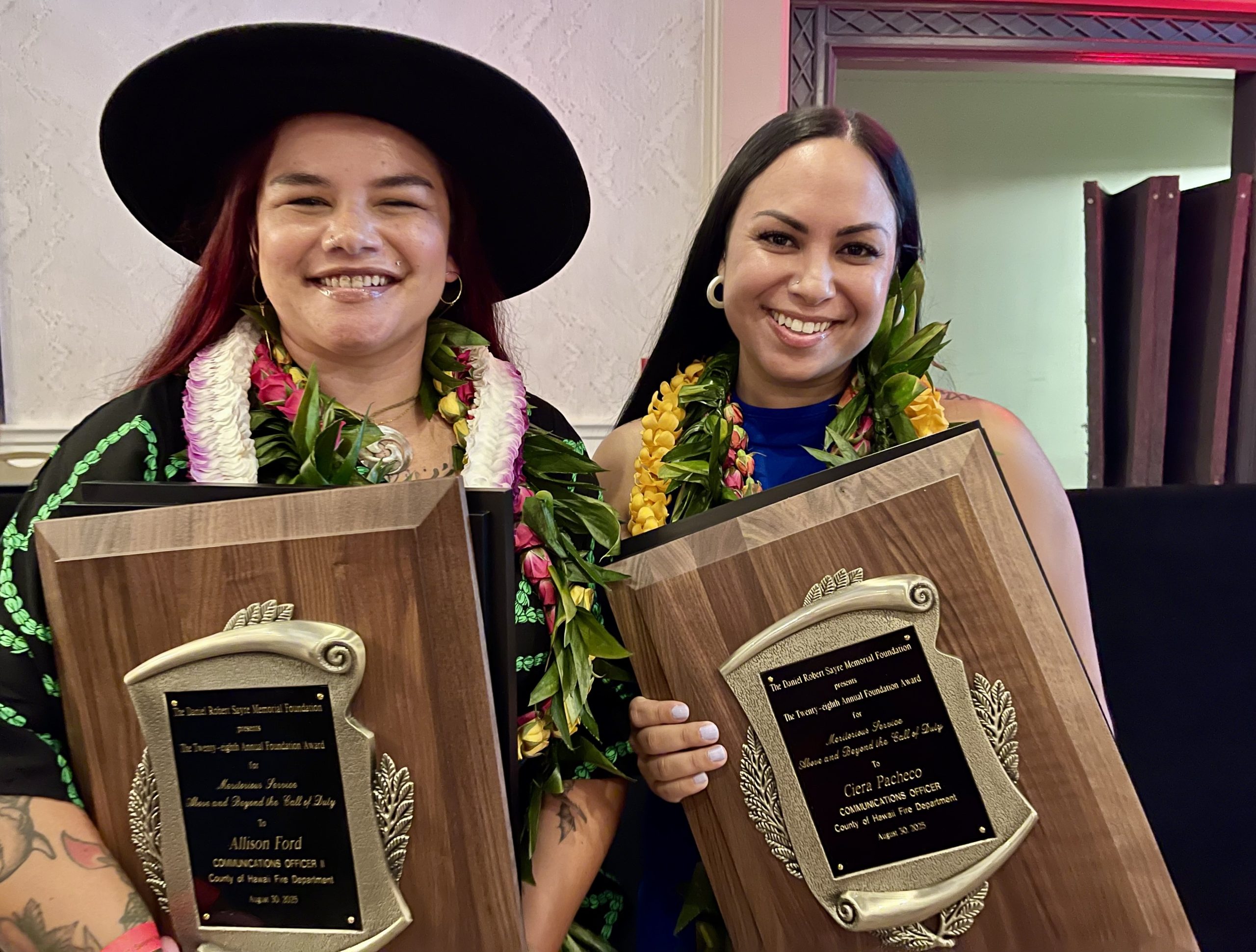
Hawaiʻi Fire Department dispatcher Ciera Pacheco was still in training when a call came in from a woman who was driving.
“Right off the bat, you could tell that it was a serious call because she was very panicky and frantic,” Pacheco said. “They’re just pleading on the phone, ‘What do I do? Tell me what to do, please.'”
Pacheco learned the woman’s daughter was not breathing and instructed her to stop the car and lie her daughter flat on her back. Then she gave the woman instructions about how to perform CPR.
A minute or two later, Pacheco heard a gasp of air and a lot of commotion. The caller told her: “She came back. She’s back. She’s breathing. It’s my daughter. She’s breathing.”
For the first time, the heroes honored during the 28th annual Daniel R. Sayre Memorial Foundation awards ceremony included dispatchers.
“In the past, we recognized heroes who are jumping off cliffs,” Hawai‘i Fire Chief Kazuo Todd said. “But there are the quiet rescues over the phone that can save a life.”
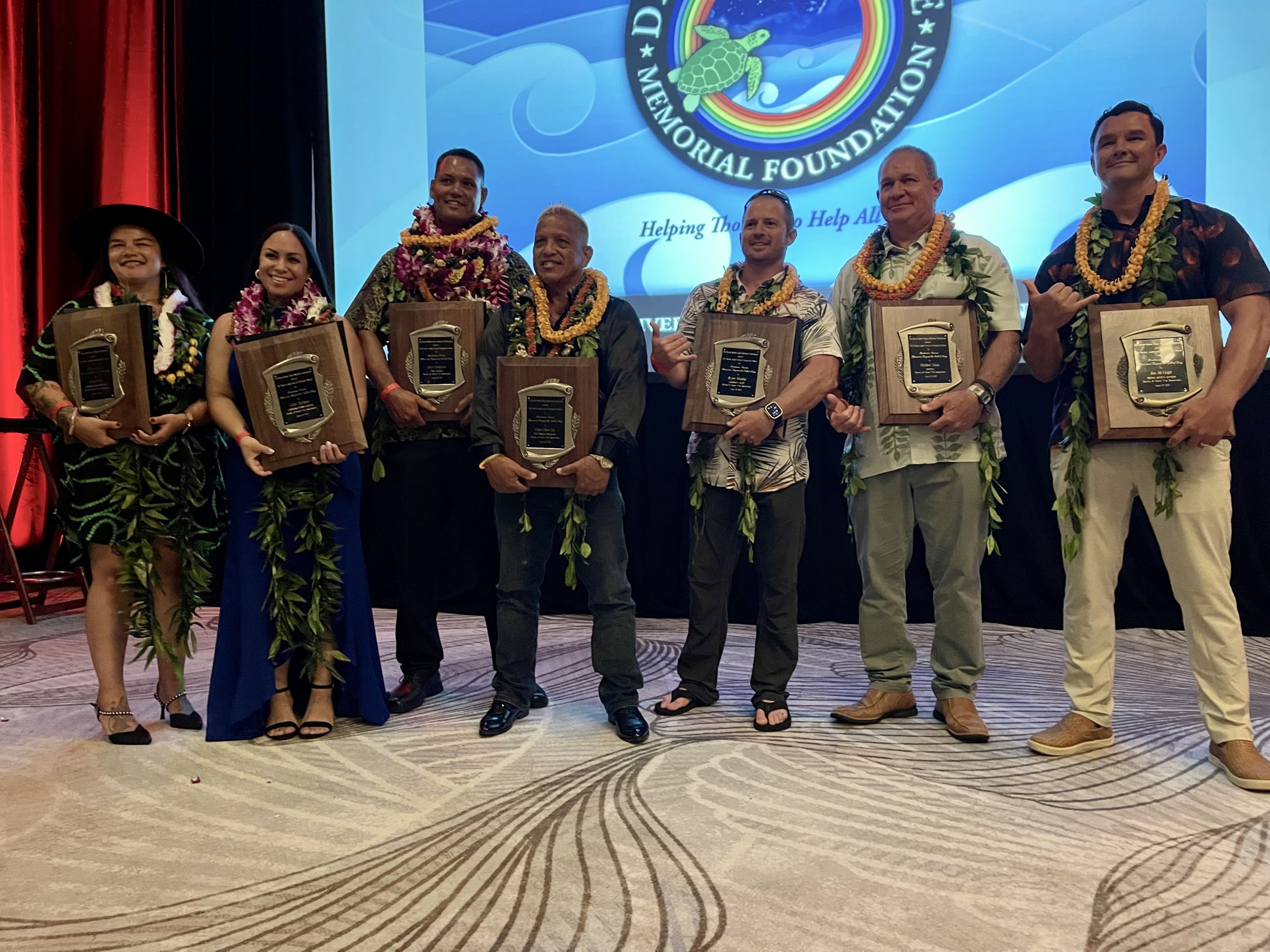
Pacheco, fellow communications officer Allison Ford, and six others were recognized for their acts of heroism performed in 2024 during the foundation’s dinner and auction on Saturday night at the Fairmont Orchid in Waimea. More than 400 people were in attendance.
Over the decades, this event has recognized the heroic rescues performed by members of the Hawai‘i Fire Department and the Hawaiʻi Police Department, while raising funds for the equipment and training needed for the first responders of the fire department to perform these rescues.
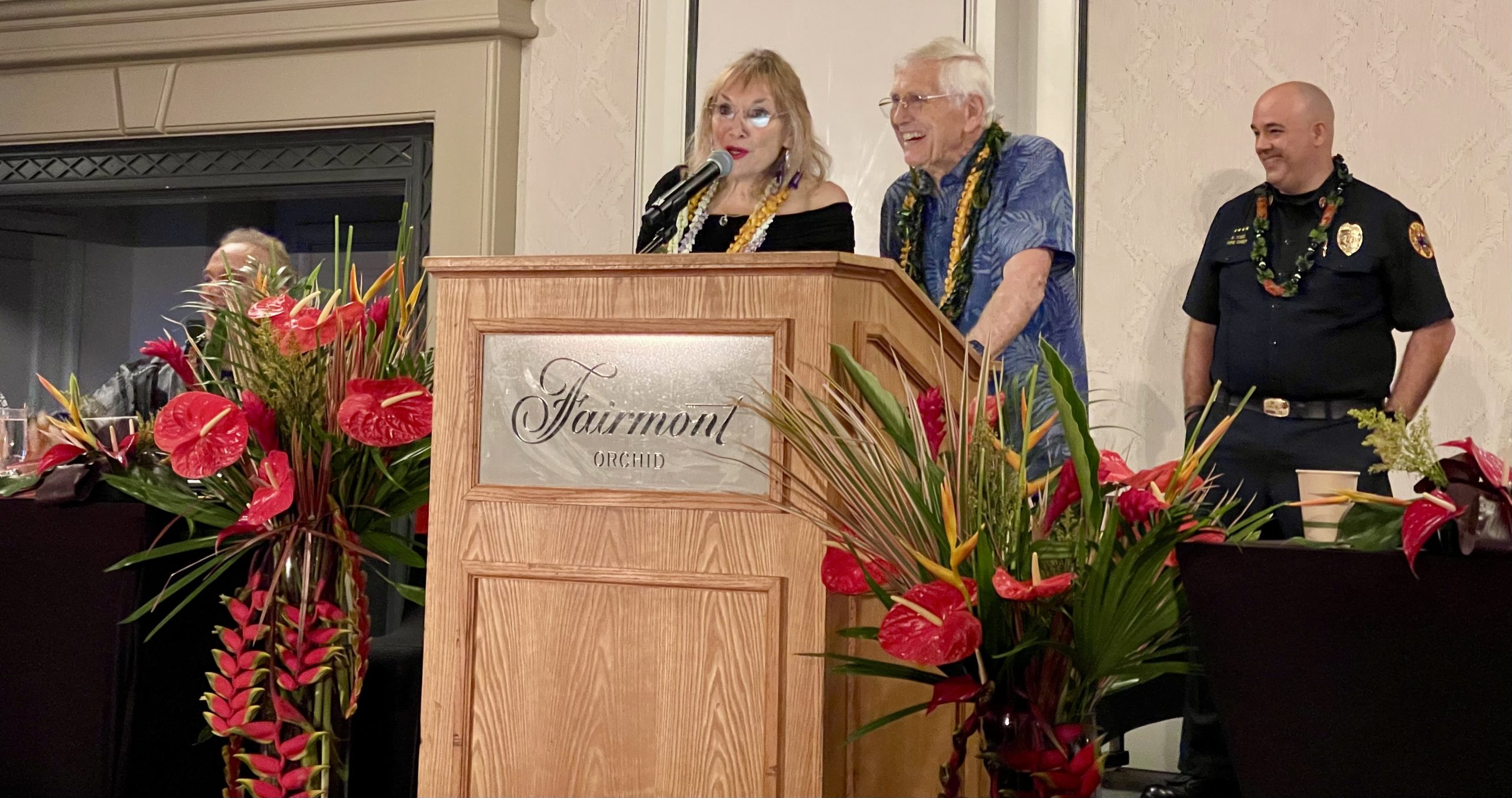
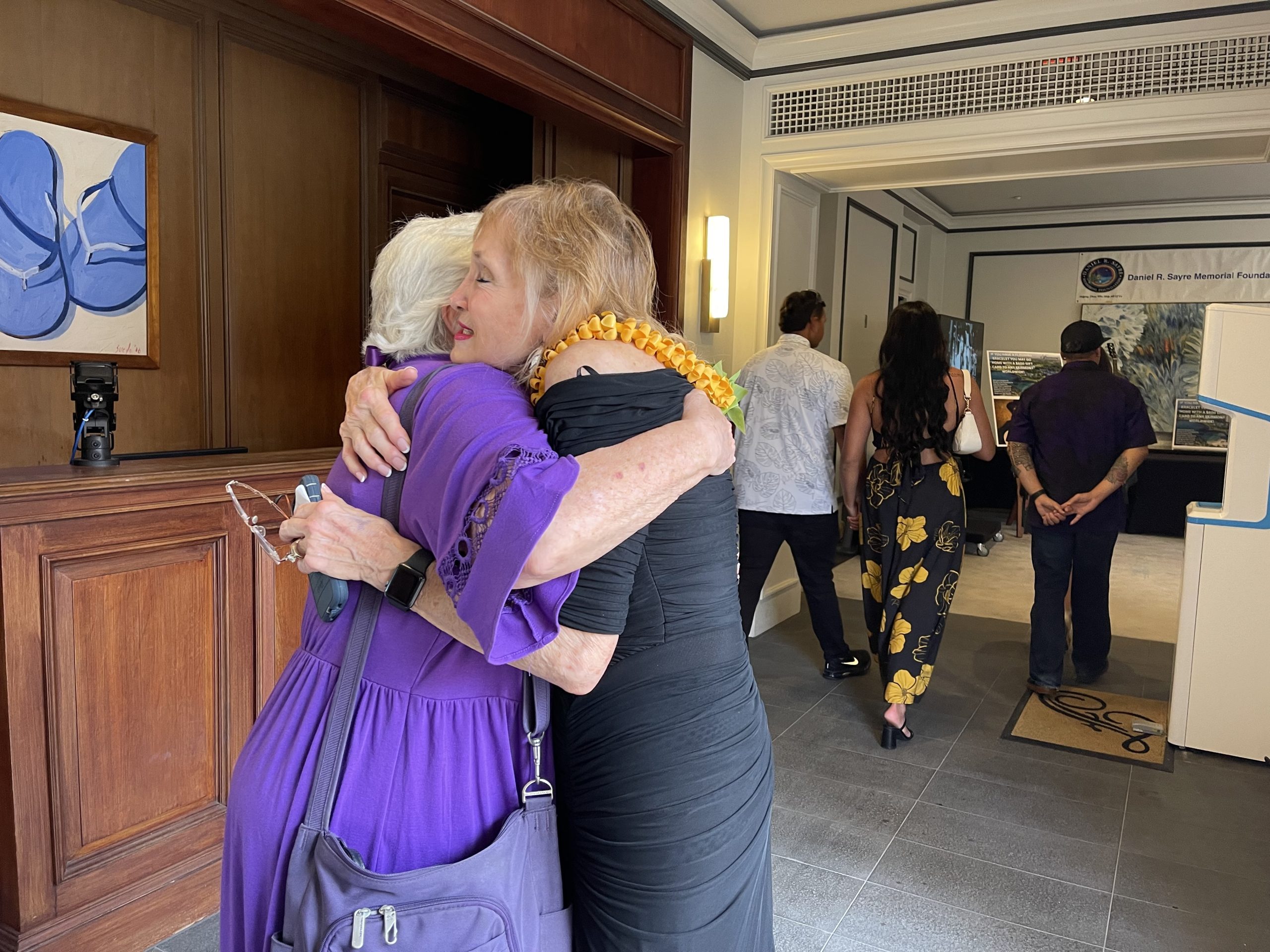
The foundation founded by Laura Mallery-Sayer and her husband Frank Sayer was born out of tragedy. In 1997, their son Daniel lost his life after falling 500 feet while hiking Pololu Valley.
During Saturday’s dinner, Mallery-Sayre recalled the danger firefighters put themselves in to recover her son’s body. The helicopter rotors shredded tree limbs as the rescuers were lowered to the site.
“We love our rescue workers,” Mallery-Sayre said. “If it hadn’t been for them, our son would never have been recovered. We know what it means to have a recovery as well as a rescue. We’re hoping to make more rescues and fewer recoveries. And we need this community to help us.”
Ford was recognized for a 911 call that helped saved the life of Honoka‘a resident Winnie Mochida, who made a full recovery.
Ford said the family who made the call were “really receptive” to her instructions on how to perform CPR.
Hawai‘i Fire Company 8 arrived shortly after the call and took over the CPR, before transporting the victim to the hospital.
“Knowing that you maybe made an impact on saving someone’s life definitely makes all the hardship and long hours and difficulties worth it,” Ford said.
She added that it is nice for dispatchers to be in the spotlight.
Chopper pilot Ryan Moeller, rescue specialist Chad Chun Fat and firefighter John Creekmur were recognized for their efforts in recovering the body of a man who went missing in the Wailuku River.
Creekmur, who was in the river searching for the victim, said conditions were bad with only about a foot of visibility in the murky, cold water. After a three-day search, the rescue crew found the victim.
“I’m just glad; at least the family got closure,” Creekmur said.
Firefighter Jordan Victorine and Hawaiʻi Island police officer Preston Paglinawan were honored for their efforts in rescuing a woman from committing suicide when she attempted to jump off a bridge in Hilo.
Paglinawan was first to arrive where he found the woman, already on the other side of the railing.
“We both kind of knew she was kind of committed to it,” Victorine said when he came to the scene.
“I’ve never been in a situation like this, so I didn’t know what to say,” Paglinawan said. “I just tried to maintain constant communication with her so she would stop focusing on jumping.”
Victorine and Paglinawan rushed to the woman, who was holding on by her fingertips, and were able to pull her to safety.
Mallery-Sayre updated the crowd that night, informing them the woman rescued is alive, doing well and getting the help she needs.
Ocean safety officer Ian McVeigh was honored for rescuing a woman at Kua Bay.
Not long after opening the lifeguard tower, McVeigh saw clothing underwater in the shore break.
“I realized it was a body,” McVeigh said. “I immediately sprinted down the ramp and crossed the beach as fast as I could and got to her pretty quick. I jumped in the water and stabilized her neck.”
McVeigh’s fellow lifeguard, Ula, was right behind him helping get the victim out of the water and onto the shore. The victim was blue and not breathing.
“I instantly jumped on compressions and started pumping away,” McVeigh said.
After about two to three minutes of compressions and oxygen, McVeigh said the woman opened her eyes.
“All her color came back in her face, and I think it took me a couple seconds to realize that her eyes were open,” he said. “The first thing she said was, ‘Oh, my neck.'”
McVeigh said the victim’s daughter was there, gave him a big hug and thanked him for saving her life.
Since the foundation’s inception in 1997, more than $40 million in donations and pledged equipment have been raised for the Hawaiʻi Fire Department, according to the foundation.
Todd said the Sayre Foundation has helped bridge the funding gap for needed trucks and equipment that is not available in the county budget.
“Four years ago, we’d be listening to the radio from the EOC (emergency operations center) about a brush fire, not knowing exactly where it was,” Todd said. “Now, I’m watching the fire from four different cameras and have drone footage.”
It’s new equipment secured with the help from the nonprofit.
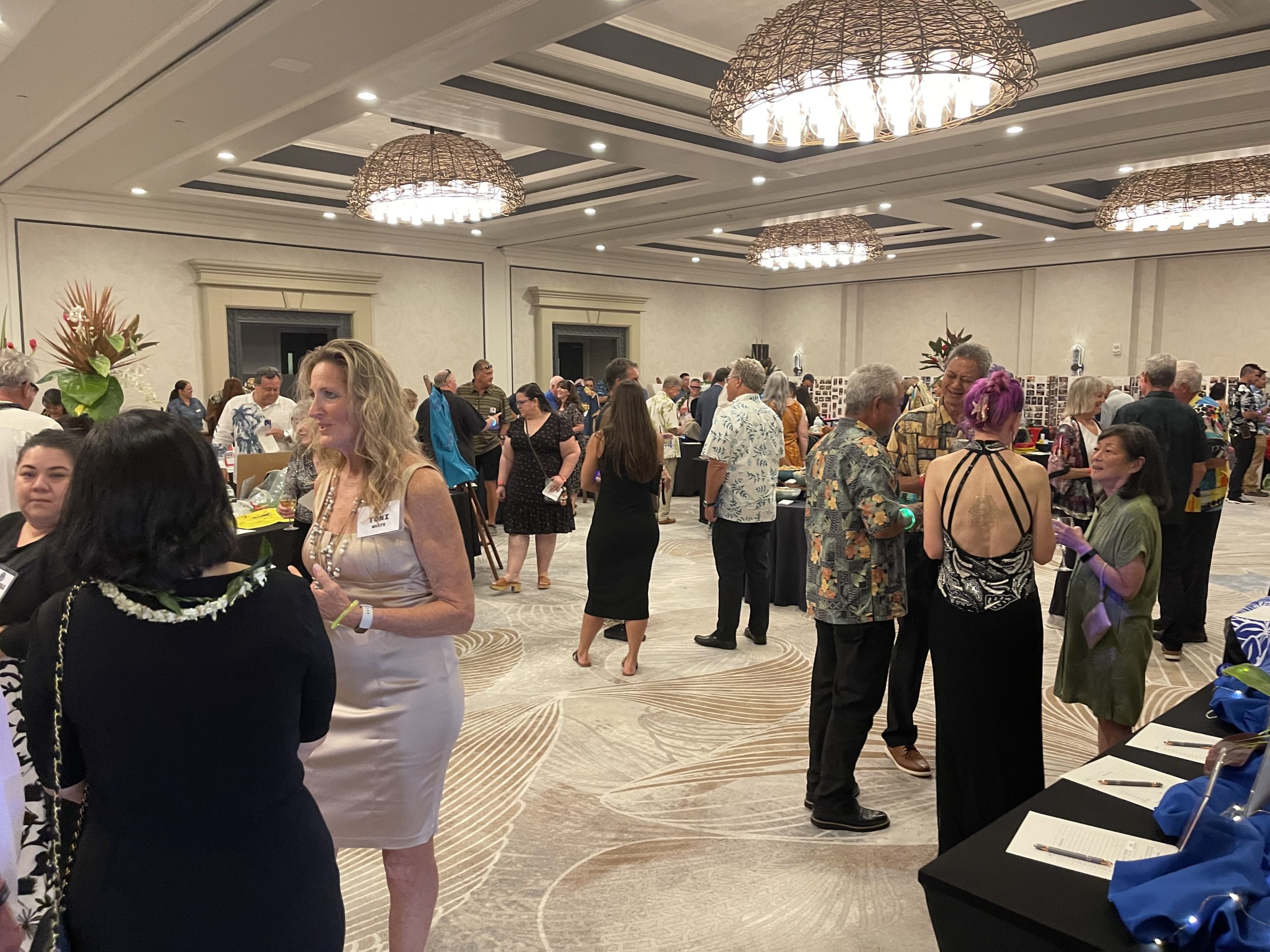
The Sayres raised funds for several items for the department from offshore inflatable life jackets to water safety craft certification training to an all-terrain UTV for Ocean View.
Out of all the items the foundation raised money for during the event’s live auction, Todd said he was most excited for the Lucas device, a machine that delivers high-performance continuous chest compressions.
Todd said in these rural areas, first responders might have to do chest compressions on a victim for 30 or 50 minutes until an ambulance gets on scene.
“Without good CPR we don’t recover anybody,” Todd said. “If rate and quality of compressions decreases, blood stops pumping.”
Money was raised for three of these devices that will go to Laupahoehoe, Kapa‘au and Ocean View fire stations.
Sponsored Content


Subscribe to our Newsletter
Comments