



Discovery of coconut rhinoceros beetles in West Hawaiʻi initiates multiagency response
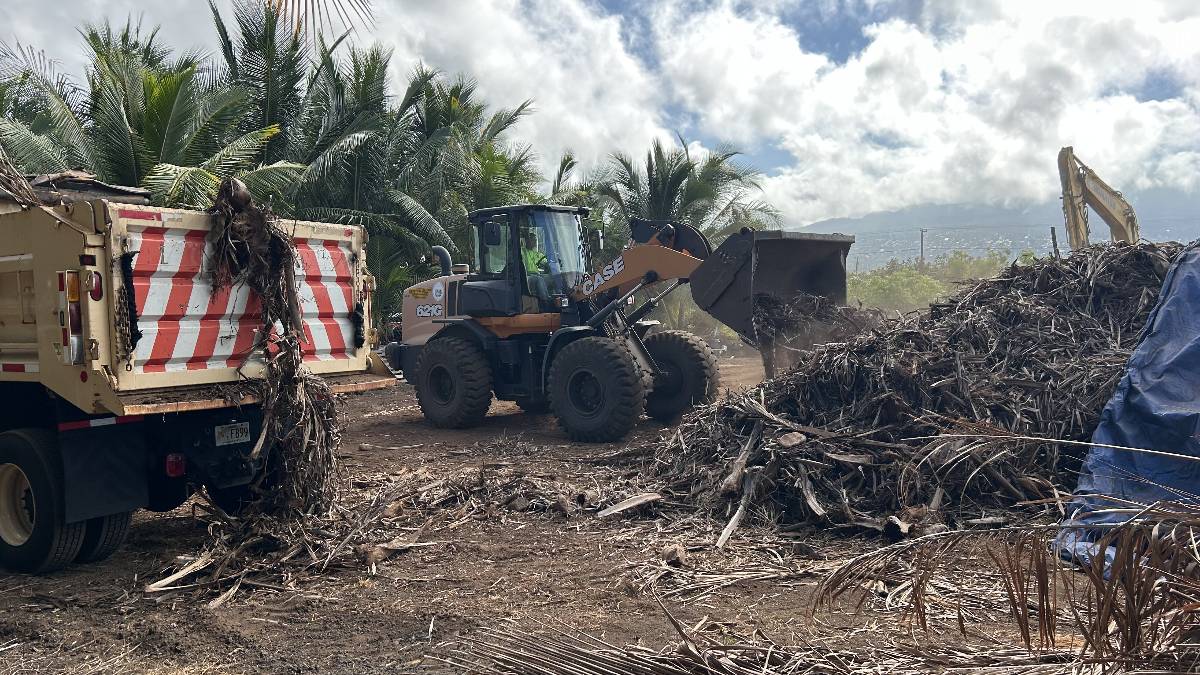
After coconut rhinoceros beetles were found in green waste piles in July at Keāhole Agricultural Park on the west side of Hawaiʻi Island, a coordinated multiagency effort took place to prevent the invasive pests from spreading.
The response involved extensive fumigation and removal of suspected breeding areas.
The operation brought together teams from the Hawai‘i Department of Agriculture and Biosecurity, Hawaiʻi County, the Hawai‘i Invasive Species Council, the Department of Transportation, Coconut Rhinosorus Beetle Response, and the Big Island Invasive Species Committee, according to a news release.
The coconut rhinoceros beetle poses a serious threat to Hawai‘i’s agricultural and natural resources. It damages and kills coconut and oil palms, and has also been known to attack bananas, sugarcane, papayas, sisal and pineapple, according to the U.S. Department of Agriculture.
On July 28, staff from several agencies worked together to conduct an on-site assessment at Keāhole Agricultural Park to inspect for potential breeding areas for the beetles.
Using heavy machinery provided by the state Department of Transportation, crews dug into massive green waste piles and uncovered two active breeding sites at a landscape nursery within the agricultural park. They discovered 110 late-stage larvae and three adult beetles.
To prevent the beetles from spreading to nearby properties, the piles were immediately sealed under fumigation tarps while staff of the Department of Agriculture and Biosecurity secured authorization to move forward with treatment. A private pest control contractor was brought in to fumigate approximately 1,500 cubic yards of green waste on Aug. 13.
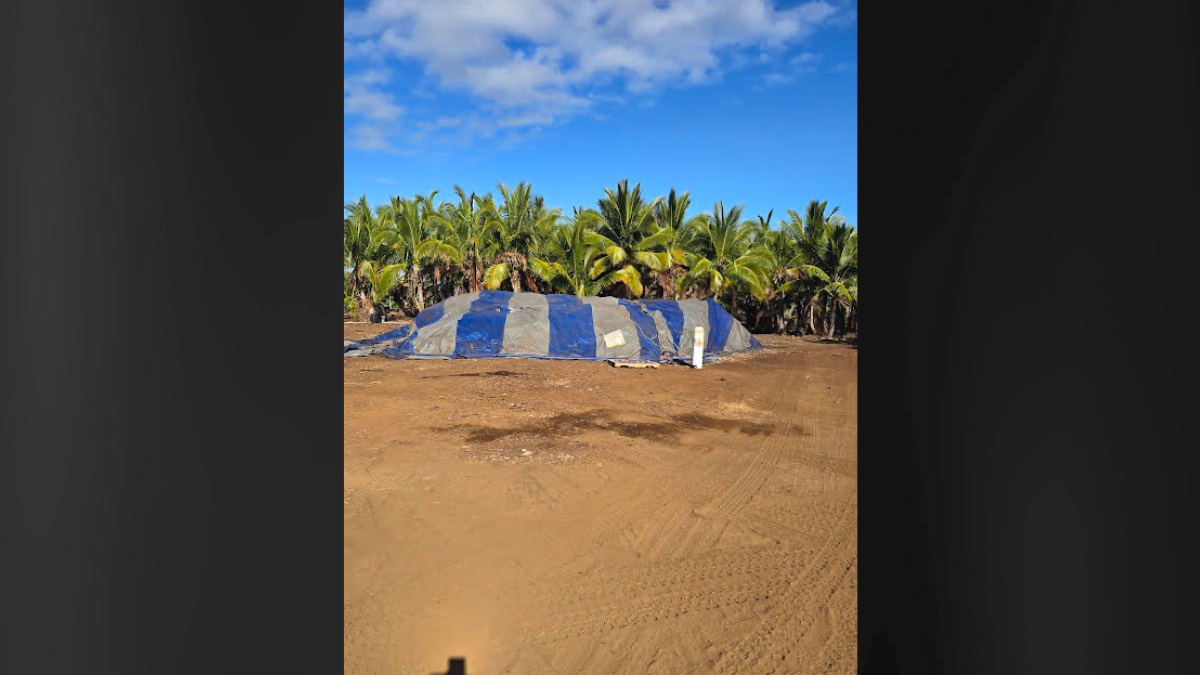
On Aug. 14, 18 and 21, fumigated material was transported to a West Hawai‘i green waste processing site, where it was further treated to ensure that any surviving beetles were destroyed.
Sharon Hurd, chairperson of the Hawai‘i Board of Agriculture and Biosecurity, said “it takes an army to battle” the coconut rhinoceros beetle.
All materials remained within the boundaries of a voluntary compliance zone established by Hawaiʻi County Mayor Kimo Alameda in June.
Response teams conducted further inspections on Aug. 18, digging through additional green waste piles at several nurseries in the Keāhole Agricultural Park. No further beetle activity or breeding sites were detected.
Pesticide treatments of coconut palm crowns throughout the park will continue to eliminate any remaining beetle threats.
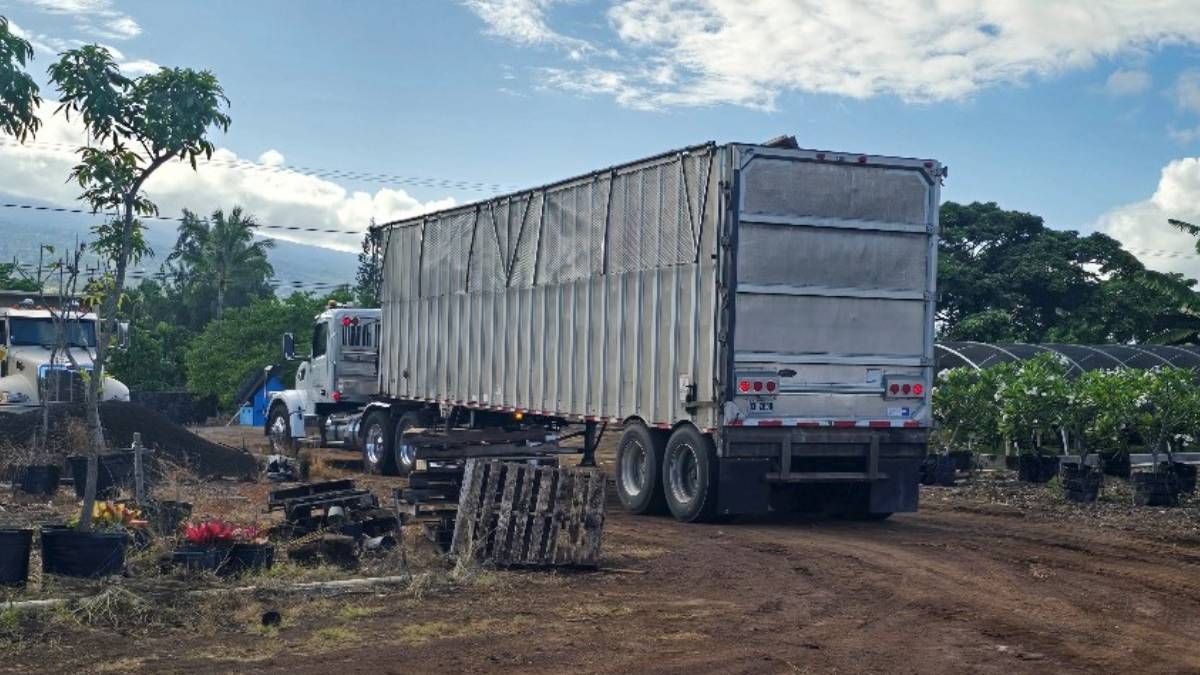
“We also need the public’s help in stopping the movement of green waste from areas in infestation zones,” Hurd said.
Additional detection traps are being deployed, and monitoring has been increased in surrounding areas as part of a long-term containment strategy.
Residents and businesses are urged to remain vigilant and report any sightings of the beetle.
Sponsored Content


Subscribe to our Newsletter
Comments