



Big Island judge to rule next month on state subpoena requesting files of disciplined police officers
A 3rd Circuit Court judge will decide next month whether or not to grant the Hawaiʻi Attorney General’s subpoena to force Hawai‘i County to release investigative files compiled by the Hawai‘i Island Police Department into the alleged misconduct of four officers.
During a court hearing on Tuesday in Hilo, Judge Peter Kubota heard arguments from both the state and county. Dakota Frenz, Deputy Corporation Counsel, told the court that the county has no intention of attempting to interfere with the Attorney General’s investigation and prosecution of potential public corruption.
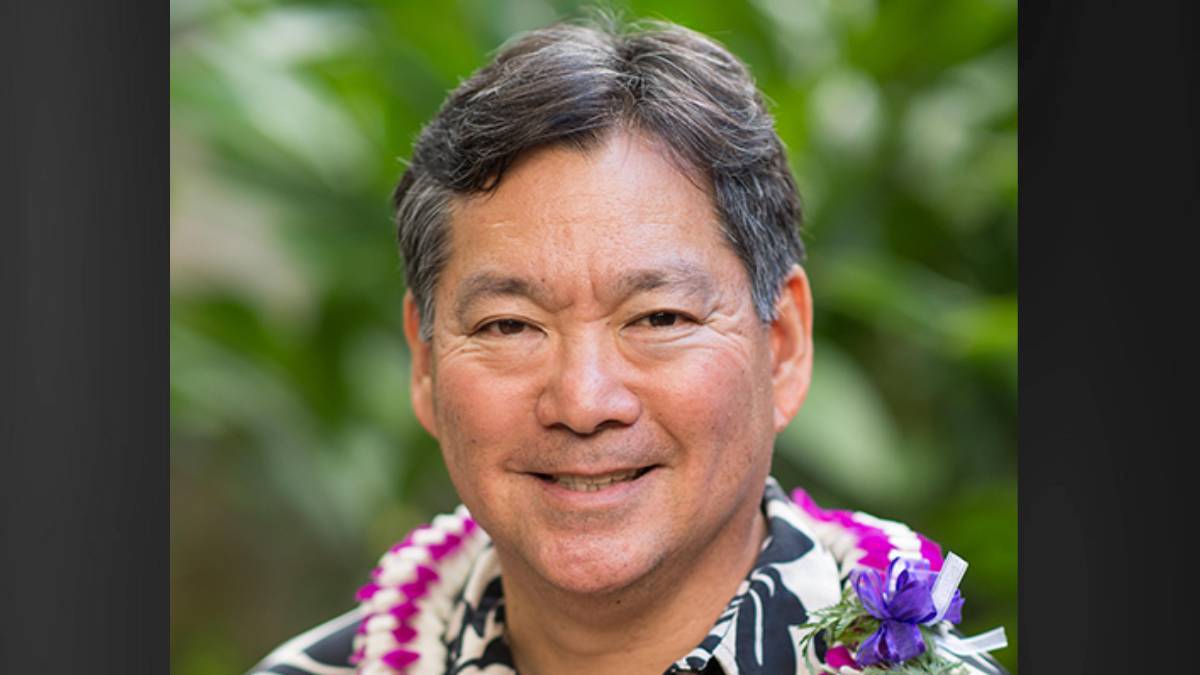
“We’re merely indicating that the county has contractual obligations, both to the officers through the SHOPO (State of Hawaiʻi Organization of Police Officers) Bargaining Unit, as well as the county has made expressed promises to these officers, not just these officers, but every officer, that receives their Garrity rights at the outset of an internal administrative investigation,” Frenz said. “And the county, as the employer, has a duty to uphold those promises.”
In defense against the subpoena, Corporation Counsel cites a 1967 U.S. Supreme Court case, Garrity v. New Jersey, as the basis for not complying with the subpoena. The motion states that public employees cannot be forced to choose between self-incrimination and job loss.
“The notice that the officers have is a promise, an express written promise that it will never be used in a criminal investigation,” Frenz said Tuesday, referring to the Garrity rule.
In June, State Attorney General Anne Lopez’s Office subpoenaed the Hawai‘i County Police Department to produce these investigative files compiled by the department into the alleged misconduct of four officers – Noah Serrao, Blane Kenolio, Andrew Springer and Sheldon Adviento – that began two years ago.
All officers appeared on the Hawai‘i County Police Department’s 2024 Legislature Disciplinary Report for a myriad of offenses that occurred in May of 2023, including alleged evidence tampering.
The officers were investigated by the department internally for misconduct and received suspensions ranging from six days to 50 days. The officers all served their suspensions, and returned to active duty with the department, according to court records and a disciplinary report.
The department forwarded the cases to the Hawai‘i County Attorney’s Office, which was ultimately forwarded to the State Attorney General’s Office to avoid the appearance of impropriety.
Deputy Attorney General Benjamin Rose told the court Tuesday that the county’s contractual obligations to police officers does not supersede the State’s ability to investigate criminal matters.
“This policy to be vigilant and active imposes a duty to obtain all relevant and material information,” Rose said. “And the Police Department’s interest in maintaining a promise that they could never keep does not override the statutorily imposed duty on the Attorney General.”
Rose stated that the interim chief, Reed Mahuna, argued that providing records to the Attorney General’s office would stifle honest statements from employees.
“It will not,” he said. “The correct advisement to government employees is that their statements cannot be used against them in subsequent criminal proceedings.”
Kubota asked Rose what prevents the Attorney General’s Office from interviewing the four officers in the same manner the county interviewed them.
“Nothing prevents us,” Rose responded. “What we are seeking to do is to obtain already recorded statements of suspects and or witnesses for the purposes of our investigation. So it is only to add to our investigation, not to substitute.”
Rose went on to explain the Attorney General’s Office is still in the investigative stage, and the law “only prevents us from using compelled statements in a criminal proceeding, security does not apply at this stage of the proceedings.”
“If, later on, after charging, a defendant believes that their statements are going to be used against them, or have been used to obtain derivative evidence for the purposes of presentation of criminal prosecution, then that defendant may file a motion to either suppress the evidence or to dismiss if most of the case is built upon that derivative use of evidence,” Rose explained.
Additionally, Rose said the Attorney General’s Office might not charge, “depending on what we find.”
Kubota’s problem with the Attorney General’s argument was the case is still in the investigation phase, not a criminal prosecution.
“If I allow all of these four reports to be reviewed by the State Attorney General, you can’t unring the bell with the knowledge you have,” Kubota said.
If the court is not inclined to grant the county’s motion to quash, Frenz said, the county is seeking to protect those compelled statements by having them redacted from the investigative files.
Frenz also believes the Attorney General’s Office should provide proper notice to the affected officers, and allow them and or their counsel to come in and object to the request of the compelled statements.
“Both of you have made very good arguments and I’ll consider that in conjunction with your briefs,” Kubota said.
Sponsored Content

_1770333123096.webp)

Subscribe to our Newsletter
Comments