



Hawai‘i County escapes a disaster, but lessons can be learned from tsunami response, coastline evacuation
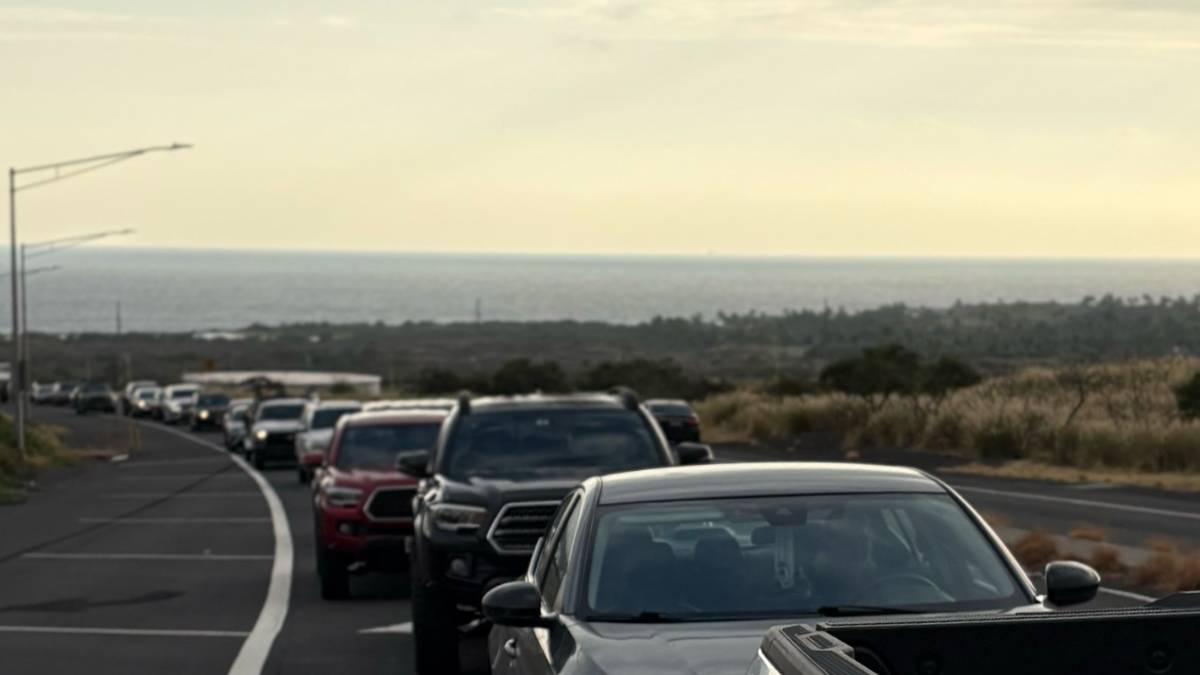
Life on Hawai‘i Island has calmed down after a Tsunami Warning following an 8.8 magnitude earthquake in Russia on Tuesday, forcing the evacuation of residents and visitors from the coastline — and resulting in traffic gridlock for hours.
But before the first waves of the tsunami were expected to hit at 7:17 p.m. on Tuesday, most motorists were out of the inundation zones.
“For the most part, we achieved most of our goals,” Hawai‘i County Mayor Kimo Alameda said. “We got everyone out of the coastal areas by 6:15 p.m., which was great.”
On Wednesday, the limited damage was assessed and discussions already were underway on how to improve the traffic flow and speed up the process to those seeking higher ground.
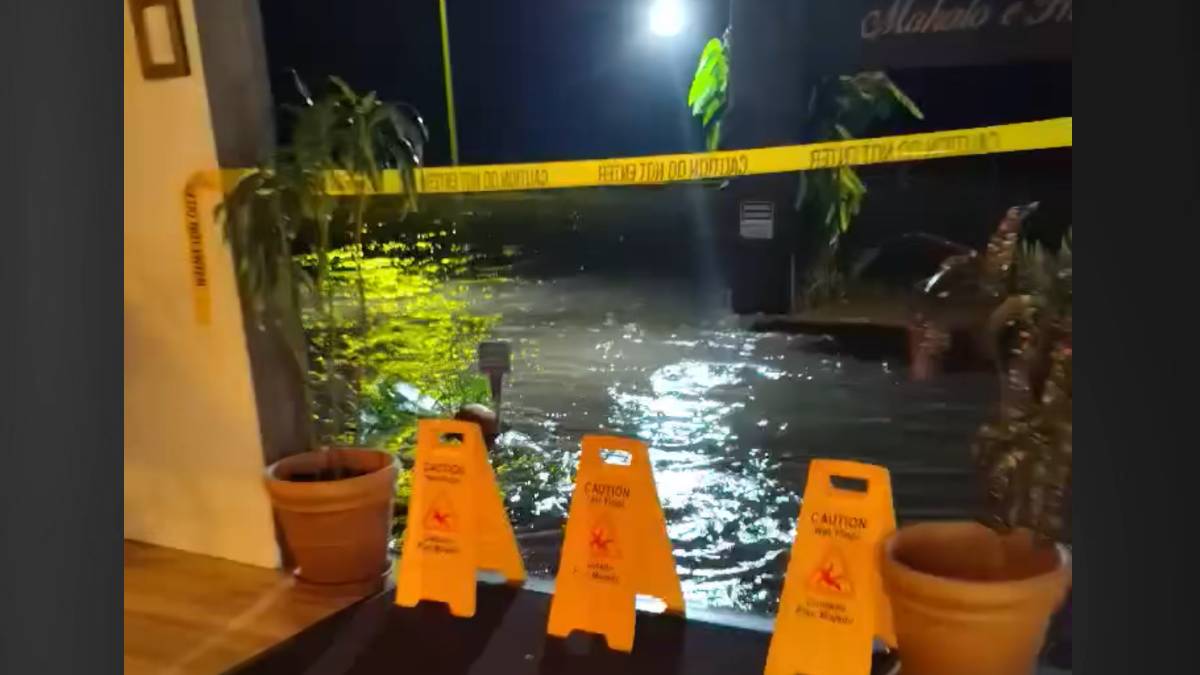
While no major damages were reported, Hawai‘i County crews are still assessing the flooding that occurred in parts of Hilo, including water entering SCP Hilo Hotel, at 126 Banyan Way, from the nearby Reed’s Bay.
While water flowed into a few rooms on the first floor, SCP Hilo Hotel, formally the Hilo Seaside Hotel, remains fully open and operational.
“Throughout the night, our team worked with care and urgency to ensure everyone’s safety, comfort and wellbeing,” said Breeani Kobayashi Kuali‘i, general manager of SCP Hilo. “We did everything possible to accommodate our guests, communicate clearly, and manage the situation with professionalism and aloha.”
According to Kobayashi Kuali‘i, the staff followed the county-led emergency protocols and swiftly removed guests from the affected area of the hotel. Once the Tsunami Warning was downgraded to an advisory, they allowed guests to return.
“We are grateful to our staff for their teamwork and calm response, and to our guests for their patience and understanding,” she said.
Alameda said the county has to improve some parts of the response, such as the gridlock areas, including Keaukaha and some major roads in Kailua-Kona.
Ellison Onizuka Kona International Airport had 34 delays and cancellations, and the Hilo International Airport canceled 15 flights and closed completely to open the tarmac for traffic in Keaukaha, which gives the community a faster way to access higher ground.
“We have to work more with the state (which operates both airports) as far as opening the Hilo airport, but for the most part, the evacuation went well, and I was pleased with the teamwork displayed at all levels,” the mayor said.
On Wednesday morning, surfers already were headed to the ocean for some waves at Old Kona Airport Park and Kohanaiki Beach Park. Stuart Weinstein, science officer with the Pacific Tsunami Warning Center, said minor sea level variations were expected, but nothing that justified keeping an advisory level.
“We were expecting waves a little larger,” Weinstein said. “Last night, we received reports of Hilo and Kahului getting 2 to 4 meters waves throughout the peak of the warning.”
It’s been more than a decade since a tsunami warning was issued where an evacuation was ordered. The first warning alert was issued at around 4:10 p.m. Following the alert, many people headed for higher ground, resulting in gridlock traffic on northbound roads.
Traffic heading up Hina Lani Street in Kona was at a crawl. A train of cars was coming up Kaiminani Drive for a couple of hours after the warning came out.
“A full tsunami evacuation is a rare event in Hawai‘i County and all county agencies worked together and got everyone to safety as needed,” Hawai‘i Island Acting Police Chief Reed Mahuna said. “All checkpoints in the inundation zone were cleared a half hour prior to expected first wave arrival, and we maintained checkpoints at the perimeter until the all clear was given.”
According to Hawaiʻi County Civil Defense Agency, 180 checkpoints were established islandwide near tsunami inundation zones to notify people and help them evacuate the area. Most people were already aware of the evacuation order due to the emergency alerts and sirens, Mahuna said.
The warning was ultimately downgraded to an advisory by around 11 p.m.
Hawai‘i Fire Chief Kazuo Todd said the moment there’s a major disaster, traffic becomes crazy, adding, “It’s an extremely hectic environment.”
There were the normal 911 calls, but Todd said there also were calls related to traffic congestion.
“Canoe paddlers are trying to get their canoes out, boaters are trying to get their boats out of the harbor,” Todd said.
The fire department was among the evacuees with two of its fire stations located in tsunami-inundated areas in East Hawai‘i.
“We have a process, but it takes several hours to clear the stations,” and get equipment and vehicles to safer locations, Todd said.
Several boat owners parked their vessels along Ane Keohokalole Highway below Kealakehe High School, where a temporary shelter was established by the American Red Cross with about 300 people using the facility to wait out the impending disaster that never came.
Among the evacuees there were Charlesha James and Anthony Hicks, who arrived at the Kona airport from California just hours after the alert was issued. It was their first time to Hawaiʻi.
They went to rent a vehicle, but none were available. There were no taxis coming to the airport and rideshare drivers were charging in excess of $70 for a pickup.
“We were stuck at the airport, and we don’t know anybody,” Hicks said.
That was until a man operating a shuttle service came through and offered to give them ride to their oceanfront lodgings at Royal Kona Resort on Ali‘i Drive.
When they arrived, Hicks said they were stopped by hotel security before they could get out of the car.
“They told us the hotel was closed and that we had to leave,” James said.
Frustrated, the shuttle driver took the couple to a gas station where they picked up snacks and water, then drove them to the high school.
While exhausted, the couple was in good spirits Tuesday night.
“It’s nature, we can’t stop it,” James said.
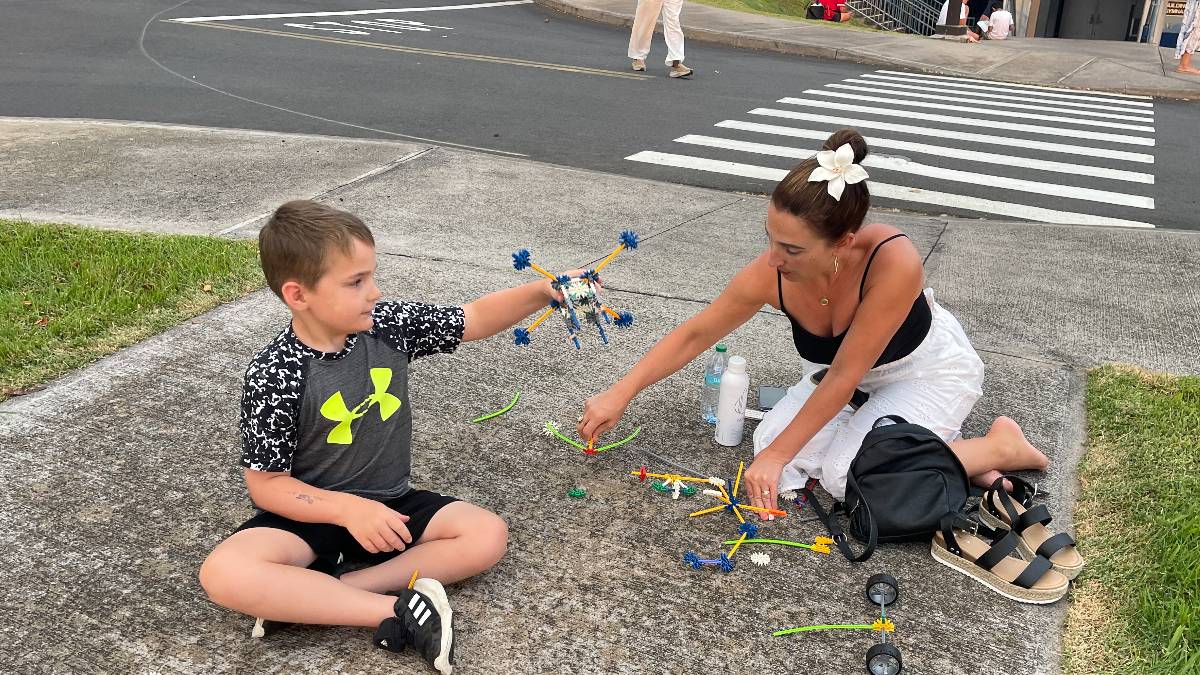
Karin Mann, who is visiting from New York City with her husband and four kids, was also at the school. She was sitting with her 6-year-old son putting a toy together while her two teenage sons kicked a ball around. Her husband was off looking at birds, and her daughter was reading in the cafeteria.
Mann said she was initally nervous since this is the farthest away they’ve been from home as a family — and they’ve never experienced a Tsunami Warning.
“I wondered at first if we were safe cause we can see the water from here,” Mann said.
Mann and her family have been on the Big Island since Sunday, staying in an Airbnb on Ali‘i Drive. She said they didn’t initially know where to go after the warning and evacuation were issued.
The host of the Airbnb ultimately connected with them and instructed them to go to the high school.
“This has definitely been unexpected,” Mann said. “We’re just going with the flow.”
Alameda said visitors at the Hilo Hawaiian were evacuated from the hotel and the Grand Naniloa Hotel visitors sheltered in place on the higher levels of the hotel.
The 11 temporary shelters set up islandwide took in approximately 1,500 people.
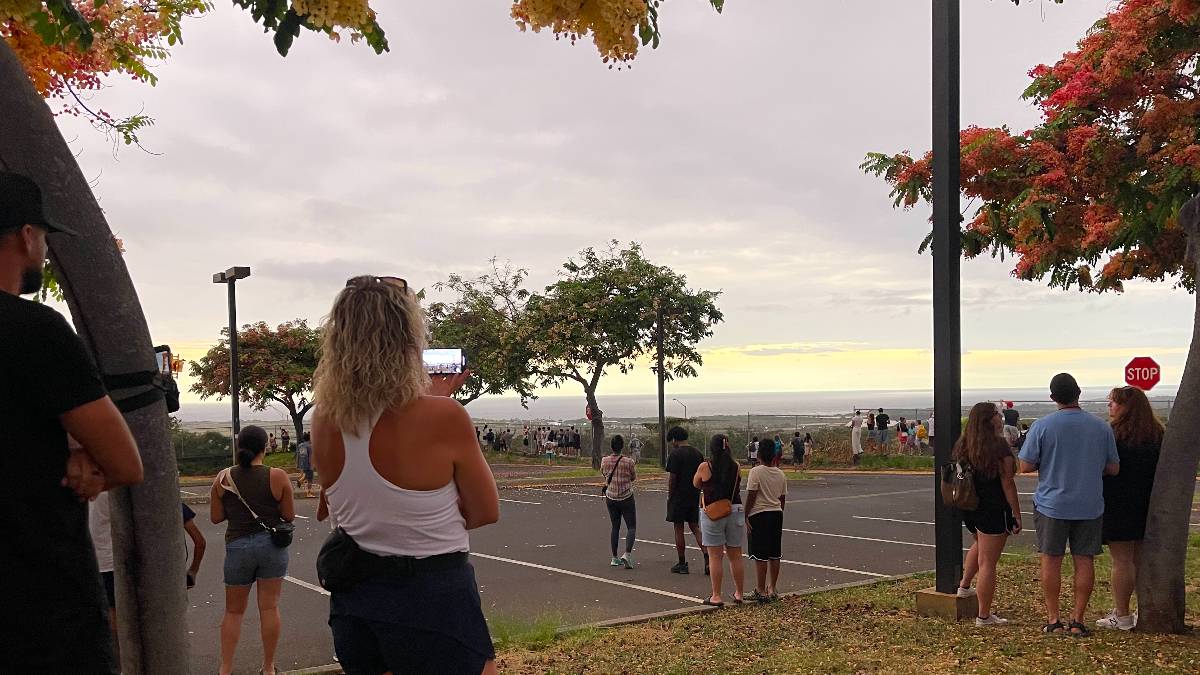
Those at Kealakehe turned their eyes and phone screens toward the ocean at around 7 p.m., waiting to see if they’d see the first wave.
County leaders and emergency responders came together at the Emergency Operations Center in Hilo, staying throughout the night to monitor conditions.
A camera was set up to look at Coconut Island, a small island in Hilo Bay, throughout the night, and floodwaters inundated the parking lot for the island during the tsunami warning.
“There’s a lot that goes on in these events,” Todd said. “We’ll do an after-action review, go over what went well and what didn’t.”
Part of the tsunami response plan is scanning the coastline with the department’s helicopter crews, Todd said.
“We send choppers into the valleys to warn people hiking or living in the area,” the chief said, adding six people were airlifted out of Waimanu Valley before the first wave was supposed to hit.
“Luckily, we didn’t suffer any major damages, but we are still assessing,” Todd said. “We walked out of this one pretty well and unscathed.”
Sponsored Content

_1770333123096.webp)

Subscribe to our Newsletter
Comments