



Key to unlock solution for rapid ʻōhiʻa death could be in seeds of resistant trees
Rapid ʻōhiʻa death was first identified in 2014 in the Big Island’s Puna District. The fungal disease has since devastated thousands of forest acres on Hawaiʻi Island, killing more than a million trees.
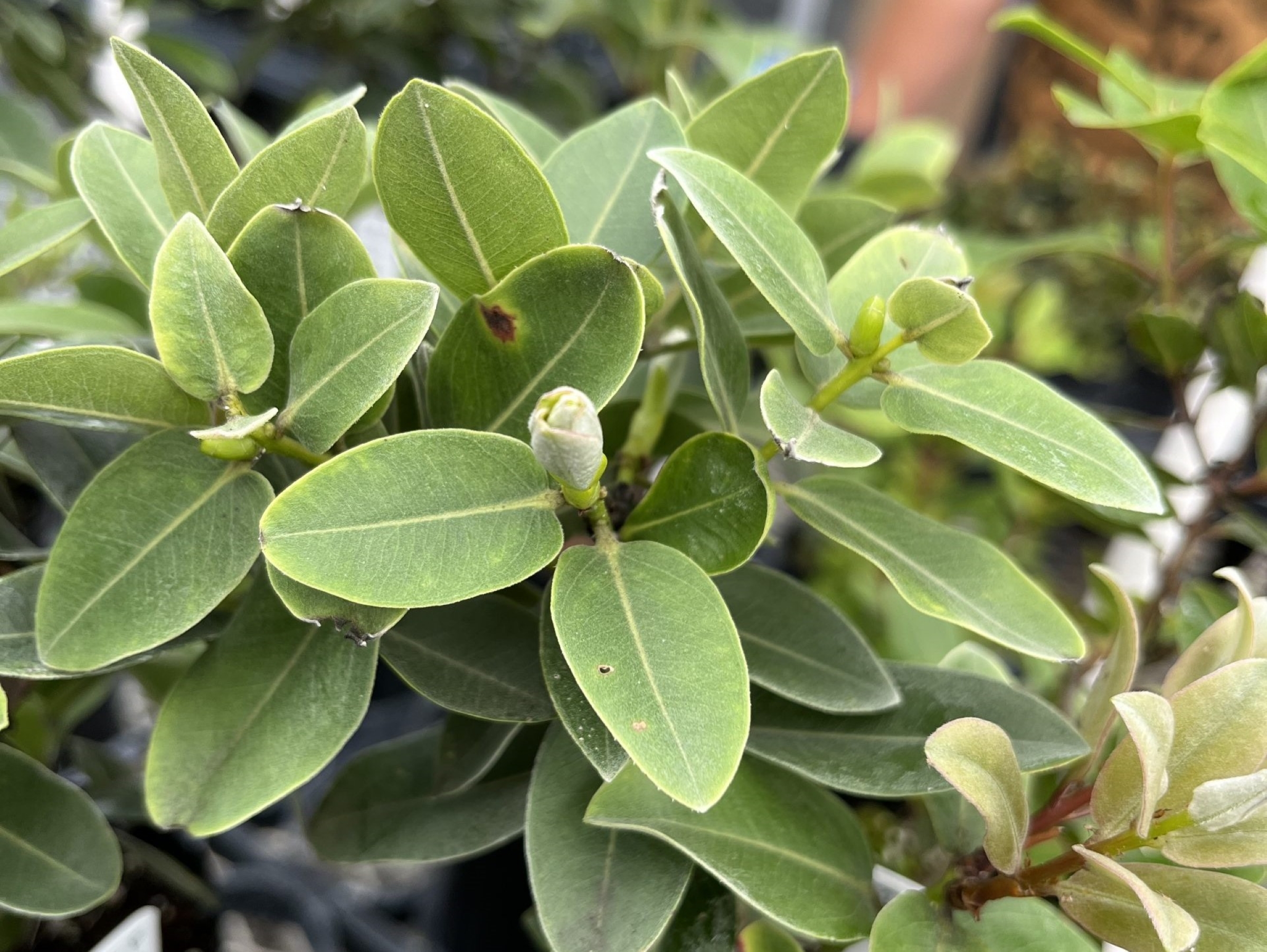
Researchers with the ʻŌhiʻa Disease Resistance Program on the Big Island are conducting studies to identify ʻōhiʻa with genetic resistance to the scourge.
Early results are hopeful.
A key observation was made as rapid ʻōhiʻa death spread through Hawaiʻi Island forests: Some ʻōhiʻa in high-mortality areas remained healthy, seemingly unaffected by the disease.
Did they randomly escape infection? Or do they have some level of resistance? Researchers established the ʻŌhiʻa Disease Resistance Program in 2018 to explore these questions.
The program — a collaboration between federal, state, nonprofit and academic partners — identifies and propagates ʻōhiʻa with genetic resistance to rapid ʻōhiʻa death.
The ʻŌhiʻa Disease Resistance Program is focused on Metrosideros polymorpha — the most widespread of Hawaiʻi’s five ʻōhiʻa species and among the most genetically diverse trees in the world.
That trait allows it to thrive in a range of environments and fill various ecological niches. Some varieties could even be resistant to disease.
“There is so much diversity in ʻōhiʻa, there has to be resistance,” said ʻŌhiʻa Disease Resistance Program Operations Specialist Ryan Belcher. “We’re just trying to give ʻōhiʻa the best chance we can.”
The ʻŌhiʻa Disease Resistance Program’s goal is to make ʻōhiʻa available for restoration and landscaping throughout the state. However, getting there is a long, meticulous process.
The program initially concentrated on screening survivor trees in hardest-hit areas of the Big Island.
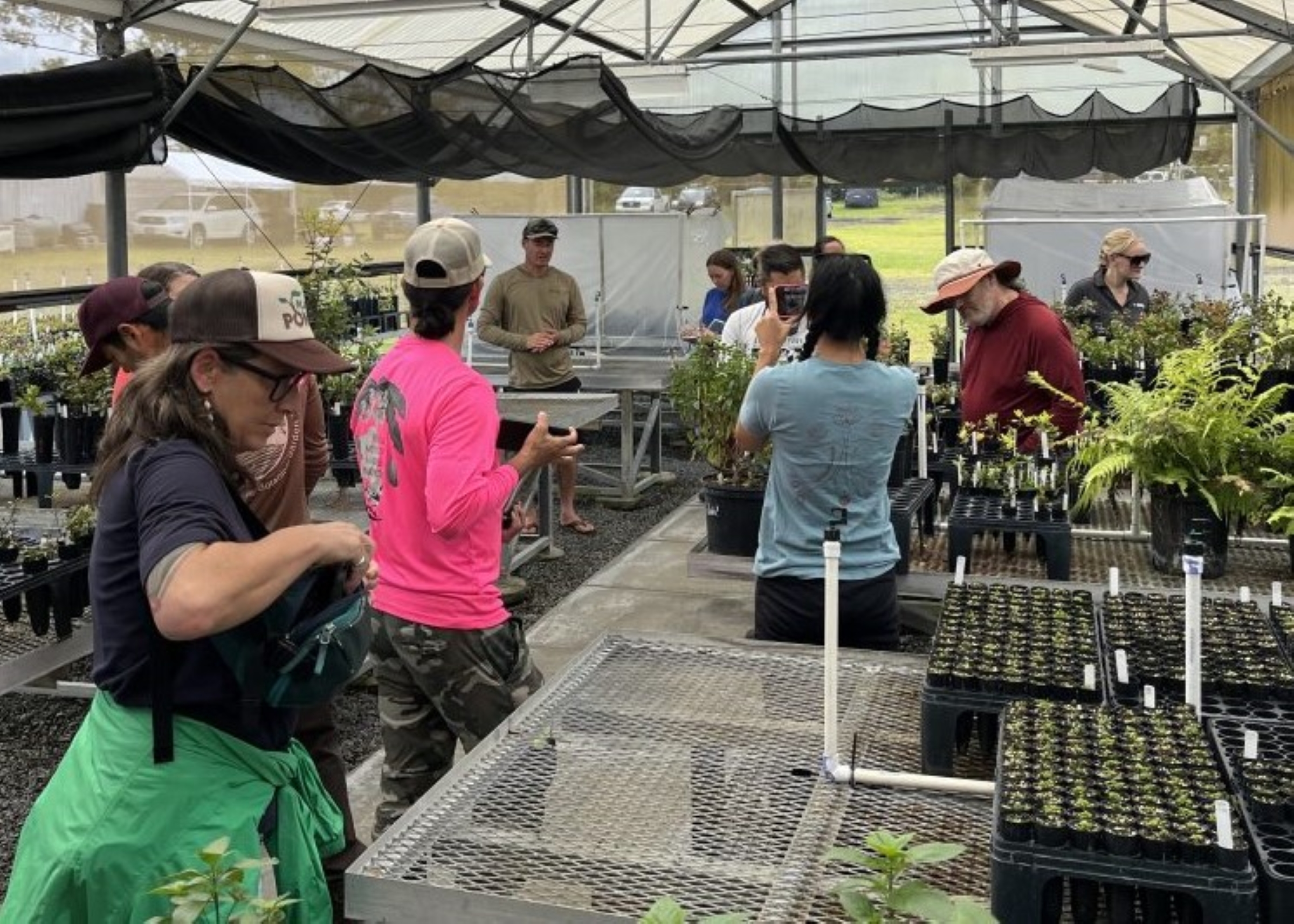
Efforts then expanded to testing seed families from ʻōhiʻa populations throughout the state, casting a wider net in the search for resistance.
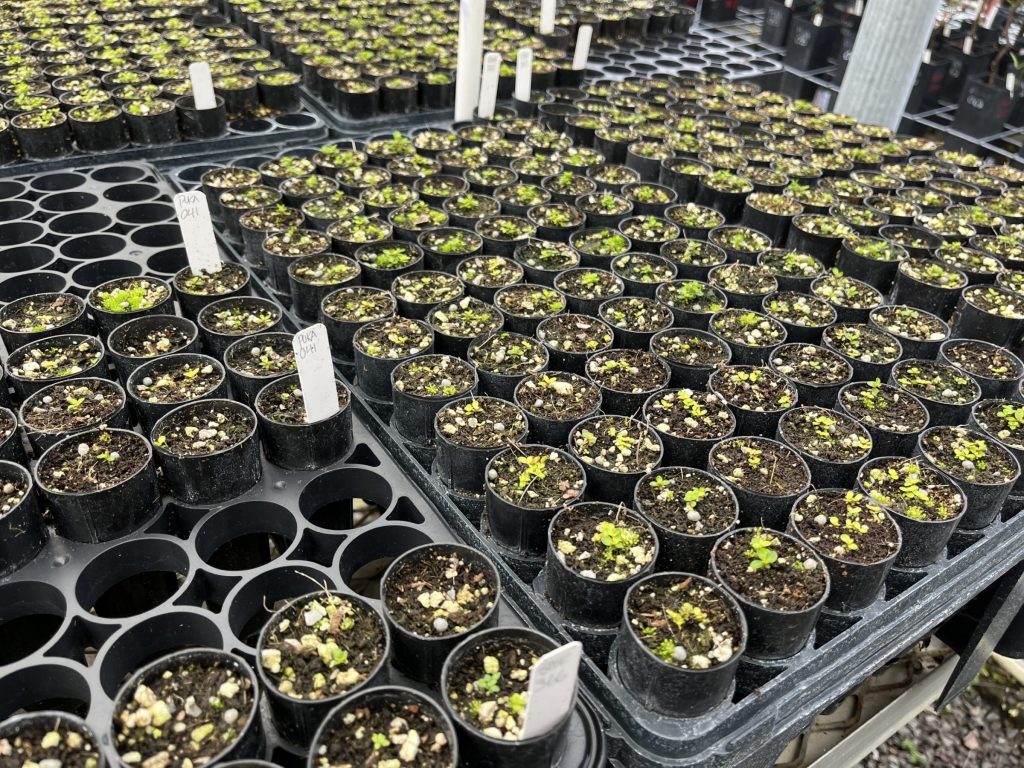
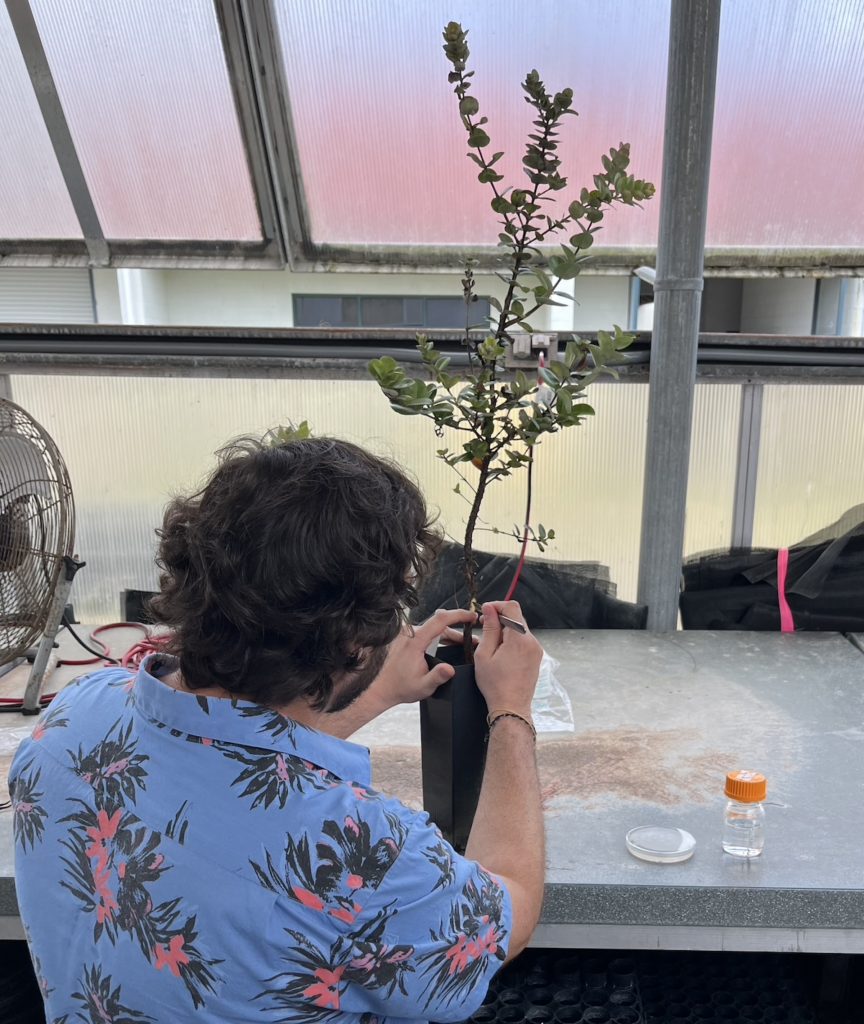
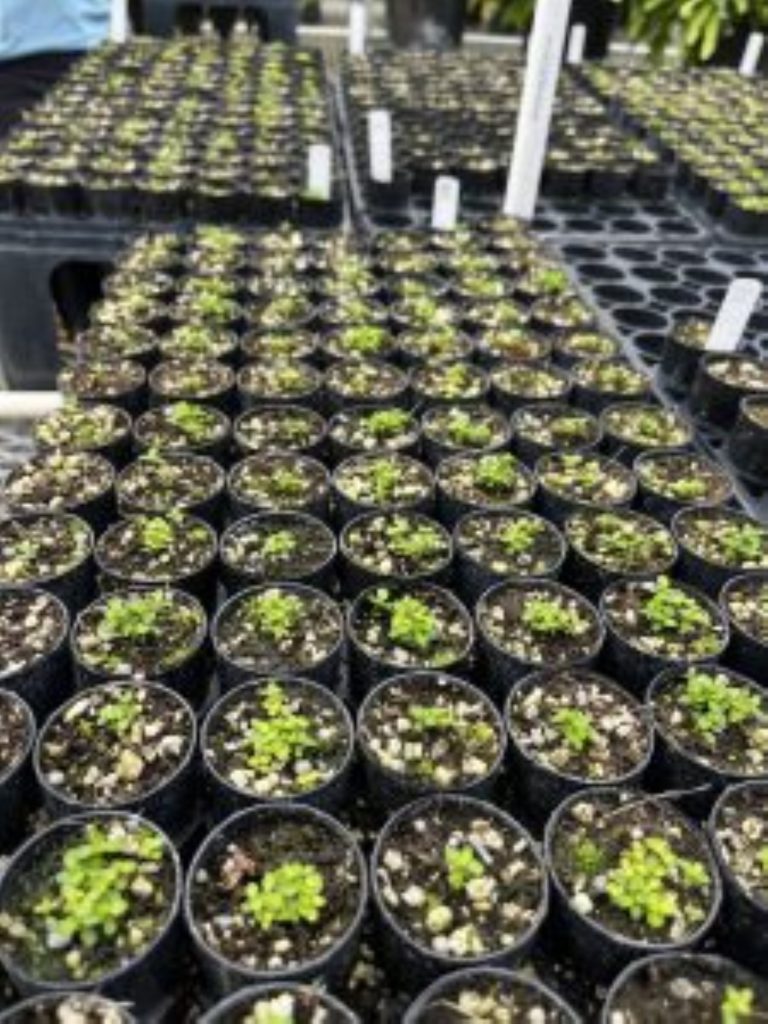
Horticulturalists collect seeds from the wild, germinate them and grow them at the ʻŌhiʻa Disease Resistance Program nursery on Hawaiʻi Island. Once the seedlings reach a stem diameter of 6 millimeters — about as thick as a pencil — they are inoculated with rapid ʻōhiʻa death.
It can take up to 2 years for ʻōhiʻa to grow from seed; however; the early results are encouraging.
Belcher and the ʻŌhiʻa Disease Resistance Program team is seeing a spectrum of responses from inoculated seedlings. Some trees wilt and die. Others show little to no sign of infection.
The varied responses indicate the inoculation process is working and shows some genotypes could truly be resistant to the disease.
“We are seeing signs in the greenhouse that we are killing stuff, so it shows that our infection rate is working,” said Belcher. “We’re also seeing ʻōhiʻa that survive 3 to 5 years after inoculation. So it’s very hopeful.”
The operations specialist added that researchers are playing the long game, and confidence will build after repeated trials.
“We’re constantly germinating seed families for trials 2 to 3 years down the road,” Belcher said.
Belcher runs up to three trials per year with staff assistance, screening 300 to 400 seedlings per trial.
“Once we’re able to verify that all of our results are consistent with each trial and we can replicate everything, then we’ll move to more of a production phase,” he said. “It’s a slow process, but we want to make sure we get it right before we jump the gun.”
There are two strains of rapid ʻōhiʻa death: Ceratocystis huliohia and Ceratocystis lukuohia.
It could still be years and dozens more trials before the ʻŌhiʻa Disease Resistance Program can confidently say it has found resistance, but the program’s team remains hopeful despite the long road ahead.
 ʻŌhiʻa seedlings are propagated at the ʻŌhiʻa Disease Resistance Program greenhouse near Hilo until they are big enough to be screened for rapid ʻōhiʻa death. (Photo Courtesy: ʻŌhiʻa Disease Resistance Program/Maui Invasive Species Committee)
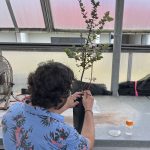
- An ʻŌhiʻa Disease Resistance Program staff member demonstrates the process of inoculating an ʻōhiʻa seedling with rapid ʻōhiʻa death at the program’s nursery on the Big Island. The innoculations are being done as tests for resistance to the fungal disease. (Photo Courtesy: ʻŌhiʻa Disease Resistance Program/Maui Invasive Species Committee)
- ʻŌhiʻa seedlings are propagated at the ʻŌhiʻa Disease Resistance Program greenhouse near Hilo until they are big enough to be screened for rapid ʻōhiʻa death. (Photo Courtesy: ʻŌhiʻa Disease Resistance Program/Maui Invasive Species Committee)
“We’re here, we’re fighting and there is hope.” Belcher said.
The ʻŌhiʻa Disease Resistance Program relies heavily on grant funding and donations to do its work. Learn more about the program and support its research online.
You can also help by learning the symptoms of rapid ʻōhiʻa death — sudden browning, wilting and dieback — as well as reporting any signs to Big Island Invasive Species Committee, Hawaiʻi Department of Agriculture and Biosecurity or 643PEST.org.
EDITOR’S NOTE: This was written by Maui Invasive Species Committee staff as part of a monthly series of articles written by the committee and published on Maui Now, a sister website to Big Island Now, to highlight issues surrounding invasive species in the Maui community.
Sponsored Content


Subscribe to our Newsletter
Comments