



2 new invasive coconut rhinoceros beetle breeding sites discovered in Kona
Two breeding sites of the invasive palm tree-killing coconut rhinoceros beetle were recently discovered in West Hawaiʻi.
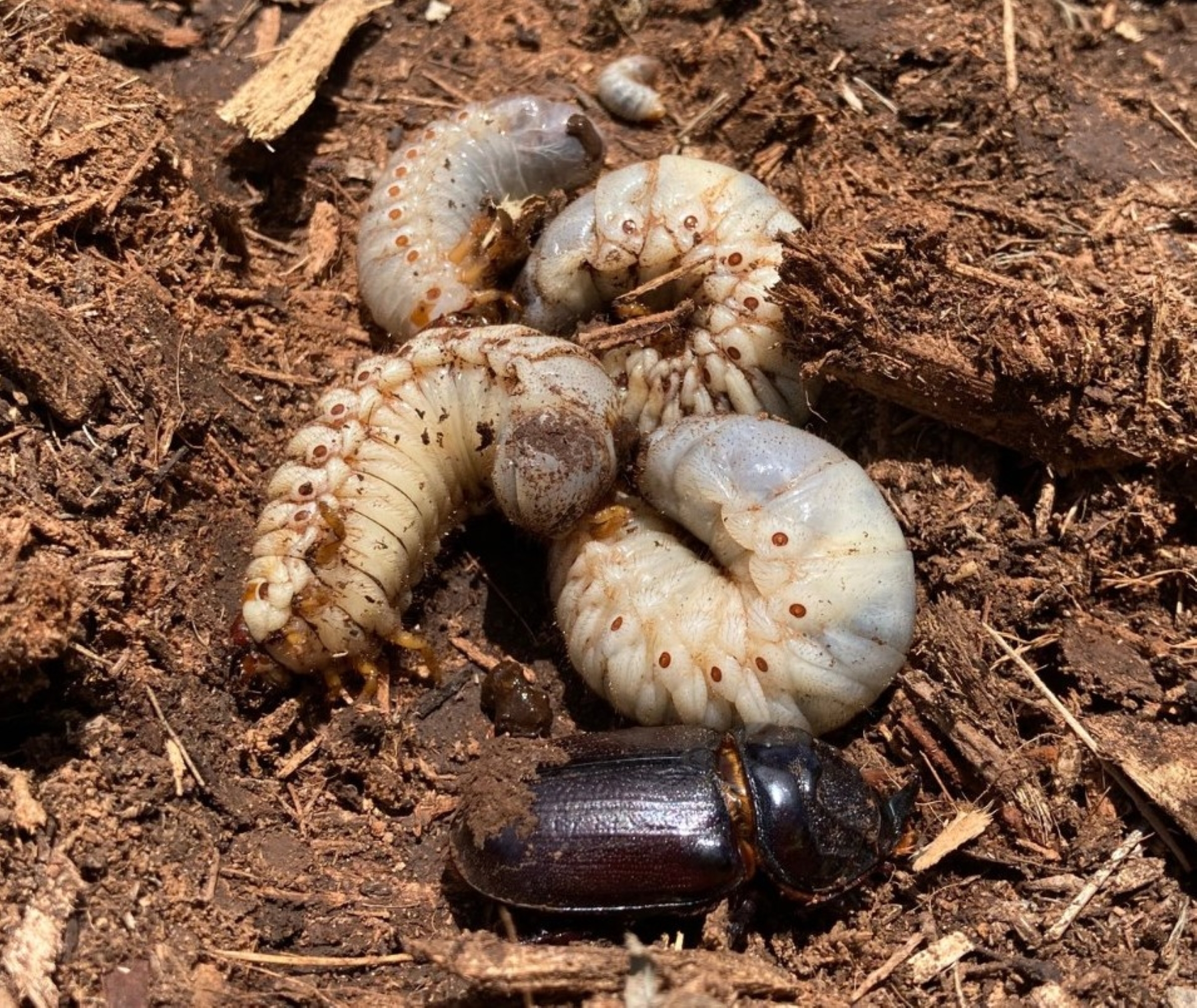
The sites were found last week in Kona during detection surveys, triggering an interagency response effort between state, county and nonprofit partners Hawaiʻi County, Hawaiʻi Department of Agriculture and Biosecurity, Hawaiʻi Department of Land and Natural Resources and Big Island Invasive Species Committee to eradicate the invasive insect.
Treatment for these sites is underway, and detection surveys for other potential breeding sites are ongoing.
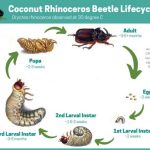
Their discovery brings the total number of breeding sites found on Hawaiʻi Island to three since the invasive beetle was first detected here nearly 2 years ago, when a Waikōloa resident rooted out several coconut rhinoceros beetle grubs from inside a decaying palm tree stump on their property.
“Intra-agency collaboration is critical to preventing the invasion and establishment of [coconut rhinoceros beetle] on the Big Island,” said University of Hawaiʻi College of Tropical Agriculture and Human Resources Dean Parawinder Grewal in a release from the state about the breeding site detections. “We must use all our available resources and intellect. Failure is not an option.”
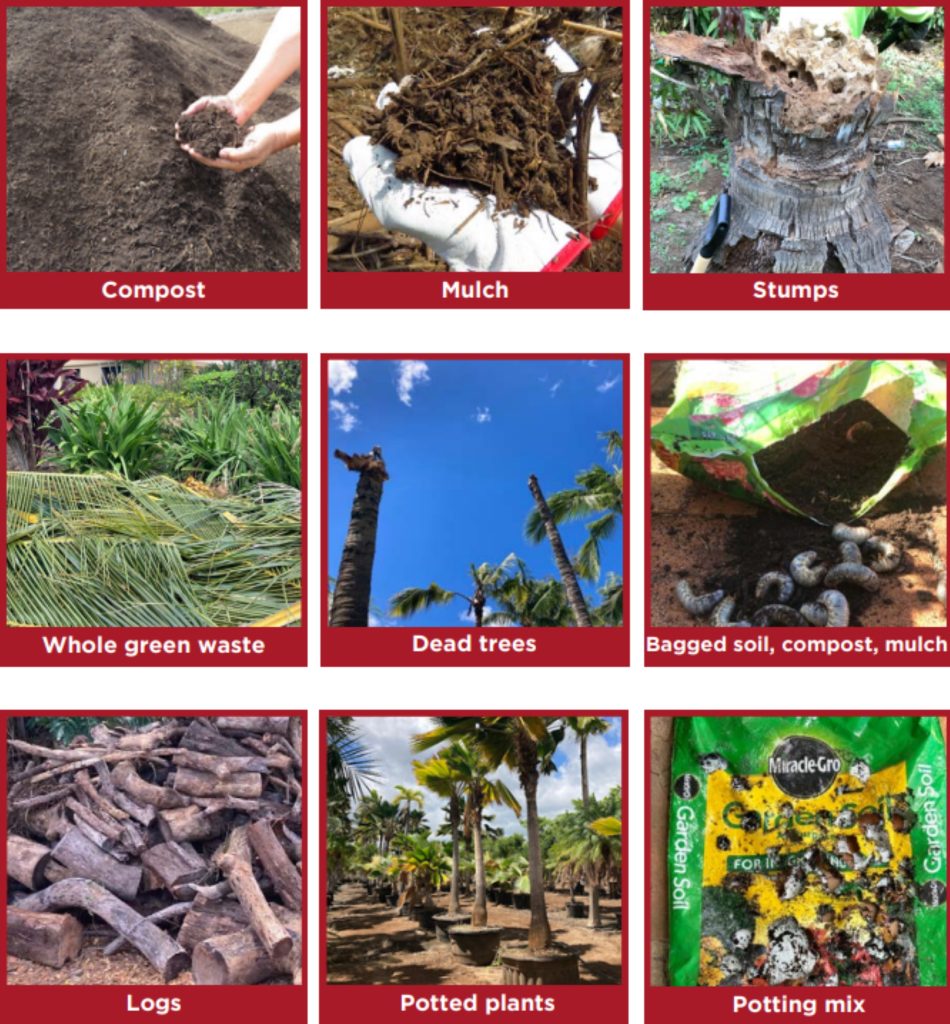
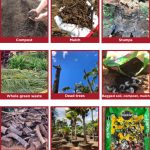
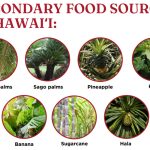
Underscoring the severe impact capable from this invasive species, Hawaiʻi County and Department of Agriculture and Biosecurity issued a 3-month voluntary compliance order to stop the movement of the coconut rhinoceros beetle host materials — which includes compost, wood or tree chips, mulch, plant propagation material, some landscaping materials and several live palm types — for a portion of West Hawaiʻi.
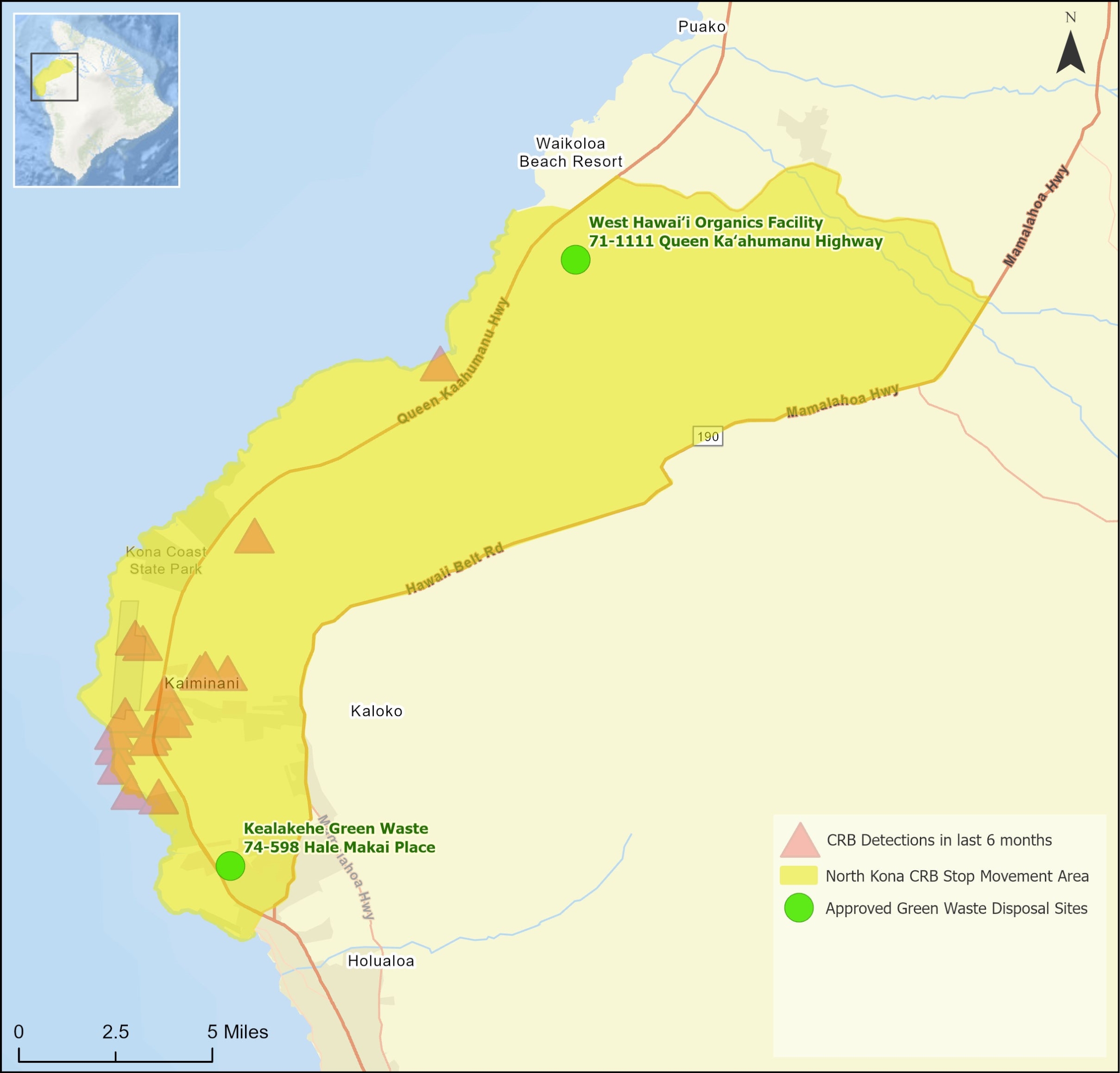
The order is in effect through September and encompasses the area of West Hawaiʻi where coconut rhinoceros beetles have been found during the past 6 months.
An adult beetle was captured in March by a trap at Ellison Onizuka Kona International Airport, initiating an intensive trapping effort for the surrounding area.
Thirty adult coconut rhinoceros beetles have been caught since, with one beetle trapped as far north as Kīholo Bay.
Recent actions taken to protect West Hawaiʻi and prevent the spread of the beetle extend beyond state and county agencies to include residents, local businesses and community organizations.
Activities include the removal of green waste and other decaying plant matter ripe for coconut rhinoceros beetle breeding, deploying more traps in the surrounding area and organizing multiple surveys with scent detection dogs.
Thousands of cubic yards of potential host material have been inspected since March, and so far only the two new breeding sites were discovered.
Combined efforts have led to the deployment of nearly 400 traps and treatment of 1,300 palm trees to prevent coconut rhinoceros beetle damage. Public outreach in the Kona area also continues, ensuring greater community awareness and engagement moving forward.
Active management of the invasive beetle on the Big Island began immediately after its first detection in October 2023 with the discovery of those six larvae at the Waikōloa property.
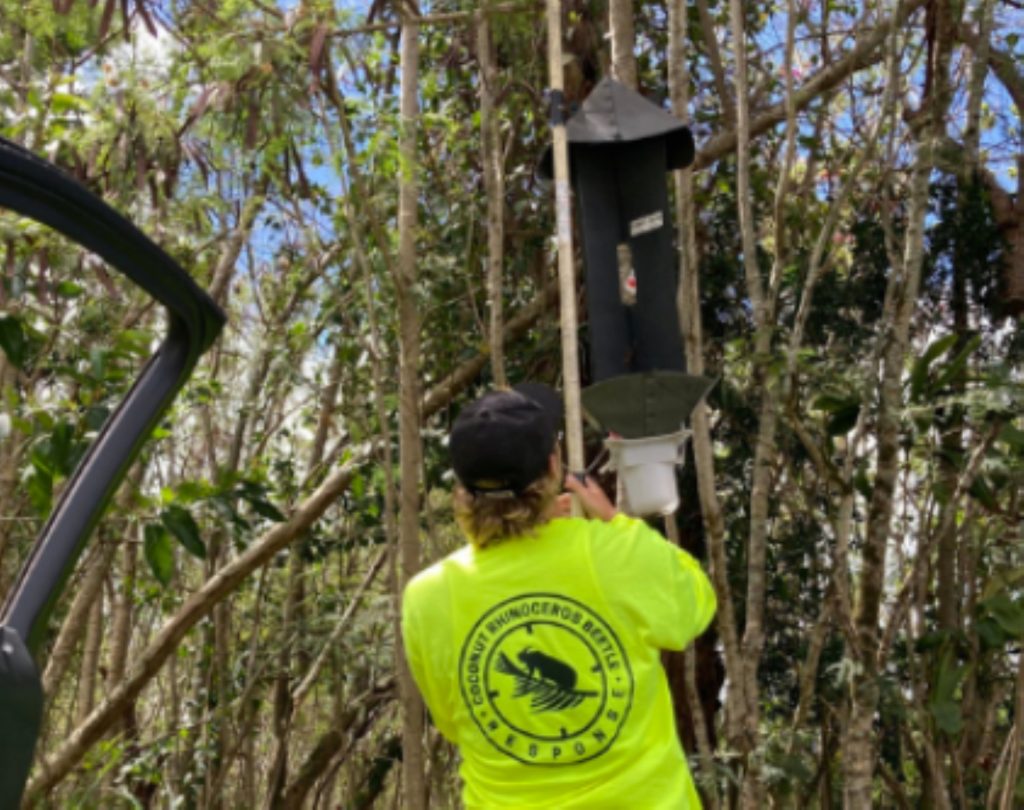
 Working with a coconut rhinoceros beetle trap. (Image Courtesy: Hawaiʻi Department of Land and Natural Resources communications materials)
- Coconut rhinoceros beetle host material examples. (Images Courtesy: Hawaiʻi Department of Land and Natural Resources communications materials)
- (Image Courtesy: Hawaiʻi Department of Land and Natural Resources communications materials)
- (Image Courtesy: Hawaiʻi Department of Land and Natural Resources communications materials)
- (Image Courtesy: Hawaiʻi Department of Land and Natural Resources communications materials)
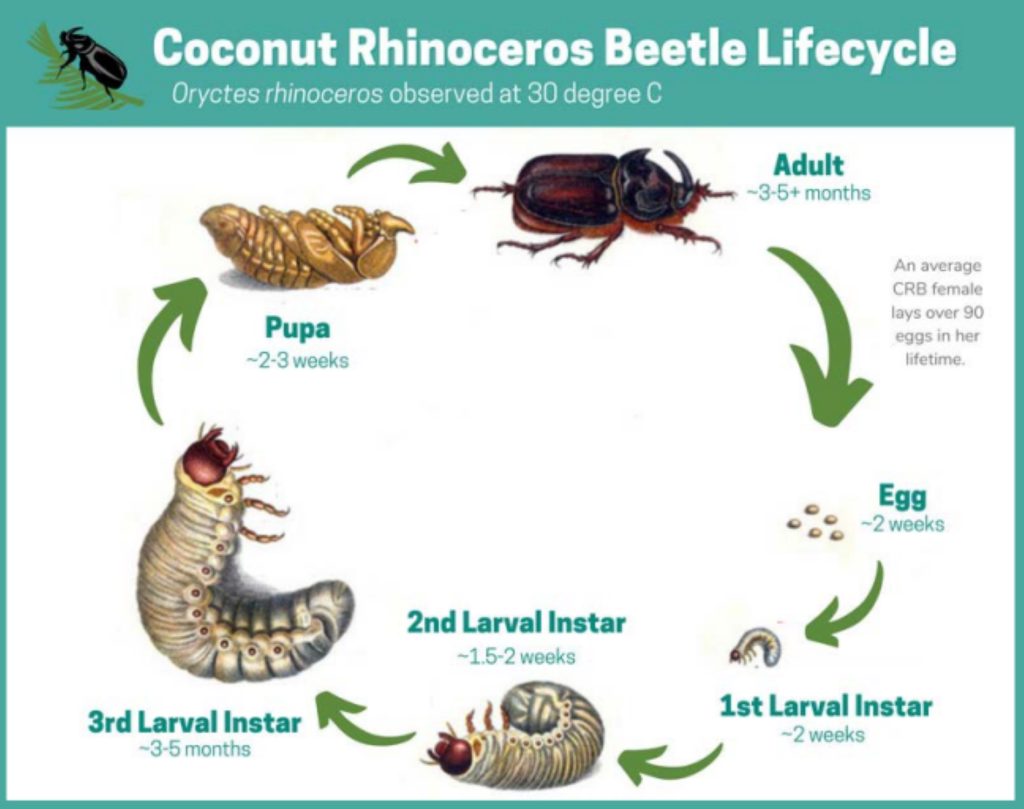
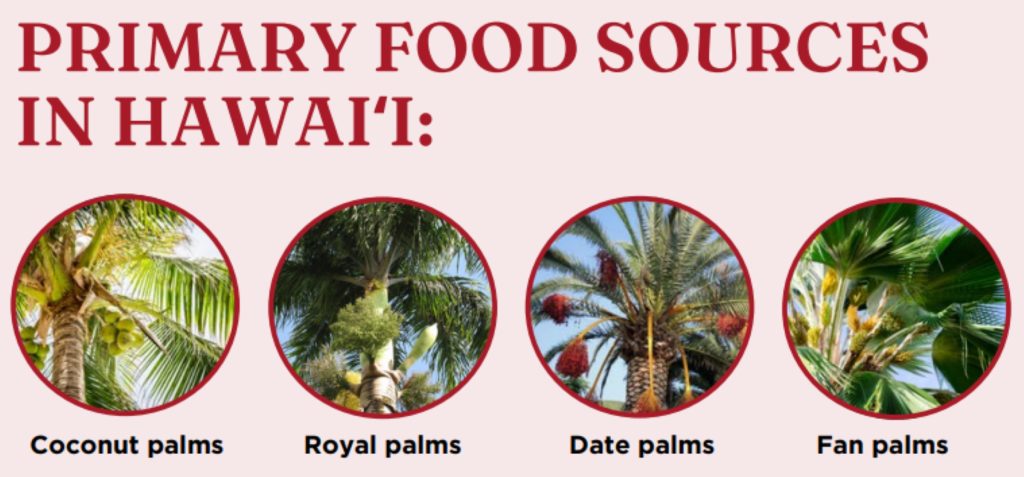
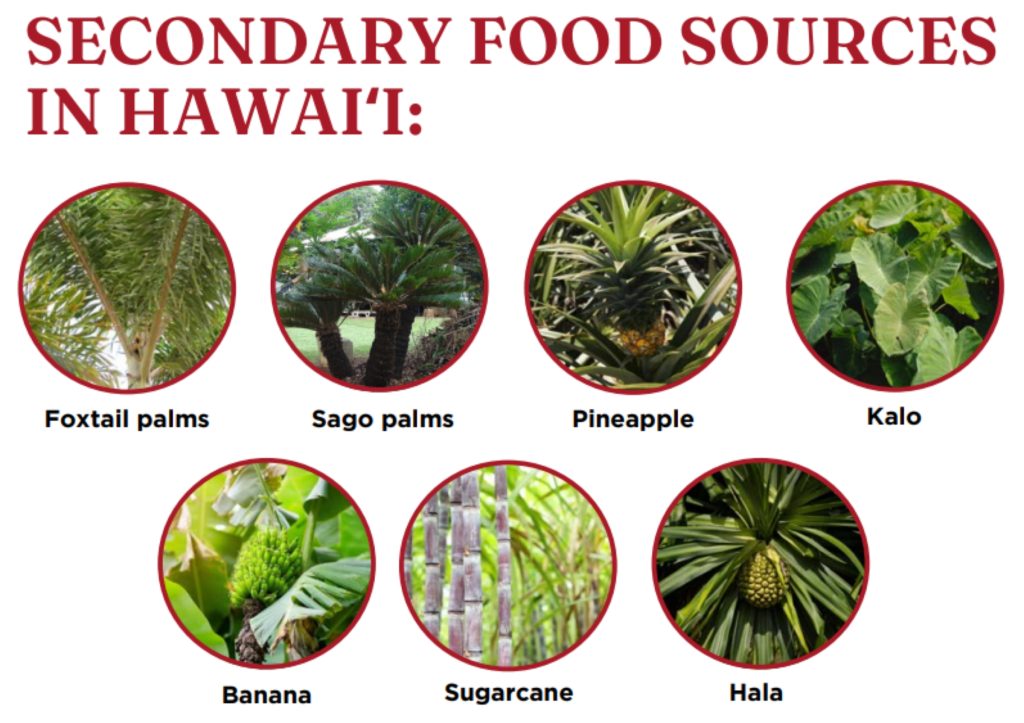

Possible coconut rhinoceros beetle infestations should be reported to 643PEST.org or the Hawaiʻi toll-free Pest Hotline at 808-643-PEST (7378).
Visit the Coconut Rhinoceros Beetle (CRB) Response website for more information about the invasive insect. CRB Response is a grant-funded organization managed by University of Hawaiʻi.
Get additional information about the voluntary compliance order to stop the movement of the beetle’s host materials in West Hawaiʻi by visiting the Hawaiʻi Department of Agriculture and Biosecurity website.
Sponsored Content

_1770333123096.webp)

Subscribe to our Newsletter
Comments