



‘It’s a way of living’: UH study connects spearfishing to wellness, culture, community

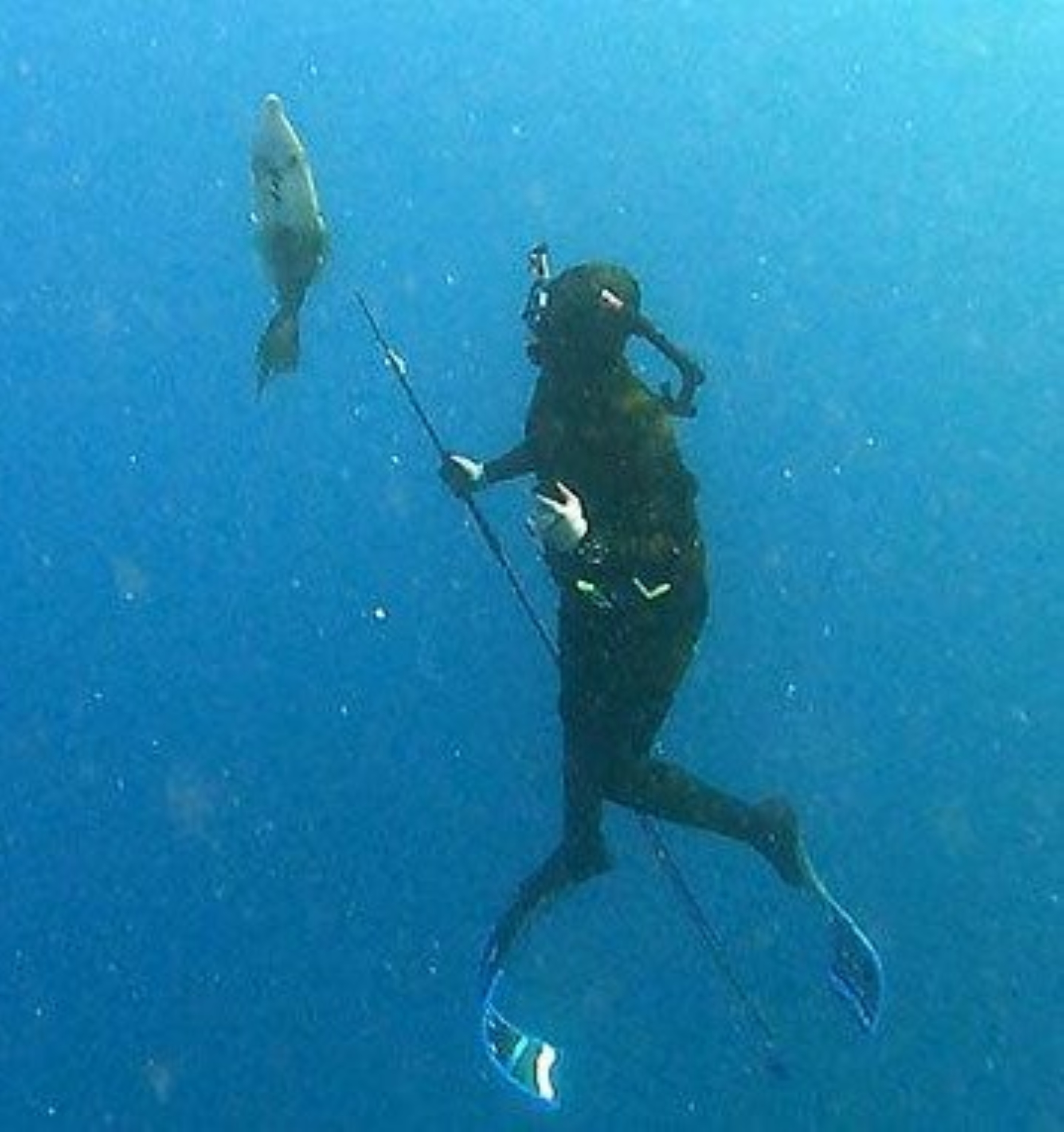
A new study by researchers at University of Hawaiʻi at Mānoa highlights how a practice deeply rooted in Hawaiian tradition promotes food security, physical activity, cultural identity and community well-being.
Published in “PLOS One”, the study on spearfishing analyzed data from the 2019 and 2020 Hawaiʻi Behavioral Risk Factor Surveillance System survey. It found roughly 1 in 4 adults in the islands have participated in the sport.
Participation was especially high among Native Hawaiians (43%), other Pacific Islanders (36%), American Indian or Alaskan Native individuals (32%) and Japanese residents (26.2%).
Rural residents in the state also were those who spearfish the most, especially on Lānaʻi (51%) and and Molokaʻi (43%).
“Our findings highlight just how widely practiced spearfishing is among indigenous and rural communities in Hawaiʻi,” said Lauryn Hansen, who led the study together with University of Hawaiʻi at Mānoa Department of Public Health Sciences professor Catherine Pirkle.
Men were four times more likely than women to report having spearfished. All age groups reported similar lifetime engagement.
The study also found that those who spearfished were more likely to meet physical activity guidelines.
Hansen is a 2023 University of Hawaiʻi at Mānoa graduate with a master’s degree in public health and current Grau Fellow with Hawaiʻi Sea Grant.
She added that recognizing and supporting activities that celebrate cultural identity, such as spearfishing, allow public health strategies to be developed that align with community values.
“Spearfishing is more than a sport, it’s a way of living,” said lifelong spearfisherman and University of Hawaiʻi Institute for Biogenesis Research scientist Rodrigo Barbano Weingrill. “Especially in Hawaiʻi, where keiki learn pretty young in their lives.”
Weingrill said children often take on the sport as more of a way to bring home food for their families instead of just a hobby.
Spearfishing remains an intergenerational tradition in many indigenous and rural communities throughout the islands.
Researchers think by bridging tradition and modern health strategies, the new study can provide a base and strategies for effective and culturally meaningful public health programs to the communities they serve.
Its findings were presented at the International Society for Physical Activity and Health Congress in Paris.
The project, in collaboration with the Hawaiʻi Department of Health and University of Hawaiʻi faculty members Tetine Sentell and Yan Yan Wu, supports the Public Health Resonance Project goal of promoting culturally relevant physical activities.
It is also supported by the Chin Sik & Hyun Sook Chung Endowed Chairperson in Public Health Studies Fund of University of Hawaiʻi Foundation.
Related research from the same collaboration also highlighted the health benefits of hula and outrigger canoe paddling.
Sponsored Content

_1770333123096.webp)

Subscribe to our Newsletter
Comments