


Bacteria advisory in effect for waters near Kailua Pier Station A-1 in Kona
State health officials advise the public about an exceedance of enterococci, or fecal bacteria, at Kailua Pier Station A-1.
Levels of 137 per 100 mL were detected at the state water quality beach monitoring station near the intersection of Palani Road and Aliʻi Drive in Kailua-Kona, on the mauka side near the pier entrance.
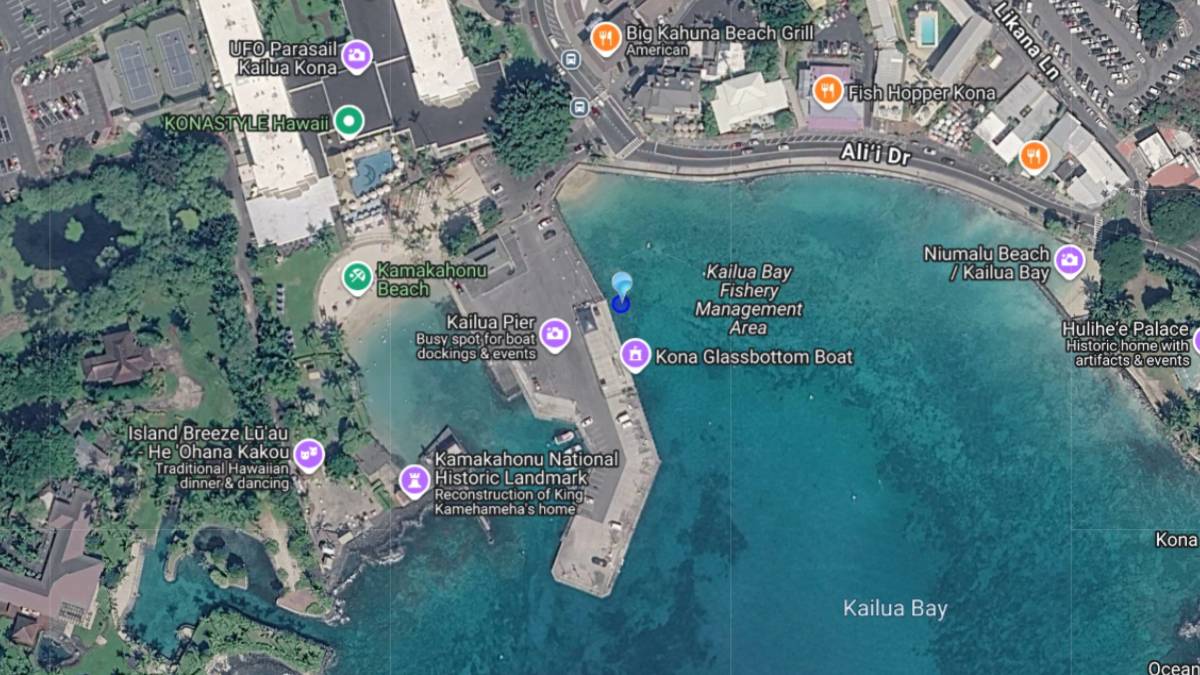
The advisory is posted because testing indicated potentially harmful microorganisms such as bacteria, viruses, protozoa or parasites could be present in the water.
It will remain in effect until water sample results no longer exceed the an acceptable threshold of 130 enterococci per 100 mL.
Swimming at beaches with pollution in the water can cause illness.
Children, the elderly and people with weakened immune systems are most likely to get sick or develop an infection after coming into contact with polluted water, usually while swimming.
Swimming-related illnesses can be unpleasant; however, they usually are not very serious, require little or no treatment or get better quickly upon treatment with no long-term health effects.
The most common illness associated with swimming in water polluted by fecal pathogens is gastroenteritis, which can have one or more of these symptoms: nausea, vomiting, stomachache, diarrhea, headache or fever.
Other minor illnesses associated with swimming include ear, eye, nose and throat infections. In highly polluted water, swimmers can occasionally be exposed to more serious illnesses.
Click here for additional information.