


100 Kaʻū households get few answers about water, sewer nightmare during Public Utilities Commission meeting
Punaluʻu Water and Sanitation provided no plans for restoring essential services to two condo communities that have been without drinking water and sewer since Hurricane Lala caused damage nine weeks ago.
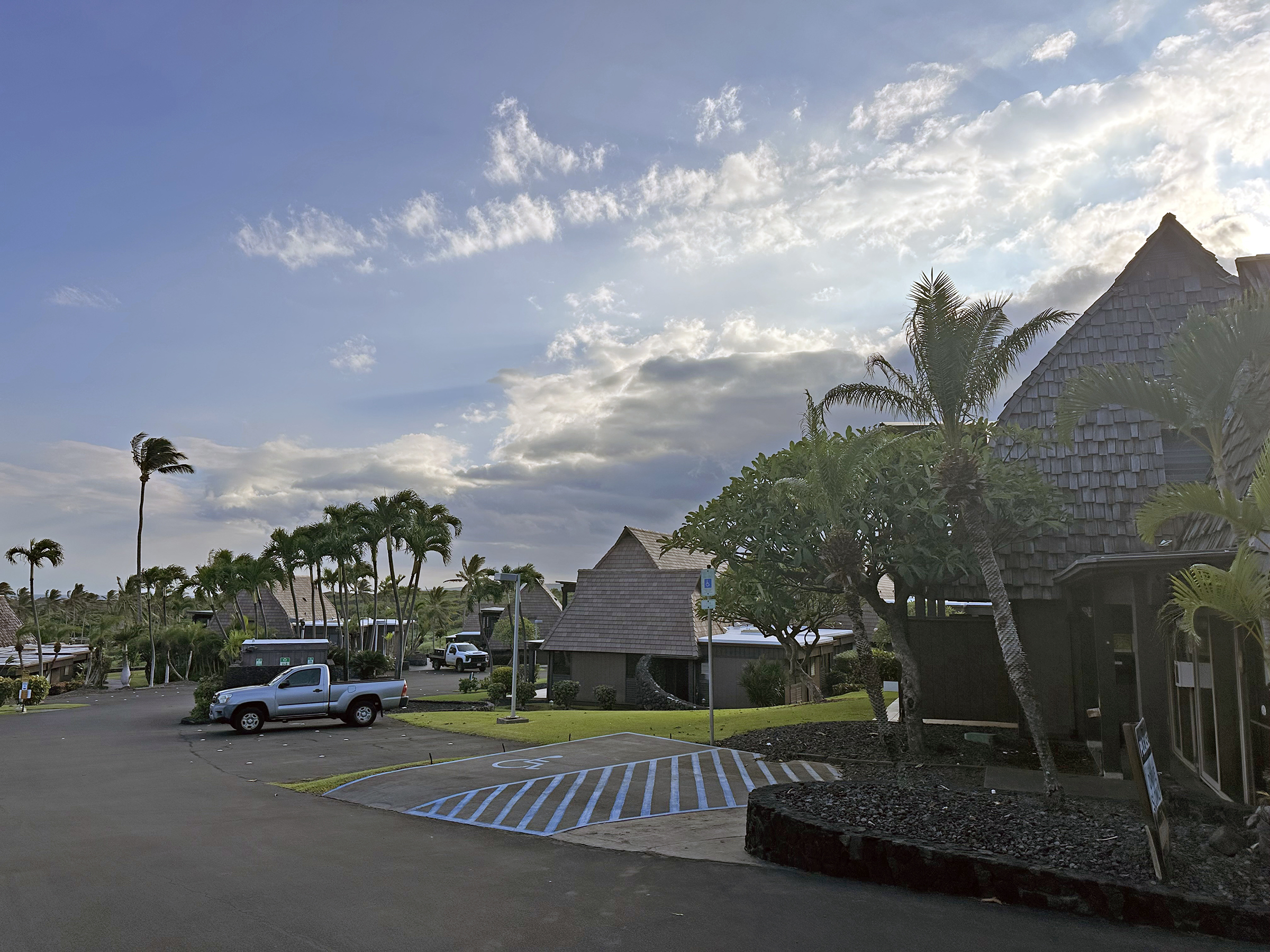
They came to the Hawaiʻi Public Utilities Commission meeting in Pahala to get answers.
But for the people who live in the condo communities of Colony I and Kalana Estates in Kaʻū, they left the Monday meeting no closer to knowing when they will finally have their drinking water and sewer restored.
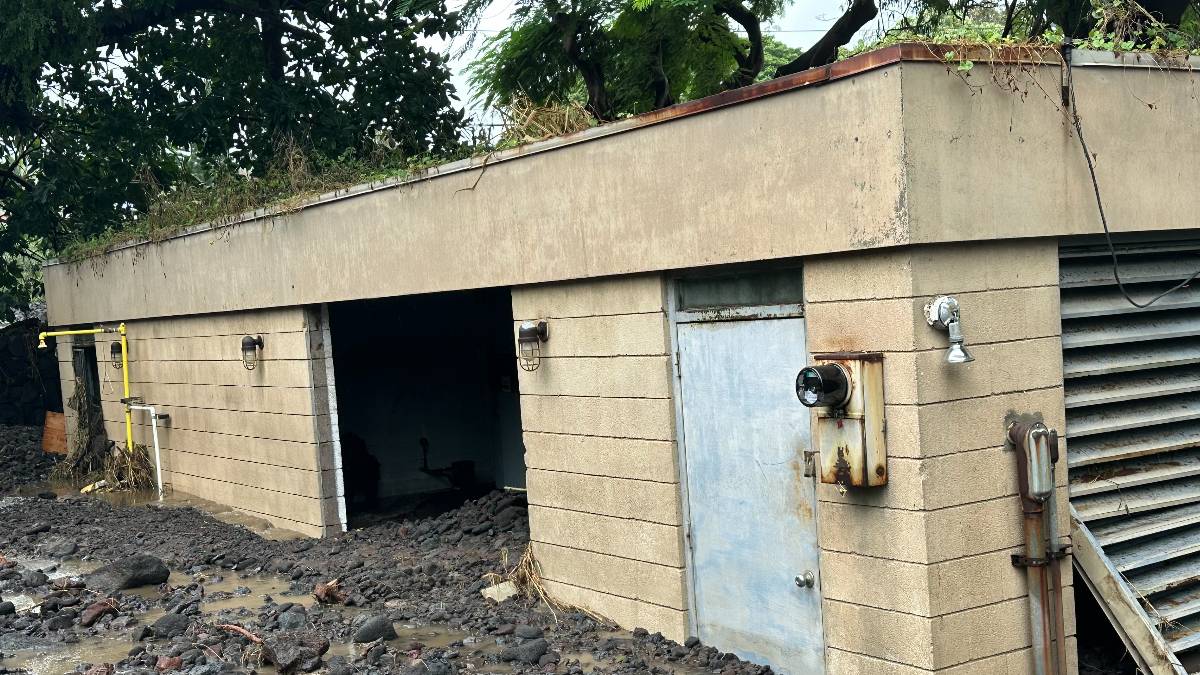
The nearly 100 units have been without those necessary services for 10 weeks, since Hurricane Lala severely damaged a well and infrastructure of the privately owned Punaluʻu Water and Sanitation that provides utilities to those condo complexes.
Colin Sakumoto, a lawyer for the private utility’s owner Eva Liu, said at the meeting it would cost an estimated half a million dollars to make the necessary repairs and upgrades to restore potable water services, adding that is money that is not currently in the budget.
“Securing a half million dollars when you’re not even providing water to the customers — that’s unlikely to happen,” Sakumoto said. “For this reason, there is no projected timeline of how that will be restored. I’m being absolutely blunt: There is no projected timeline.”
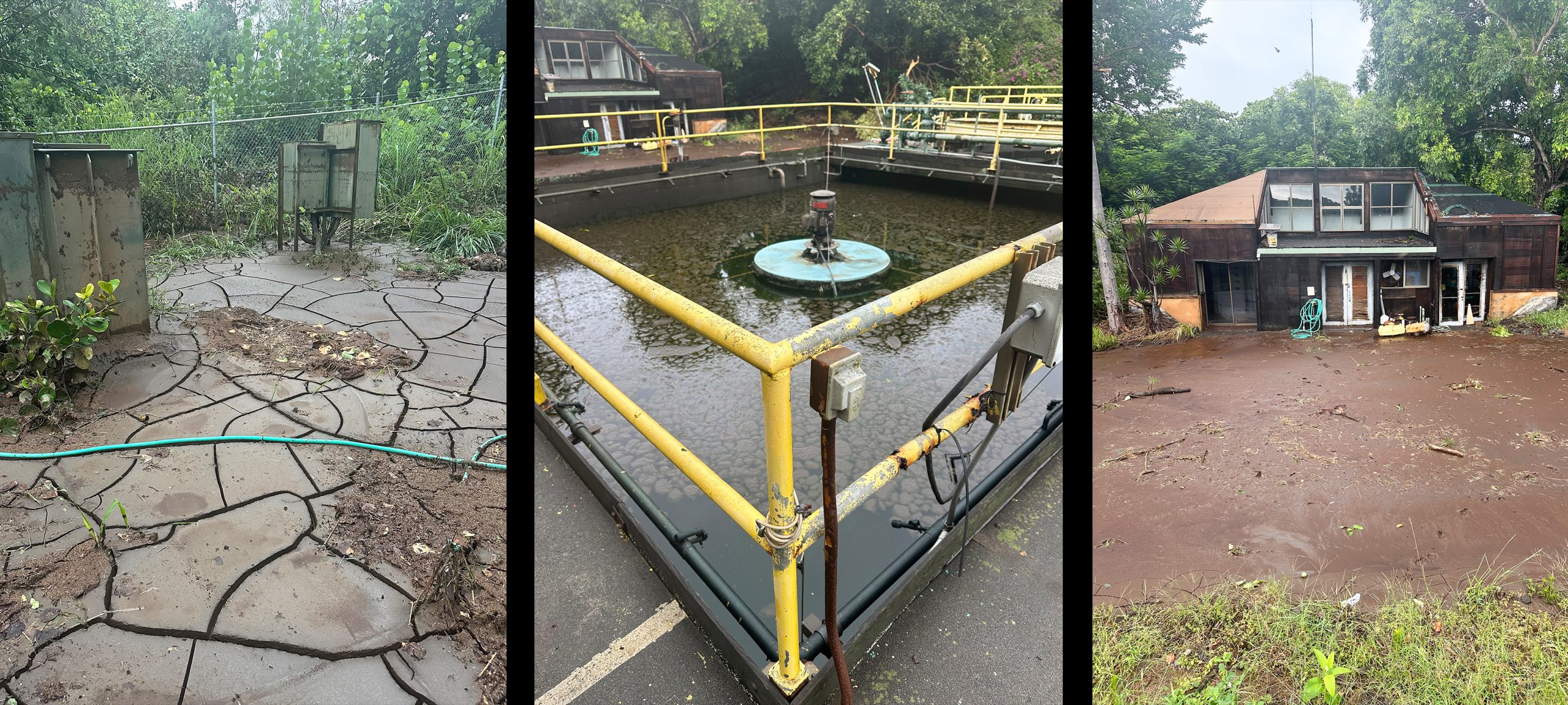
As for the wastewater treatment system, Sakumoto said it was closer to being functional and just needed power to be restored to begin operating.
But Commissioner Colin Yost asked how it would work without water. Sakumoto said toilets would need to be manually filled by residents.
“The solution to that is nonpotable water sites where they can fill and then refill again,” Sakumoto said. “That’s what we have. Without restoring potable water systems, that’s the only way.”
Sakumoto said the company was in talks with Hawaiʻi County — which is in the process of purchasing the nearby Punalu‘u Black Sand Beach Park, which is also owned by Liu — about the possibility of providing support for the water system.
“One of their primary concerns is that there’s no working water or bathrooms at Punalu‘u Black Sand Beach,” Sakumoto said. “For this reason, (the county) has expressed interest in taking over, potentially — again, that’s still in preliminary discussions.”
Hawaiʻi County Mayor Kimo Alameda said is a misconstrued conclusion to a conversation he had with Liu while they talked about the purchase of Punaluʻu Black Sand Beach.
“The county has never bought a privately-owned system. That would not be in our best interest,” Alameda said. “What I told Eva Liu, that there could be collaboration to find solutions. For example, they could temporarily become a customer of the county by utilizing the fire hydrant in Pāhala, finding a water hauler and filling their tanks. The county has similar deals with construction sites, so that would be a temporary solution for them.”
According to Jeff Silva, who owns a condo in the Colony I Condominiums and serves as the president of the Association of Apartment Owners of Colony I at Sea Mountain, this option was not brought up by Sakumoto during the meeting.
As Sakumoto updated the Public Utilities Commission and residents on the status of the wastewater plant, audience members grew frustrated at the lack of solutions and preparation done by Punaluʻu Water and Sanitation.
“This might as well have been an alien encounter,” Silva said. “The lack of care and callousness portrayed by PWS was incomprehensible. Monday was the first time in 27 years I have ever seen reactions from the (Public Utilities) Commission. Anyone could tell they were shocked by their lack of answers.”
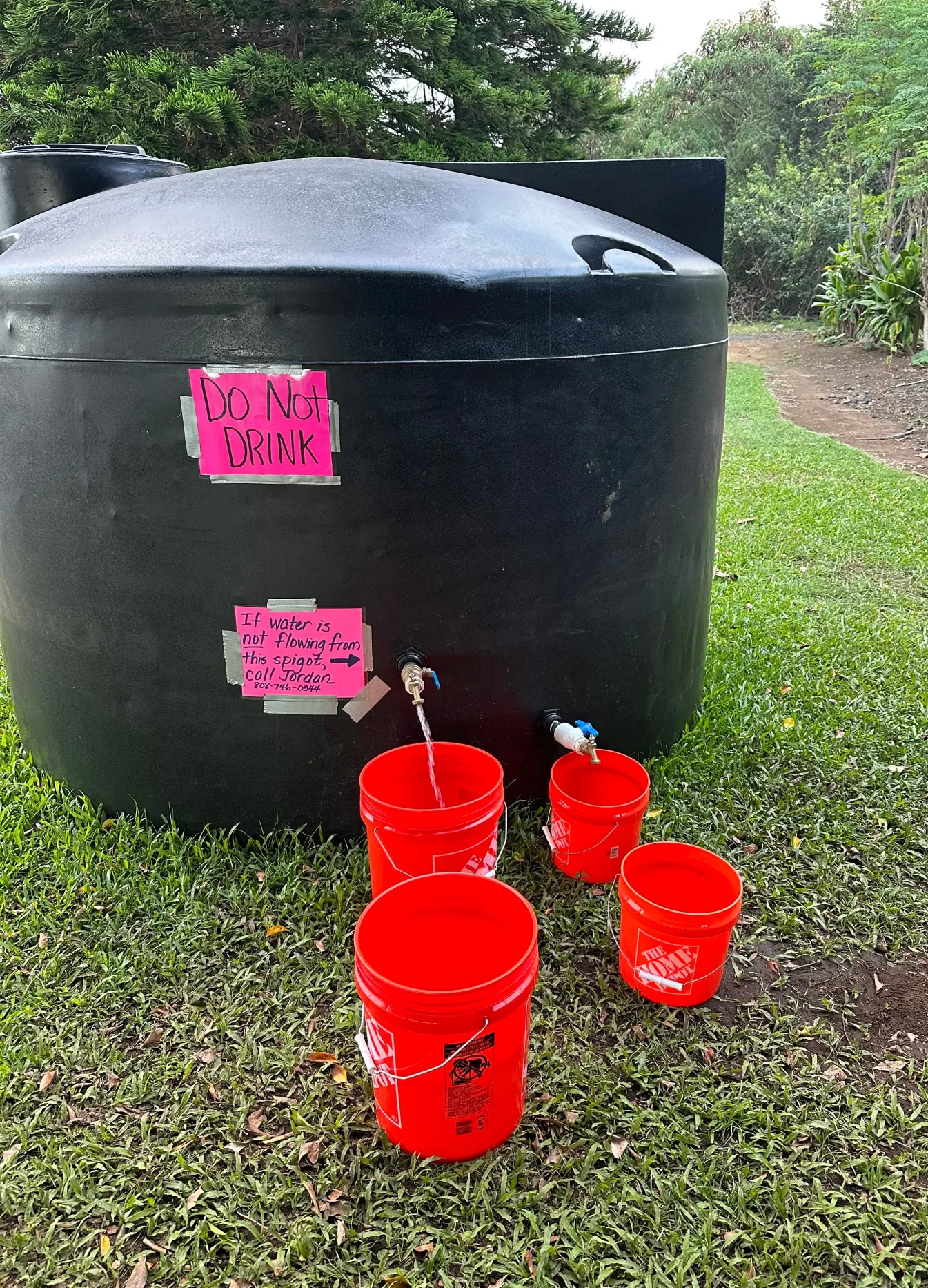
Silva, formerly an operator and advisor for Hawaiian Beaches Water Company and Wood Valley Water and Farm Cooperative, purchased water tanks with his personal credit card post-Hurricane Lala to provide water access for bathing and dishes. However, residents are growing weary, unable to live in homes where they continue to pay mortgages.
“There are a number of residents in a tough spot,” Silva said. “My neighbor is a disabled veteran, and we bring him gallons of water every day. Couples, elderly folks, and families are being forced into terrible situations, and they deserve answers.”
Kathleen and Chris Mumme, residents of Kalana Estates, said in the past 65 days customers have received exactly three official communications via email from Punaluʻu Water and Sanitation. They say the company offered no restoration plans or comments that expressed genuine respect or concern.
“We are a diverse community of mostly full-time residents in Kalana,” Kathleen Mumme said. “The majority are retired couples, several working families, including one with three small children; very elderly people, and a few disabled residents.
“This is our home. These are our biggest investments, which are quickly losing value. Imagine going week after week trying to get ready for work or get children ready for school, cooking and cleaning without running water, and using portable toilets in the middle of the night, often in the rain.”
Kathleen Mumme continued: “We are not whiners. We are managing, but this is no small thing. It all would have been easier to bear had Punaluʻu Water and Sanitation even tried to help. Instead, we have gotten little more than excuses for doing virtually nothing.”
During the meeting, Sakumoto explained that PWS had requested an engineering assessment to get a better understanding of the situation, but the company that they hired was not available until Nov. 17.
In the meantime, he said PWS had explored hiring a contractor to haul drinking water into Punalu‘u for its customers, but so far has not been able to reach an agreement with any water haulers on the island.
Before Monday’s meeting, the Public Utilities Commission provided Punaluʻu Water and Sanitation with 20 questions it expected to be answered.
This meeting was one of the first times affected residents could address Punaluʻu Water and Sanitation face-to-face since losing service on Aug. 15. During the public testimony, Sakumoto rarely lifted his head to look at the speakers and had very few answers to provide when asked by residents.
“Everyone kept their cool for the most part,” Silva said. “Of course, it got heated due to the circumstances, but it didn’t matter because no one’s questions were answered. However, one thing they did was reveal how unwilling and unable they are to run a water system.”
One resident asked if PWS would be reimbursing customers for the costs of hauling in their own water or renting porta potties. Sakumoto answered that it was not something the company could commit to at the time.
“Punaluʻu Water and Sanitation showed complete disregard for their customers by not being prepared in the slightest nor having anyone with true authority present at the meeting,” said Anthony Wolfgang Fritz, a resident of Colony I.
In 2025, Punaluʻu Water and Sanitation was granted a temporary rate increase with the Public Utilities Commission to help with repairs, maintenance and other expenses, increasing customer rates by $500 from May 2025 to May 2027.
Unfortunately, there is no proof the rate increases were used for any repairs, residents say.
“When they authorized the temporary increase in water bills, it may have been acceptable if repairs had been made to the infrastructure, but nothing was fixed,” said Nathan Yokum, a part-time resident of Colony I. “The wells remained vulnerable, the fire suppression at-risk. Money was paid, but services were not rendered. It was no surprise when Hurricane Lala finished what time and negligence had started.
“I understand Black Sand Beach LLC’s claim that repairs are too costly. However, they undertook a duty to provide an adequate system when they purchased the utilities and then required an increase in payment for the specific purpose of fixing the systems.”
As part of his testimony, Silva presented the Public Utilities Commission with Nīnole Wai Community Association as a nonprofit option to take over the water and sewer system operations.
Led by Silva, Nīnole Wai represents affected condo and property unit owners and announced it is “willing, able, and ready” to manage the utilities professionally on behalf of the community. However, Silva may need to file as an official 501(c)(3) before filing a formal petition with the Public Utilities Commission.
“I think the Commission is aware of our existence and appears to be supportive of it,” Silva said. “Punaluʻu Water and Sanitation is almost giving them no option. No for-profit company would take a liability like that. The community itself is the only one that would take on that responsibility because we all have a stake in it.”
There is support for this move from public comments filed with the Public Utilities Commission.
According to Silva, the only representative from the County of Hawaiʻi was Councilmember Michelle Galimba. Although Alameda has met with Liu regarding the Punaluʻu Black Sand Beach, there has been not been communication with residents of Colony I and Kalana Estates in several weeks.
Although it is uncomfortable, Silva is trying to motivate neighbors to stay at the Colony I condos for a couple of nights a week to prevent homelessness, squatting and theft.
“Even though I’m begging people to stay, I understand why they don’t if they have somewhere else to go,” Silva said. “There are only porta potties, you have to bathe outside, and it feels like a ghost town. Which begs the question for me – how does Punaluʻu not care?”
Sakumoto did not return a phone call for comment.
For more public comments and updates, visit the Public Utilities Commission website.