


Exhausted Ka‘ū residents still recovering from Hurricane Lala brace for Nolo
"It's like we've been beaten with a stick and we're getting beat again," said 62-year-old Owen Fritts, who owns a macadamia nut farm in South Point.
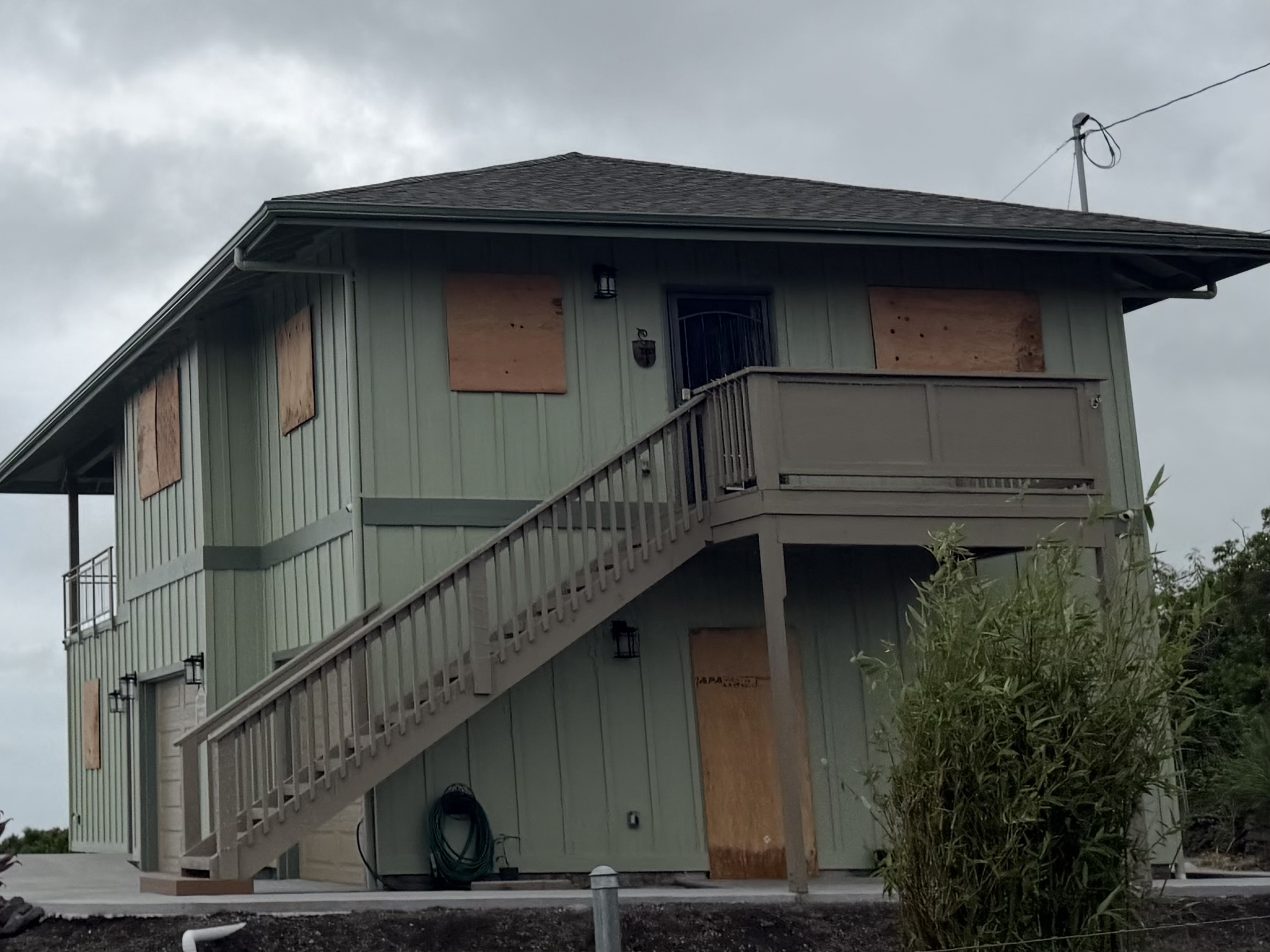
Panic is in the air in the rural district of Ka‘ū.
For the third time in six weeks, the small communities on the south end of the Big Island are in the path of a major storm. Hurricane Lala’s outerbands were devastating. Hurricane Lowell brought some more rain. And now, it’s Nolo, which meteorologists say could be the most damaging of them all.
“People are evacuating,” said Christine Inserra, a resident of Wai‘ōhinu. “The 76 station closed early on Wednesday, and gas lines were really long.”
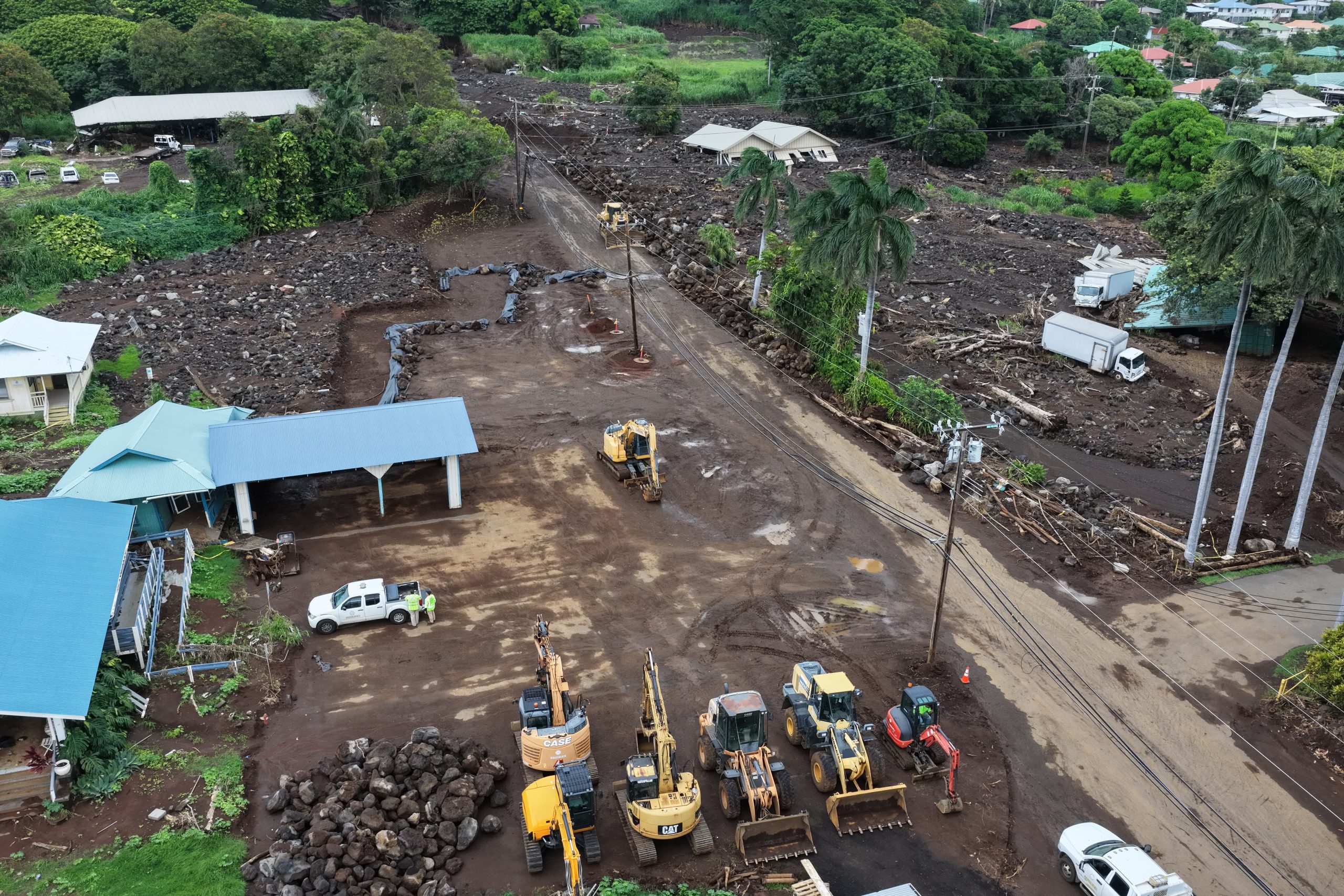
The residents and business owners are still cleaning up and recovering from the damaging winds, rainfall, storm surge and flash flooding brought by Hurricane Lala six weeks ago. The storm brushed up against Hawai‘i Island’s southern coastline on Aug. 15, bringing 40 inches of rain that created devastating flooding in Ka‘ū.
Homes were buried in mud, the Nā‘ālehu Cemetery had graves and headstones washed away and 3,000 linear feet of water lines were damaged or destroyed. Two beloved residents lost their lives.
Owen Fritts, who owns a macadamia nut farm with his partner Elizabeth Hellstern in South Point, said people in the community are in shock that another hurricane is coming so soon.
Right before Lala, Fritts said the energy was a little panicked as people prepared for the storm. This time, he said people are exhausted.
“It’s like we’ve been beaten with a stick and we’re getting beat again,” the 62-year-old said.
Hawaiʻi County Mayor Kimo Alameda said Thursday that the county has been working since the Kona low storms in March to clear culverts of the debris brought down with those storms’ floodwaters.
“That’s why it shocked us when Lala came and just took us out, because we cleared all those channels,” Alameda said. “That was 40 inches of rain. We couldn’t have prepared for that. That was just out of the norm.”
But, once again, Alameda said the areas under bridges and culverts have been cleared to allow water to flow down the mountains as Nolo churns ominously less than 300 miles south of South Point.
This time the county used the trees, boulders and debris that came down during Lala in the channels to create berms in Wai‘ōhinu, Nā‘ālehu and Pāhala.
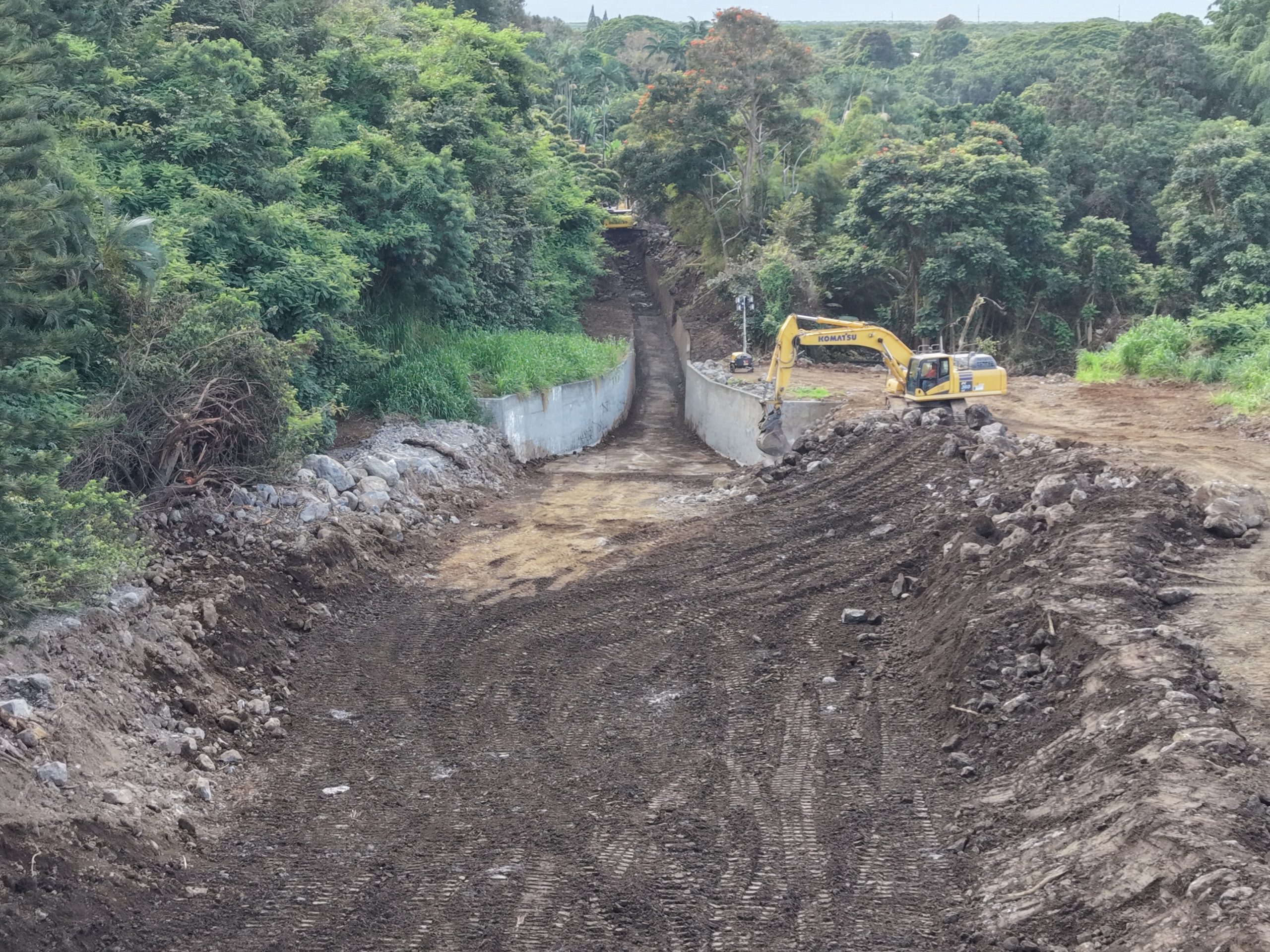
If the channels overflow again, the water will hit the berm and not go into the community.
“That’s the idea anyway,” Alameda said.
Keith Okamoto, manager and chief engineer for the Hawai‘i County Department of Water Supply, said there isn’t much the department can do except anticipate power outages, by pre-positioning generators at well sites, and filling up water tanks.
While the county has cleared much debris, Okamoto said there is still a lot of debris on the mountain that could come down with flooding.
“There’s plenty of opportunities for water to change course, and that’s what’s spooky,” Okamoto said.
During Lala, Hellstern said they lost their roof and several large trees, but their property wasn’t as severely affected as others they knew.
Hellstern said they’ve patched up the roof and set up their solar system. They are prepared to evacuate and camp out in their driveway if they have to, with go-bags and camping gear.
Fritts said he filled his gas cans and has his chainsaws ready if trees go down.
Fritts said most of the seniors in the community that could be in harm’s way have been evacuated.
Inserra is planning on waiting out the storm at home in Wai‘ohinu because she has animals. She has made preparations including freezing water in case the water system goes down again.
“Our house is on post-and-pier, and we do have hurricane straps on the roof,” she said, adding that the neighbors have been checking on each other. “We have a deal to check in in case anyone is cut off.”
Alameda said he understands residents’ desire to stay in their homes, “but in some cases it can become a trap,” he said. “We want people to recognize when it’s a trap and, for their own safety, to evacuate early. Don’t wait until the flood happens. That’s why we’re encouraging residents to seek shelters now.”
The county opened four shelters on Wednesday night where each had one person using the space. Alameda said the county is also offering shuttles to residents in Nā‘ālehu and Wai‘ōhinu to Pāhala.
“Now is the time to do it (evacuate) because once that rain becomes heavy, Kawa Flats at Highway 11, it floods pretty quickly, and we may not be able to cross,” he said.
The county also has set up additional Starlinks (for Internet connectivity) at the shelters as well as positioned a water buffalo in Nā‘ālehu in case the water system is compromised.