

New museum reflects the often overlooked deaf history, culture of Hawaiʻi
A new Deaf history museum at the University of Hawaiʻi at Mānoa's Hamilton Library exposes others to the Deaf community's language and traditions.
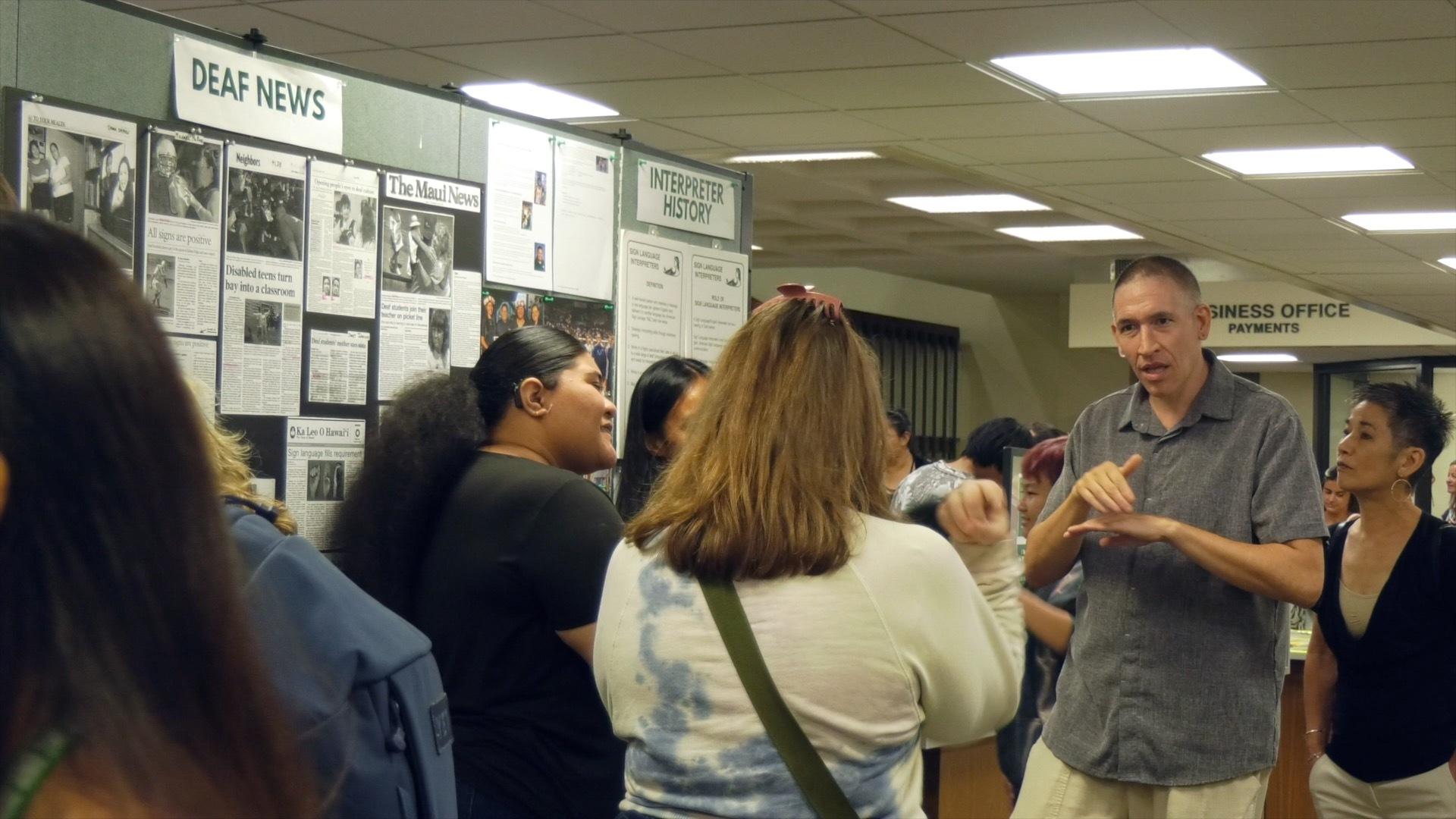
A new Deaf history museum at the University of Hawaiʻi at Mānoa is bringing a century of Hawaiʻi’s Deaf history, culture, and community into the heart of Hamilton Library.
The exhibit, “I ʻike ʻia, I lohe ʻia: Nā Moʻolelo o ke Kaiāulu Kuli o Hawaiʻi (To Be Seen, To Be Heard: The Stories of Hawaiʻi’s Deaf Community),” features artifacts, stories, and contributions from Hawaiʻi’s Deaf and hard-of-hearing community. It opened on Sept. 14 in recognition of Hawaiian History Month and Deaf Awareness Month.
“Deaf history is Hawaiʻi history. This museum keeps our stories alive so future generations can see where we came from, know who we are, and proudly say this is my history,” said Ed Chevy, a Deaf historian and curator of the museum.
The Deaf community came together for a grand opening ceremony at Kennedy Theatre, filled with sign language musical performances and a keynote by Yvette I. Ibarra-Keohuloa, a Deaf descendant of Hawaiian high-ranking chiefs Kameʻeiamoku and Kamanawa, trusted advisors to King Kamehameha I.
Ibarra-Keohuloa shared her moʻokūʻauhau (genealogy), moʻolelo (stories), and manaʻo (perspectives).
“Deaf people have always been a part of Hawaiʻi—our families, our communities, our culture, and our stories,” Ibarra-Keohuloa said. “Our experiences may not always have been recognized, but that does not mean we are not here.”
The celebration also marked the first Deaf show presented on Kennedy Theatre’s main stage.
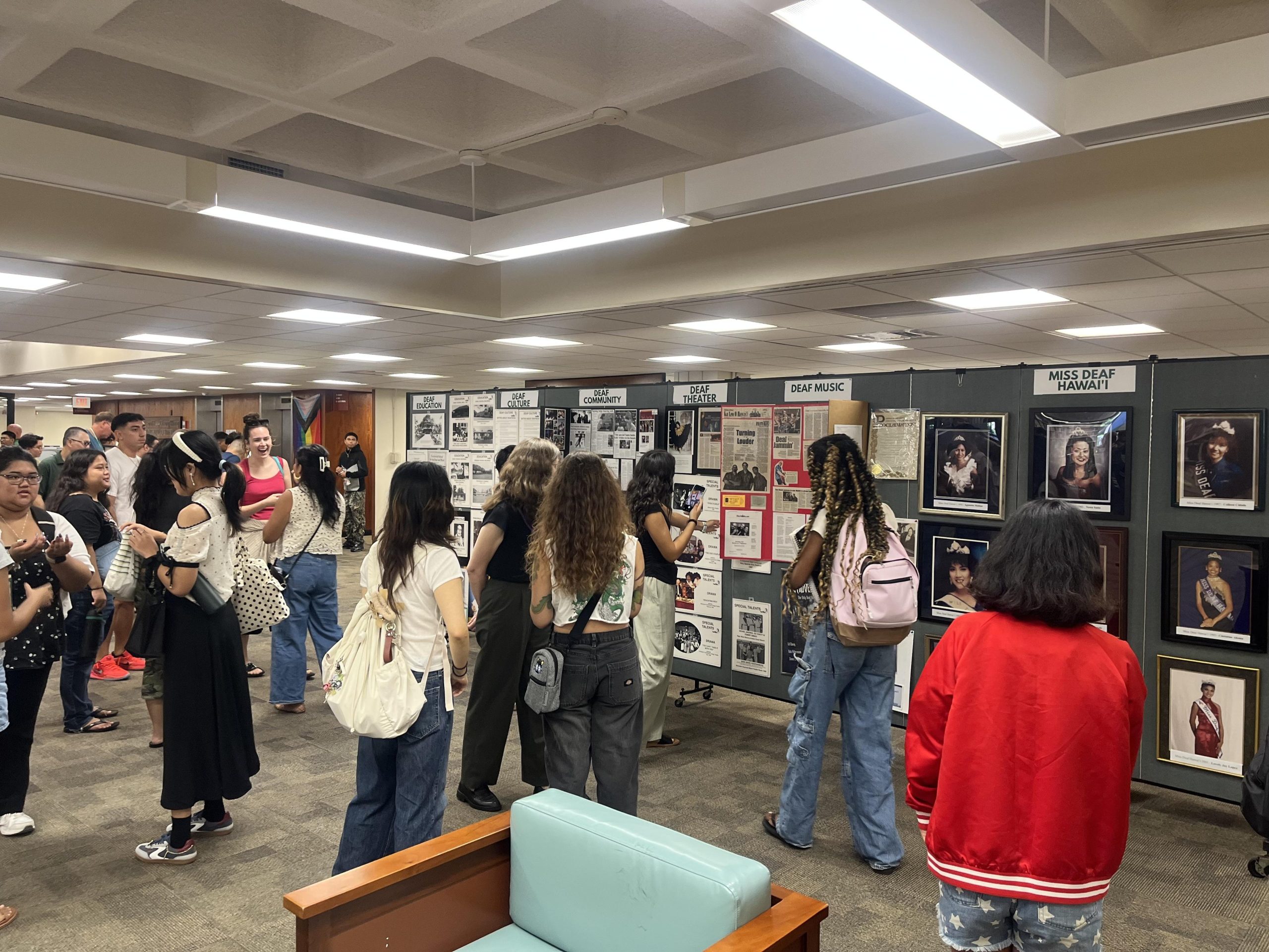
Deaf community members and advocates express that Deaf history and culture have often been overlooked, leaving many people in Hawaiʻi with limited exposure to the community’s language, experiences, and traditions. The museum aims to help close that gap by making those stories more visible and accessible to a broader audience.
Interest in American Sign Language (ASL) and Deaf culture has been growing at the University of Hawaiʻi at Mānoa.
This fall marked the launch of a new path for students, a standalone Bachelor of Arts in linguistics with a concentration in ASL.
Interest in ASL courses at the University of Hawaiʻi at Mānoa has surged in recent years. Enrollment has grown by 1,400% in six years, from 19 students in spring 2019 to 265 in fall 2025. Demand continues to exceed capacity, with long waitlists for courses.
A 2024 survey also found that 94% of ASL students are interested in pursuing a bachelor’s degree in ASL-English interpreting.
“Once, our languages were silenced. Today, we celebrate them openly. Both of my parents are Deaf, and they told me how sign language was discouraged in their school,” said University of Hawaiʻi at Mānoa ASL instructor Gisella Tomita. “Hawaiʻi also has a history of suppressing ʻŌlelo Hawaiʻi (Hawaiian language) in schools and public life.”
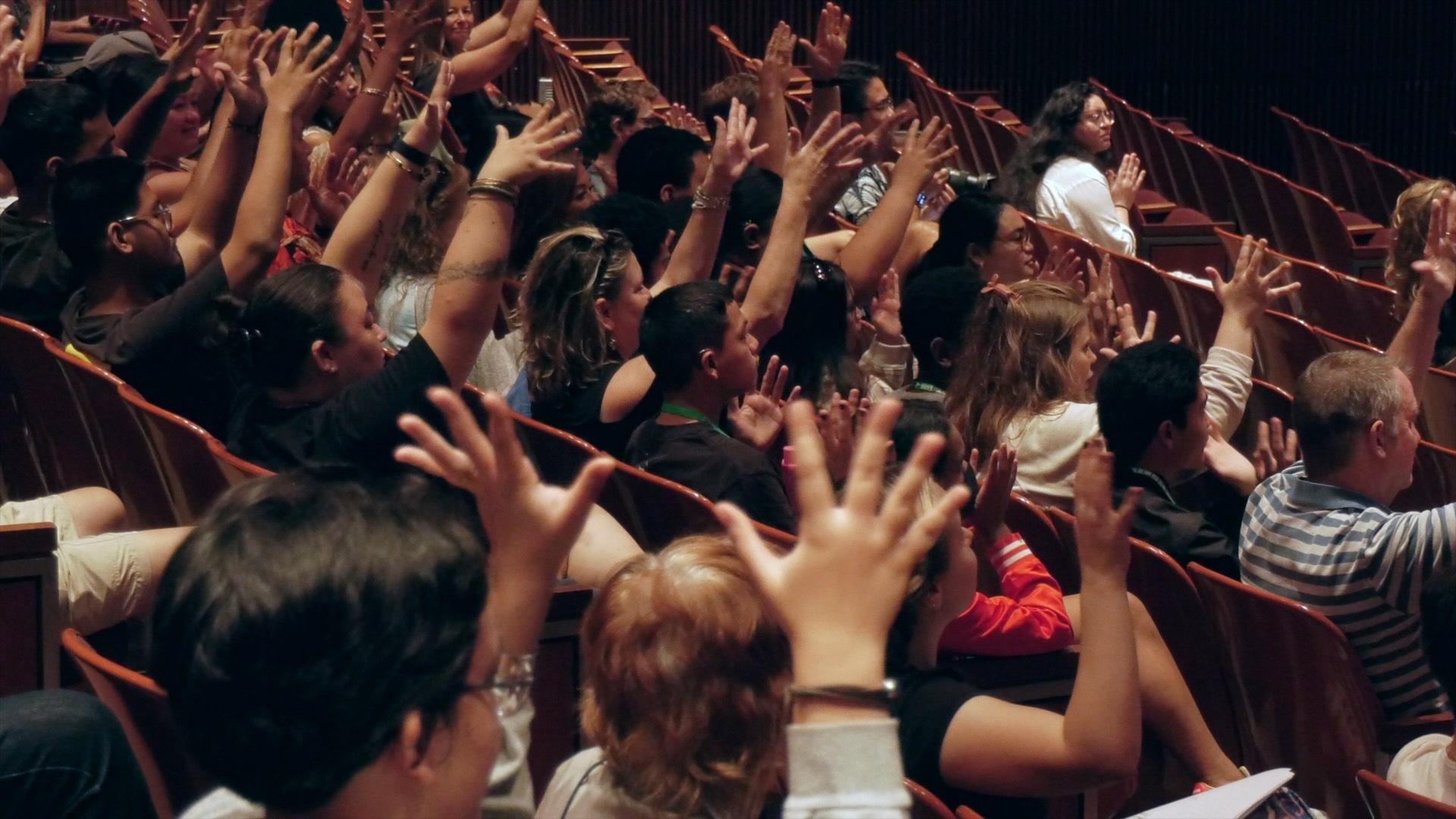
Tomita, who is one of three Deaf instructors of ASL at the University of Hawaiʻi at Mānoa, came up with the idea to bring the museum to Hamilton Library, placing it in the heart of the university in order to create space for greater awareness, connection, and inclusion—inspiring students to carry those values into their future professions.
“There’s something special about connecting with other Deaf and hearing Hawaiians and locals. We share culture, history, and experiences that connect us to Hawaiʻi,” Tomita said. “Deafness may be invisible, but when we sign, we find each other. When hearing people are willing to learn and connect, we unite our two worlds.”