

Candidates for Ka‘ū District seat on Hawai‘i County Council talk priorities for rural and remote area
The five candidates are running for the seat being vacated by Michelle Galimba, who decided not to seek re-election.
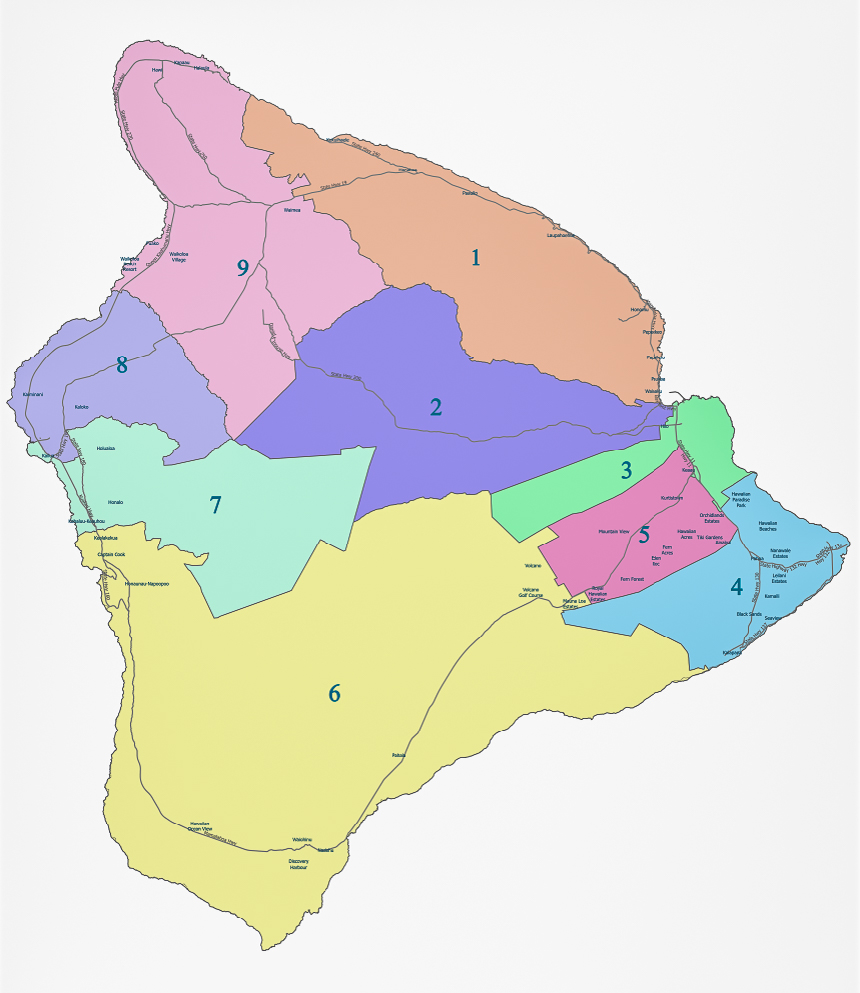
The Ka‘ū District of Hawai‘i Island has long been described as one of the last remaining vestiges of old Hawai‘i, with its 80 miles of undeveloped coastline and home to the Hawai‘i Volcanoes National Park, Punalu‘u Black Sand Beach and South Point, the southernmost tip of the United States.
The residents of the communities residing in District 6 love the area for its rural feel, remote lifestyle and ranching and farming economy.
But the district, which boundaries run from South Kona to Volcano, has its challenges. Many residents feel neglected by the state and county, with roads littered with potholes, delayed responses by police to crime because there is no substation in the district’s largest community, Hawaiian Ocean View Estates, and just a general lack of infrastructure.
Residents also are concerned about proposed development by Black Sand Beach LLC of the former resort Sea Mountain at Punalu‘u, which abuts the iconic Punalu‘u Black Sand Beach Park. The county is looking into purchasing the park through funding from its Public Access, Open Space, and Natural Resources Preservation program.
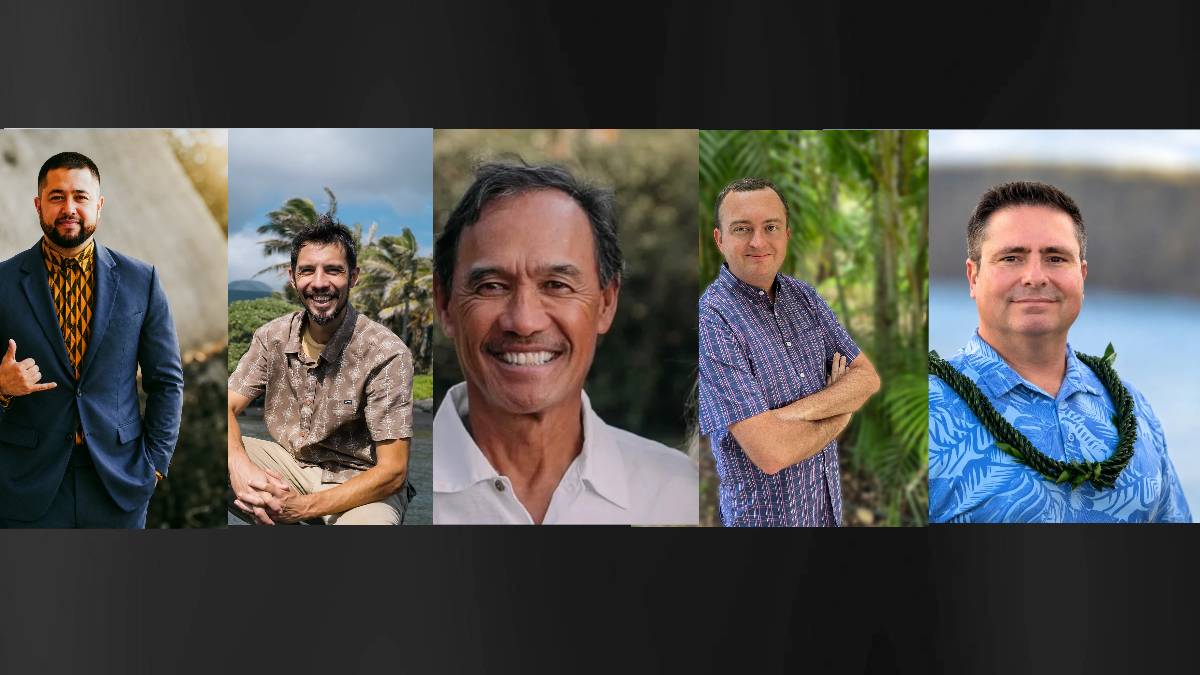
With the current Kaʻū District council member Michelle Galimba not seeking re-election on the nine-member Hawaiʻi County Council, her seat is up for grabs. Five candidates have entered the race, all eager to take on the challenges.
Zed Ka‘apana Aki, Guy Enriques, Kyle Kepano Jones and Jason Masters all have deep roots or were born and raised in the Ka‘ū District. Justin Robert Canelas has lived in the area for only six years but has established himself and his family in the community as stewards and owners of the Manadina Farm.
Each candidate was asked about their priorities for the district and about how they would address the critical issues that have faced the rural area.
Zed Ka‘apana Aki
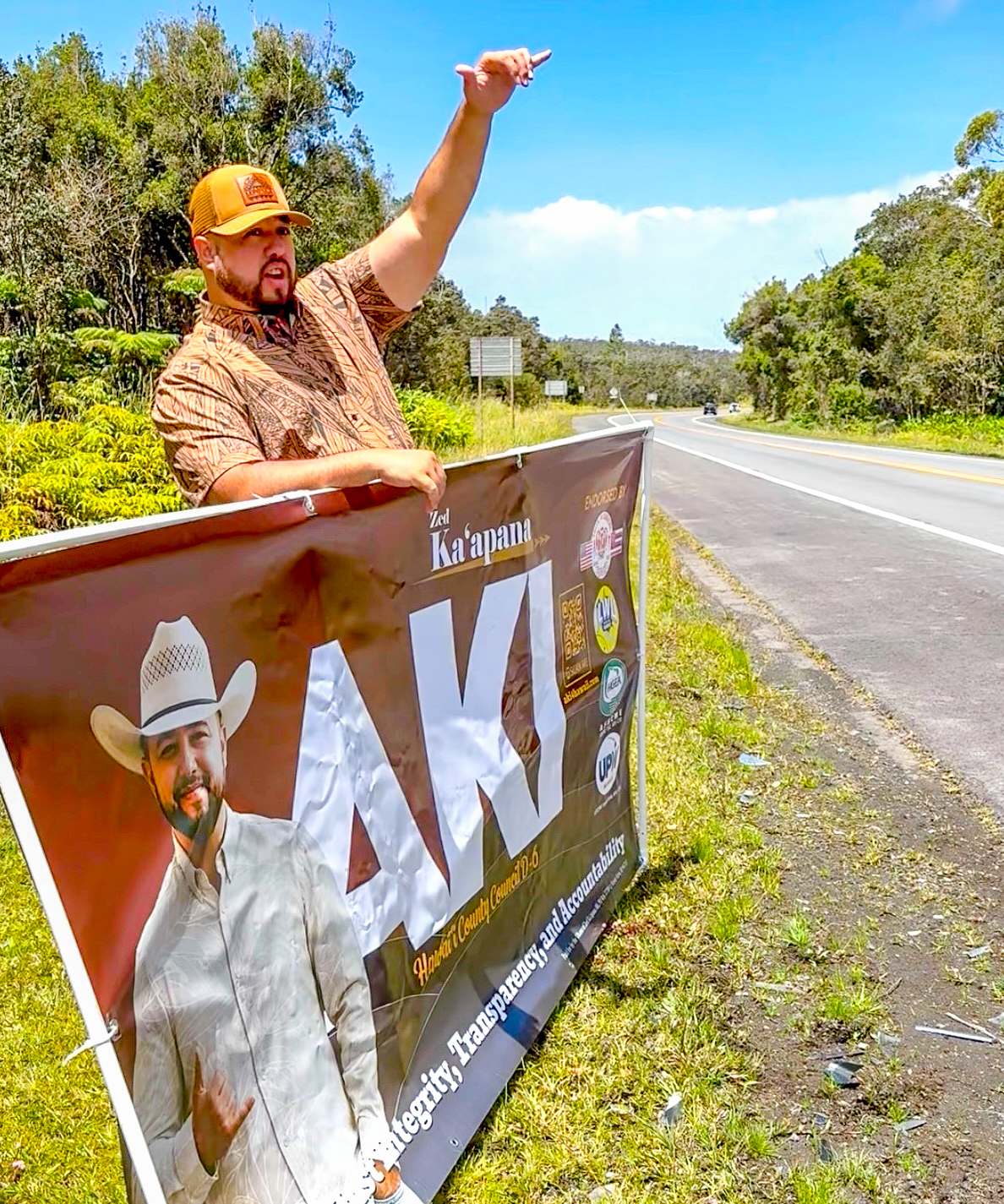
Aki, 44, is a native Hawaiian cultural practitioner with deep roots in Ka‘ū, where his Hawaiian ancestors have lived for generations. He is a business consultant with a background as a public policy advocate for more than two decades and a part-time farmer of a growing ulu (breadfruit) orchard of 100 plants in Ocean View.
Aki is passionate about the Ocean View community, saying residents are frustrated.
“More often than not, when we’re calling the county for help and assistance, we are always told that we are not the priority,” Aki said.
Aki recognizes that South Kona and Ka‘ū are rural and remote, adding that it’s important to keep the “country character” to preserve the economic engine around the district that includes tourist attractions Green Sands Beach, Punalu‘u and one of only two official national parks in Hawaiʻi.
“We are crucial economic infrastructure, but nobody sees us that way,” Aki said.
He says keeping the district’s country character is critical, and that development would undermine the integrity of the natural beauty of the parks and beaches.
Aki also is determined to close the gaps in some of these underserved areas. If elected, he plans to pursue ways to secure funding through federal, state and county dollars to create a medical training hub to bring more health care workers to the area where the closest hospital, Kona Community, now is 45 minutes away in South Kona.
Aki wants to pursue a police substation for Ocean View. He would also like to see better funding for programs like Neighborhood Watch.
“We can start recruiting out of our own community, hiring police officers out of our own community, giving us economic opportunities while also making our communities safer,” Aki said. “It’s taking our greatest weaknesses and turning them into strengths.”
Aki is in favor of low-impact development that doesn’t expand urban sprawl, saying: “We’re not looking to establish gigantic resorts on our pristine shores.”
When asked about the controversy over the proposed Punalu‘u development, Aki said he was hesitant to be 100% supportive of the park entering into the county’s Public Access, Open Space, and Natural Resources Preservation program.
Lands secured through these programs are preserved and stewarded by nonprofits. In Ka‘ū, several parcels of land are in this program. What Aki has found is that sometimes there is a lack of access provided by the stewards to these lands for Native Hawaiians.
“I hesitate to support that (program) when I have no idea what organizations and who the people are behind these organizations are gonna be,” Aki said. “It kind of boggles my mind that the county has not exercised eminent domain in the past to acquire Punalu’u.”
Aki supports farming initiatives that help the smaller independent farmers. He would like to find ways to subsidize farmers to get them water when its less prevalent.
Aki said he knows a lot of farmers who don’t have access to direct markets to sell their goods. He would like to create an organized structure that promotes wholesale markets for them.
Justin Robert Canelas
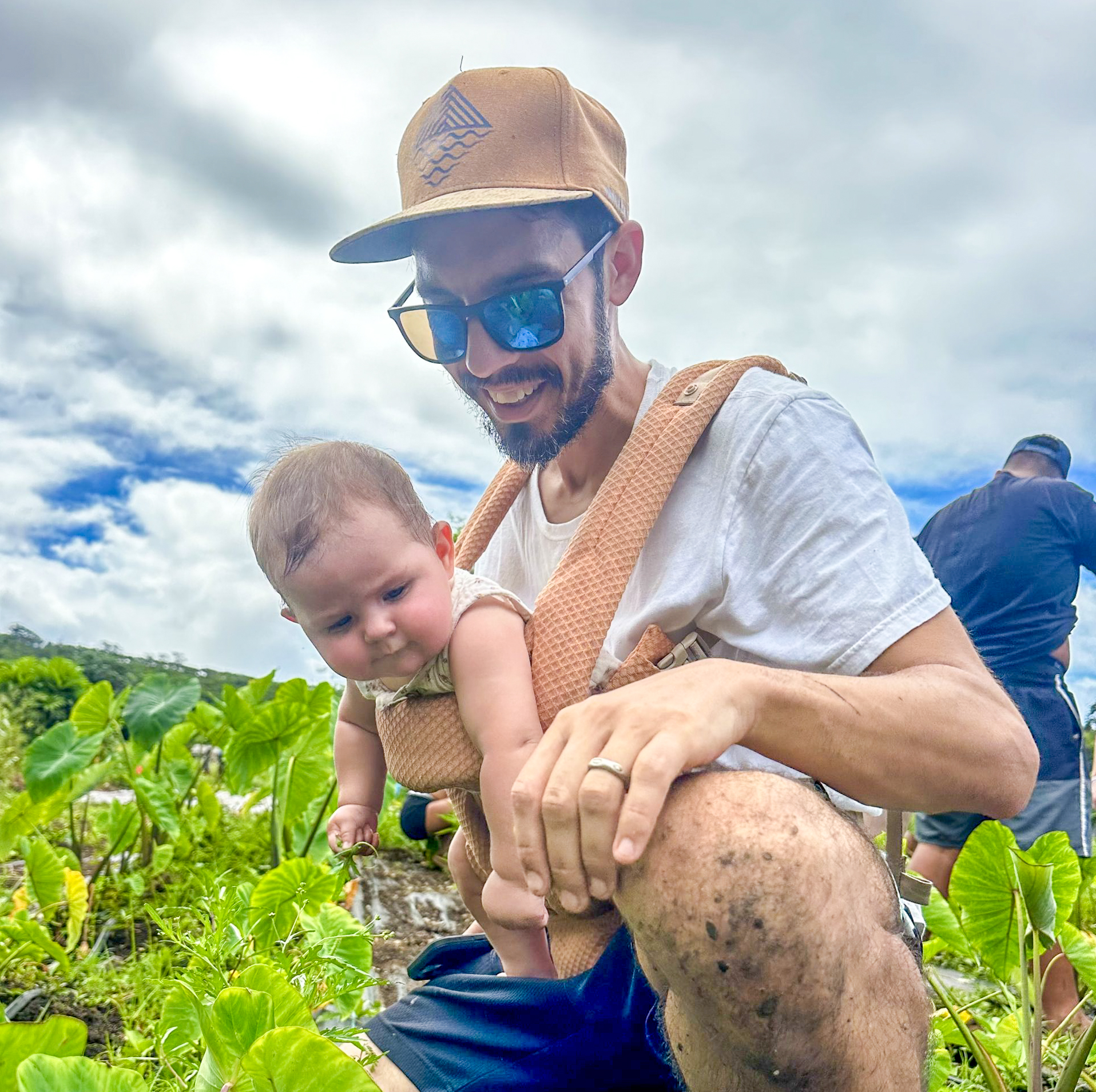
Canelas, 39, grew up in a small rural town in upstate New York called Chatham. He and his wife have visited Hawai‘i Island for years during work trips and felt connected with the land and its people. In 2018, they decided to buy the Manadina Farm in Nā‘ālehu.
He also is the Operations Director for Recycle Hawaiʻi and is currently serving as the Environmental Management Commissioner for County Council District 6. Canelas said several community leaders and kūpuna he’s worked with throughout the years encouraged him to run.
“It was their belief in me that led me to throw my hat in the race,” he said. “And at the time (November of 2025), no one else had committed to running.”
Canelas values sustainability and resiliency, as well as connecting with Hawaiian culture as he admires the partnership between ‘āina and human beings. Those values have translated into priorities for his first run for council.
Canelas started a farm-to-table restaurant using food grown on the farm as well as from other surrounding farmers as a revenue generator for the community and to help the local farmers.
A couple of months after starting the restaurant, Canelas joined Recycle Hawai‘i, where he helped draft an EPA grant application, in partnership with Ka‘ū High School, for $1.5 million to run a zero-waste program.
After getting word that the nonprofit and high school was awarded the grant, Canelas closed down the restaurant a year later to focus on the grant-run program full-time, which is where he remains today.
Agriculture policy is also a big part of Canelas’ platform. He said with farmers from South Kona to Pāhala growing everything from coffee to cacao, “I think investing in agricultural processing is the lifeblood of our district” and it would help to make the area self-sufficient.
Canelas has talked to State. Rep. Jeanné Kapela about a processing facility complex in Ka‘ū that would give local farmers a way to process more of their crops through commercial dehydrators, canning or juicing, giving prospective buyers shelf stability and value to those products.
While working at the New York State Assembly for public affairs and community development, Canelas said he did a lot of work in the South Bronx, trying to fight gentrification and advocating for infrastructure money for the local community.
“It was to help improve their lives rather than just trying to divert that money to big developers for them to get their luxury condos built,” he said, adding he sees similarities with that work and the Punalu‘u debate.
A few years ago, when the project was initially proposed by the developer at the Hawai‘i County Windward Planning Commission, Canelas said people were for and against it, while now there seems to be just overwhelming opposition.
At this point, Canelas said he doesn’t see the project going anywhere, and he supports the people’s voice: “There is a group of Kanaka Maoli and local residents that would lay themselves down in front of the bulldozers and prevent it from happening.”
Canelas also said he is committed to finding ways to help kids stay on a productive path by developing after-school programs. He also wants to look into identifying partnerships with nonprofits to create programs that provide health care for kūpuna.
Guy Enriques
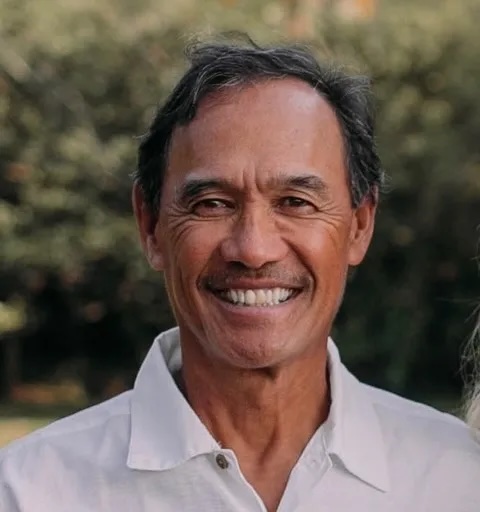
Enriques, 71, was born and raised in Punalu‘u. He was a volleyball coach at Kamehameha Schools Kea‘au Campus and a volunteer coach at Ka‘ū High School. He’s also a commercial fisherman, and his family runs a lei stand about a quarter mile from Punalu‘u Beach Park.
He has been outspoken against the proposed redevelopment by Black Sand Beach LLC, and has led several sign wavings in opposition at the park.
Enriques did file a lawsuit in May against the development company after they served him a notice to vacate his lei stand that has been operating in the same location since 1974. While the leaseholder of the land is Black Sand Beach LLC, Enriques argued in court documents that the high water mark, which is the boundary between private and public land, has moved, arguing his business is now on state land.
He was unable to comment on the matter as the issue is pending litigation.
In 2024, when the Black Sand Beach LLC, owned and managed, Eva Liu, went to the Hawai‘i County Windward Planning Commission seeking a Special Area Management permit, Enriques said the Ka‘ū residents traveled to Hilo to testify against the project.
Since then, “there was no leadership to follow up on something which the people of Ka’u really, really came out and said no to,” Enriques said.
Although he did add that Galimba put out a survey looking for feedback on the project, which produced the same results.
Enriques said he would like to see the county purchase the black sand beach land. He said the county already “should have been focused on this place because it’s the most accessible to development and it has the zoning.”
While he is passionate about protecting Punalu‘u Beach Park and keeping it open to the community, Enriques said he was spurred into running for office again because of the success he had during the one term he served in 2008.
“I was able to build that Ka‘ū High School gym and shelter,” Enriques said. “I was able to secure the budget to drill the potable well, as well as build the reservoir that went with it. And that was like a million-dollar budget.”
Enriques wants to serve again and has a three-step platform: create a project list that comes directly from the people; connect departments with people who have experience and influence to get the projects done; and post the projects online to create public accountability.
“My goal is to produce, like I did before, real and visible results,” Enriques said.
In talking about Ocean View, Enriques said his big goal for the community was to bring a full-service police station, noting that “87% of our calls come from Ocean View, yet our police station is in Nā‘ālehu.”
Nā‘ālehu is located 20 minutes south of Ocean View, and by the time an officer responds to these calls, there is nobody there to deal with, Enriques said.
He said he would work on putting an animal shelter in the community, which has been plagued with abandoned animals and dangerous dogs.
He wants to relocate a water spigot in Ho‘okena that is currently situated on a dangerous curve. Calling it a “big issue,” Enriques said he’s already identified a one-acre parcel, about a quarter mile toward Ho‘okena School, where it can be relocated.
In looking at South Kona, Enriques would also like to put in an outdoor play court similar to ones at the Billy Kenoi District Park, and parks in Pana‘ewa and Waimea.
“Their facilities are just packed every day, seven days a week with activities,” he said. “Kona needs one. And we already have a place picked up down by McDonald’s in Kealakekua.
Enriques is also committed to helping residents in Pāhala and Nā‘ālehu who are being forced to get off their cesspools as part of the state’s requirement, in an effort to help the environment. He is determined to look for federal funds to alleviate the costs.
Some other smaller issues he would take on are replacing lights at Pāhala and Nā‘ālehu County Parks.
“My goodness, they’ve been off for I don’t know how long,” Enriques said. “I (also) want to get the SRO, which is a security or school resource officer at Ka‘ū High School.”
Kyle Kepano Jones
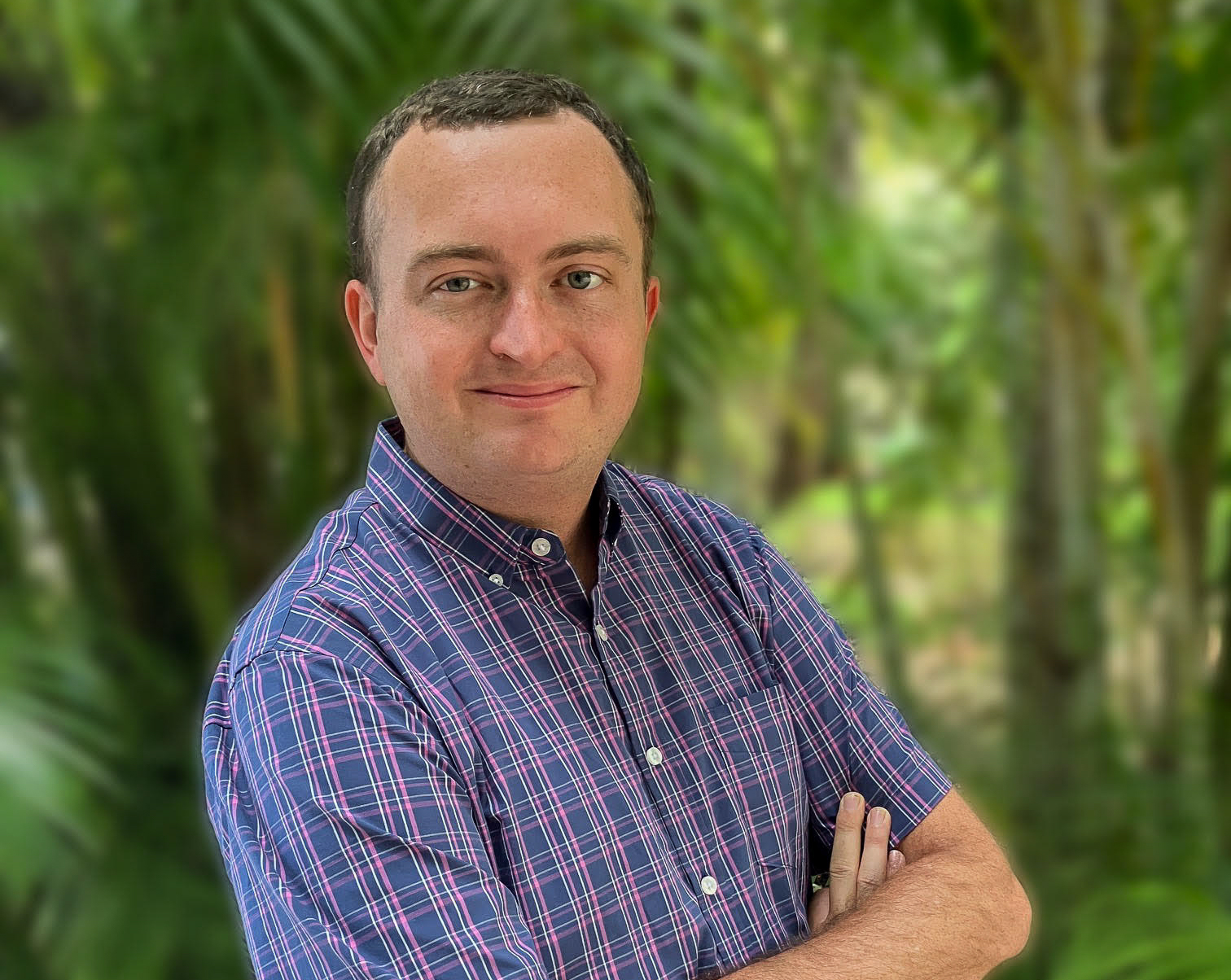
Jones is a lifelong resident of Hawai‘i Island and is running again for council after falling short in 2024. At 31, he is the youngest candidate in the race for District 6.
A graduate from the University of Hawai‘i at Hilo, Jones received a political science degree. While still in school, he did a six-month-long internship with U.S. Sen. Brian Schatz in Washington, D.C. He worked as a legislative assistant doing budget analysis.
In South Kona, Jones has been working odd jobs, including substitute teaching for public schools in Kealakekua.
Jones said a priority is getting more funding for county roads that are falling apart, and need to be fixed for public safety.
“I kind of view myself as what I call a pothole politician,” he said. “That’s my focus, basic municipal improvements as much as possible here.”
The road to Hawai‘i’s last fishing village, Miloli‘i, has a lot of potholes that need to be fixed. And Jones said there is a government road in South Kona from Manini Beah to Pu‘uhonua o Hōnaunau that has had fatalities that he’d like to address.
Jones also wants to address the homeowner insurance crisis. Currently, homeowners who live in lava zones one and two can’t get affordable insurance, and some can’t get any insurance.
“There is a small state insurance program called HPIA (Hawaiʻi Property Insurance Association), but it’s really expensive,” Jones said, adding it only covers $450,000 worth of value and there’s no guarantee that a homeowner can obtain a policy.
Jones said one solution to this issue it to build two more fire stations, to try to coax the insurance companies to return to the area.
“We’re too far away from one, and the insurance companies got a little spooked,” he said.
When asked about Punalu‘u, he said it’s clear no one wants the development and thinks maybe there should be a deal made with the county to expand the current park. Jones also thinks the old resort buildings that are falling apart and covered in graffiti need to fixed or torn down.
“I’d like to see some native plant restoration in the area and make the make the whole area a little nicer,” he said.
Jones does have some big picture ideas for the entire island that include creating a Hawai‘i Tourism Trust, which is a sovereign wealth fund that invests a portion of tourism-related revenue into the trust and gives out dividends to every man, woman and child in the county – based on some qualifications.
Jones also would like to see geothermal more aggressively developed to help reduce power bills and utilize environmentally friendly power generation.
“We’re sitting on what is essentially a gift from heaven in terms of the amount of energy we could be utilizing,” he said.
Jason Masters
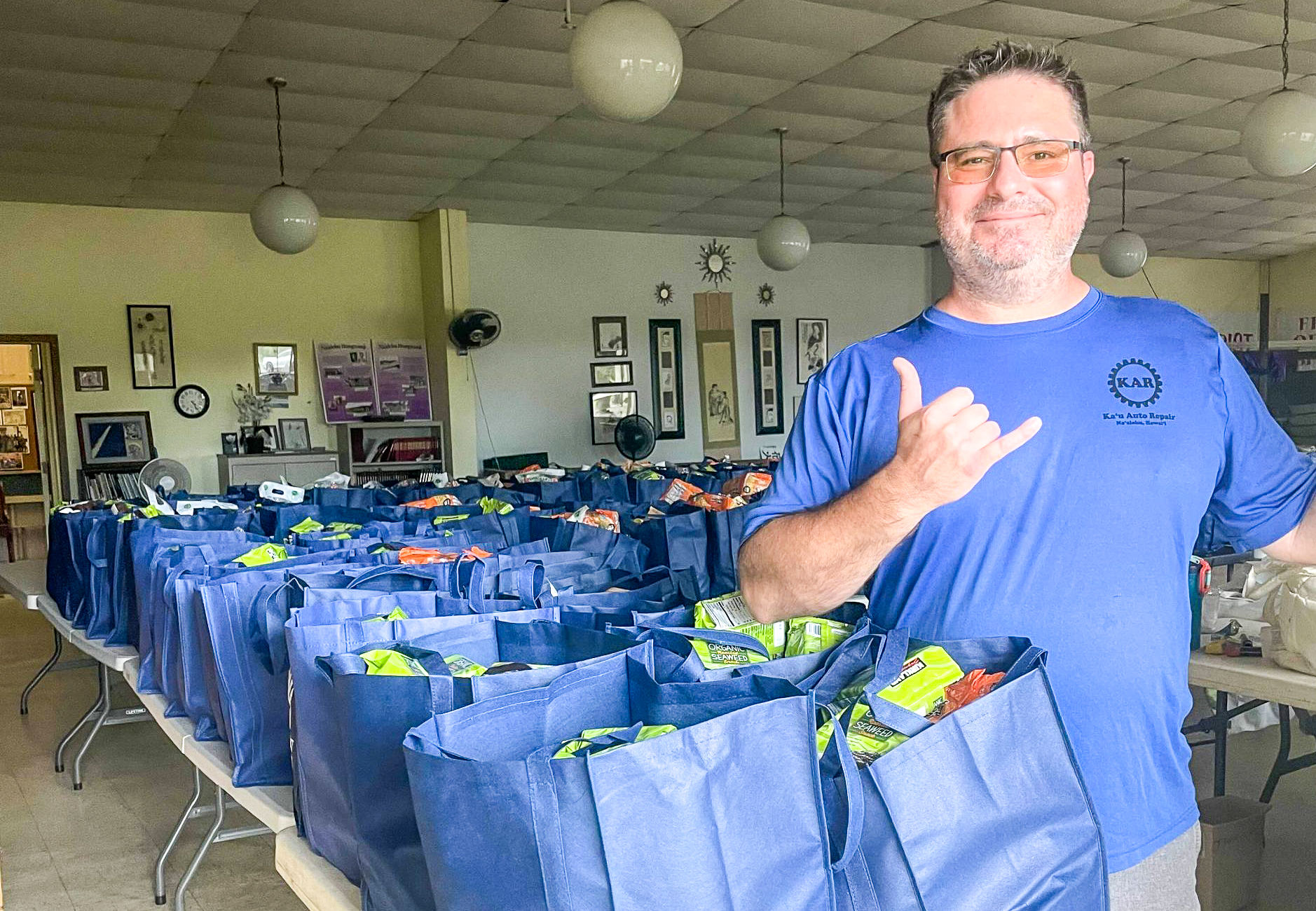
Masters, 44, was born in South Kona and raised in Ka‘ū. He got a degree in environmental studies and worked as a city planner in Los Angeles for about 15 years before returning home to the Big Island, where he now works as a substitute teacher.
He currently serves as chairman of the Ka’u Community Development Plan Action Committee.
His interest in running for County Council was planted when he was attending Ka‘ū High School years ago and had the opportunity to shadow then state Rep. Andy Levin and then state Sen. Robert Herkes.
The closure in 1996 of the Pāhala Sugar Mill, a huge economic driver for the area for decades, left a lot of people without jobs, forcing them to move. Masters said Levin and Herkes were among those who transitioned the plantation land into ranching, which ultimately helped diversify the economy in Ka‘ū.
“I believe they also helped with getting the coffee industry jump-started,” he said, adding their work piqued his interest in what he could do for his community.
Masters said his priority is infrastructure.
“Most of the highways in District 6 are in quite disrepair,” he said, adding he thinks the last time they were resurfaced was when he was in high school.
Masters also wants to look into ways to create economic opportunities by “getting back to the land, keeping people in agriculture, and maybe creating facilities for value-added products.”
“We have the Nā‘ālehu Shopping Center that’s been empty for – or mostly empty, for 10-plus years,” he said. “We don’t have a laundromat anymore in Nā‘ālehu.”
Masters said the county needs to help incentivize private parties to create opportunities for the communities.
Masters also said the district needs to look at creating affordable housing initiatives “to keep the people from our communities in our communities.”
He sees the proposed Punalu‘u development as an opportunity to do that.
“We don’t want Waikōloa in Punalu’u,” Masters said. “That certainly wouldn’t fit with Ka‘ū or Punalu’u or most of District 6’s character.”
At the same time, Masters said it’s a huge property that is centrally located and has some basic infrastructure. While in disrepair, he thinks it’s easier to fix that than to create something new somewhere else.
Masters said the Ka’ū Community Development Plan Action recommends building workforce housing and potentially affordable housing in the area.
“But we need to be mindful of our community character and cultural and ecological resources,” he said.
Masters said access needs to be preserved for the community to the pavilions, the beach, the boat ramp, the cultural resources, the natural resources, the anchialine ponds, the church and the cemetery up on the hill.