


Episode 51 of lava fountaining in ongoing Kīlauea episodic eruption didn’t disappoint despite wait
The Big Island volcano — perhaps the most active in the world — was a bit of a tease leading up to its most recent fountaining episode yet, which lasted 8.3 hours July 15.
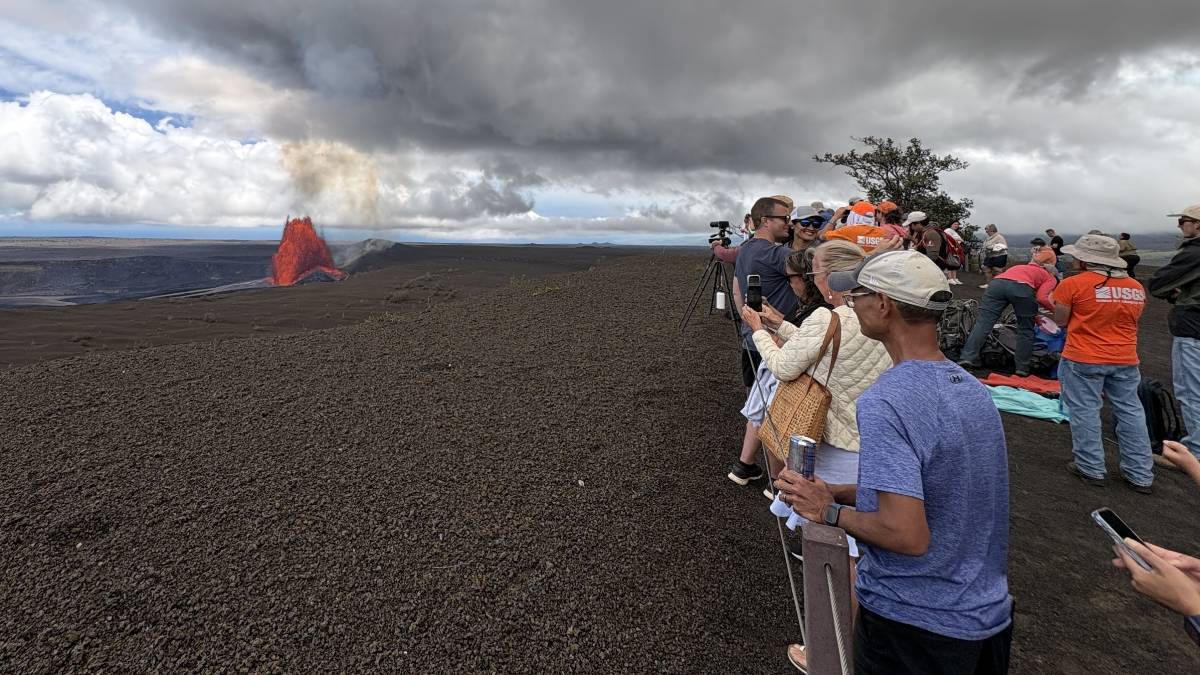
Kīlauea volcano on the Big Island was a bit of a tease leading up to Episode 51 of lava fountaining of the ongoing episodic summit eruption in Halemaʻumaʻu Crater.
Once it started at 8:30 a.m. July 15 — like its 50 predecessors — the volcano did not disappoint, even if the world did have to wait a few extra days.
Highlights from Episode 51:
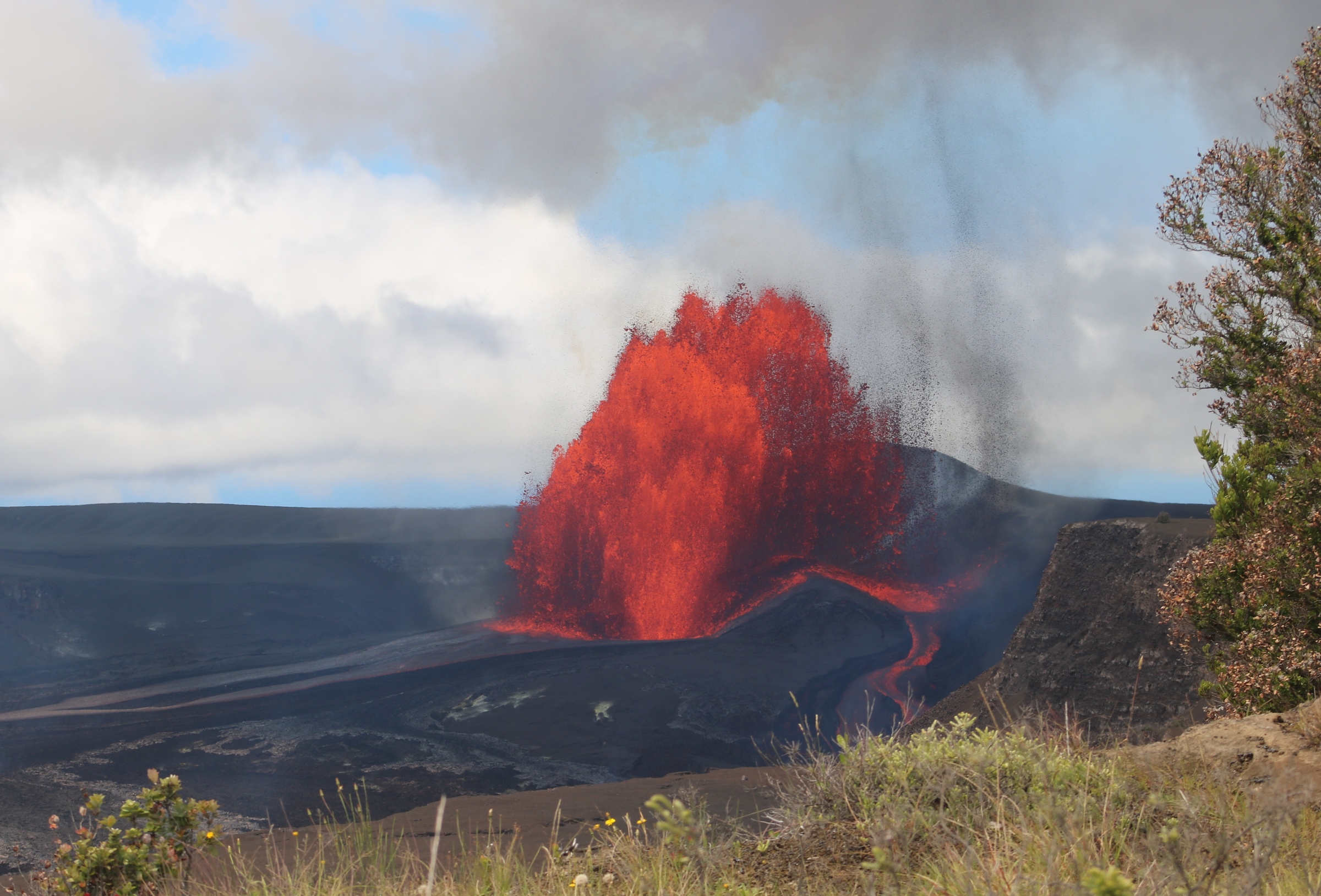
- Maximum fountain height was about 950 feet above ground level from the north vent, which was the peak at about 10:30 a.m. Wednesday.
- The south vent didn’t fountain, but did emit flames and gas jets.
- Maximum volcanic plume height was about 18,000 feet above mean sea level.
- Tephra fall was confined mostly to the closed area of Hawaiʻi Volcanoes National Park, to the southwest of the active Halemaʻumaʻu vents. A light fall of Peleʻs hair was reported at several sites inside the park outside the closed area, including Uēkahuna Overlook and Kaʻū Desert trailhead on Highway 11.
- No tephra was reported from any populated areas.
Kīlauea seemed primed early the morning of July 11, with nearly continuous small precursory lava spatter bursts beginning about midnight from the north vent. Hawaiian Volcano Observatory later that morning forecast Episode 51 was then likely to start that day or July 12.
A deflationary trend — which would be the harbinger of a longer wait — started just a few hours later and spatter bursts ended following the flattening of inflation, which had continued the day prior, pushing back the forecast for the onset of fountaining.
Before renewed precursory activity began again the afternoon of July 14 from the north vent — with four lava overflows within an hour between 3 and 4 p.m., the longest lasting more than 30 minutes ‘ the volcano teetered between deflation and inflation, continuing to delay fountaining forecasts from Hawaiian Volcano Observatory scientists.
Inflation again leveled off and precursory activity paused. It resumed later the evening of July 14, with overflows beginning at 2:08 and 2:32 a.m. July 15 from the south vent. Each lasted just 5 minutes.
Short overflows at 4:27 a.m. and 4:42 a.m. from the north vent Wednesday ended another brief pause in activity. Those were then immediately followed by the onset at 4:47 a.m. of vigorous lava overflow fed by 10- to 30-foot dome fountains.
That activity continued until Episode 51 fountaining began, marked by increasing height of the dome fountains, greater eruptive volume, increased deflation and tremor.
Fountaining was continuous from the north vent throughout the episode, and while the south vent did not fountain, it emitted flames and gas jets.
Instantaneous effusion peaked at about 10:30 a.m. Wednesday about 370 cubic yards per second, with an average effusion rate of 200 cubic yards per second for the entire duration of fountaining.
An estimated 6.6 million cubic yards of lava erupted — for reference, enough to submerge about 2,246 Olympic-sized swimming pools such as the one at Charles “Sparky” Kawamoto Swim Stadium in Hilo — and covered about 50% of the Halemaʻumaʻu Crater floor.
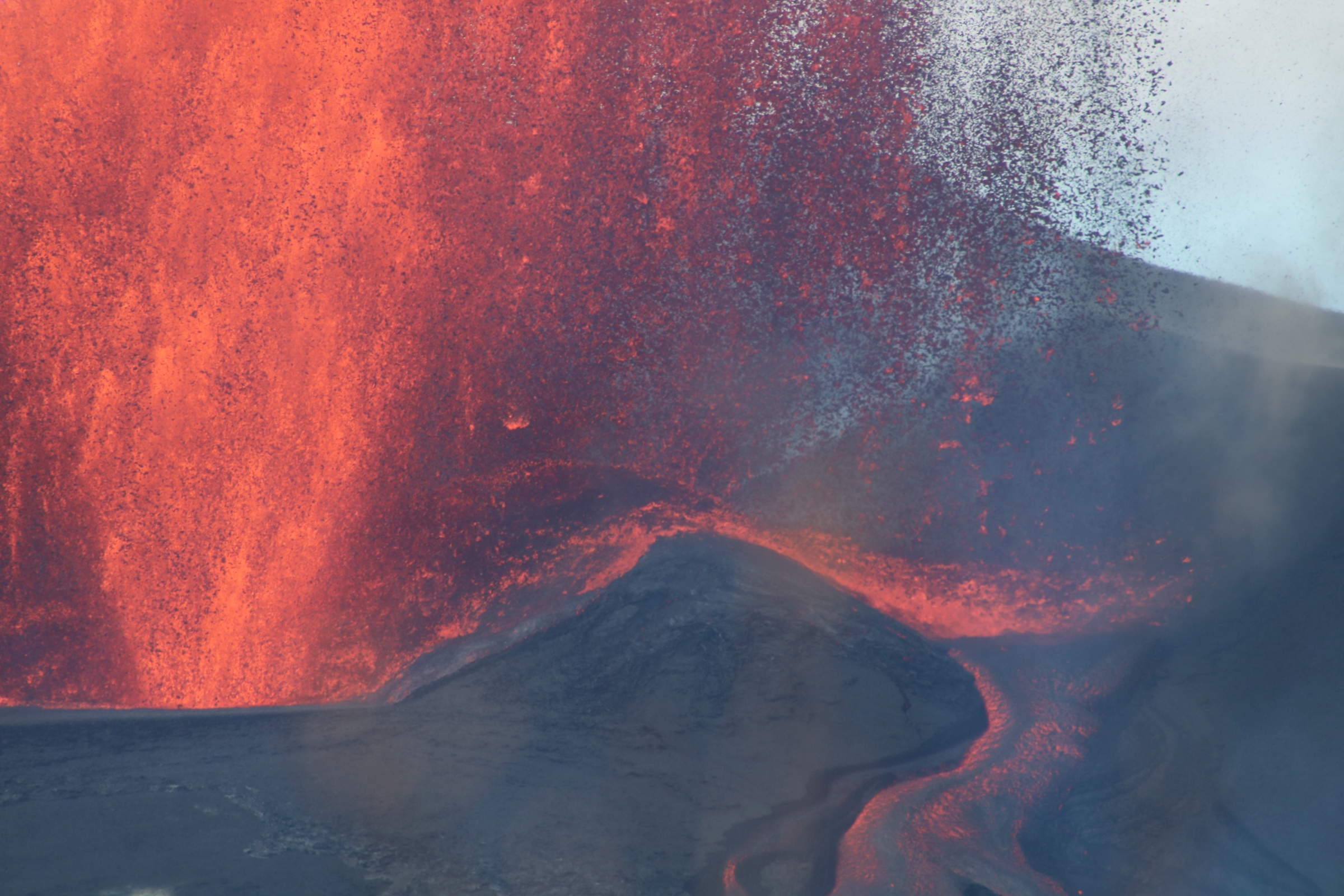
Lava fountain and volcanic plume heights gradually decreased in height. They were down to about 400 feet above ground level and 10,000 feet above mean sea level, respectively, by 4:40 p.m. Wednesday.
Episode 51 ended abruptly at 4:46 p.m., with the last 2 to 3 minutes of fountaining from the north vent marked by gas jetting.
An abrupt switch from summit deflation to inflation at the end of the episode indicates once again that another lava fountaining episode is likely in this historic ongoing episodic summit eruption that started now almost 1 year and 7 months ago on Dec. 23, 2024.
More information:
- Kīlauea webcam images.
- Kīlauea photos/video.
- Kīlauea lava-flow maps.
- Kīlauea frequently asked questions.
- Summary of volcanic hazards from eruptions.
Hawaiian Volcano Observatory lowered Kīlauea’s volcano alert level back to advisory following the end of Episode 51 and continues to watch the volcano closely.
Email to askHVO@usgs.gov with any questions.