


Big Island students present Hawaiian language projects on the national stage
Five Hawai‘i Island students presented projects in ʻŌlelo Hawai‘i (Hawaiian language) at the Smithsonian’s National Museum of the American Indian last month.
Ulua‘e Keali‘ikanaka‘oleohaililani, Ka‘ie Martin, Pūnua Gomes, Pikake Evans-Barnes, and Mana Inoue from Ka ‘Umeke Kā‘eo Public Charter School showcased projects they created for the annual Hawai‘i History Day Fair last February. The five students competed in the ʻŌlelo Hawai‘i category and earned the top scores at the 2026 Hawai‘i History Day State Fair.
Due to the lack of judges with expertise in the Hawaiian language and culture at the national level, students in the ʻŌlelo Hawai‘i program cannot compete at the national level. However, they are given the opportunity to present their work at the Smithsonian’s National Museum of the American Indian and at the University of Maryland’s Stamp Student Union.
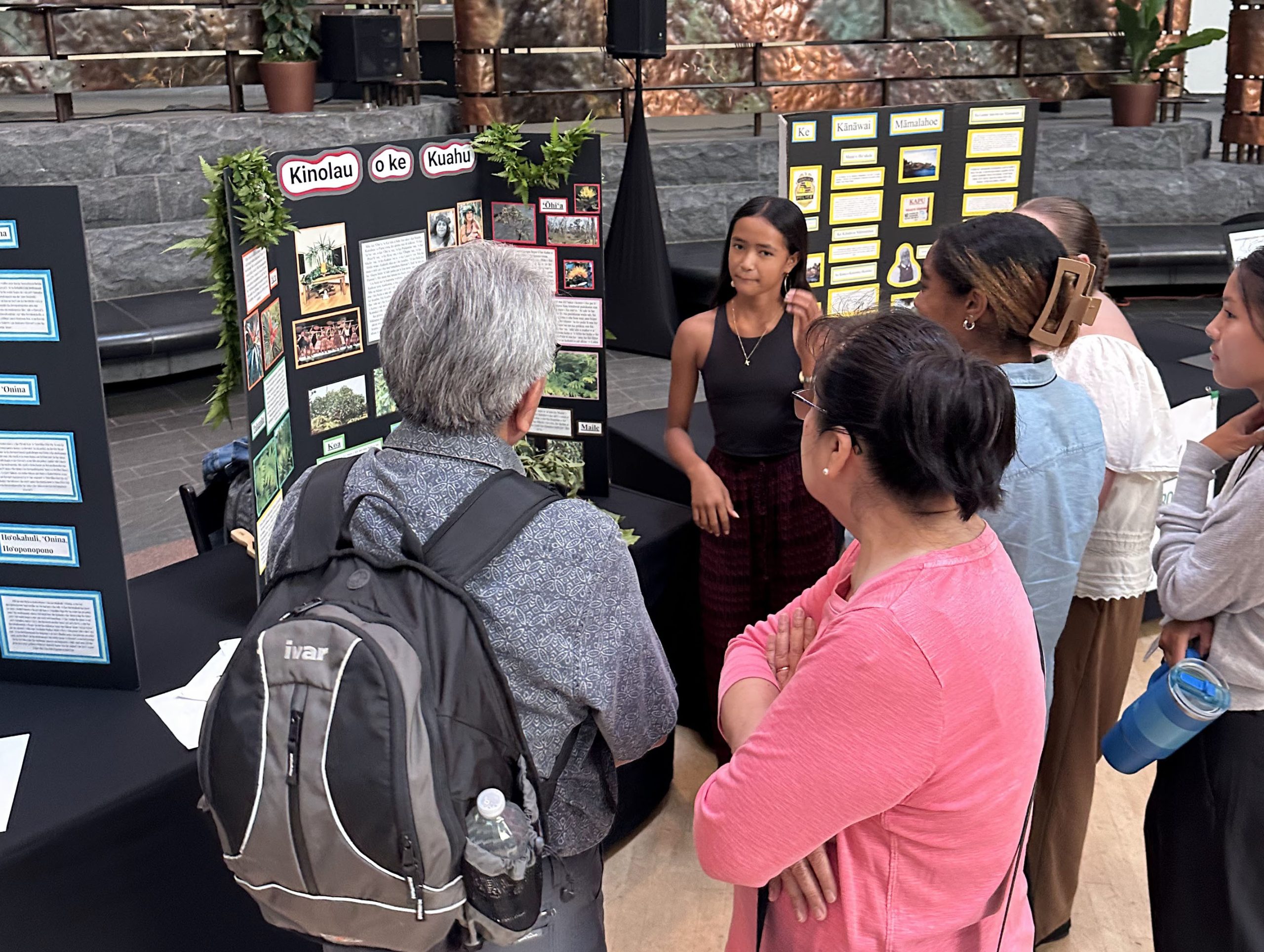
This year, the students displayed their projects in the Smithsonian’s “In Language There is Life: I ka ʻŌlelo nō ke ola” exhibit. The projects covered various topics related to Hawai‘i history.
Inoue, Martin, and Evans-Barnes presented physical exhibit boards, while Keali‘ikanaka‘oleohaililani and Gomes presented video documentaries.
Inoue’s project covered Kānāwai Māmalahoe, a historic Hawaiian human rights decree established by King Kamehameha I in 1797. The decree serves as a foundational model for modern international humanitarian law regarding the treatment of civilians. The law ensured that all non-combatants, specifically the elderly, women, and children, could travel safely and rest by the roadside without fear of harm.
Martin presented a project about Nā Kino Lau o Ke Kuahu, referring to the multiple manifestations or physical forms of deities placed as offerings and spiritual vessels on the traditional Hawaiian hula altar.
Evans-Barnes’ project was Ka Hoʻopahūpahū ‘Ana Iā Kahoʻolawe, which translates to the Bombing of Kahoʻolawe. It covers the 50-year period from 1941 to 1990 when the U.S. Navy and allied forces used the sacred Hawaiian island of Kahoʻolawe as a live-fire bombing range and military training site.
Keali‘ikanaka‘oleohaililani’s documentary covered the history of the telephone in Hawai‘i, which includes King David Kalākaua’s efforts to bring technological advancement and modernization to the Kingdom of Hawai‘i.
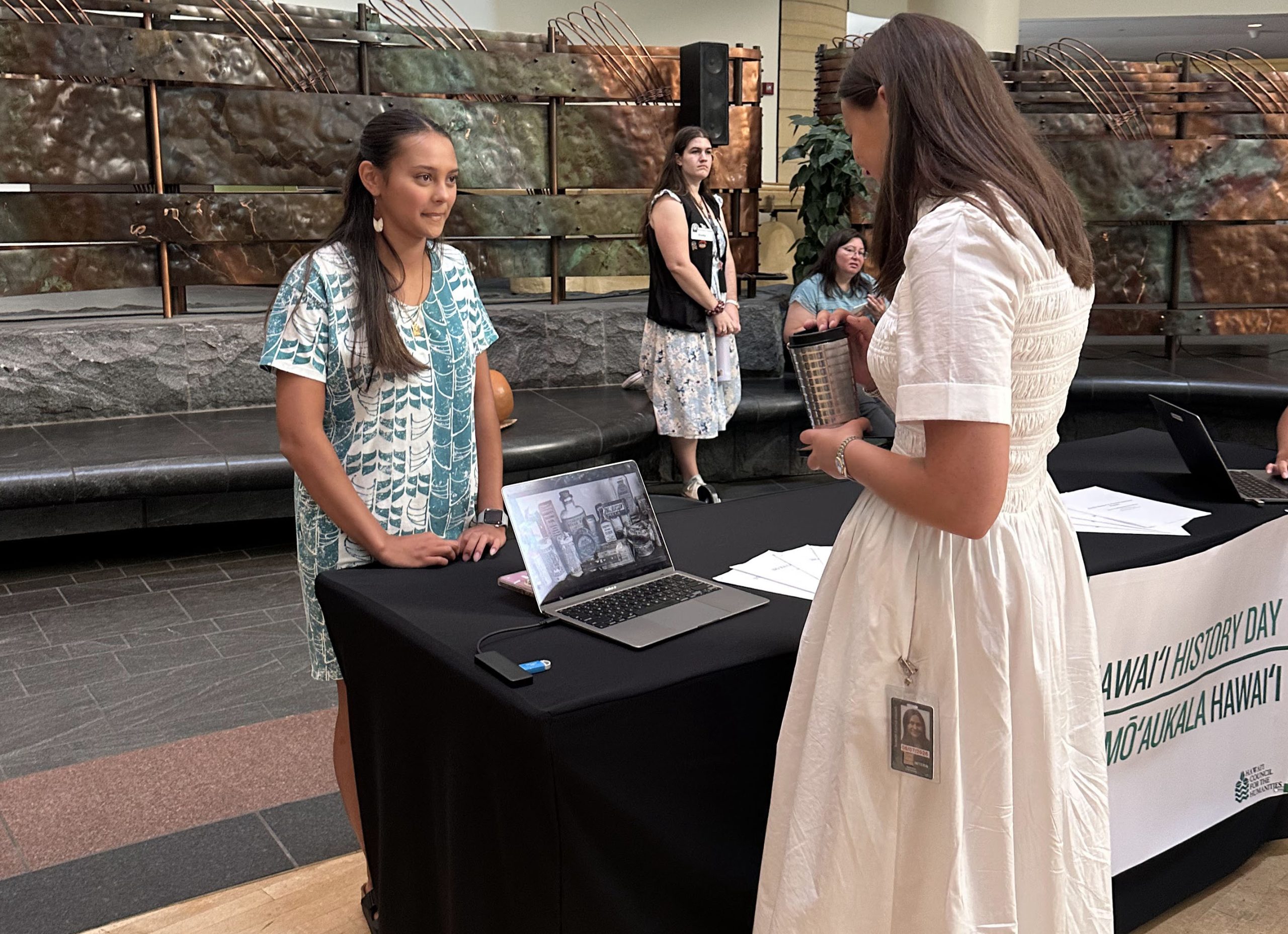
Gomes shared her documentary about Ka Lā‘au Lapa‘au, the traditional Hawaiian medical practice of using native plants, spirituality, and prayer to treat illnesses and injuries. Guided by indigenous healers, the practice views physical sickness as a symptom of spiritual imbalance or a loss of mana (energy).
While the five students showcased their projects, 62 students participated in the National History Day National Contest from June 14 to 18 and received 12 awards.
“National History Day provides an enriching experience for students in middle and high school,” said National History Day Executive Director Dr. Cathy Gorn. “National History Day students learn to research, analyze, and articulate their position.”
To coincide with the commemoration of the 250th anniversary of the Declaration of Independence, National History Day’s theme for 2026 was “Revolution, Reaction, Reform in History.” Seven hundred twenty-six students from sixth to twelfth grades completed historical research projects this year.
“Just 1% of this year’s National History Day participants advanced to the national level, so all students should be proud of their achievements,” Gorn said. “National History Day will benefit students far beyond academics as they become successful professionals, community-minded leaders, and engaged citizens.”
Five hundred forty historians and education professionals served as judges for the students’ work. More than 100 students took home cash prizes between $250 and $2,000 for superior work in a specific category of judging, along with special prizes from various sponsors.
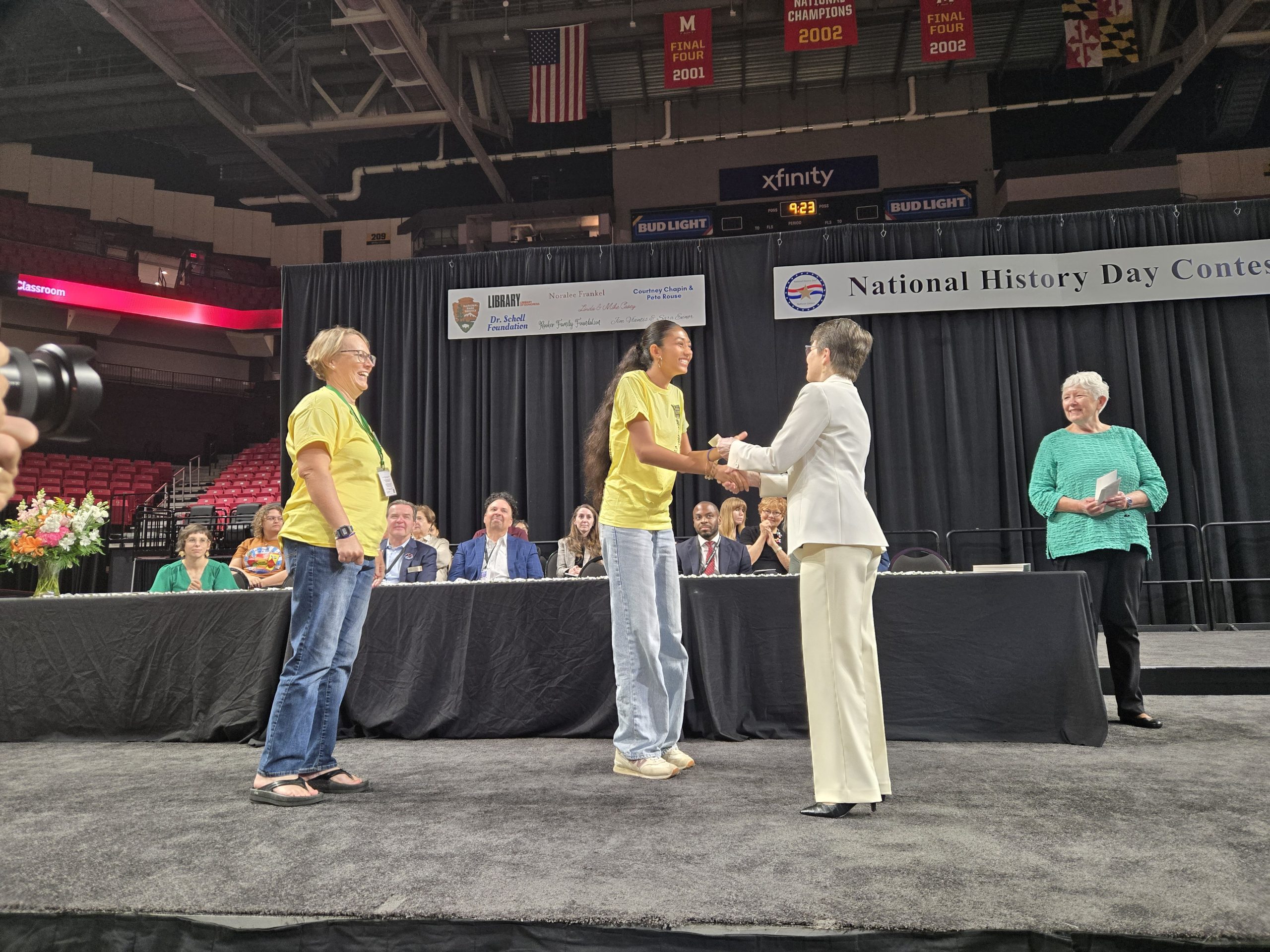
The following Hawaiʻi students and their teachers that were awarded and recognized at the 2026 National History Day National Contest are listed below:
Medalists
- Third Place in Junior Group Website
- Title: Chernobyl: The Nuclear Reaction That Revolutionized and Reformed the World
- Students: Alexis Abregano, Avish Arzaga, Carl Gantala
- Teacher and School: Jaimy Valerio, King David Kalakaua Middle School
- Third Place in Senior Individual Exhibit
- Title: Revolutionizing Native Hawaiian Nutrition: The Impact of Claire Kuʻuleilani Hughes
- Student: ʻĀnelalani Suapaia
- Teacher and School: Sarah Razee, Kamehameha Schools – Kapālama Campus
Special Awards
- Indigenous History Prize, sponsored by the National Park Service
- Title: Language Returned: ʻŌlelo Hawaiʻi in Reaction, Revolution, and Reform
- Student: Seojin Moon
- Teacher and School: Reid Wyatt, ʻIolani School
- Outstanding Hawaiʻi Affiliate Projects, Junior Division
- Title: Voices for Freedom: How the People Brought Down the Berlin Wall
- Student: Alvin Perez
- Teacher and School: Colleen Spring, Laie Elementary School
- Outstanding Hawaiʻi Affiliate Projects, Senior Division
- Title: When Silence Spoke Louder
- Students: Dari Cho, Derrick Fujioka, Emily Lee
- Teacher and School: Reid Wyatt, President Theodore Roosevelt High School
Top Ten Finalists
- Junior Group Documentary
- Title: Ink, Imagination, and Inequality: Women Revolutionizing Animation
- Students: Ava Cowley, Aspen Pack
- Teacher and School: Caitlin Albert, Kahuku High & Intermediate School
- Junior Group Performance
- Title: Industrial Abuse and the Denial of Justice: The Keating-Owen Act of 1916 and Revolution, Reaction, and Reform of Child Labor in America
- Students: Niksyn Batoon, Noleen Bianca Florentino, Miranda Mangkheua
- Teacher and School: Jaimy Valerio, King David Kalakaua Middle School
- Senior Group Website
- Title: Black Tide, Green Future: The Santa Barbara Oil Spill and the Environmental
- Students: Kenzie Chamberlain, Lilikoi DeMartini
- Teacher and School: Caitlin Albert, Kahuku High & Intermediate School