


Red Cross volunteers stage in Hawai‘i on way to help following Super Typhoon Bavi
American Red Cross was on the ground As Super Typhoon Bavi passed over Guam and Commonwealth of the Northern Mariana Islands to support the islands impacted by the storm and is working to send more staff and volunteers in the days to come.
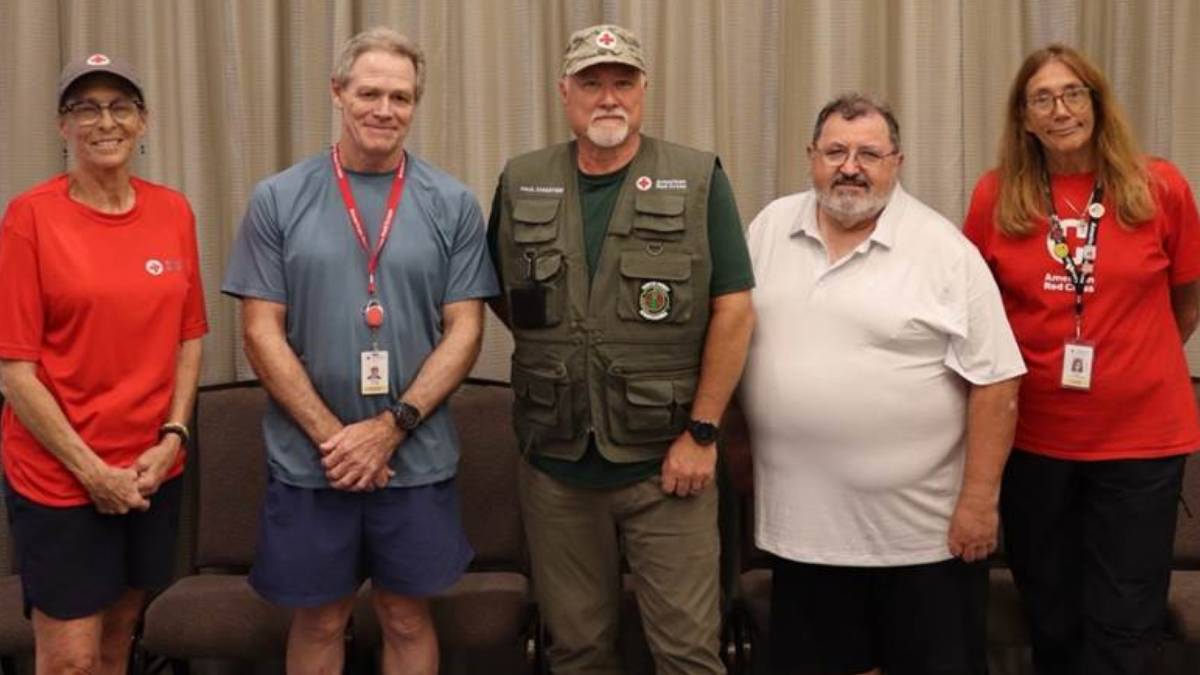
Volunteers were staged in Hawai‘i to respond as soon as it is safe.
Winds grew to as strong as 180 mph during the Bavi’s passage, so significant wind, flooding and landslide damage — especially on the hardest hit islands of Rota and Tinian — could be discovered after the storm clears.
American Red Cross prepositioned staff, volunteers and supplies on the islands. Disaster volunteers from throughout the United States also began traveling July 1 to support those in the path of the storm.
They join local volunteers from the Red Cross Guam and Commonwealth of the Northern Mariana Islands chapters, all working with local officials and partners to ensure people get the help they need.
Disaster teams on the ground are ready to support shelters, provide meals and other disaster recovery supplies as soon as it is safe to do so after the storm moves away from the islands.
These same islands were hit fewer than 3 months ago in April by Super Typhoon Sinlaku, which caused widespread damage and destruction. Many on the islands were continuing to recover from Sinlaku and living in temporary shelters or with makeshift roofs as they faced incoming Bavi.
Hundreds of Red Cross volunteers and partners spent more than 80 days helping people after Sinlaku and are staging themselves once again for response to Bavi.
Deb Blaze, a Red Cross Volunteer from Fresno, Calif., is back in Hawai‘i on her way to Commonwealth of the Northern Mariana Islands for the second time after responding during Super Typhoon Sinlaku.
“Most of us who deployed then would return to the islands at the drop of a hat if we ever had to help the people again,” said Blaze in a Red Cross release. “I know these people by name, and I hope to see them again, although I wish it were under better circumstances.”
Having also responded to the kona lows this spring in Hawai‘i, Blaze is a seasoned Pacific Island Region responder.
This will be Paul Chartier’s first time responding in the Pacific after a year and a half as a Red Cross volunteer.
Chartier said the best advice he received is to “lock arms with the people from Guam and Saipan.”
By working in partnership with the local community, the Red Cross is able to mobilize resources quickly and efficiently. Chartier will work to secure and transport resources to shelters across the islands and plans to work with and learn from his local partners.
The impact from back-to-back disaster events poses significant challenges for emergency response and recovery. Without adequate time to recover from disaster, people and families remain exposed and at greater risk for the next event.
Preparing households and communities in advance is one of the most effective ways to reduce risk and improve resilience.
America Red Cross Pacific Islands Region Hawai‘i Chapter supported the transit and preparation of the volunteers as they prepare to leave from Hawai‘i for Guam and Commonwealth of the Northern Mariana Islands.
All volunteers are provided with cultural awareness training before arriving at their duty stations, allowing the volunteers from throughout the nation to respond in the Pacific with care and consideration.
The goal, as Linda Scheuermann of Pennsylvania put it, is that “you have the crew of people that come with different personalities and skill sets working together to serve our residents with compassion and care.”
Donate to support the Red Cross response in Guam and Commonwealth of the Northern Mariana Islands by visiting the American Red Cross website, calling 1-800-RED CROSS (800-733-2767) or texting the word REDCROSS to 90999.
You can also help by becoming a volunteer. Visit the Red Cross website to get involved and register as a volunteer.