


University of Hawai‘i launches historic early phase clinical cancer research center
"For the first time in state history, qualifying cancer patients will have the opportunity to access promising investigational therapies here in Hawai‘i, without traveling thousands of miles to medical centers on the U.S. mainland," said Dr. Naoto T. Ueno, medical director of the new Hoʻōla Early Phase Clinical Research Center.
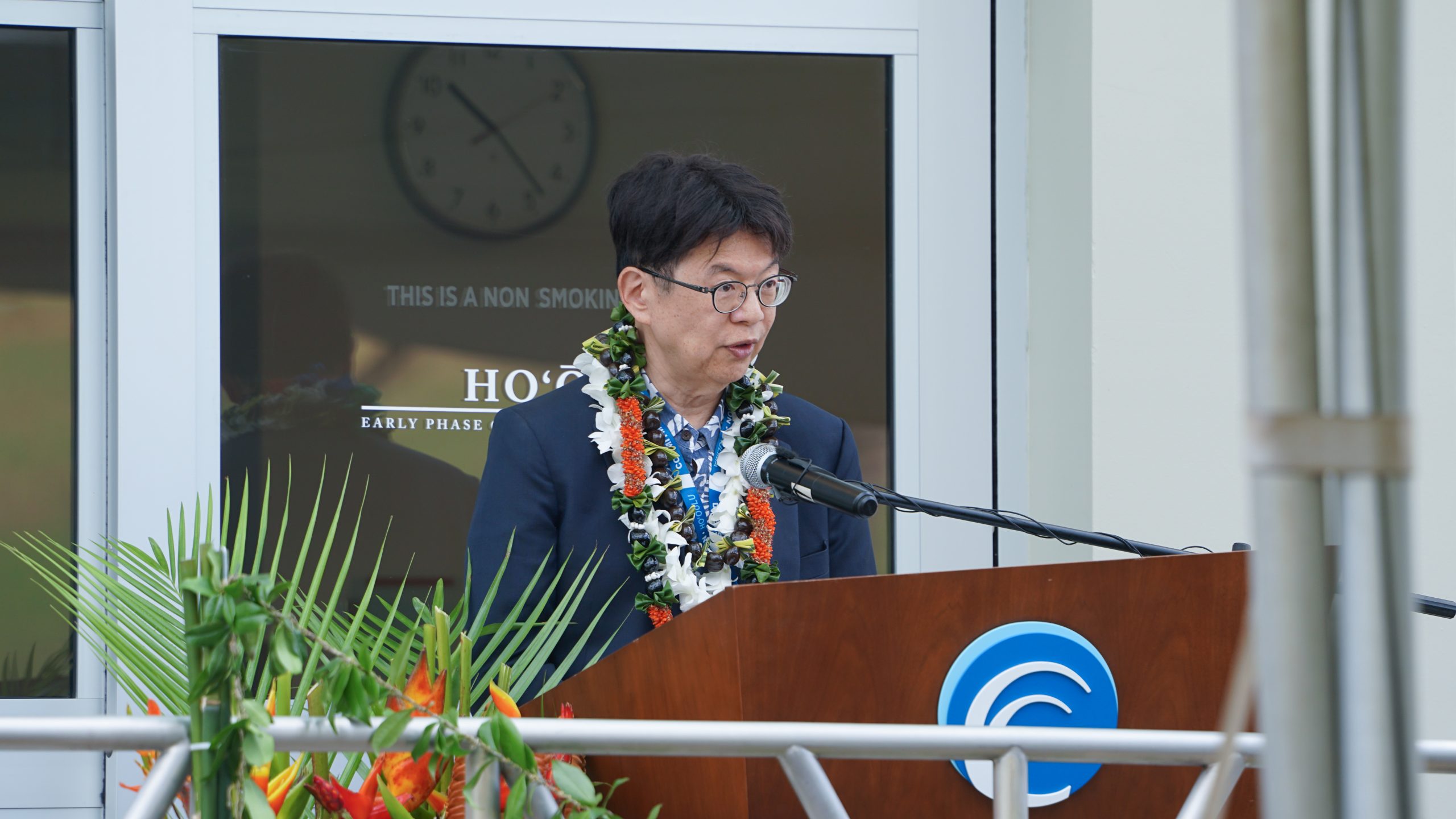
The University of Hawaiʻi Cancer Center officially opened on Monday the Hoʻōla Early Phase Clinical Research Center, the first dedicated center for these type of trials in the islands.
UH Cancer Center Director Dr. Naoto T. Ueno, a researcher, clinical trialist and two-time cancer survivor, said the opening of the new center marks a major milestone for cancer care in Hawai’i.
“For the first time in state history, qualifying cancer patients will have the opportunity to access promising investigational therapies here in Hawai‘i, without traveling thousands of miles to medical centers on the U.S. mainland,” Ueno said. “Patients treated through Ho‘ōla EPCRC will be able to remain close to home and ‘ohana, which is crucial to their healing journey.”
That was not available to Susan Hirano, wife of center supporter Peter Hirano. In his speech on Monday, he told the story about his wife, who had metastatic breast cancer and was offered the opportunity to participate in a clinical trial on the U.S. mainland.
Despite her hope that a clinical trial would extend her life and allow her to see her son graduate from high school, she declined the trial so she could stay home in Honolulu surrounded by her ohana. Susan Hirano, a Hope Ambassador for the UH Cancer Center and the founder of the Susan C. Hirano Cancer CARE Community, passed away in April 2025.
“Sue was always a big advocate for the UH Cancer center and all that it can do,” Peter Hirano said. “She was convinced that the opening of Ho‘ōla would give cancer patients hope. It would allow them to do what she couldn’t: participate in a clinical trial while staying home with ‘ohana. I know she’d be smiling ear to ear if she were here today, full of hope — if not for herself, then for others who will benefit from this amazing resource.”
The Hawaiian word hoʻōla means “to give life” or “to heal.”
Ueno, who is the medical director of the new center, added: “These patients also will be making invaluable contributions to medical science, as early-phase clinical trials like these are how tomorrow’s standard cancer treatments are developed.”
Cancer is the second leading cause of death (after cardiovascular disease) in Hawai‘i. Nearly 76,000 people in Hawai‘i are living with cancer, and each year an average of 2,519 Hawai‘i residents die of cancer, according to the center’s “Hawai‘i Cancer at a Glance” report.
A new UH Cancer Center study found that Hawai‘i residents spent at least $230 million on out-of-state care for cancer in 2021 through 2023, underscoring the need for enhanced cancer care in the islands.
Early-phase clinical trials — also called Phase 1 and 2 trials — evaluate promising new cancer therapies to determine their safety, appropriate dosing and potential effectiveness. Such clinical trials are conducted under stringent safety protocols. Patients undergoing Phase 1 and 2 clinical trial treatment through the Ho‘ola center will be treated with utmost care, safety and compassion, Ueno said.
On Monday, a private grand opening ceremony was attended by more than 200 people to celebrate the years of collaboration it took to bring the project to fruition. They included: federal, state and university leaders; physicians, researchers, health care partners; donors and community supporters; and faculty, staff and students of the UH Cancer Center and its Hoʻōla center.
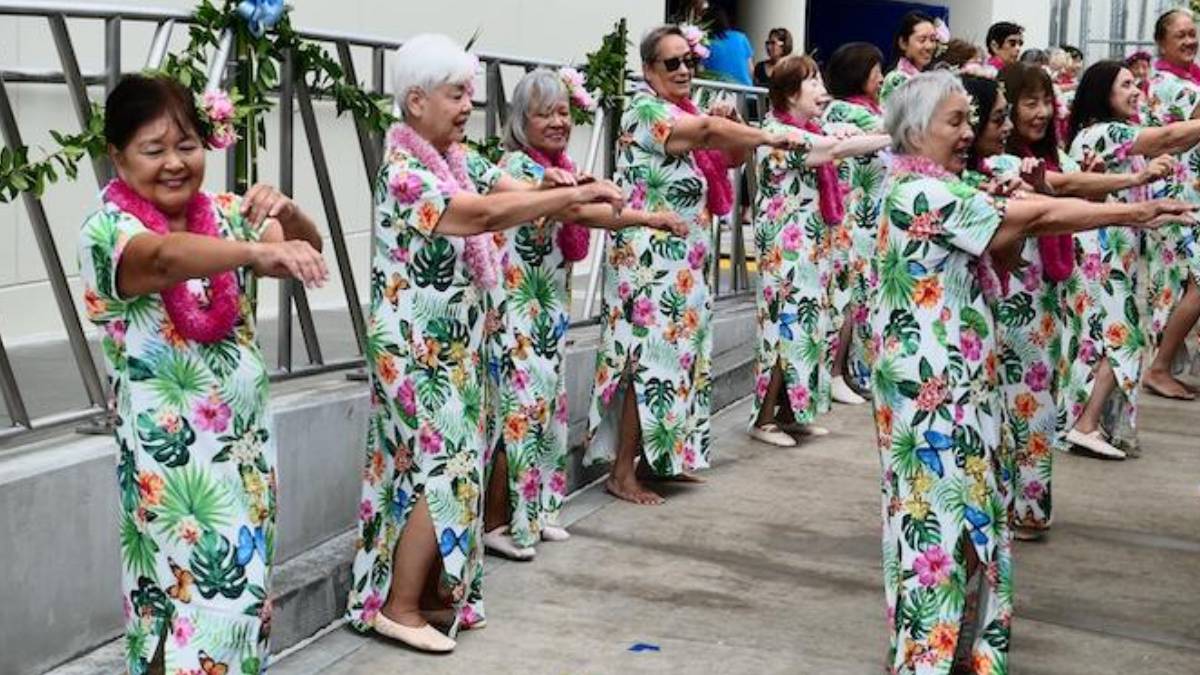
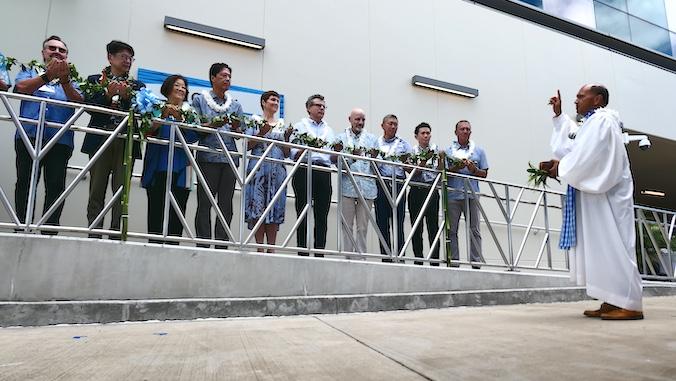
Hula by a hālau of cancer survivors, speeches by dignitaries, a maile-lei untying, and a clinic tour for invited guests were featured at the launch of the center-within-a-center at the UH Cancer Center in Kaka‘ako.
U.S. Senator Mazie Hirono of Hawaiʻi, who attended the celebration, said: “If it were not for this kind of research that we support and the kind of clinics that we are opening, then a number of us wouldn’t be here right now. So I’m glad to have been a part of the creation of this center and to be a partner at the federal level.”
The Hoʻōla center includes dedicated patient treatment areas, specialized clinical research space, a certified pharmacy, and highly trained staff who will work closely with investigators, referring physicians, and research sponsors to safely conduct complex early-phase studies.
A pilot Phase I clinical trial, with one patient already enrolled, is underway to confirm that the center can safely deliver treatment and conduct the required clinical research operations.
To date, the pilot study, launched in 2025, has successfully demonstrated the clinic’s readiness to receive a growing portfolio of studies and patients. The goal is to have 30 active early-phase clinical trials at the Hoʻōla center by 2031, Ueno said.
Each Phase I or II study will typically enroll no more than three participants from Hawaiʻi, ensuring that the safety of investigational therapies is closely monitored.
For the 7,500-square-foot center, located in the ‘ewa-makai (west-ocean) side of the UH Cancer Center, University Health Partners will handle staffing and operations.
The UH Cancer Center collaborates on clinical trial operations with member organizations of the Hawai‘i Cancer Consortium, which include The Queen’s Health Systems, Hawaiʻi Pacific Health, Kuakini Medical Center, Adventist Health Castle, Hilo Benioff Medical Center, Hawaiʻi Medical Service Association and the John A. Burns School of Medicine.
Approximately $19.5 million in federal and state funding, plus support from donors and organizations, including more than $1 million from The Leona M. and Harry B. Helmsley Charitable Trust, have contributed to the clinic’s construction and launch. In addition, numerous community donors have contributed over many years to the UH Cancer Center’s success.
“Our goal is not only to provide access to promising therapies to patients, but to ensure that discoveries and treatments are informed by the rich variety of Hawai‘i’s unique people, so that future cancer treatments work better for everyone in Hawai‘i, the Pacific and worldwide,” Ueno said.
At a glance: Hoʻōla Early Phase Clinical Research Center
- Layout: 7,500 square feet, on 1st and 2nd floors of the UH Cancer Center
- Key features: six (6) infusion bays, five (5) patient rooms, two (2) nurses’ stations, pharmacy, two (2) exam rooms, clinical research laboratory, patient lobby and reception area
- Construction: started in October 2022; completed in December 2025
- Total design and construction funding (federal and state): ~$19.5 million
($6.5 million Federal NIH C06 – Research Facilities Construction Grant; $6.5 million State of Hawaiʻi via Act 20 in 2019; $6.5 million – Federal Health Resources and Services Administration (HRSA) Community Project Funding / Congressionally Directed Spending [2022 Omnibus Appropriations Act])
For more information on clinical trials at the UH Cancer Center: call 808-586-2979 or email ctoadmin@cc.hawaii.edu.
Authoritative resources on clinical trials, from the National Cancer Institute:
- How clinical trials work (including definitions for Phases I, II and III of clinical trials):
- Frequently asked questions about clinical trials: