


From Vietnam battlefields to Big Island nature, Kona professor shares collection of memories in new book
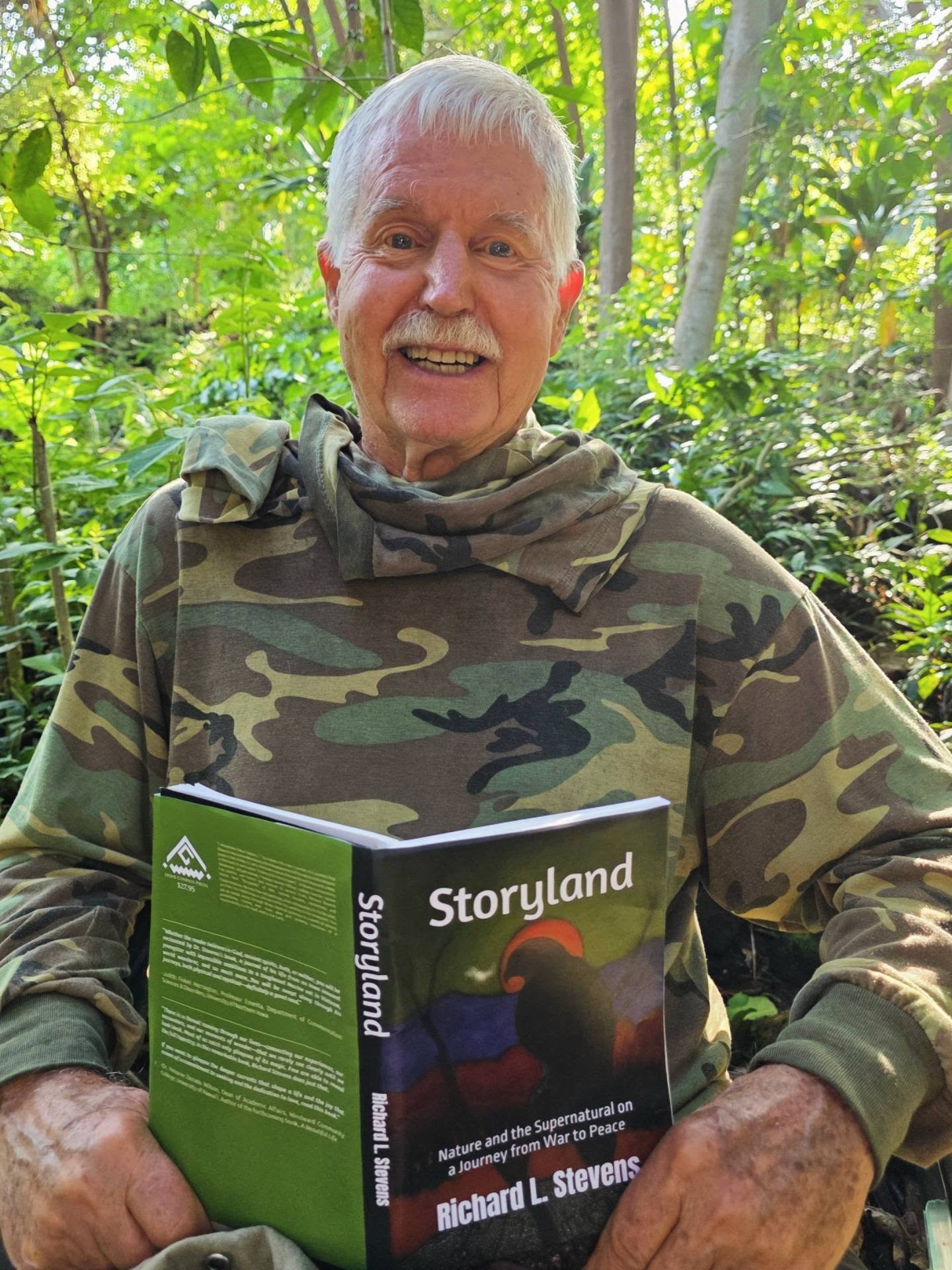
While lost in the deep jungle of Vietnam on the Ho Chi Minh Trail, a young Marine searched for the tallest tree he could climb to find something that looked familiar. Little did he know this moment would shape his future.
“From that hilltop tree, stretching away in every direction, were unbroken mountain and forest waves as far as the eye could see,” said that Marine, Dr. Richard Stevens, now a University of Hawaiʻi history professor.
“I realized we never could win, no matter how hard we tried,” he said. “We could never blow the top of every hill, scrape every valley, or defoliate every tree. We were fighting against nature and would lose. They were working with nature and would win.”
To those who know him best, Stevens is a storyteller, someone who has spent a lifetime helping others see the world differently. Now, those stories that once lived only in classrooms, trail walks, and conversations are written words in his new book, “Storyland.”
The idea for the book came from his use of personal stories to teach world history and from him writing personal history at Hawaiʻi Community College Pālamanui.
“I had the good fortune to survive as a child during World War II to now, so there are a broad range of stories to choose from that were valuable to tell over the years,” Stevens said. “At the end of the semester, students would often comment on these stories and their impact.”
Those comments made the idea of a book real to Stevens.
“Since I’m into writing, it felt natural to put these stories that lean heavily into nature and indigenous wisdom in one book for people who would never sit in my class,” he said.
“Storyland” is a deeply personal reflection on Stevens’ life lived with purpose and the journey that carried him from the battlefields of Vietnam to the mountains and coastlines of Hawaiʻi Island.
“A major connecting piece of these stories is the fact that they are all guiding forces in my life’s purpose,” he said. “Whether it was the words people say, the actions they take, or strange occurrences that eventually reveal their meaning, these memories are all guiding forces for me.”
Stevens said stories are the “verbal artifacts in our lives.” Writing them down makes history come alive. It brings back people, places and experiences that are long gone.
“It’s kind of magical,” he said.
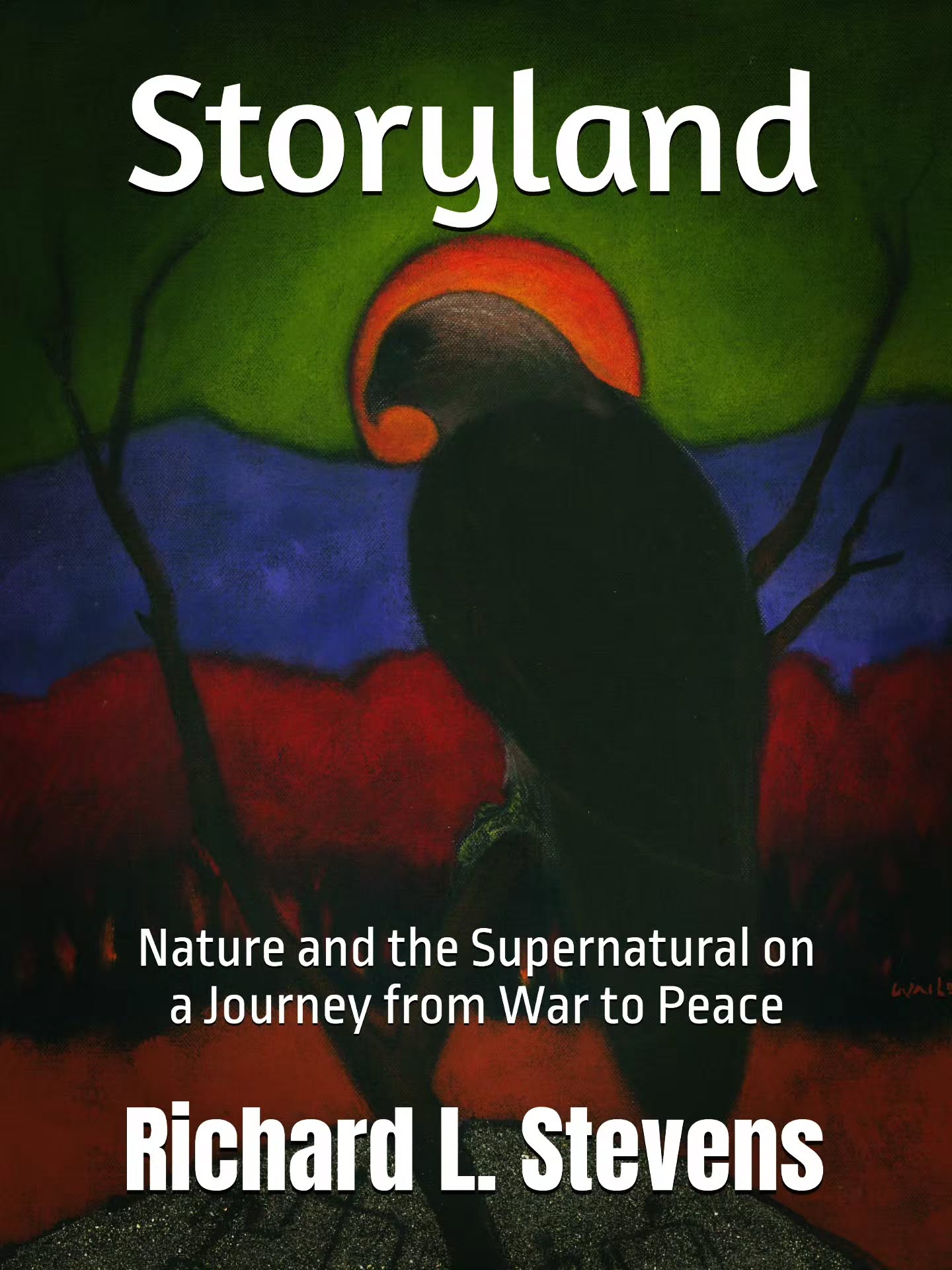
In one of the first stories in the book, Stevens writes about a memory of watching redtail hawks soar from a hill with his father in Iowa. This was his first lesson about tradition. Stevens’ father had been brought to the same spot by his father.
“Tradition is like a type of communication between generations, so it made sense to start with this story for me,” Stevens said. “Hawks are also a connecting thread through the book, which is why the cover depicts an ʻio (Hawaiian hawk) above the petroglyphs on the ground, which represent family.”
The cover is a painting by Stevens’ late hānai (informal adoptive) brother.
“I have a story about my hānai brother and his mesmerizing experience watching a young ʻio take flight for the first time in Hāmākua,” Stevens said. “Since he’s passed on from this life, I’ve seen him as an ʻio flying overhead in the friendly Kohala skies multiple times.”
Stevens grew up in Prairie City, Iowa, and joined the Marines soon after high school. He served in the Vietnam War for three years in both military and civilian roles. He was wounded twice and reported missing once. He has been a Foreign Service officer, refugee adviser for the U.S. Agency for International Development (USAID), and a college professor in Japan, Guam, California, and now Hawaiʻi.
He received a master’s degree and Ph.D. from the University of Hawaiʻi at Mānoa and became a lecturer at the University of Hawaiʻi–West Hawaiʻi, leading his students and community members in numerous restoration projects, such as planting trees at the West Hawaiʻi Veterans Cemetery.
While he has written about his experiences in the Vietnam War and as an environmentalist in Hawaiʻi before, “Storyland” is the first time Stevens has written about spirituality and humanity’s connection to the unseen world. He blends poetic storytelling and reflection from the stories told.
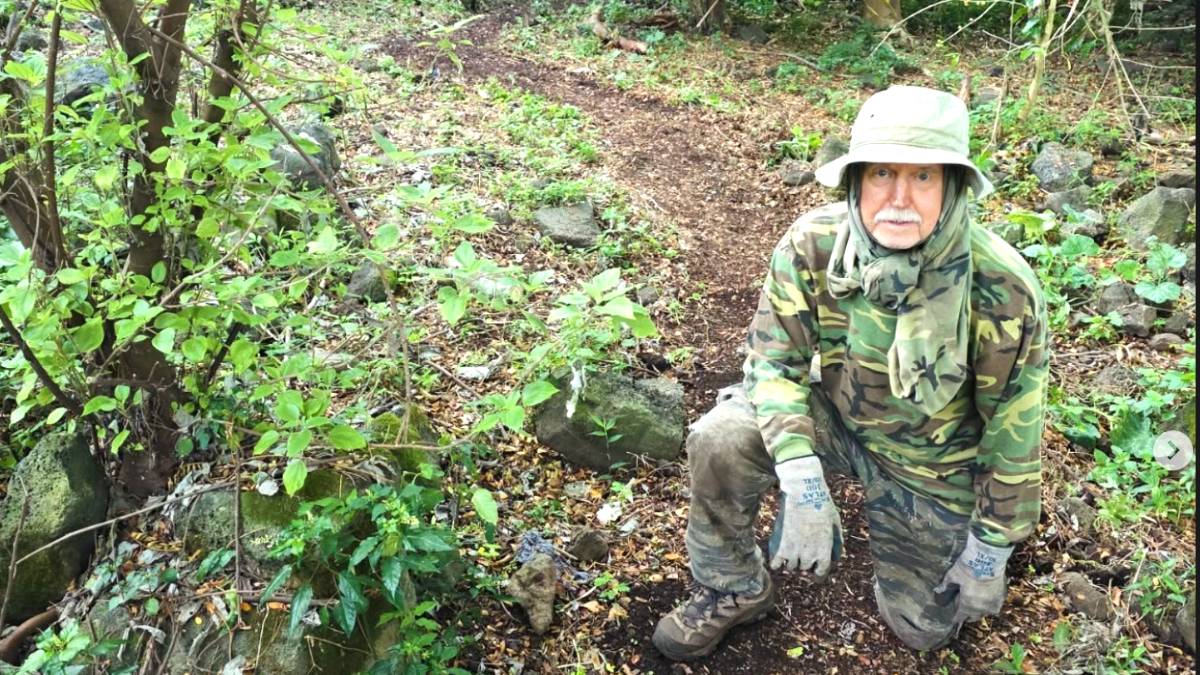
In the book, Stevens reflects on his time as a trail hunter in the 1990s. The job allowed him to document North Hawaiʻi trails for the state’s Nā Ala Hele system, which he has continued to do in his free time.
“One of the chapters is called ‘The Trail Hunter,’ which starts at the phone call for the job, finding the first trail going into the valleys and hearing voices coming from the valleys,” he said. “When you walk on these trails, you feel the mana come through the soles of your feet.”
Stevens added: “You become part of the procession that stretches from the first person who ever walked the trail. I began asking myself, what is my kuleana (responsibility) from this now? Others have played their role, what am I supposed to be doing here?”
These questions were posed in the stories to students and are now posed to readers.
“Everyone just needs the motivation to find their path,” he said. “Once you get there, you’ll be guided in the right direction.”
Making connections between memories and life lessons is the reason he wrote “Storyland.” He hopes his worldview inspires others to dive deep into their own perspective by physically preserving their memories, experiences and life lessons that might otherwise exist only in passing moments.
“I hope people are encouraged to capture their memories by writing them down, whether published or not,” Stevens said. “Even the most vivid memories get lost or worn down, so capturing them before they get away is a beautiful thing. In the process, you end up learning from them even more, too.”
Stone Compass Press, an independent hybrid publisher and distributor dedicated to empowering writers and authors on the Big Island, published “Storyland” and has it for purchase on its website.
“Storyland” is also available on Amazon and select bookstores across the island.
Sponsored Content


Subscribe to our Newsletter
Comments