


After 8 years, Pāhoa Elementary School master plan to expand, modernize facilities finally moves forward
In 2018, State Sen. Joy San Buenaventura received $500,000 from then Hawaiʻi Gov. David Ige in Capital Improvement Plan Funds to finance the master plan for Pāhoa Elementary School’s expansion. Nearly eight years later, the community finally is seeing a draft.
The proposed five-phase master plan to build more classrooms and upgrade the campus with modern facilities, including a new library and cafeteria, was unveiled Wednesday during a public meeting at the Pāhoa Elementary School gymnasium.
The Hawaiʻi State Department of Education, design consultant, Mitsunaga & Associates, and planner PBR Hawaiʻi and Associates hosted the meeting to detail the plan and get community input.
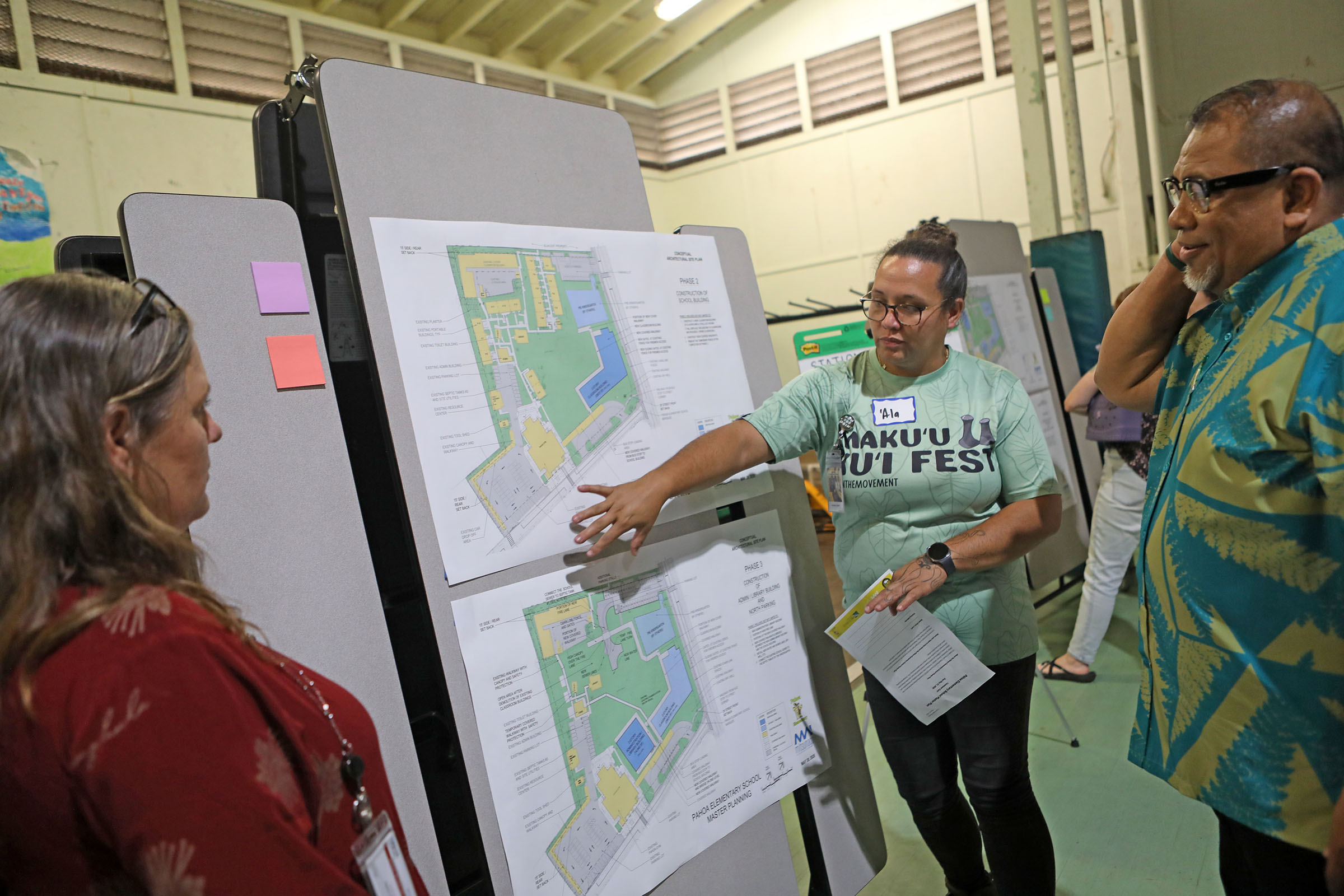
Romeo Gampong, the lead architect of the plan, has been with the Department of Education for just eight months. But he said: “This master plan has been in the works for two to three years. At least there is a project that is moving. People in the community can see the wheels turning.”
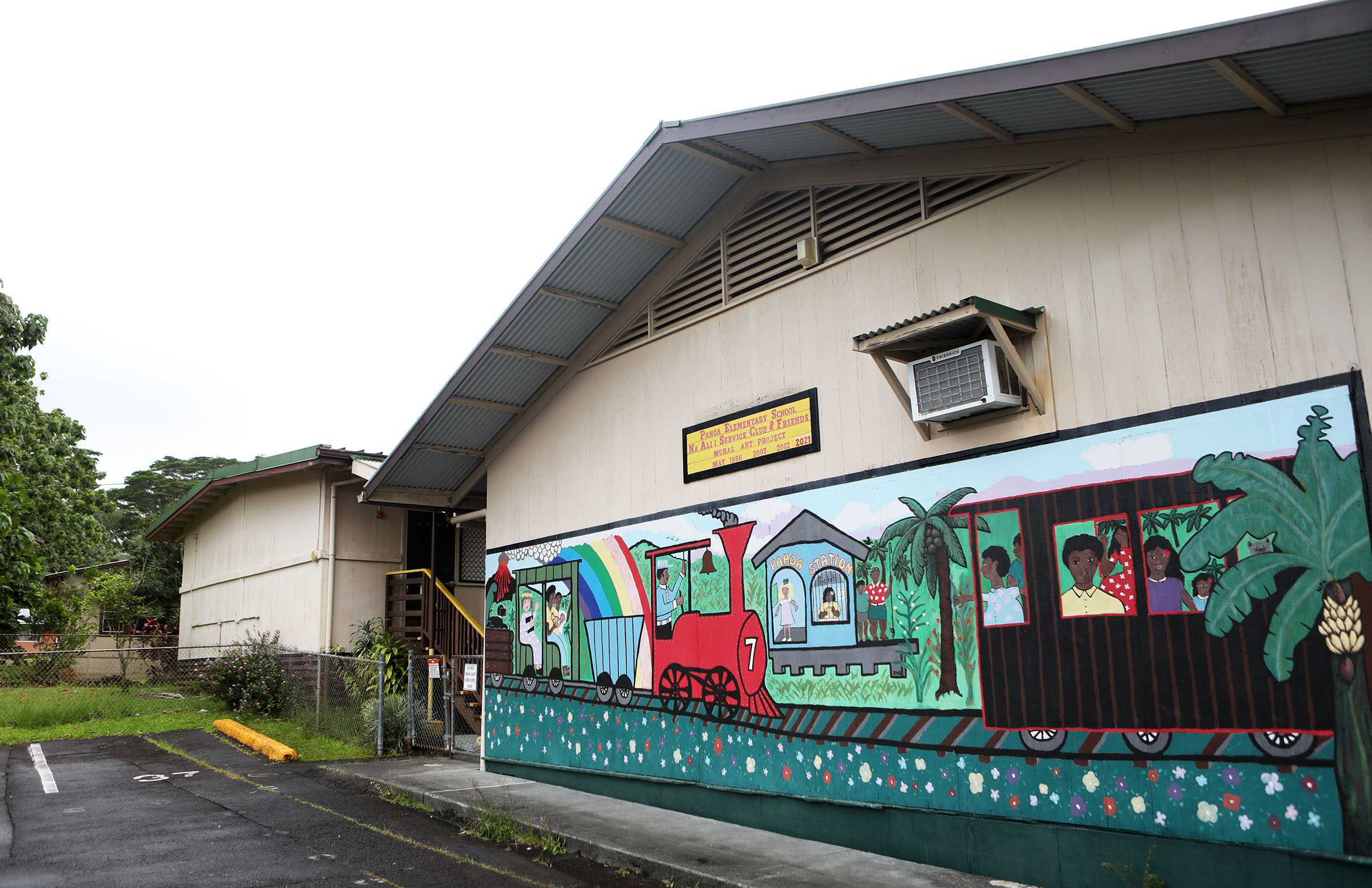
The reason the master plan took 8 years to complete is ultimately due to the Department of Education’s massive backlog of projects and years of unspent funds.
In 2018, the Department of Education mistakenly reported a backlog of $293 million for its repair and maintenance projects but then corrected the number to over $868 million, according to reporting in 2025 from Civil Beat.
When the COVID-19 pandemic began in 2020, spending slowed down even more with supply chain shortages and delays in the permitting process.
The backlog, along with an increase in legislative appropriations, have contributed to the department’s buildup of funds over time. In the 2021 to 2023 fiscal years, the Department of Education received nearly $1 billion in Capital Improvement Project funds and spent less than 1% of its appropriations in the 2023 fiscal year.
Due to the amount of Department of Education projects across the state and the time it may take to get funding for each phase, the ambitious plan could take up to 20 years to complete, according to Karyn Yoneshige, a project coordinator with the Department of Education.
Pāhoa School was established in 1910, and in 1914, the school was renamed Pāhoa High and Elementary School. All three schools were administered as one campus until the fall of 1993.
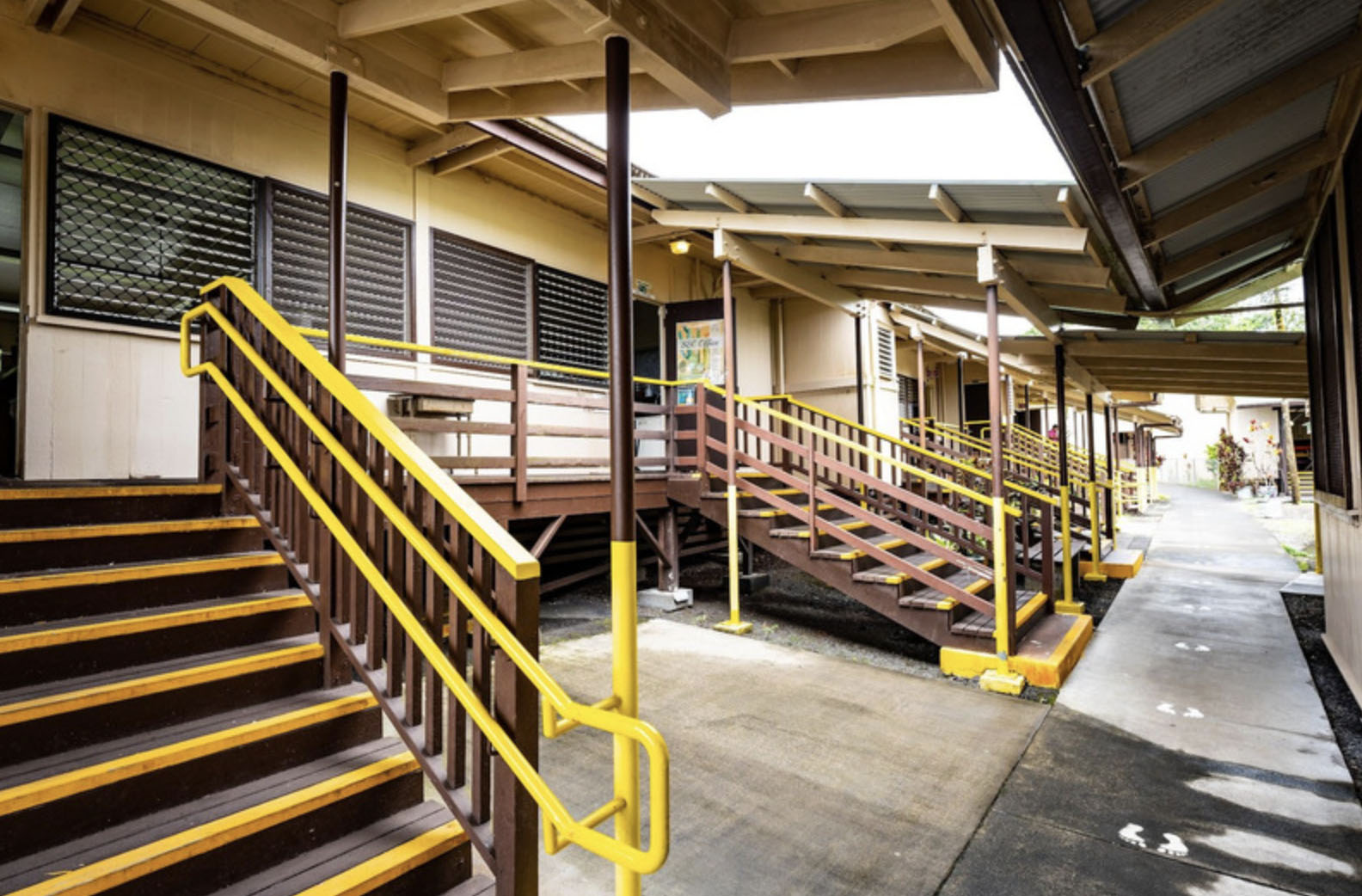
A few original buildings, including the gymnasium, are still in use on the Pāhoa Elementary School campus. The original main elementary school building was torn down in 1979; and the replacement two-story building is approaching 50 years old.
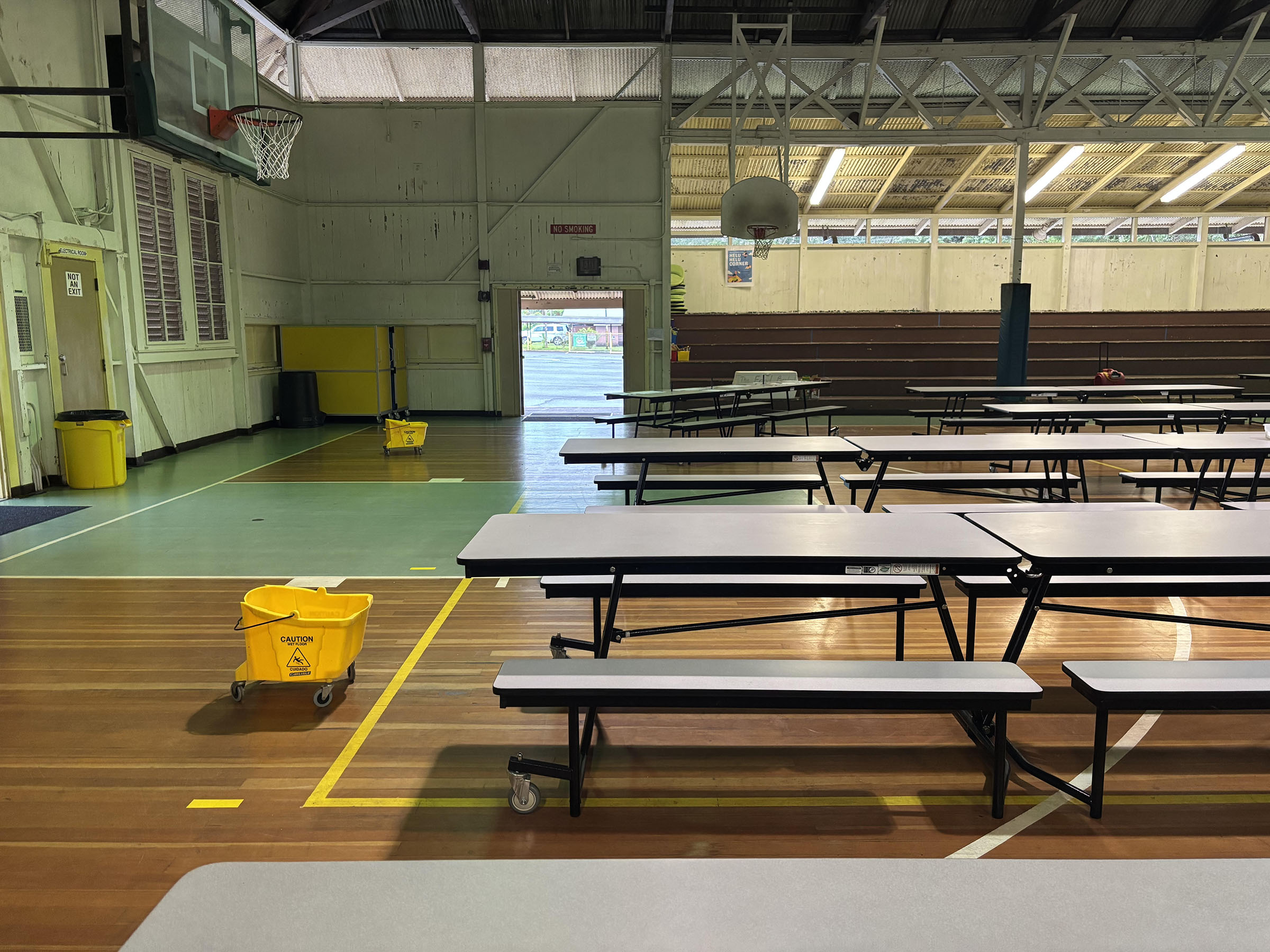
The gymnasium, which is also used as the cafeteria, has several leaks from the roof and is slowly becoming inadequate for the students. The student population is also growing each year, according to Public School Review,
Pāhoa Elementary School has a student population of 394 students, which has grown by 14% over five school years. Current classrooms, recreation areas and administration facilities will eventually need to grow to support a growing student population.
“This project is critical for Pāhoa and Puna, which is the fastest-growing district in the county,” San Buenaventura said. “This will contribute to a better home for keiki for years to come.”
In 2025, Gov. Josh Green allocated $2 million in general obligation bond funds to Pāhoa Elementary, which will cover upgrades to existing conditions as well as the construction of a new bus loading zone and a covered walkway for students.
“The first thing to tackle is the traffic and parking issues, which will be helpful to parents in the mornings and afternoons,” Gampong said. “The phased plans are useful because the community will ultimately see progress one phase after another.”
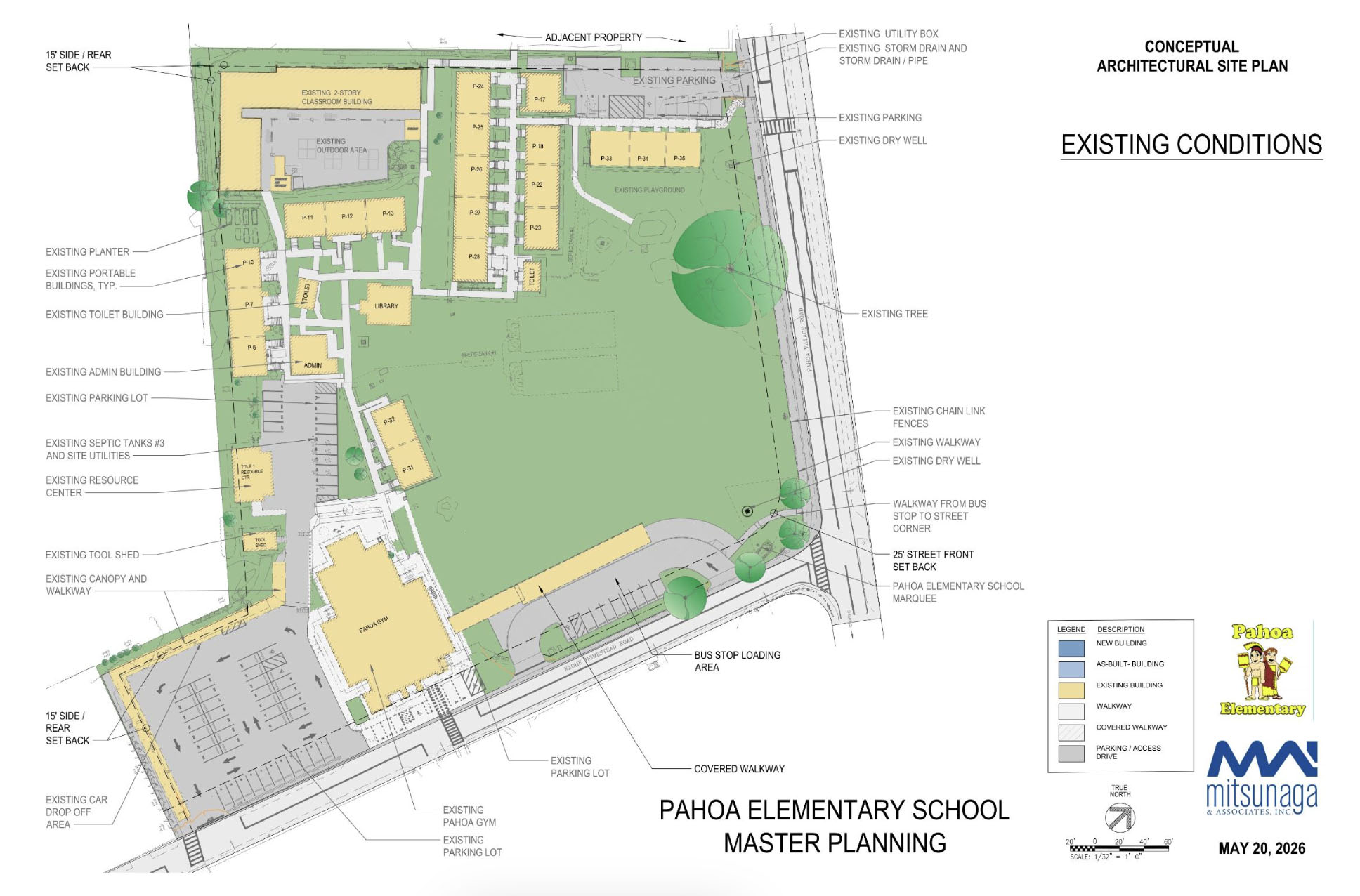
Construction on a new bus stop loading area, a new covered walkway, and the expansion and restriping of a parking lot will begin early next year after a permit is approved in the next four to six months, according to Mike Beason, a planning consultant and civil engineer.
Before any additional phases of the master plan begin, an environmental assessment is being prepared. Once the draft environmental assessment is complete, a public review period will follow.
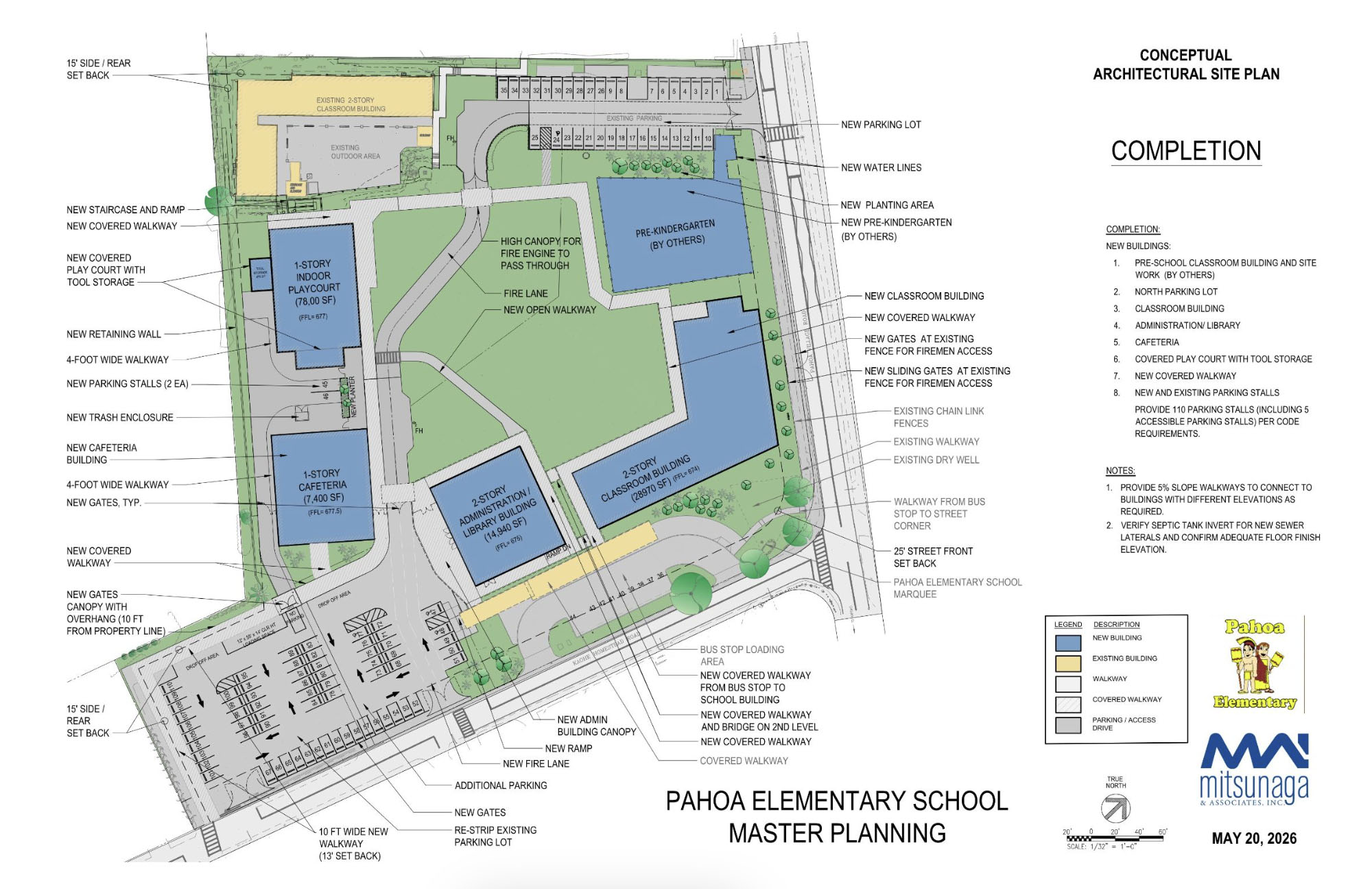
The five phases include:
Phase 1:
- Design and construction of a preschool building, which will be funded and managed through the Office of Early Learning.
- Construction of a new north parking lot.
Phase 2:
- Construct a new classroom building with 16 classrooms and two pull-out rooms to replace existing 15 classrooms.
- Construct new covered walkways.
Phase 3:
- Construction of a new administration/library building.
- Completion of portions of a new fire lane and covered walkways.
- Bridges between the administration building and classrooms.
- Installation of new water and sewer lines and a dry well.
- Connect the existing school sewer to the septic tank.
Phase 4:
- Construction of a new playcourt.
- Completion of a portion of the new fire lane.
- New stairs and a ramp to the existing school building.
Phase 5:
- Construction of a cafeteria.
- Construction of an additional parking lot on the south side and new gates.
- New covered and open walkways.
“The phased planning will allow the school to remain in operation while another portion of the campus undergoes construction,” Gampong said. “The timing of this project all comes down to funding. It can take a long time for a project like this, but once we are awarded funding for a phase, we can apply for permits with the county and get started on construction.”
While the idea of the total master plan is exciting, some Pāhoa Elementary staff members have resigned themselves to the fact that they may not see it all come to fruition.
“I think they said that this could take up to 20 years,” Pāhoa Elementary head custodian Leinaʻala Kealoha said. “I started working here recently, so I may be one of the few who will see the entire project from start to finish.”
“Other than the classrooms, the most important thing in my eyes is the playcourt,” Kealoha added. “It rains so much here and the kids can’t do anything active and are stuck in their classrooms. They perform much better in school when they have a chance to play.”
Visit the story maps webpage to learn more about the Pāhoa Elementary School Master Plan. Additional comments on the plans are being received through May 31. Download the comment form and submit through email at mbassett@pbrhawaii.com or by mail to PBR Hawaiʻi & Associates, Inc. Attn: Makena Bassett 1001 Bishop St. Suite 650 Honolulu, HI 96813.
The public review period for the draft environmental assessment has not yet been determined. Email mbassett@pbrhawaii.com to be notified when the assessment is published.