


Briefs for May 19: Submit input on future wildfire policy, state employees train in trauma-informed care, vaping and effects on mental health

Public Utilities Commission launch public engagement process regarding wildfire recovery policy
The Hawai‘i Public Utilities Commission is working to develop administrative rules to help the state can ensure future wildfire victims are compensated while maintaining the financial stability of utilities responsible for delivering essential public services.
The Public Utilities Commission has launched a statewide stakeholder engagement process tied to ongoing wildfire policy effort to develop administrative rules that establish a liability cap framework for electric utilities under Act 258.
Input from community members, advocates, industry representatives, local organizations, and impacted residents across the state will help inform the development of rules related to utility liability caps and their potential interaction with broader wildfire recovery and resilience efforts.
The initiative builds on the Commission’s recently completed Wildfire Recovery Fund Study, which found that liability cap decisions are deeply interconnected with any future wildfire recovery fund structure. Potential areas of interest for coverage include:
- How Hawai‘i is approaching utility accountability and wildfire risk
- The balance between victim compensation, grid resilience, and utility financial stability
- The role public input will play in shaping future wildfire-related policy
- How Hawai‘i’s approach compares to wildfire liability frameworks emerging in other Western states
The Commission’s announcement on the engagement process can be found on its website. Submit written input through the following intake process here.
Additional resources, engagement materials, and participation information are all available on the Public Utilities Commission Liability Cap Rulemaking webpage.
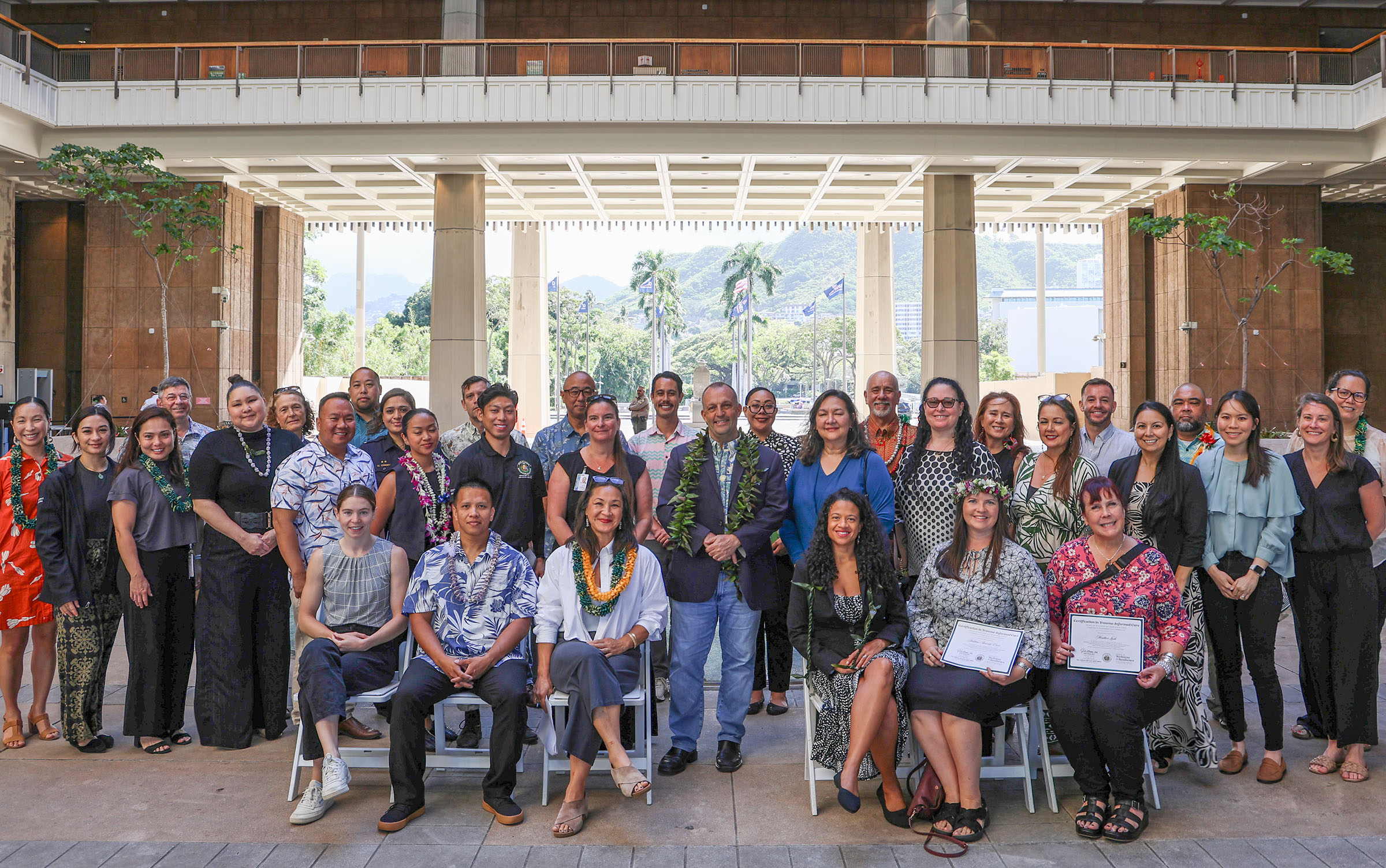
Hawaiʻi recognizes inaugural cohort of state certified trauma-informed professionals
The first cohort of state employees earned the State of Hawaiʻi’s Certification in Trauma-Informed Care last week after completing an eight-module hybrid program.
Developed by the Office of Wellness and Resilience, the program is the first trauma-informed care certification in the state and is a cornerstone of Gov. Josh Green’s 2024 executive order committing Hawaiʻi to becoming a trauma-informed state.
The program pairs in-person workshops with asynchronous video trainings hosted online by the Department of Human Resources Development. Coursework covers the science of trauma and resilience, the principles of trauma-informed care, and the application of those principles in the workplace, and was shaped by Hawaiʻi’s culture, strong sense of place, and the realities of historical and intergenerational trauma experienced by Native Hawaiian and Pacific Islander communities.
The cohort includes employees from across state departments and partner agencies, with about 200 workers enrolled in the program’s first phase. The certification is now open to nearly all executive state department employees, with plans to extend it to our other branches of government, county workers and community-based organizations.
“This first cohort represents what’s possible when we put hope and healing at the heart of public service,” said Gov. Josh Green. “These graduates are bringing a deeper understanding of trauma and resilience into every interaction they have with the people of Hawaiʻi. That is how we build a healthier state.”
One of the key recommendations of The State of Well-Being Report, the state’s first comprehensive look at the mental health and well-being of Hawaiʻi’s essential workforce, noted that targeted training programs as a universal support and intervention for all state employees.
“Our clients work with some of the most vulnerable populations in the state. They are exposed daily to secondary trauma, and so are we as the attorneys who advise them,” said Deputy Attorney General James Walther, who is part of the inaugural cohort. “This training gave us good insight and practical tools to use with each other and with our clients, helping us listen and respond in ways that don’t add to someone’s trauma.”
The online modules can be found on the Department of Human Resources Development’s training website. To learn more, visit the Office of Wellness and Resilience Learning and Leadership Collaborative website.
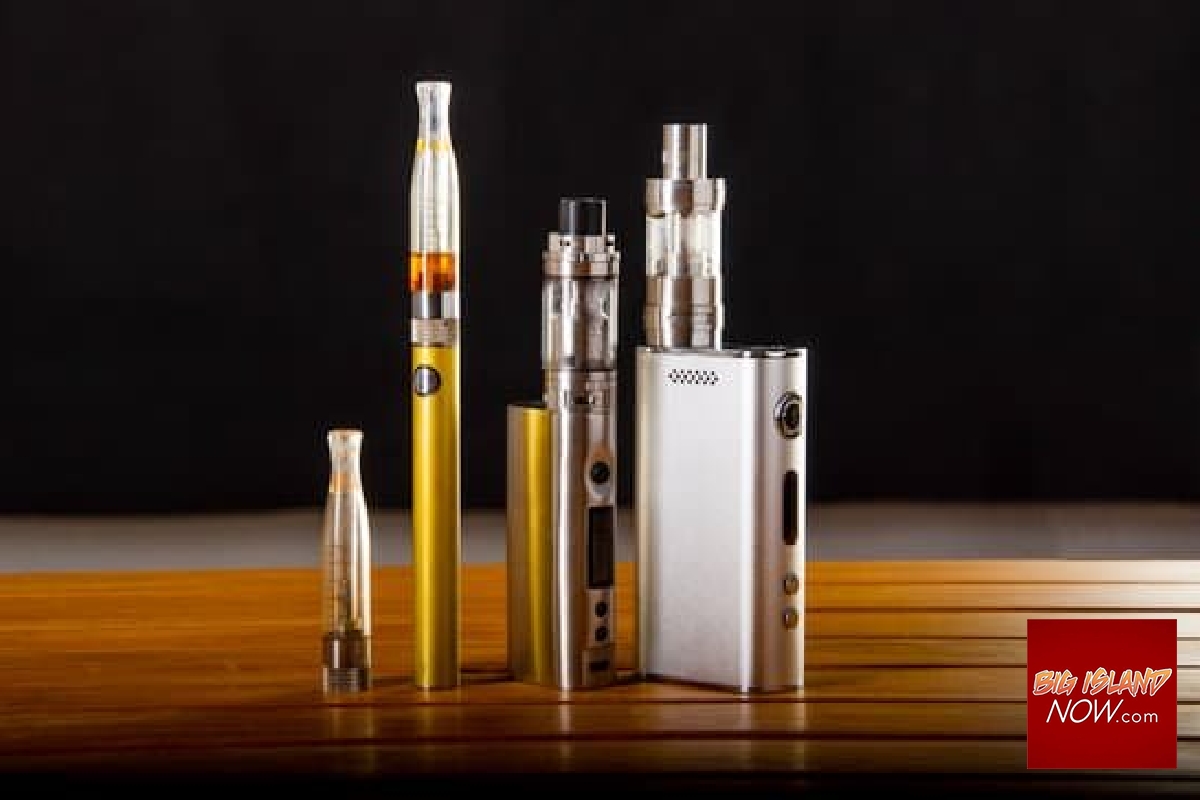
Hawai‘i State Department of Health calls attention to vaping and its impact on mental health
As part of Mental Health Awareness Month, the Hawaiʻi State Department of Health is highlighting the connection between nicotine use and mental health challenges such as anxiety, depression, and lowered self-confidence.
Emerging research and statewide data reveal that nicotine use can contribute to or intensify mental health challenges over time. Some data includes:
Nicotine use in Hawaiʻi: Eight out of 10 teens and young adults (ages 15-24) in Hawaiʻi who have used e-cigarettes said they started vaping because they thought it would decrease stress, anxiety, or depression.
Impact on well-being: Vaping can become tied to routine and social connections, often leading to withdrawal symptoms, including anxiety, or lower self-confidence.
Benefits of quitting: 90% of those who quit reported feeling less stressed, anxious, or depressed, and many also felt a stronger sense of mental well-being and experienced more meaningful connections with others after quitting.
One Hawaiʻi resident in recovery shared that nicotine use was once a constant part of daily life, often tied to stress, anxiety, and isolation. However, since quitting and entering a long-term treatment program, they’ve experienced greater clarity and stability.
Angela, a Hawaiʻi resident in recovery, credited the Habilitat Health and Wellness program on Oʻahu with helping her become and stay tobacco-free.
“After five months of smoking, it was difficult for me to breathe while lying on my back, I was unable to go upstairs without having to catch my breath and overall I felt bad,” Angela said. “Quitting was very challenging for me – I was on edge and felt like crying almost every day until I got the nicotine replacement therapy.”
To shed light on the financial and emotional toll of nicotine, the Hawaiʻi State Department of Health launched its Unsubscribe and Next Move campaigns, which address vaping among young adults and teens by reframing the conversation around cost, control, and independence while connecting audiences to free, local support to quit.
This year, the Hawaiʻi Tobacco Quitline celebrates 20 years of providing free, confidential, and convenient phone and online services to help individuals quit tobacco and vaping. For support in quitting, call 1-800-784-8669.
The Hawaiʻi Tobacco Quitline also offers “My Life, My Quit,” a free and confidential program with trained coaches to help youth up to 17 years old quit smoking or vaping. For more information or to sign up, visit the My Life, My Quit website.