


2-year dispute ends with Hawaiian Paradise Park mailbox park to be built at new location
After two years of disputes between the Hawaiian Paradise Park Owners Association and residents over the construction of a mailbox park near a burial site with iwi kūpuna (ancestral bones), a decision has been reached not to use that location.
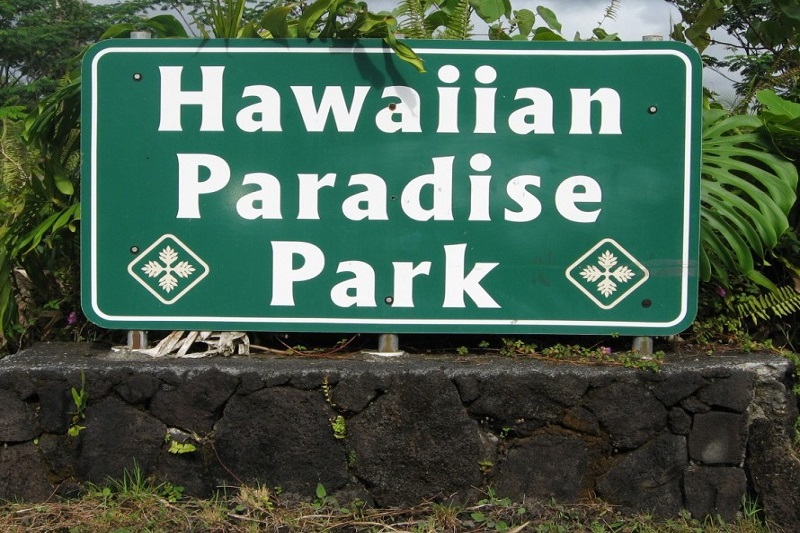
The association’s board decided not to use the planned site at Makuʻu Drive and 16th Avenue for the building of 1,400 mailboxes. They now will be built elsewhere, according to Lanell Lua-Dillard, chair of the association’s Cultural Preservation Committee.
“The board decided to move the mailboxes, but they aren’t telling us where it will go yet,” Lanell said.
In July 2024, workers accidentally uncovered a lava tube opening near the site and found iwi kūpuna. Since the discovery, which occurred after the land was cleared and a concrete slab was poured, there has been more than a year of contentious discussions between owners and the association’s board, with some meetings abruptly ending when they became too heated.
When some residents argued against the site, the board repeatedly cited the depletion of the $600,000 budget for the project, which covers all four mailbox parks, as a reason for not relocating the mail park at Makuʻu and 16th.
The board also suggested that residents who want a different site would need to “come up with $200,000 for a new acre to clear.”
“Every time people express concerns, it is met with financial issues and the suggestion to fund it themselves,” Lua-Dillard said. “We were all told there are $3 million in annual funds, so that response is inappropriate.”
All nine board members were asked about the cost and how they came to the decision to move the mailbox park, but they have not returned emails.
Resident and community activist Emma Koa, who has attended the Hawaiian Paradise Park Owners Association meetings for the past year to urge board members to change their plans for the mailbox park, said she was thankful the mailbox park is being relocated.
“This situation shows that if you can get enough people together, hold the line, and not be swayed by intimidation tactics, money or other distractions, real change can happen,” Koa said. “Sometimes it takes going to court or going to these meetings for real change to happen.”
Koa and other activists were often barred from attending meetings.
“Truthfully, the way they talked to Hawaiians and treated us, who were only trying to protect our iwi kūpuna, was pilau (foul),” Koa said. “But that doesn’t matter when you are able to get the collective to agree on something and to fight for it, no matter how long it takes.”
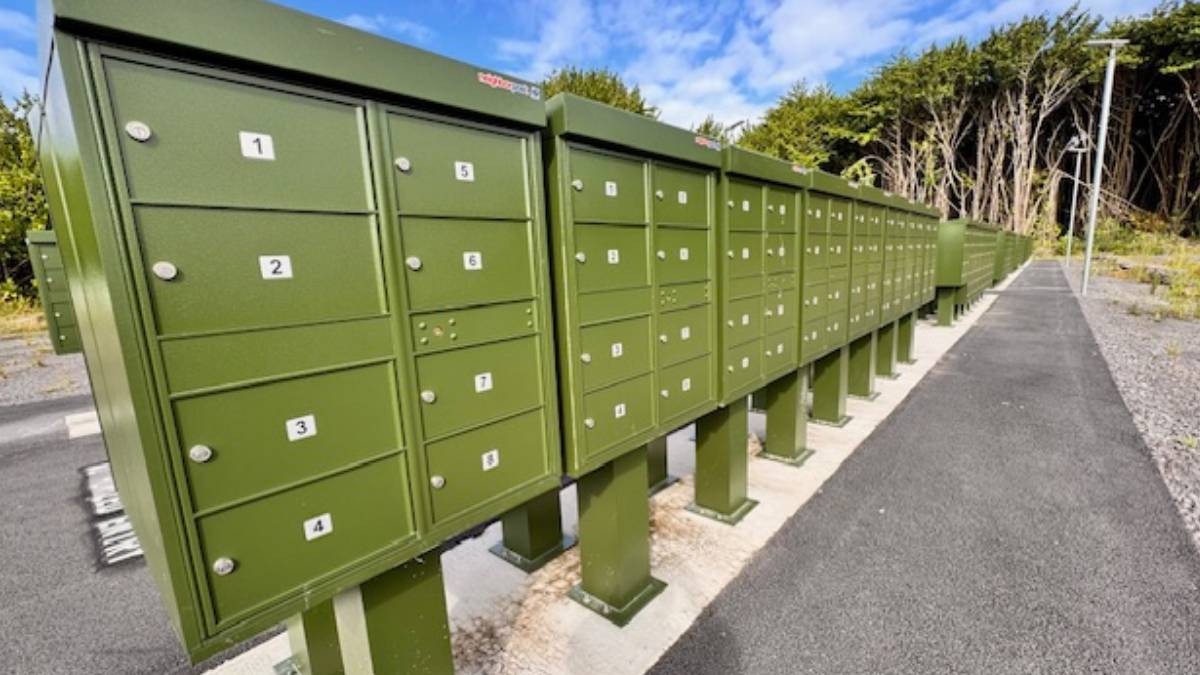
There are now about 3,000 occupied homes in the Hawaiian Paradise Park subdivision. One of the four mailbox parks is complete at Kaloli Drive and 4th Avenue with 1,400 mailboxes.
The association plans to install all four of the cluster mailboxes this year, with ones holding approximately 3,000 each at Kaloli Drive and 4th Avenue and Makuʻu Drive and 6th Avenue.
With several recent controversies involving iwi kūpuna on Oʻahu and Maui, as well as the discovery and broadcast of iwi kūpuna by Tristyn and Kamohai Kalama on the Big Island, a coalition of Kānaka Maoli (Native Hawaiian) advocacy groups has filed a formal petition for rulemaking with the State of Hawai’i Board of Land and Natural Resources and the State Historic Preservation Division.
Representing a broad base of Kānaka Maoli practitioners, residents and lineal descendants, the petitioners are seeking to ensure the orderly and transparent protection of iwi kūpuna and historic properties since existing rules give consultants too much leeway and offer the public too little visibility into how burial discoveries are reported and who is notified.
The petitions emphasize the urgent need for systemic reform to prevent the continued desecration and improper disturbance of burial sites across the islands as well as the need to foster better collaboration between descendants, cultural practitioners and permitting agencies.
Since the petitions were submitted to the Board of Land and Natural Resources and the State Historic Preservation Division, they can open a rulemaking docket, ask for additional information or decline to move forward.
Any formal rulemaking process would trigger public notice and a chance for public comment. For now, the timing is in the hands of state regulators and the administrative process set out by the State Historic Preservation Division.