


NTSB releases preliminary findings on Airborne Aviation helicopter crash that killed 3, seriously injured 2 on Kauai’s North Shore

The surviving pilot of a sightseeing helicopter that crashed off Kaua’i’s North Shore on March 26, resulting in the deaths of three people, told federal aviation investigators that the aircraft experienced severe vibrations and a loss of directional control during the tour flight, according to the preliminary finding of the National Transportation Safety Board.
The preliminary report did not identify a suspected cause of the crash. That determination will come in the NTSB’s final report, which likely is expected sometime in 2027.
But in the preliminary report, released Friday, the pilot said the flight along a routine tour route proceeded normally until the aircraft reached Kauai’s North Shore near the Kalalau shoreline, an area known for rapidly changing weather patterns, including strong winds, heavy rain, and shifting cloud cover.
The pilot told investigators when he initiated a left turn away from the shoreline, he felt a “high frequency vibration” throughout the helicopter that “came in waves and became stronger each time.”
The lone surviving passenger told investigators that she heard a change in the helicopter’s sound and noticed it slowing down before it began rotating toward the water.
She said the aircraft then “nosedived” into the ocean.
The Hughes 369D (500D) helicopter, tail number N715KV, operated by Airborne Aviation Tours, was reported to have gone down at about 3:39 p.m. near Hā’ena offshore Kalalau Beach along the Nā Pali Coast — and roughly 20 miles from Līhu’e Airport, where it had departed about 27 minutes earlier for a tour flight.

(Image Credit: PulsePoint App)
A post-accident examination found substantial damage to the fuselage and main rotor blades. The helicopter was recovered and taken to a secure facility for further investigation.
Preliminary flight data reviewed by aviation attorney Mike Slack shows the helicopter departed and descended from about 3,000 feet to near sea level within minutes.
In the preliminary report, the pilot said that moments after he made the turn away from the shoreline, the helicopter began an uncommanded right yaw that could not be corrected using left anti-torque pedal input. The aircraft rapidly spun clockwise, completing about two full rotations.
The pilot said he then entered an autorotation, reducing engine power by rolling the throttle to idle and attempting to increase airspeed to regain directional control. The pilot reported that the spinning stopped during the autorotation, allowing him to issue a mayday call.
Unable to reach the beach, the helicopter descended into the ocean about 75 yards offshore. It struck the water, rolled onto its right side, and became partially submerged shortly afterward.
According to the NTSB preliminary report posted on Aviation Safety Network, a witness flying in the area saw the helicopter hit the water and said it came to a rest upright, tilted slightly to the right and facing east. Another witness reported the aircraft appeared intact before the impact but broke apart upon hitting the water.
The flight was the sixth and final trip of the day and was operating under federal Part 135 regulations for commercial air tours.
The National Transportation Safety Board is leading the investigation, which includes the recovery and now the examination of the wreckage. The helicopter was a Hughes 500 model manufactured in 1979.
The pilot and one passenger survived with serious injuries. Neither has been identified. Police reported the people who died from the crash were 65-year-old Margaret Rimmler and 59-year-old Patrick Haskell, both from Massachusetts, and Ukrainian national Oksana Pihol.
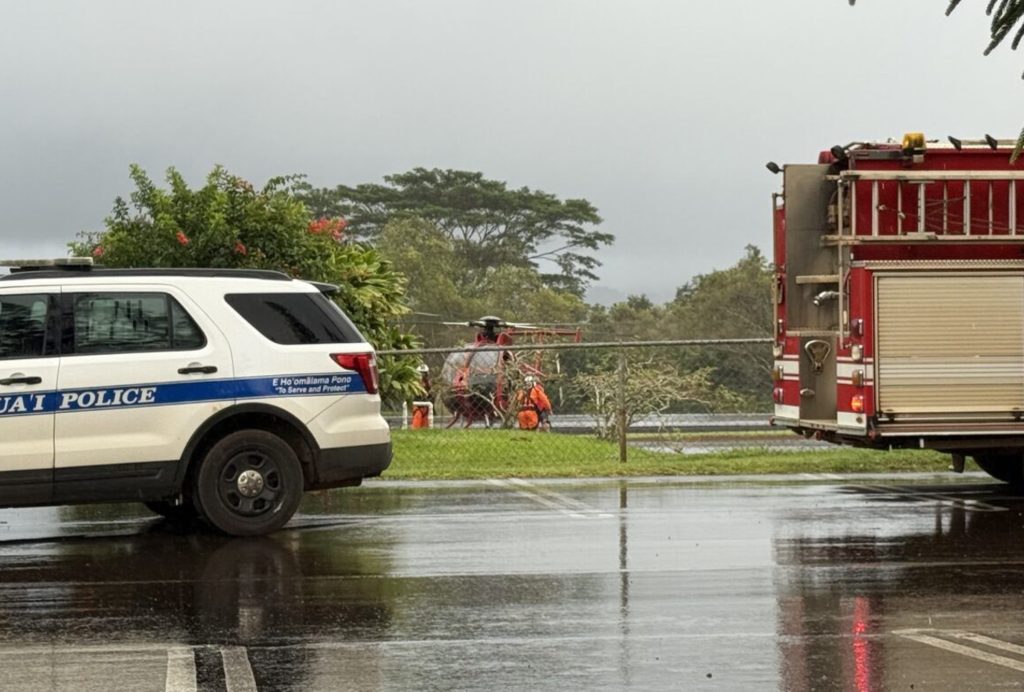
Kauaʻi authorities said at least one victim was trapped in the wreckage, underscoring a commonality in water-related helicopter crashes: limited time for passengers to escape.
“When aircraft go into the water, occupants are restrained and may only have seconds to get out,” Slack said. “Entrapment and drowning are frequent causes of death in these kinds of accidents.”
The helicopter was nearly 50 years old. While older aircraft can legally remain in service if properly maintained, Slack notes that age can complicate potential liability and raise additional scrutiny about maintenance practices.
Following the crash, Airborne Aviation Tours suspended operations indefinitely, a move Slack says is typical following a fatal accident while companies assess safety and support for staff. Meanwhile, other tour operators in the area have continued flying.
Airborne Aviation did not immediately respond Saturday to a request for comment.
Airborne Aviation is one of several helicopter companies that offer sightseeing tours of Kauai’s canyons, shoreline, and waterfalls, and especially the cliffs and beaches along the world-renowned Nāpali Coast. Airborne Aviation said on its website that its helicopters are “doors-off” for thrill-seeking adventure and can seat up to four people.
The crash has renewed concerns about Hawaiʻi’s air tour industry, with industry critics pointing to longstanding issues, including pressure to fly in marginal weather, high aircraft utilization, and varying pilot experience levels.
“There’s economic pressure to keep flying,” Slack, the aviation attorney, told Kauaʻi Now. “These are revenue-generating flights, and that can influence decision-making.”
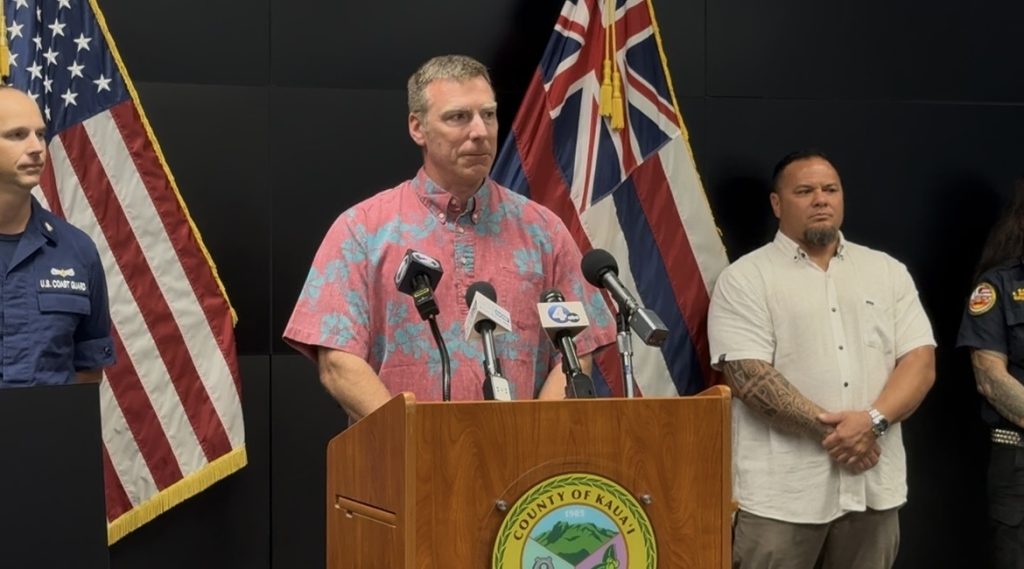
According to records dating back to 2004, at least nine helicopter crashes have occurred on the island with at least 23 fatalities.
- 9/24/2004 – Bali Hai Helicopter Tours crashed near Mount Waialeale (central Kauai); all five aboard were killed.
- 09/23/2005 — Heli‑USA Airways Aerospatiale AS350 crashed into the sea off Kailiu Point (near Haʻena); three passengers died, others survived; NTSB found the pilot continued into adverse weather.
- 03/08/2007 — Heli‑USA AStar (Princeville Airport) crashed at the end of a tour; four people were killed and others injured.
- 03/11/2007 — A McDonnell Douglas 369FF operated by Smoky Mountain Helicopters and doing business as InterIsland Helicopters crashed into the ocean with a pilot and four passengers during a flight near Tunnel Beach in Haena. Mechanical failure was the cause. One person died and three people were seriously injured.
- 01/17/2016 — Blue Hawaiian (Airbus EC130 T2, N11VQ) made a hard landing at Kalalau Beach (Nā Pali Coast); multiple injuries.
- 12/26/2019 — Safari Helicopters (tour flight) crashed in the Kokee/Kalepa area above the NāPali cliffs; seven people were killed; NTSB led the investigation.
- 02/27/2024 — Jack Harter Helicopters crashed at Honopu Beach (NāPali Coast); one passenger was injured and others unhurt; local responders assisted.
- 07/11/2024 — Aliʻi Kauai Air Tours (Robinson R44) ditched off the NāPali Coast; multiple fatalities (pilot and passengers); NTSB docketed the investigation.
- 03/26/2026 — Sightseeing helicopter operated by Airborne Aviation crashed just off Kalalau Beach (NāPali Coast); three fatalities and two injuries.
Past efforts to modify flight altitudes and paths in Hawaiʻi have drawn tens of thousands of public comments, reflecting ongoing tensions between safety, tourism and community concerns.
“In Hawaiʻi, weather can change quickly with terrain and altitude,” Slack said. “Experienced pilots know when not to fly and which areas to avoid.”
Slack also added that Hawaii’s distinct “microclimates” — localized weather systems that can vary dramatically over short distances — pose unique risks for pilots unfamiliar with the islands.
In the preliminary report of the March 26 crash, there is no mention that weather was a factor. The meteorological conditions were clear low cloud conditions with 10 miles of visibility and wind speed at 16 knots.