


Residents, visitors urged to remain informed as Episode 44 bubbles beneath the surface
The Hawaiian Volcano Observatory expects Episode 44 of the Kīlauea eruption to begin sometime before April 15, given the continued strong glow from the north vent.
Volcano Observatory Notices for Aviation and associated Volcano Activity Notices must now be issued daily for volcanoes at red level, weekly for orange level, and every two weeks for yellow level.
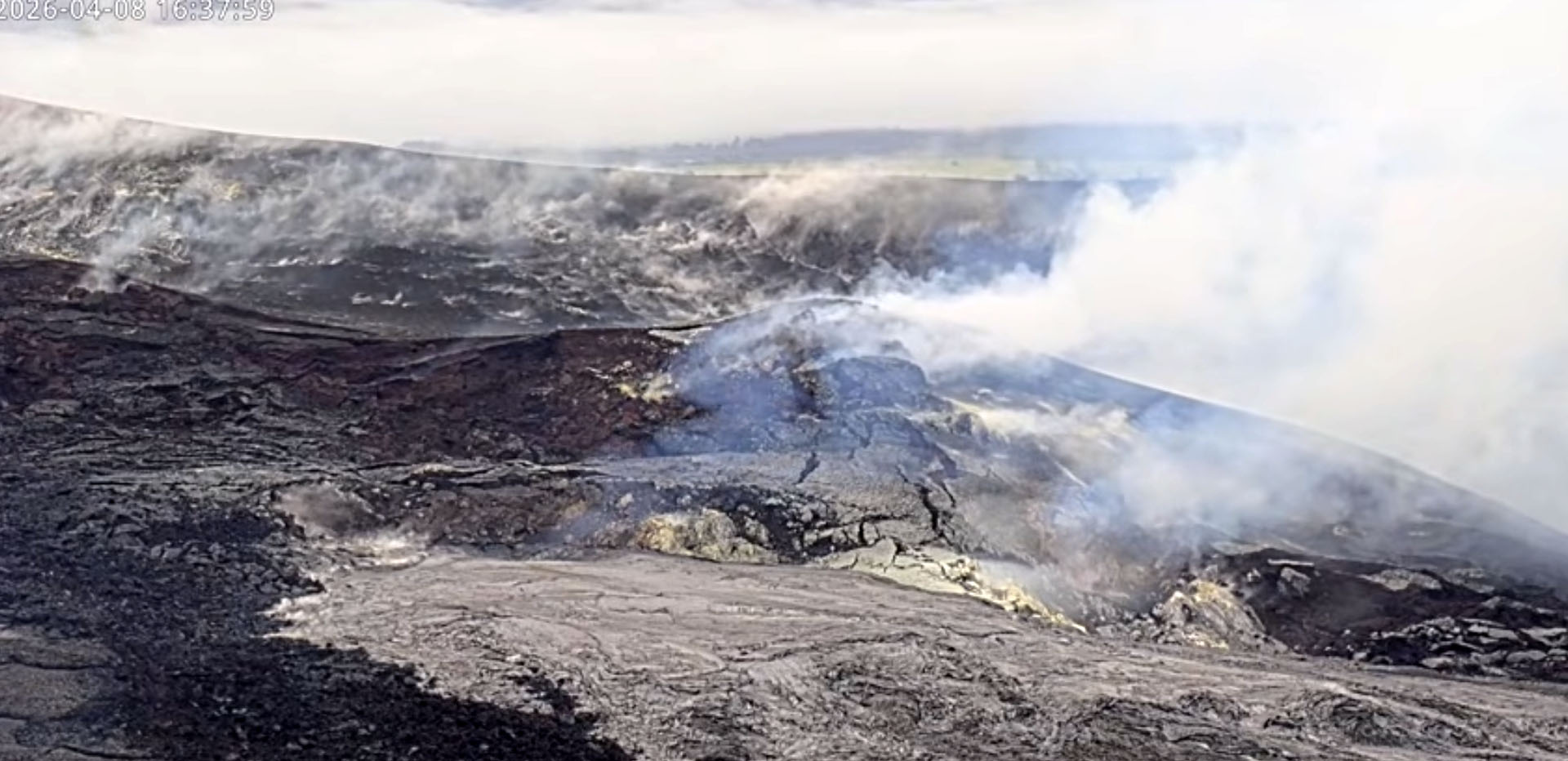
Kīlauea summit inflation returned yesterday afternoon, and south vent overflows and associated spattering resumed early this morning.
Evidence of a fresh lava flow from the south vent appeared at 3:20 a.m., with another brief overflow occurring around 6:30 a.m. Overflows and spattering may continue until lava fountaining Episode 44 begins, though further periods of deflation and reduced vent activity may occur before the next episode.
Fountaining episodes typically last less than 12 hours, but ash can remain airborne longer depending on wind and weather conditions. Smaller particles can travel farther from the eruption site and may affect more distant communities.
If an eruption occurs, varying levels of ash, Pele’s hair, and other lightweight tephra may fall downwind of the eruption. These conditions are expected to impact areas north and northeast of the summit over the next several days.
No significant activity has been noted along Kīlauea’s East Rift Zone or Southwest Rift Zone.
For those residing downwind of the Kīlauea summit or planning to visit the area, staying informed about current volcanic activity and weather conditions is crucial. Follow guidance from the National Park Service and the County of Hawaiʻi and take necessary precautions.
Road and park closures may happen without notice. Be aware of the following hazards:
- Vog: Water vapor, carbon dioxide, and sulfur dioxide emissions can remain hazardous near the vents, even when not actively erupting. Sulfur dioxide reacts in the atmosphere to create vog (volcanic air pollution) downwind, potentially causing respiratory and other problems at high concentrations.
- Tephra: Small glassy volcanic fragments may be remobilized during windy conditions following recent eruptive episodes. Minimize exposure to these fragments, which can cause skin and eye irritation, and disconnect water catchment systems.
- Lava flows: Lava on the floor of Halemaʻumaʻu Crater and the southwest side of Kaluapele, Kīlauea’s summit caldera, remains hot and may slowly move in the days following an eruptive episode.
- Unstable ground: Halemaʻumaʻu Crater wall instability, ground cracking, and rockfalls can be exacerbated by earthquakes, leading to ground failure around the Kīlauea caldera. Tephra material on the crater rim is prone to cracking, slumping, and small landslides that sometimes expose hot and molten material.
The three Kīlauea summit livestream videos are available on YouTube. A timeline of eruptive episodes since Dec. 23, 2024, and additional updates can be found on the U.S. Geological Survey website.
For health and safety recommendations, visit the Hawaiʻi Interagency Vog Information Dashboard.