


New technology detects deadly whale, dolphin diseases
Marine mammal health surveillance can now detect deadly diseases in whales and dolphins in oceans, beaches, and remote locations, thanks to research from the University of Hawaiʻi at Mānoa.
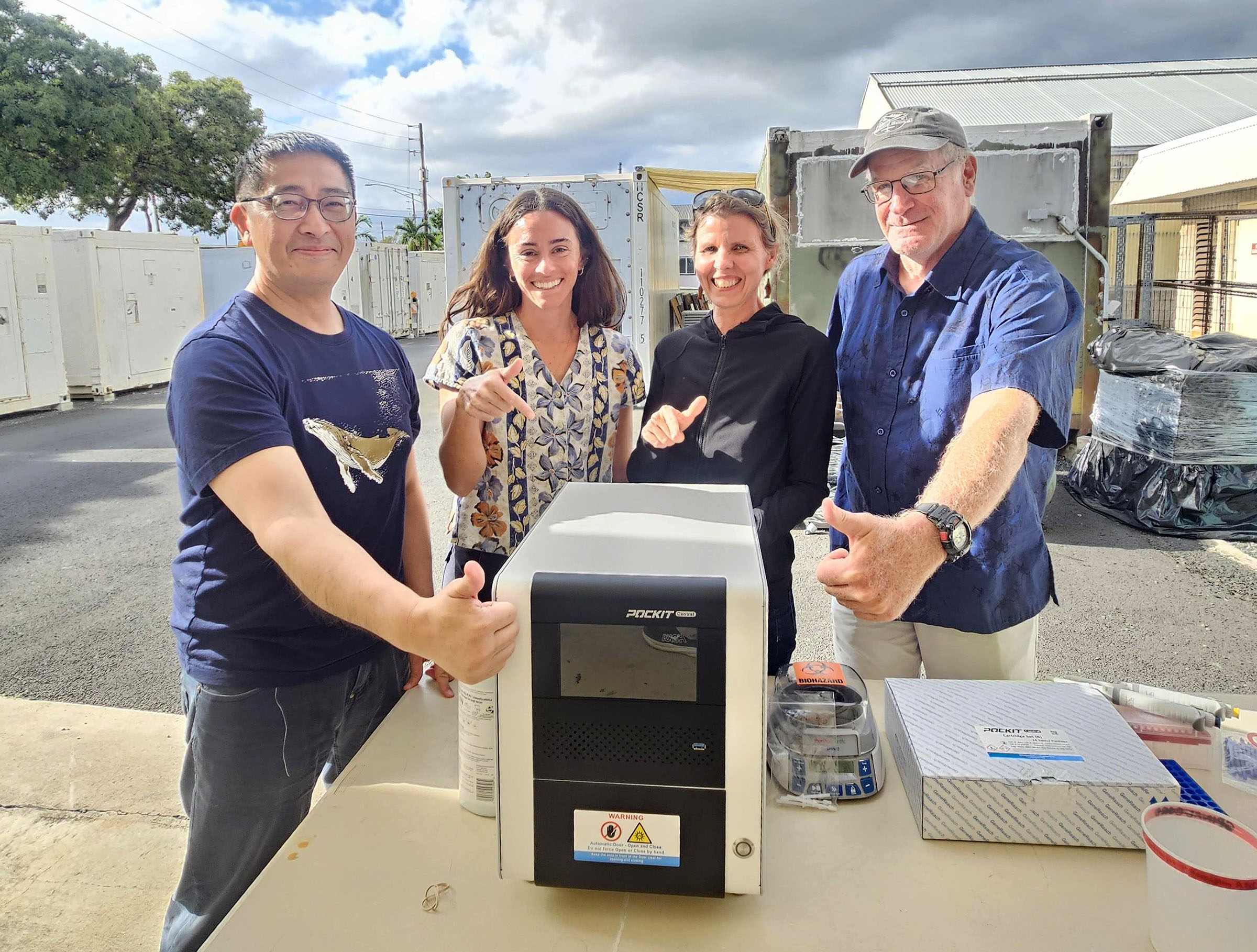
The University of Hawaiʻi Health and Stranding Lab at the College of Tropical Agriculture and Human Resilience and international researchers worked together to validate a portable, field-deployable molecular diagnostic tool for Cetacean Morbillivirus. The study was published in Transboundary and Emerging Diseases.
Cetacean Morbillivirus has caused mass deaths of thousands of marine animals globally. Traditionally, detecting such pathogens required sending samples to specialized laboratories, often resulting in delays of weeks to months.
“This is the first application of a field-deployable system for rapid testing for whales and dolphins,” said Kristi West, director of the University of Hawaiʻi Health and Stranding Lab. “It breaks down barriers to detection because it can be used remotely, even without a traditional lab nearby.”
The portable unit delivers results in about an hour, aiding decision-making during mass stranding events. It is designed for hot, humid environments, making it essential for detecting outbreaks early and potentially preventing larger epidemics.
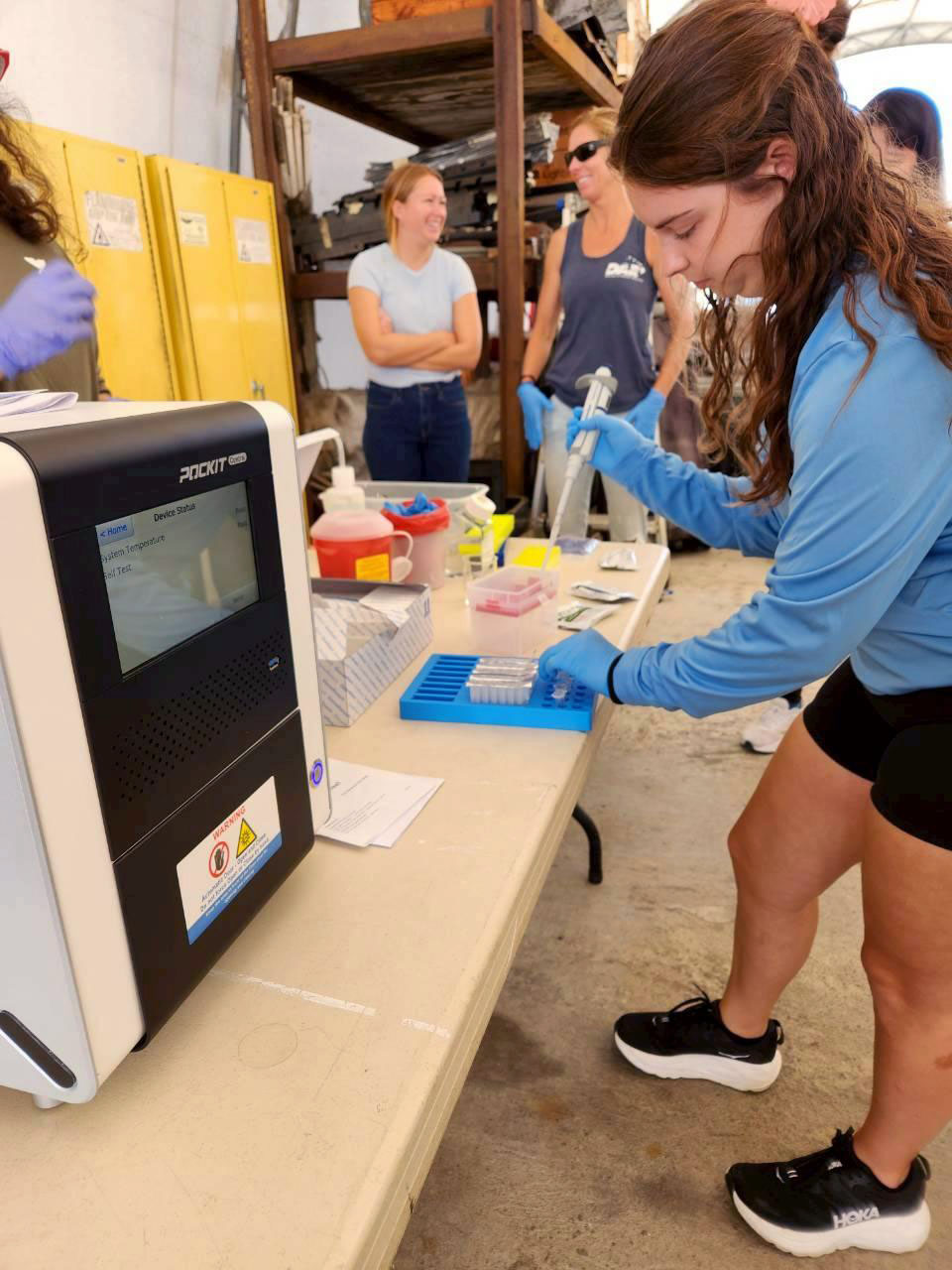
The system uses high-speed testing to provide rapid, on-site results and proved effective across multiple divergent strains from Hawaiʻi, Europe, and Brazil, even in archived tissues up to 28 years old.
“We want to train others so we can increase what we know about disease in many other areas of the world,” West said.
To ensure this technology reaches those who need it most, University of Hawaiʻi researchers hosted a workshop in Honolulu with Professor Wei-Cheng Yang from National Taiwan University’s Veterinary School to train stranding responders and scientists from across the Pacific.
Participants included staff from the Taiwanese Cetacean Society, biologists from Guam and Saipan, College of Tropical Agriculture and Human Resilience graduate students, and representatives from the Hawaiʻi Department of Land and Natural Resources’ Division of Aquatic Resources, National Oceanic and Atmospheric Administration Fisheries, and the U.S. Geological Survey’s National Wildlife Health Center.
During the workshop, researchers ran tests on known positive and negative samples for diseases impacting dolphins and nēnē, the endemic Hawaiian goose. The Taiwanese team also shared their insights from a mass stranding of 11 pygmy killer whales they had responded to just days before arriving in Hawaiʻi, which resulted in the successful release of seven whales.
The project is supported by the U.S. Pacific Fleet Environmental Readiness Division and a joint zoonotic disease grant with the state of Hawaiʻi’s Department of Land and Natural Resources and involves collaborators from Taiwan, the Philippines, Spain, and Brazil.