


Proposed Hawai‘i County operating budget increases 1.4% to fund public safety priorities
In Mayor Kimo Alameda’s nearly $1 billion proposed Hawaiʻi County operating budget for fiscal year 2026-2027, he is asking for a 1.4% increase of $13.47 million to fund priorities that include public safety, infrastructure and recreation.
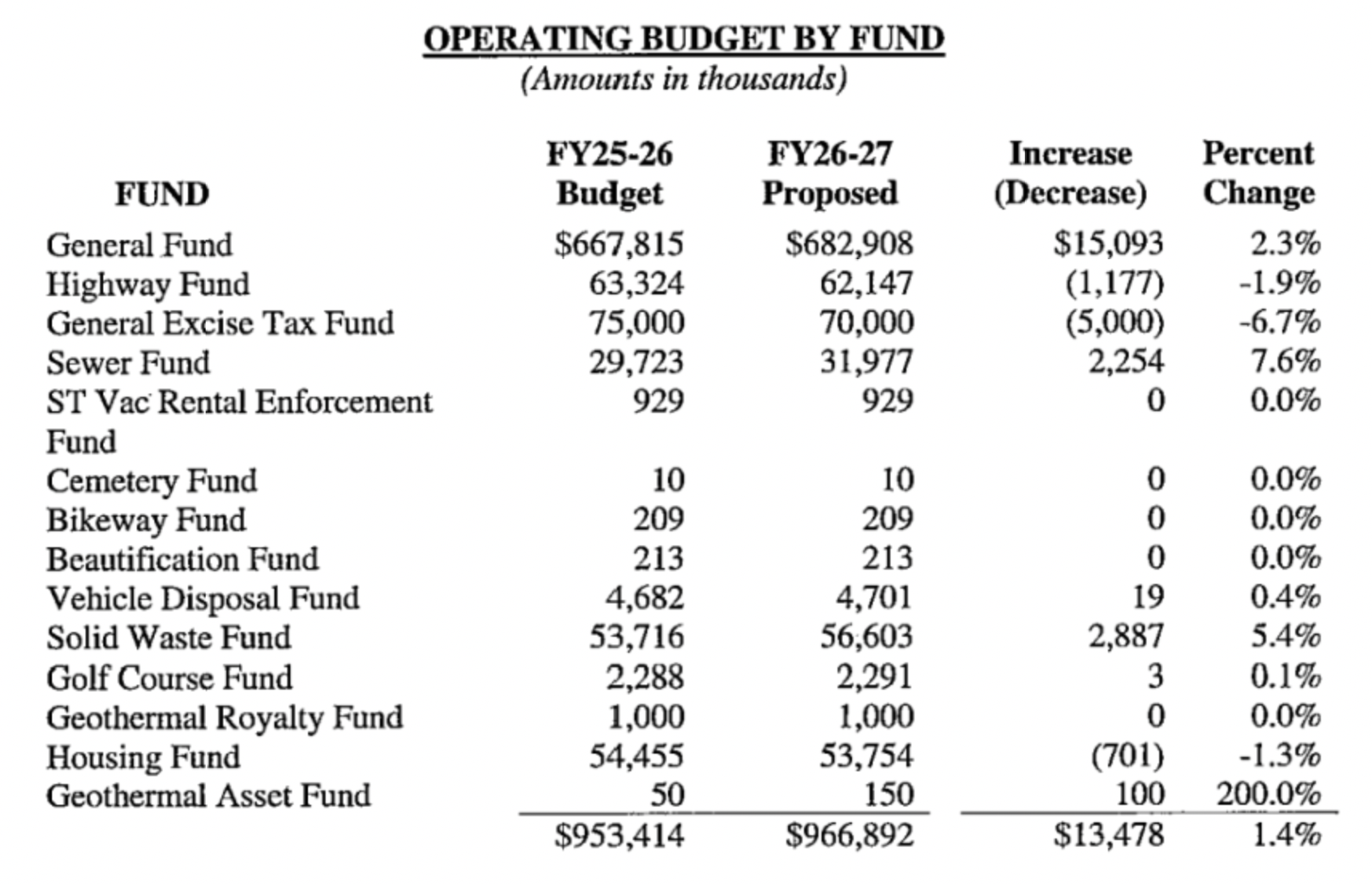
The proposed increase would bring the 2026-27 fiscal year budget to $966,891,661.
In Alameda’s letter to the Hawaiʻi County Council, the body which ultimately approves the budget, he said county revenue is expected to increase slightly in a few major sources, including real property tax, general exercise tax and the transient accommodations tax.
The proposed capital budget and 6-year capital improvements program submitted to the council includes 45 projects, requiring a total appropriation of $358.74 million.
Alameda said in his letter to the County Council that of these projects, $42 million is intended to be funded by federal grants, $23 million with state funds, $285.2 million in whole or part by bonds and $8.5 million with private funds.
Alameda told Big Island Now on Thursday that the capital budget is like a wish list.
“Not all of it is funded,” he said.
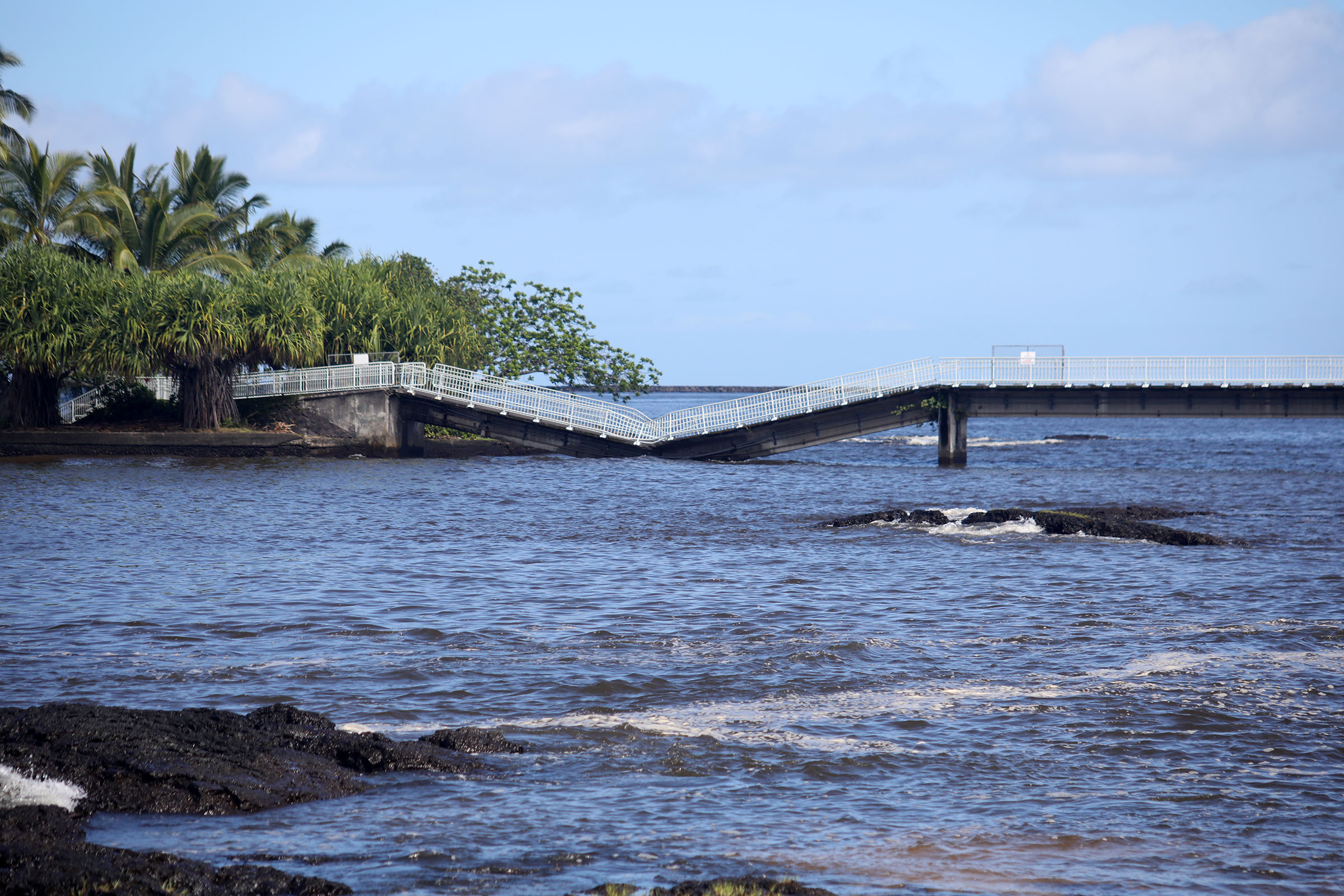
The projects are listed on page 10 of the proposed capital improvement budget. They include Moku‘ola Island and bridge repair improvements, construction of the Nā‘ālehu Wastewater System and a new Kea‘au Fire and Police Station.
Each county department will begin advocating for its budget to the County Council starting April 14.
The County Council finalizes the budget and sets the tax rates in early May, with the new fiscal year starting July 1.
The Alameda administration highlighted how some of the additional expenditures in the proposed operating budget would be used:
- Civil Defense Agency: $2.5 million was added to manage, expand and support operations of the County’s Land Mobile Radio system, which county officials described as the “primary communications backbone for first responders and emergency managers.” This system will operate continuously and support interoperability among multiple agencies and partners at the County, State and Federal levels.
- Hawai‘i Fire Department: $1 million was added to replace portable radios in the department. These radios improve operational efficiency and safety by ensuring reliable communication.
- Hawai‘i Police Department: $385,000 was added to replace mobile data terminals. These mobile computers are used by personnel in the field and provide a secure means of communication with dispatch personnel and other officers, while allowing officers to have immediate access to critical information while on service calls. Funding was also added to procure an audio/video recording system for the East Hawai‘i Detention Facility.
- Office of the Prosecuting Attorney: $426,000 was added to upgrade the hardware, licenses and maintenance for their servers. This upgrade allows the department to keep data secure and prevent data loss, ensuring compliance with Criminal Justice Information Services standards. Funding was also added to procure a new phone system for the department. This provides adequate and secure communications with the court system and the police department.
- Debt Service: The account was increased by $11.9 million to be able to fund critical infrastructure repairs and enhancements, primarily focused on wastewater improvements.
After reviewing the proposed budget, Hawai‘i County Council Chair Holeka Inaba said nothing stands out at this time because the council has been receiving regular updates from the Finance Department. He said the proposed budgets appear to be in line with the priorities that have been discussed.
“Public safety is one of the County’s primary kuleana (responsibility), so I think it is appropriate that we are committing funds to disaster preparedness through improvements to radio systems at Civil Defense and the Fire Department, as well as investments that strengthen the safety and security of data used by the Police Department and the Prosecutor’s Office,” Inaba said.
At this point, Inaba said he didn’t have significant concerns with the budget and looks forward to reviewing Draft 2 in early May once real property assessed values are confirmed.
Alameda’s operating budget also proposes $15 million be added to the capital fund to address road maintenance and repair, aging facilities, improving park amenities and strengthening routine maintenance, which Alameda has described as “critical investments.”
Alameda said under his leadership the county has spent $500 million on active wastewater projects, with the Hilo Wastewater Treatment Plant taking the biggest chunk with a price tag of $337 million.
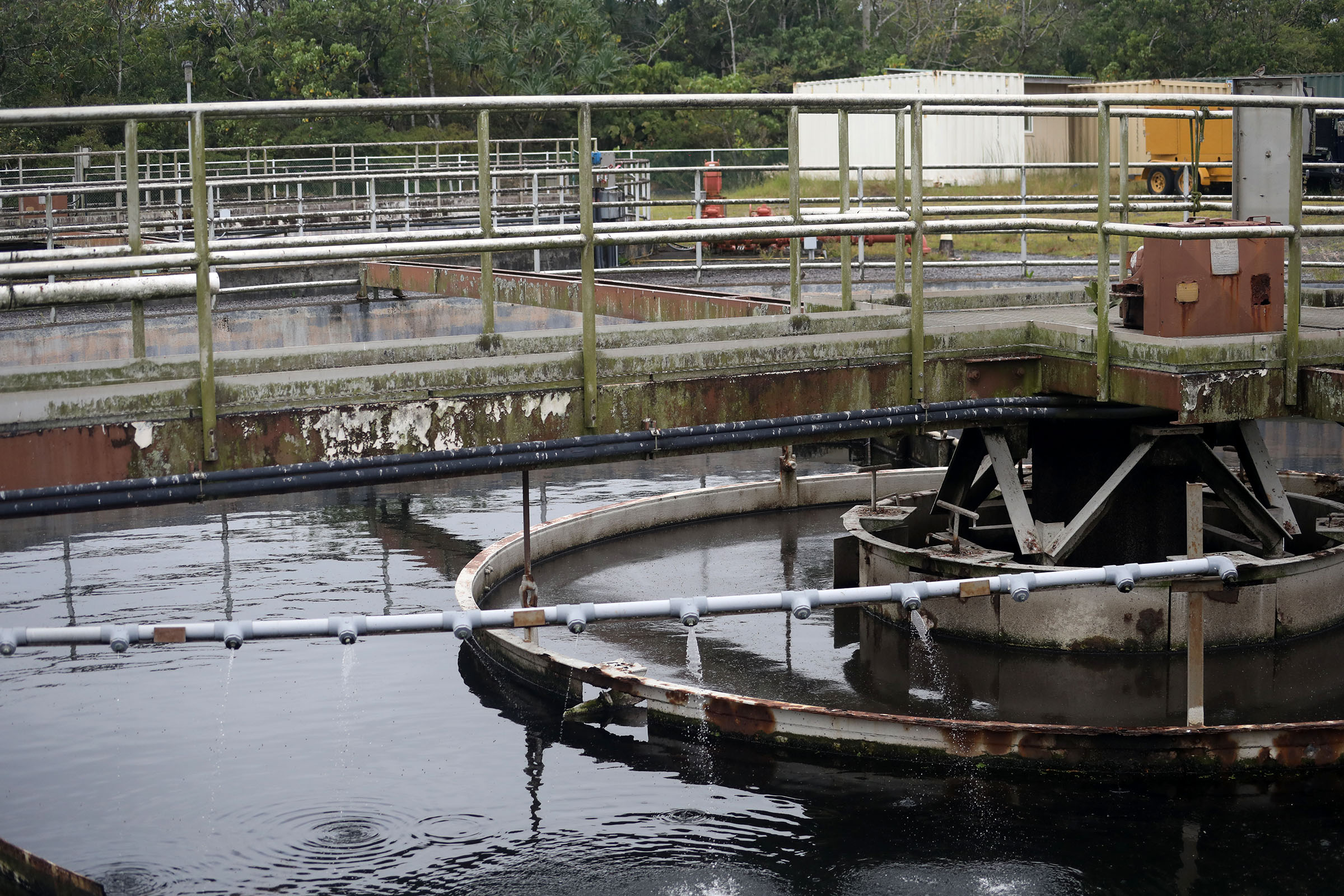
After years of deferred maintenance, Hawaiʻi County entered into an Administrative Order on Consent with the U.S. Environmental Protection Agency in March 2024 to bring the facility, built in the early 1990s, and related infrastructure into compliance.
Improvements on the plant began in August 2025, and the project is expected to be completed by 2030.
“We’re not passing this off,” Alameda said. “The buck stops with us. We got to get this done.”
While the amount of funding the county has committed to these projects is significant, Inaba said the reality is that the time to move forward on many of these projects was years ago.
“We are where we are today, and I am thankful that progress is being made,” Inaba said.
The budget document also includes $15 million for the budget stabilization fund, also known as a rainy day fund, to ensure long-term financial stability in the county.
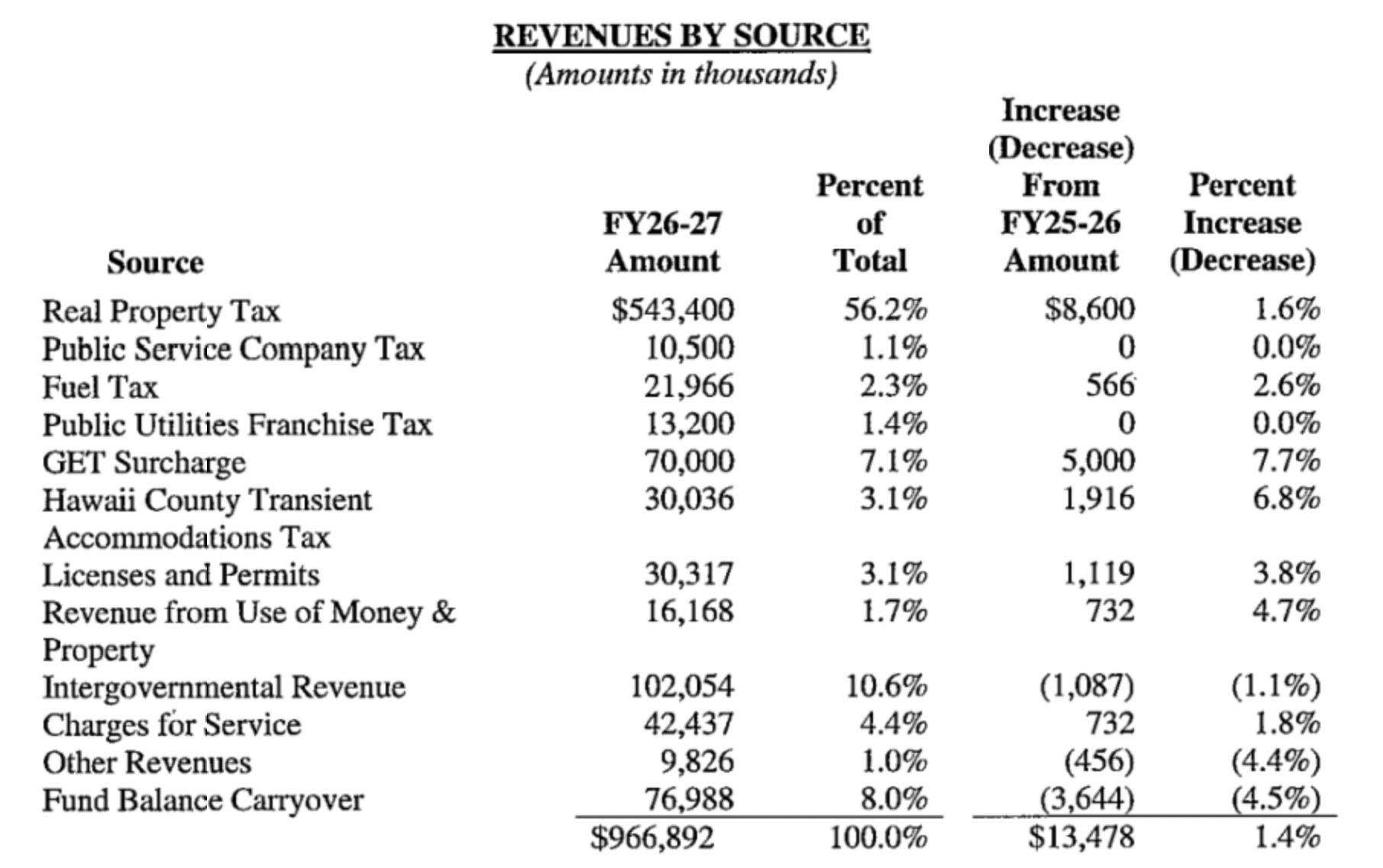
The operating budget laid out revenue estimates since it is the council that will be setting the tax rates. According to the presented document, real property tax revenues are expected to increase by $8.6 million or 1.6%, primarily due to an increase in taxable values and new construction.
Hawai‘i County Council also passed a bill that creates a Tier 3 tax rate for luxury second homes worth more than $4 million that will bring in more revenue. The council now has the job of setting that rate during the budget discussions.
For budgetary purposes, the revenue estimate includes the new long-term rental tax class with an assumed rate of $7.65. The council also will set this rate during the budget discussion.
General excise tax revenues are expected to increase by $5 million or 2.6%, based on current estimates. Hawai‘i County Transient Accommodations Tax is expected to increase by $2 million or 6.8% based on current estimates.
Income from county rents and concessions is expected to increase by approximately $595,000, and interest revenue is expected to have an approximate increase of $137,000.