

University of Hawaiʻi study finds outrigger canoe paddling provides lifelong health, culture
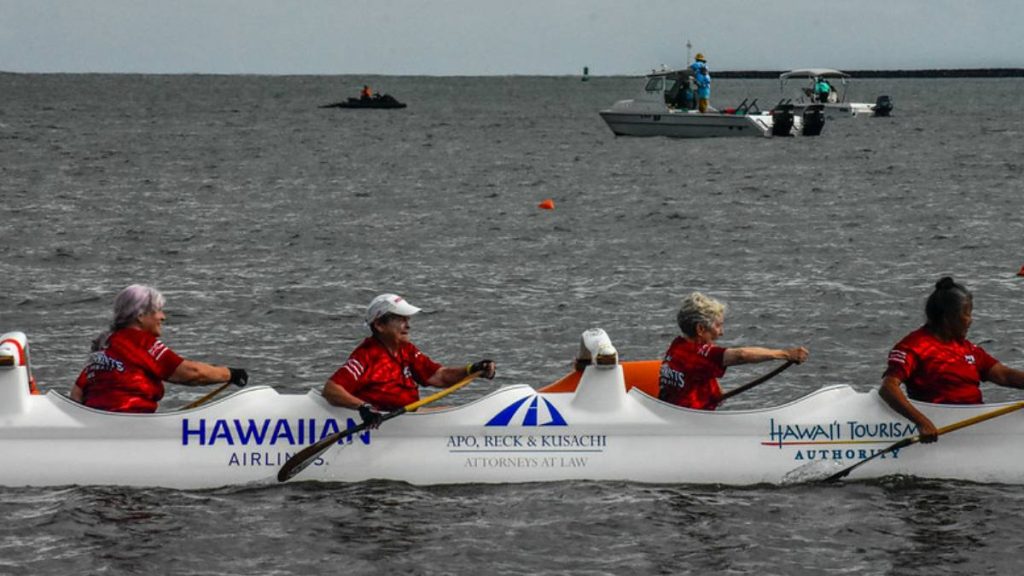
A University of Hawaiʻi at Mānoa study finds that outrigger canoe paddling is far more than a state team sport. It’s also a way of life that supports physical, emotional, cultural and spiritual health for paddlers in Hawaiʻi.
The study published in Health Promotion International examines the public health of paddling. It was led by Simone Schmid, a former postdoctoral fellow and current adjunct assistant professor in the Thompson School of Social Work & Public Health’s Department of Public Health Sciences. Schmid also is the director of strategy, impact and research at AccesSurf Hawaiʻi.
While previous UH research documented paddling’s physical benefits and participation patterns among Native Hawaiian and Pacific Islander communities, this study uniquely centers paddlers’ voices to explore the cultural, spiritual and community meaning that sustains long-term participation.
“As a paddler myself, having benefited from this physical and cultural activity and community in more ways than I can express, we did this work to capture what is already known in the community,” Schmid said. “It is just one piece in the puzzle of overall efforts and goals to support past, current and future paddlers. And one step in my journey of getting canoe club membership covered by health insurance.”
The research team analyzed open-ended survey responses from 362 paddlers statewide who answered: “What does outrigger canoe paddling mean to you?”
Of the participants, 47 percent identified as Native Hawaiian and 65 percent were female. Responses revealed multiple layers of meaning, from physical health, stress relief and teamwork to family traditions, pride, connection to the ocean and ʻāina, cultural heritage and spirituality. Researchers adapted a social-ecological model to include a spiritual perspective.
Many paddlers reflected on ancestry and traditions.
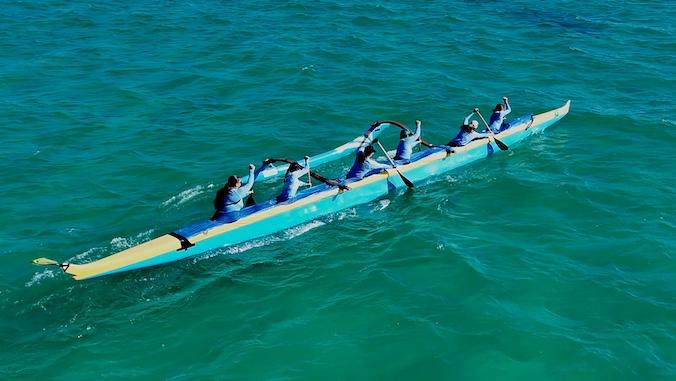
Ann Yoshida, paddler and community author with AccesSurf Hawai‘i, said: “Paddling across the world representing Hawaiʻi and the USA, I felt connected to my island home and culture because my ancestors knew through navigation that the water was our highway to connect with the world. I knew if I was in water, I was home and I never felt alone. This power pushed me to live my extraordinary life.”
The study found cultural ties, rather than health goals alone, might motivate long-term participation. Paddling connects people to their health, ancestors, environment and sense of purpose.
Findings have been shared with canoe clubs and public health partners to explore how paddling can support chronic disease prevention and community-based activity programs.
The study also received international recognition, with Schmid and co-authors named finalists for the Ilona Kickbusch Award, ranking among the top five early career research papers of 2025.
“We are very proud to see the global dissemination of this important work from Hawai‘i around strengths-based public health promotion, relevant to our communities,” said Tetine Sentell, UH professor and study co-author. Other UH authors included Carrie Soo Hoo, Catherine Pirkle, Michael Phillips and Mika Thompson.