


Thousands of Kaiser Permanente health care workers continue to strike
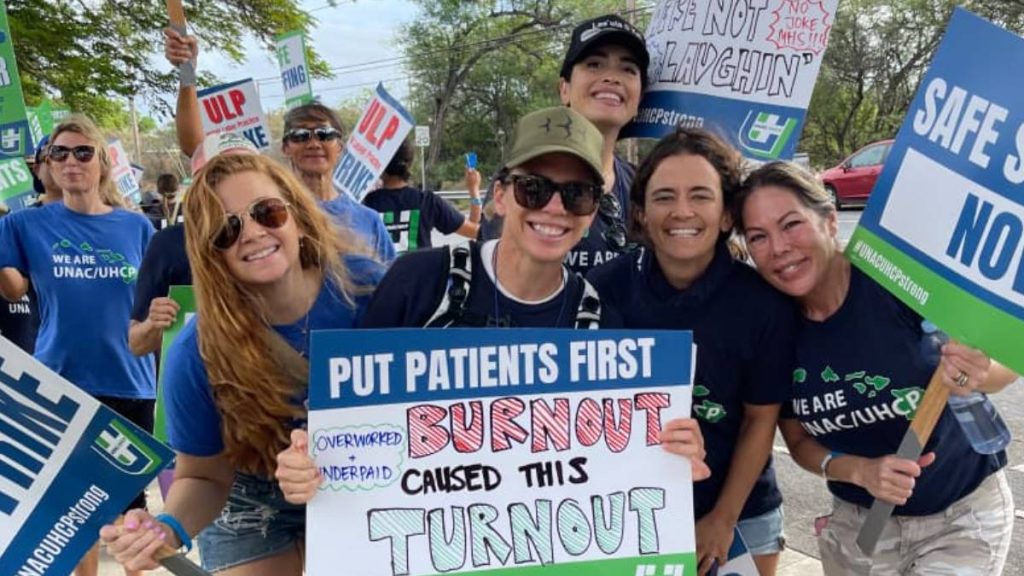
Update, Jan. 30, 5 a.m. The unfair labor practice strike at Kaiser Permanente facilities nationwide has entered its fifth day, with thousands of health care workers continuing to walk off the job amid disputes over staffing and patient care.
Union officials said the strike is in response to what they describe as a coordinated public relations effort by Kaiser to downplay the issues driving what unions have called the nation’s largest health care strike.
Those concerns include unsafe staffing levels, unsustainable workloads and unresolved workplace protections that workers say directly affect patient care.
The striking employees in Hawai‘i are members of the United Nurses Associations of California/Union of Health Care Professionals, which has been bargaining with Kaiser since May 2025.
Negotiations stalled in December after Kaiser management left the national bargaining table, according to union officials.
Original Post: Tens of thousands of nurses and other health care professionals at Kaiser Permanente across Hawaiʻi and California will walk out and strike on Monday, Jan. 26, union officials announced Friday.
About 31,000 nurses and other health care workers plan to strike because of what they say are unfair labor practices at more than two dozen Kaiser Permanente hospitals and hundreds of clinics across California and Hawaiʻi.
The strike is scheduled to start at 7 a.m. at the Moanalua Medical Center in Honolulu and will continue until a labor agreement is reached, according to a press release from the United Nurses Associations of California/Union of Health Care Professionals, which represents the workers.
Charmaine S. Morales, registered nurse and president of United Nurses Associations of California/Union of Health Care Professionals, said: “We’re not going on strike to make noise.
“We’re striking because Kaiser has committed serious unfair labor practices and because Kaiser refuses to bargain in good faith over staffing that protects patients, workload standards that stop moral injury, and the respect and dignity that Kaiser caregivers have been denied for far too long.
Morales said striking is the lawful power of working people.
“We are prepared to use it on behalf of our profession and patients,” she said.
Union leaders said picket lines will focus on concerns about staffing shortages, access to timely patient care and wages for frontline caregivers. They argue Kaiser has failed to invest adequately in safe staffing levels and working conditions, creating what they describe as a growing crisis in patient care.
The workers have been bargaining with Kaiser since May 2025. Negotiations stalled in December after Kaiser management left the bargaining table, the union said.
Kaiser Permanente calls it the longest national bargaining period in the history of its Labor Management Partnership.
“Despite more than 1,000 bargaining sessions at the national and local bargaining tables over these eight months, there has been no real movement on economic issues at the national table since the contract expired in September,” Kaiser Permanente said in a statement on Thursday.
“Unfortunately, much of the activity by the Alliance and some of its members violates our Labor Management Partnership Agreement and undermines the purpose of national bargaining.”
Kaiser Permanente said the activity included:
- The recent attempt by UNAC/UHCP to coerce concessions in national bargaining by threatening to release information of purportedly unlawful and unethical conduct
- Corporate campaign tactics designed to drive patients and health plan members away from Kaiser Permanente
- Instructing employees to withhold information about union strike plans in order to interfere with our ability to operate during a strike, which is against everything we are here to do
- Directing employees to no longer participate in activities aimed at achieving and maintaining market-leading performance
Kaiser Permanente said local bargaining has resulted in 29 of the 53 bargaining units reaching tentative agreements on matters at their local tables, including six of the 11 Alliance union affiliates reaching tentative agreements for all local units within their union.
“Now with another strike looming and UNAC/UCHP at the center of most open issues and non-partnership activity, we don’t see a path to an agreement through national bargaining,” Kaiser Permanente said. “Because it has become clear that the national process is gridlocked, we are moving the remaining unresolved national issues to the local bargaining tables — the most effective and timely path to secure new contracts, wage increases and enhanced benefits for our Alliance-represented employees.”
Kaiser Permanente added: “Our employees deserve raises, and our patients deserve our full focus. Local bargaining allows us to deliver both.”