


Livestream of Kīlauea eruption shows 2 men walking through volcano’s restricted area
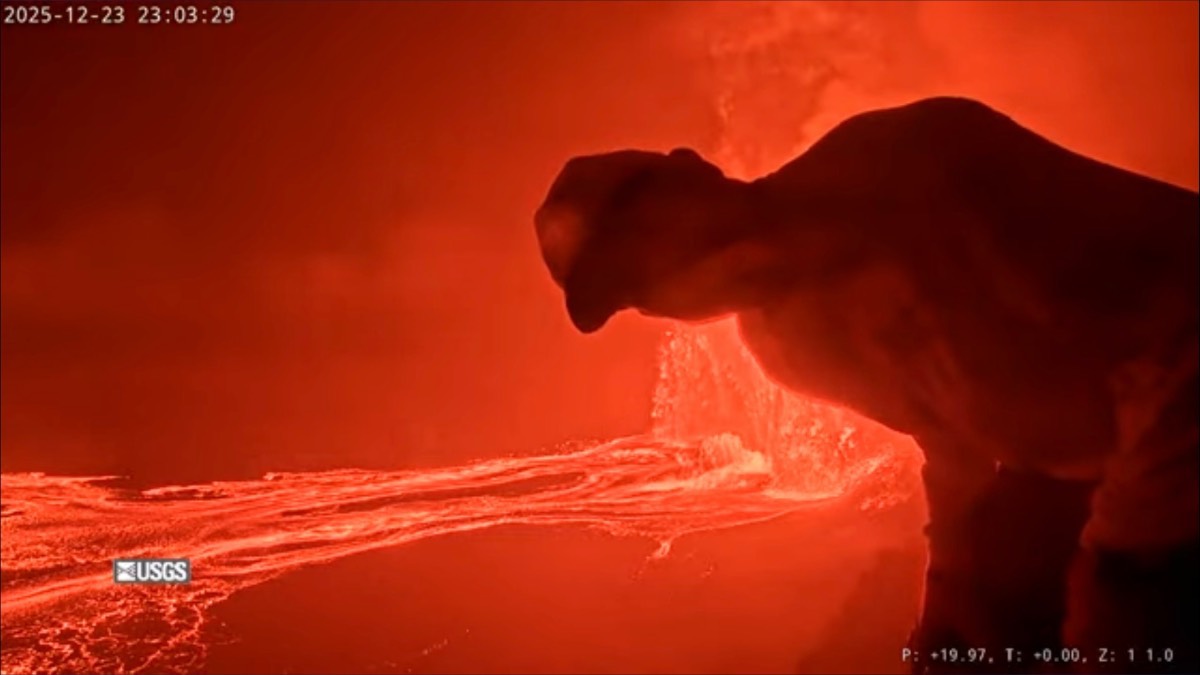
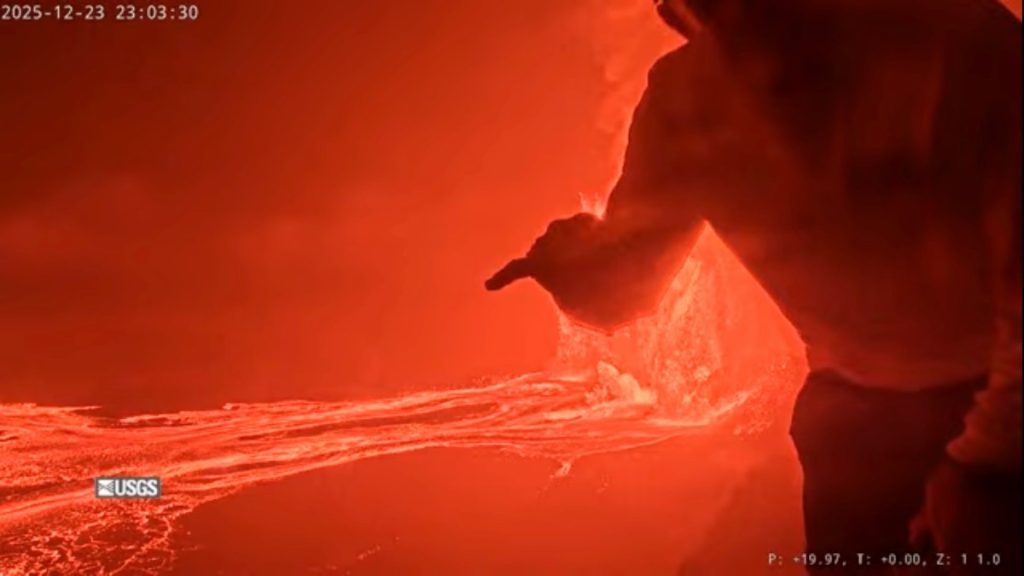
Viewers watching the U.S. Geological Survey’s livestream of the latest eruption of Kīlauea on Tuesday evening were surprised to see two men walking in front of the V1cam at the summit, an area not publicly accessible within Hawai’i Volcanoes National Park, according to the park’s website.
“Who dis?! Standin’ right in front da V1 cam like he da eruption manager,” wrote one viewer from Waikōloa Village on his Facebook page.
Geologist Katie Mulliken said the USGS Hawaiian Volcano Observatory did not have staff in the closed area during episode 39, which began on Dec. 23, exactly one year after the beginning of the rare episodic eruption, and lasted less than six hours.
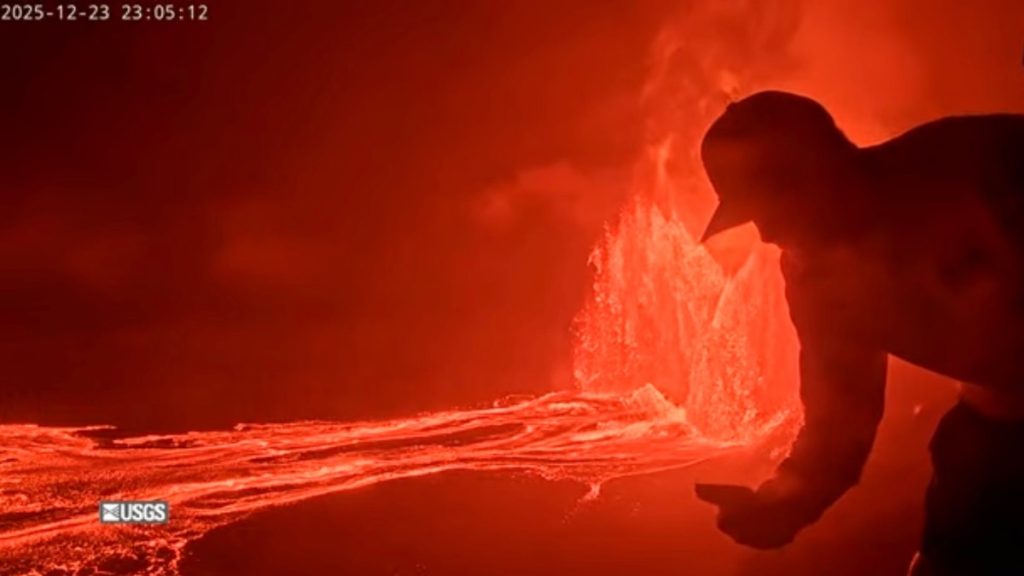
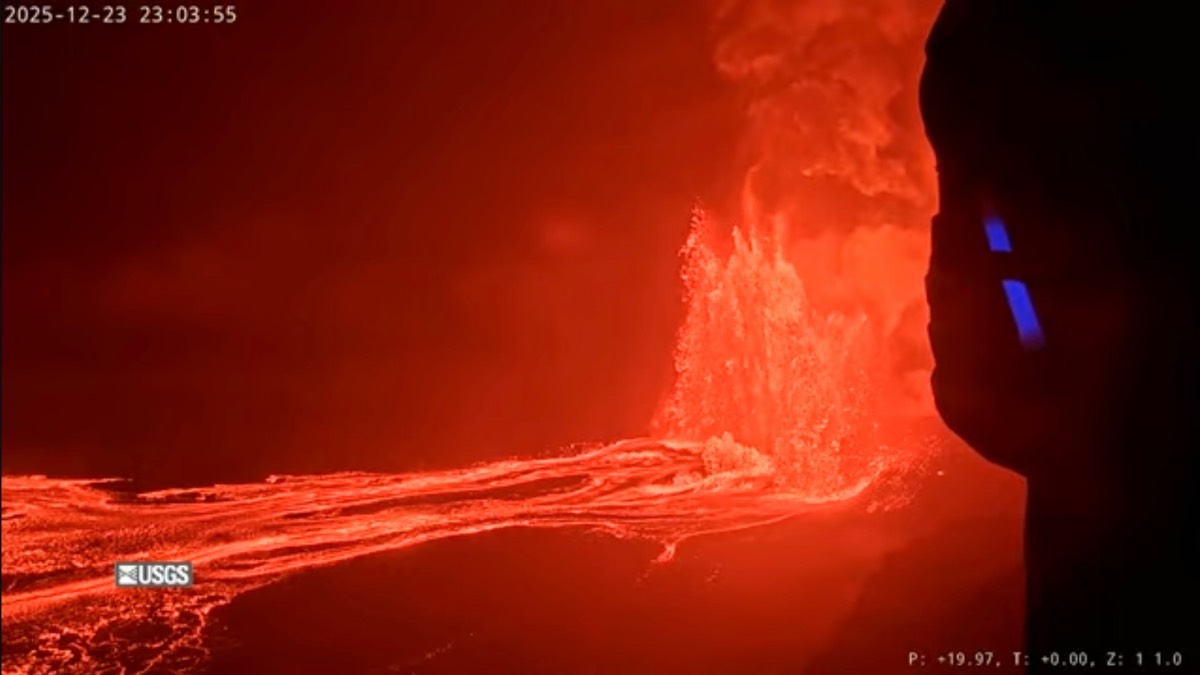
The men were seen walking back and forth in front of the dramatic fountains of lava at about 11:03 p.m.
One man is seen taking pictures, then looking straight into the V1 cam and giving a shaka, while another man is seen walking across, wearing a backpack with a glowstick attached.
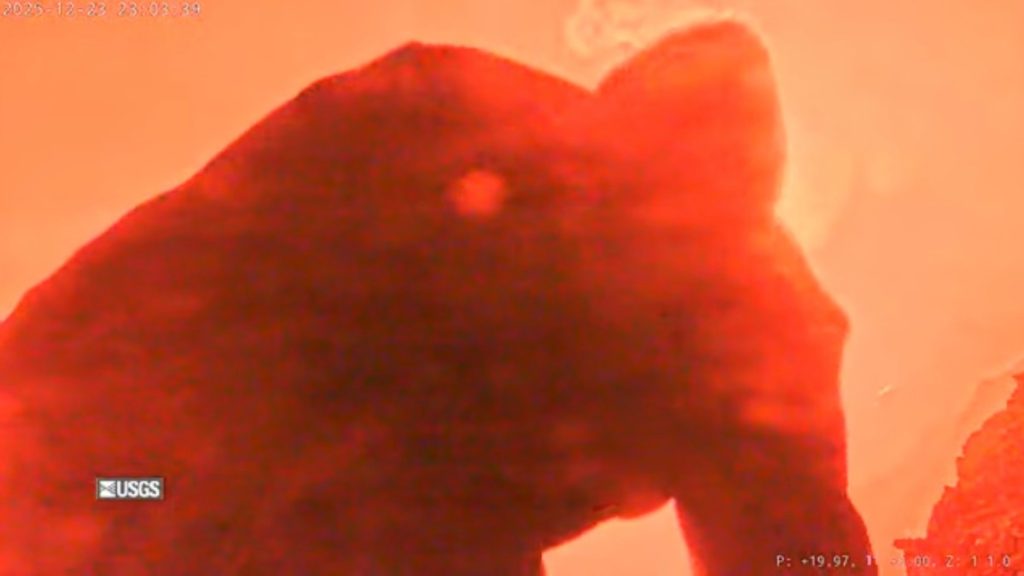
The men remained visible for about two minutes before disappearing.
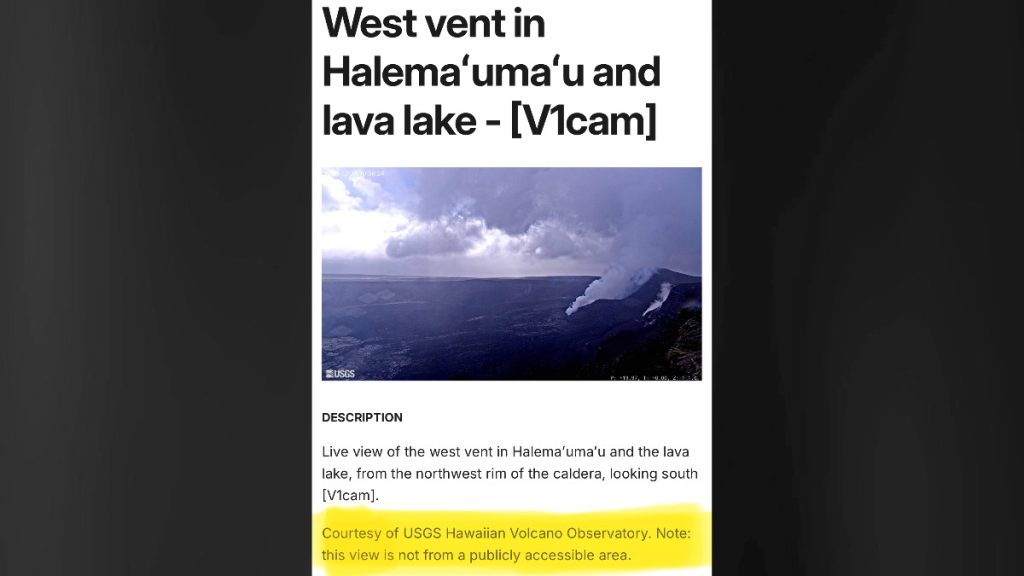
The V1cam is located on the northwest rim of the Halemaʻumaʻu crater within Kīlauea’s summit caldera.
The Hawai’i Volcanoes Observatory states on its website that the V1cam view is not from a publicly accessible area due to safety and volcanic-hazard restrictions within the Hawai’i Volcanoes National Park.
 According to the Hawaiʻi Volcanoes National Park website, the V1 camera view is not from a publicly accessible area. (Photo Credit: Hawai’i Volcanoes National Park)
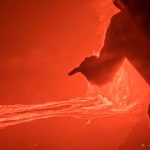
- In another image a man can be seen taking pictues of the eruption and flowing magma. (Photo Credit: V1cam at Kīlauea)
- During the ongoing eruption, a man walks through and obstructs the V1 cam’s view. (Photo Credit: V1cam at Kīlauea)
- On Dec. 23, a man can be seen flashing a shaka at V1cam on its live feed.(Photo Credit: V1cam at Kīlauea)
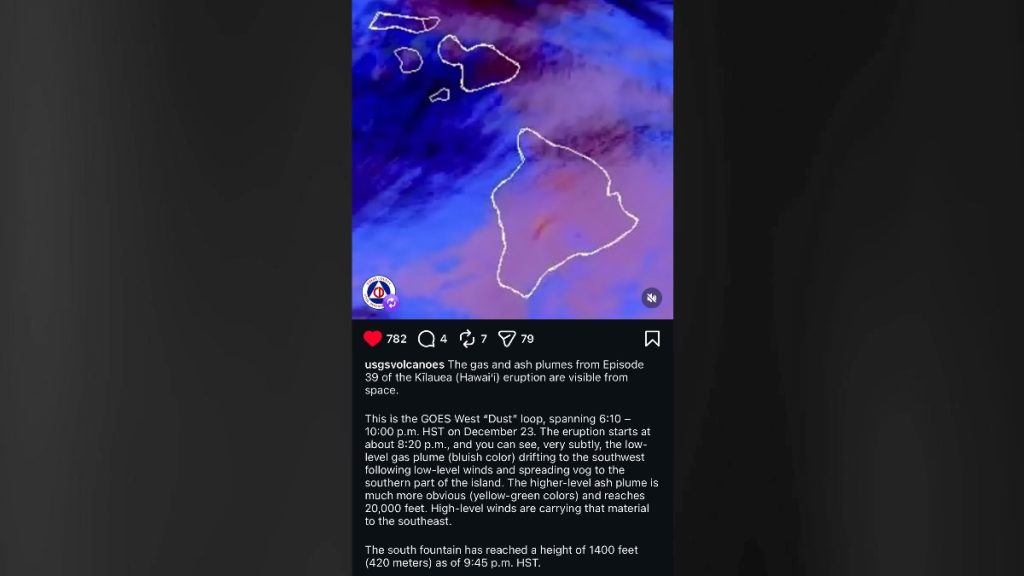
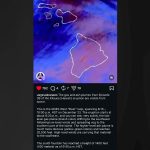
- USGS Volcanoes reported on Instagram that the gas and ash plume from episode 39 of Kīlauea’s eruption was visible from space. (Image Credit: USGS Volcanoes)
“Did two tourists enter a restricted zone to approach the V1 cam? For what reason? To get a better selfie?” wrote another viewer.
Following the dramatic eruption in episode 38, V3cam was buried under 32 feet of tephra, leading to its destruction and eventual replacement.
Mulliken said Crater Rim Drive in this area of Hawai’i Volcanoes National Park has been closed since 2007, with parts of it collapsing into the caldera during the 2018 Kīlauea summit eruption.
“That’s why we use cameras in locations where it’s not safe for people to be during eruptions,” she said.
“The fact that the original V3cam was destroyed is a good reminder of how hazardous the closed area of Hawai’i Volcanoes National Park is,” Mulliken said.
By around 9:45 p.m., the U.S. Geological Survey reported via Instagram that the gas and ash plume from the episode 39 eruption could already be seen from space.
With the holiday season upon us and an increase in visitors to the park, Mulliken added that “visitors should heed National Park Service guidance and stay out of these closed areas to ensure their safety.”
Hawaiʻi Volcanoes National Park did not respond Wednesday to a request for comment.