


Hawaiʻi County leaders outline needs, priorities to state senators during Big Island visit
Before Hawaiʻi County Mayor Kimo Alameda formed his state legislative priorities for the upcoming fiscal year, he put out a survey three months ago asking 28,000 community members what was most important to them.
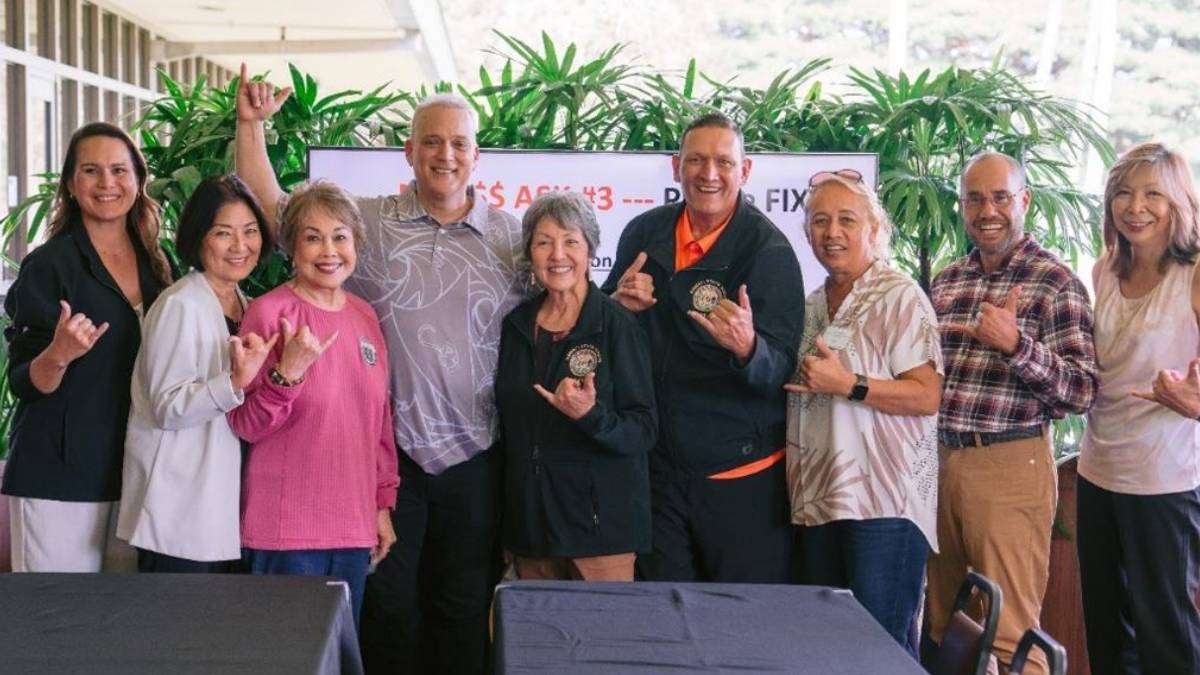
Taking into account the responses by about 4,000 people, Alameda said he is advocating for state funding to support the construction of a North Kona hospital, continued support to expand a Puna alternate route to ease the daily traffic jam in one of the largest growing areas on Hawai‘i Island, and finding ways the state can help address the rising cost of living.
Alameda said the priorities that emerged from the survey validated his thought process going into the election in 2024.
Alameda presented these priorities, part of three funding requests and three asks that don’t require money, to the state Senate Ways and Means Committee during its visit to Hawai‘i Island on Nov. 5 and 6.
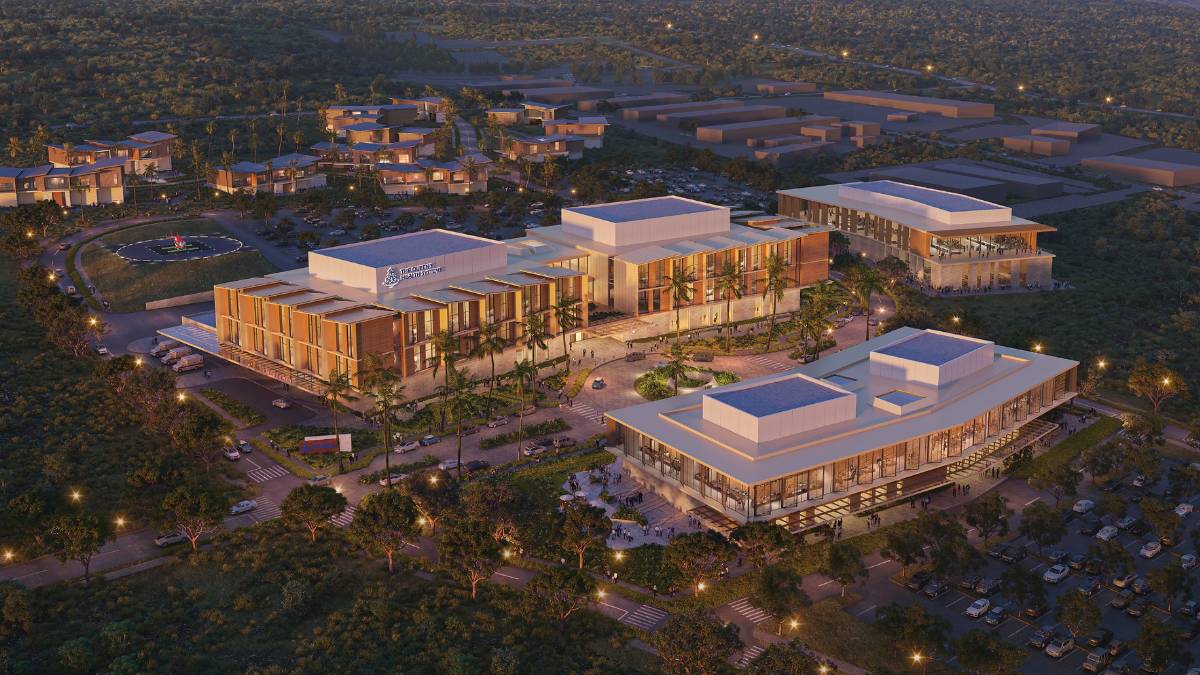
Alameda said part of that wish list appears to be coming to fruition with Hawaiʻi Gov. Josh Green’s announcement Wednesday that the state is committing $50 million in bonds to help plan for a much-needed outpatient care center in Kailua-Kona.
If money is approved through the legislature, the center will be built on land in North Kona donated by Queen’s Health Systems, where the O‘ahu-based health care company plans to build a $400 to $500 million hospital beside it.
While Green described Hawai‘i Island as the most affordable place to live in the state during the press conference about the clinic, Alameda said housing still is expensive for many residents in the county, with average rents about $3,000 per month plus utilities.
Alameda suggested legislation to decrease or cap rent, or offering incentives for landlords who charge cheaper rents.
With community members facing rising costs in rent and utility payments, Alameda proposed to the committee to look at geothermal exploration outside of Puna and residential areas.
During their early November visit, members of the Senate Ways and Means Committee also met with county and community leaders to receive updates on projects and initiatives relating to biosecurity, economic development and sustainability, housing, culture, and workforce pathways, which are outlined in a 20-page report.
Puna Geothermal Venture, an independent power producer on the Big Island, was chosen as a site to present about Hawaiʻi’s vision for future developments in renewable energy. The location in Puna is currently the only operational geothermal facility in the state, representing both the foundation and future of firm renewable energy on the island, according to the committee’s report.
While Alameda wasn’t in attendance, he said talking about geothermal is critical because it will help address the cost of living by reducing utility bills and potentially look for other locations where geothermal activity could take place.
Mike Kaleikini, senior director of Hawai‘i Affairs for the company, said the presentation was an opportunity to showcase how the company is helping the state reach its goal to use 100% renewable energy by 2045.
After the facility was damaged in the 2018 Kīlauea eruption, Puna Geothermal Venture has been building back the power it provides to Hawaiian Electric. The company is contracted to provide 38 megawatts per month. The power companies are currently working on an agreement to boost that contribution by another 8 megawatts.
Hawaiian Electric has stated in documents provided to the Hawai‘i State Public Utilities Commission that increased use of geothermal power could decrease an electric bill by $23.62 per month for residential consumers averaging 500 kWh per month.

The mayor’s non-funding requests included adjusting the timeline for cesspool conversion requirements or help in prioritizing areas that need conversion. He said he doesn’t think the county can realistically meet the 2045 deadline to address the 48,000 cesspools identified in need of conversion.
Alameda also wants the legislators to accept a bill that Big Island Rep. Sue Lee Loy is pushing to create the Waiākea Community Development District, with two seats set aside for Hilo residents, to tackle the master planning of the once-thriving Banyan Drive.
The area, which is currently under the jurisdiction of the state Department of Land and Natural Resources, encompasses Liliu‘okalani Gardens, Reeds Bay Beach Park, Coconut Island and the condemned Uncle Billy’s Hilo Bay Hotel, which is in the final phase of being demolished.
Lee Loy hopes to revitalize the historic space with guidance from the community.
“It will give the county more control of the area and its development,” the mayor said.

Alameda is also hoping the county retains oversight of the Keauhou aquifer, which the state is looking to designate as a conservation area. This would enable the state Commission and Water Resource Management to more closely monitor the use of the water.
The designation, Alameda said, would give the state the authority to approve water usage for the area, instead of the county. If that happens, the mayor added it would create “layers of bureacracy” for the county if they wanted to get projects done or if repairs were needed.
“We know our county best,” Alameda said.
The Senate Ways and Means committee is a group of senators responsible for the state’s budget, including the operating and capital improvement budgets.
The committee reviews the governor’s proposals, makes its own recommendations, and considers issues related to state funding, workforce development, and economic resilience through site visits and hearings.
For the first time since taking office in 2022, Sen. Tim Richards will join the Senate Ways and Means Committee for the 2026 legislative session.
While he wasn’t on the visit or saw the report following the committee’s trip to the Big Island, he agreed with Alamdeda that cost of living affects everyone.
“Can we afford to live a year in Hawai‘i? Can we afford food? Can we afford health care? The cost of living dovetails into everything,” Richards said.
During the upcoming legislative session, he said he hopes “we can take a swing at getting the cost of living down as far as it goes with food.”
Richards’ approach to this crisis is first to feed hungry kids, after learning from the Hawai‘i Food Bank that 40% of Hawai‘i County families currently struggle to afford food.
“Food insecurity, by definition, is whether a family is going to have dinner tonight,” the senator said.
With a background in agriculture, Richards hopes to address this by putting money toward local food production.
Rep. Greggor Ilagan, who has been one of the Big Island lawmakers advocating for alternate routes in Puna for the past five years, praised Alameda for keeping this traffic issue at the forefront of priorities.
Big Island lawmakers secured $1.5 million to fund the Puna Makai (oceanside) Alternate Route Study after funding lapsed last year.
Lawmakers also secured $1 million for a Puna Mauka (mountainside) Alternate Route Study. The hope is that the state and county will work collaboratively in completing these studies.
“We have the money right now to fund a study to determine the most preferred routes for mauka (mountain side) and makai (ocean side) in Puna, which will accommodate ways to alleviate traffic and a phased-out implementation,” Ilagan said. “However, these projects could cost a total of hundreds of millions of dollars.”
Calls to members of the Ways and Means Committee, Sen. Lorraine Inouye, Sen. Joy San Buenaventura and Committee Chair Sen. Donovan Dela Cruz, were not returned.