

Body politics ‘Em-bodied’ in latest East Hawai‘i Cultural Center exhibit
Human bodies — and the relationships we have with our bodies plus how others present their bodies to us — are complex.
Seven artists offer their unique perspectives concerning questions inherent to these relationships as part of East Hawai‘i Cultural Center’s latest exhibit “Em-bodied. Body Politics” on view through Nov. 26.
A range of mediums — including photography, textile collage, video, drawings and installations — are on display in the exhibit; two of the artists even employ their bodies in the art, asking viewers to examine their discomfort with what they see.
Mitchell Squire is a former bodybuilder who in 2020 started his plein-air self portraiture, exploring the socio-sexual effects of extractive economies and race, an effort that evolved through the COVID-19 pandemic and the rise of the Black Lives Matter movement.
He presents his increasing lack of fitness without apology.
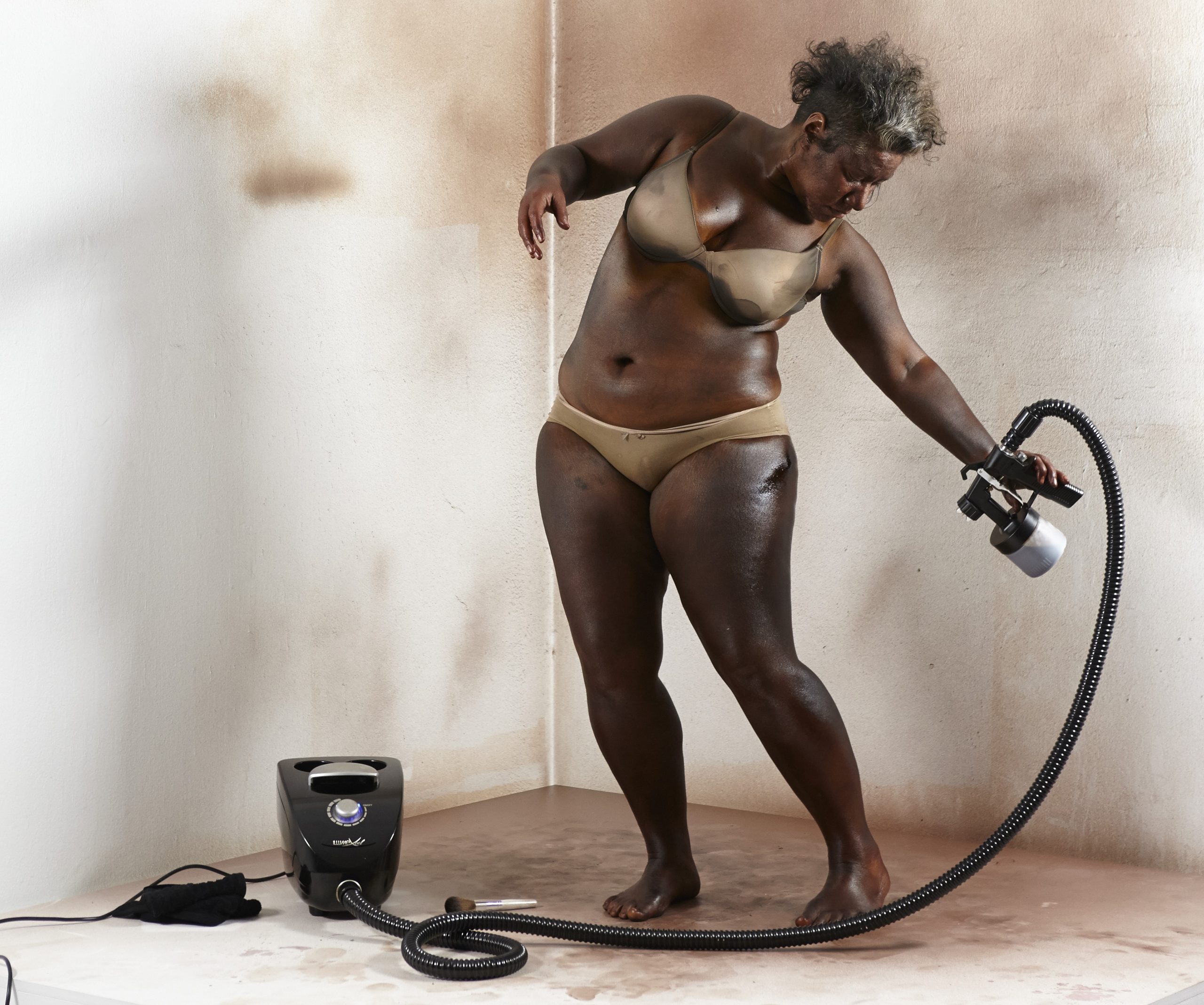
Tongan artist Latai Taumeopeau’s “Dark Continent” performance is documented with photos taken at 4A Centre for Contemporary Asian Art in Sydney, Australia, as she spray painted herself in progressively darker shades every half hour throughout the course of a weekend.
Skin tones are also central to Lori Crawford’s art, which features brown paper bags that reference a decades-old practice — no longer accepted — within the African American community.
Called the Brown Paper Bag Test, it involved comparing a person’s skin tone to the color of a paper bag to determine its acceptability.
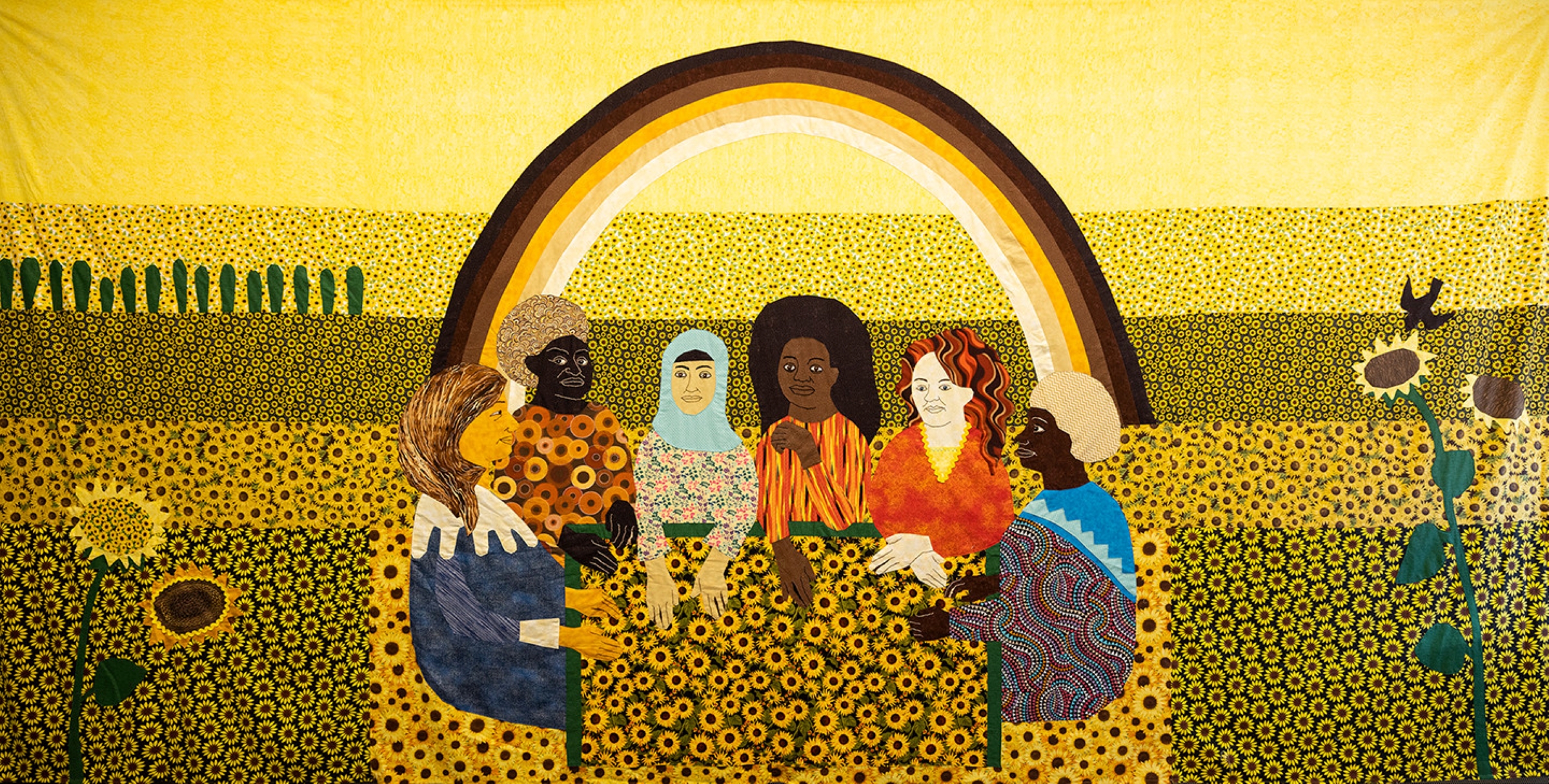
The textile collage “In Solidarity with Ukraine” by Oksana Briuhovetetska employs different clothing styles and skin tones to envision women united before a backdrop of sunflowers, the symbol of Ukrainian resistance to Russian occupation.
Katarzyna Mirczak’s collection of photos “Tools of Crime” paradoxically reminds viewers of bodies through their absence. Seeing images that remain after death, viewers must confront their own expectations about mortality.
Hans van der Meer takes a very different approach in his video of amateur football games in The Netherlands and other countries. The bodies seen in action in his work speak to the human desire for shared identification, with uniforms telling viewers all they need to know in this context about the affiliations of those bodies.
Works by significant Polish-Jewish modernist writer and artist Bruno Schulz, who died in 1942, offer gallery visitors yet another set of experiences.
Best known for his unique, dreamlike prose and drawings, his work blends autobiography, fantasy and philosophy, depicting perhaps disturbingly honest sketches of bodies, literally or figuratively naked and the interactions of the people who inhabit them.
Visit the East Hawai‘i Cultural Center website, call 808-961-5711, email to admin@ehcc.org or visit the center at 141 Kalākaua St. in downtown Hilo for additional information.
Note: Adjusted gallery hours, which began Oct. 3 are 10 a.m. to 4 p.m. Wednesdays and Thursdays, noon to 6 p.m. Fridays and 10 a.m. to 2 p.m. Saturdays. East Hawai‘i Cultural Center is closed Sundays, Mondays and Tuesdays.