

State and county agencies complete another fumigation against coconut rhinoceros beetle
A massive fumigation operation removed 144 tons of potential coconut rhinoceros beetle breeding-site material from a nursery in the Keāhole Agricultural Park.
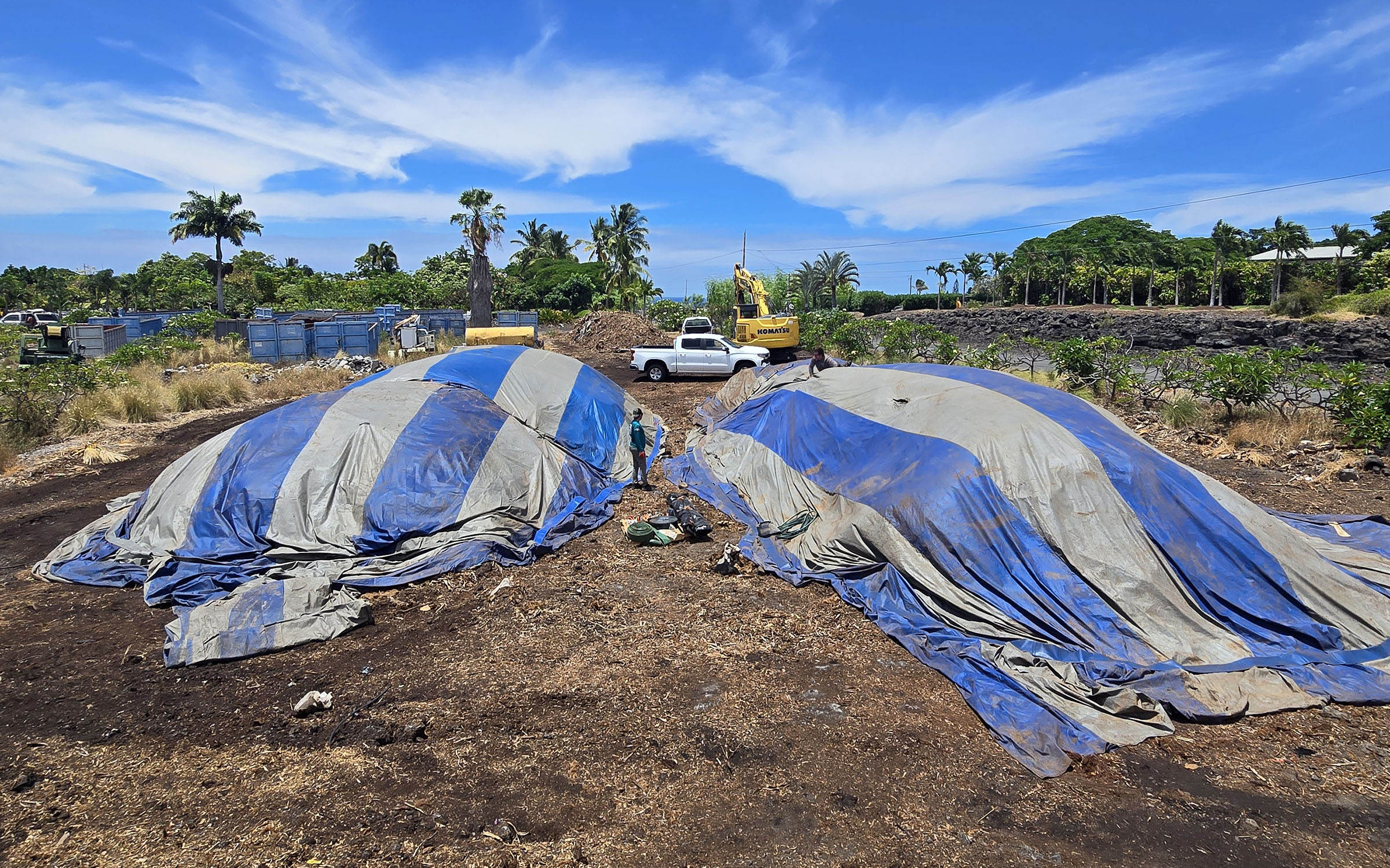
On Aug. 25 to 26 and Sept. 3 to 5, a team from county and state agencies participated in fumigating the nursery. This is part of the ongoing effort to prevent the coconut rhinoceros beetle from becoming established on Hawaiʻi Island.
The operation followed a previous fumigation of green waste at the agricultural park site in mid-August. The coconut rhinoceros beetle had not been detected in the green waste at Keāhole Agricultural Park after the first fumigation, and this recent fumigation served as a safeguard in case the species had moved into other nearby green-waste piles.
The operation was coordinated by the Hawai‘i Department of Agriculture and Biosecurity’s Plant Pest Control Branch, including the Hawai‘i Department of Transportation Highways Division, which provided heavy equipment such as excavators, loaders, and dump trucks.
The County of Hawai‘i Department of Public Works and Department of Environmental Management Solid Waste Division also assisted in hauling the fumigated material to a green waste processing facility for further processing.
The fumigation services were provided by a private pest-control operator contracted by the Department of Agriculture and Biosecurity.
“Treating and hauling 144 tons of green waste is a colossal task,” said Sharon Hurd, chairperson of the Hawai‘i Board of Agriculture and Biosecurity. “But the work crews, both private and public, were committed to eliminating the coconut rhinoceros beetle from this site, and we truly appreciate their collaboration and hard work, especially in the summer heat.”
In late July, the first major coconut rhinoceros beetle breeding site at Keāhole was found when an inspection team uncovered 110 late-stage coconut rhinoceros beetle larvae and three adult beetles. The green-waste piles were promptly covered with a fumigation tarp to prevent further spread and later fumigated and removed for additional processing.
Hawai‘i Island residents are asked to continue to comply with Hawai‘i Island Mayor C. Kimo Alameda’s voluntary order to stop the movement of green-waste material from the compliance zone on the west side of Hawai‘i Island.
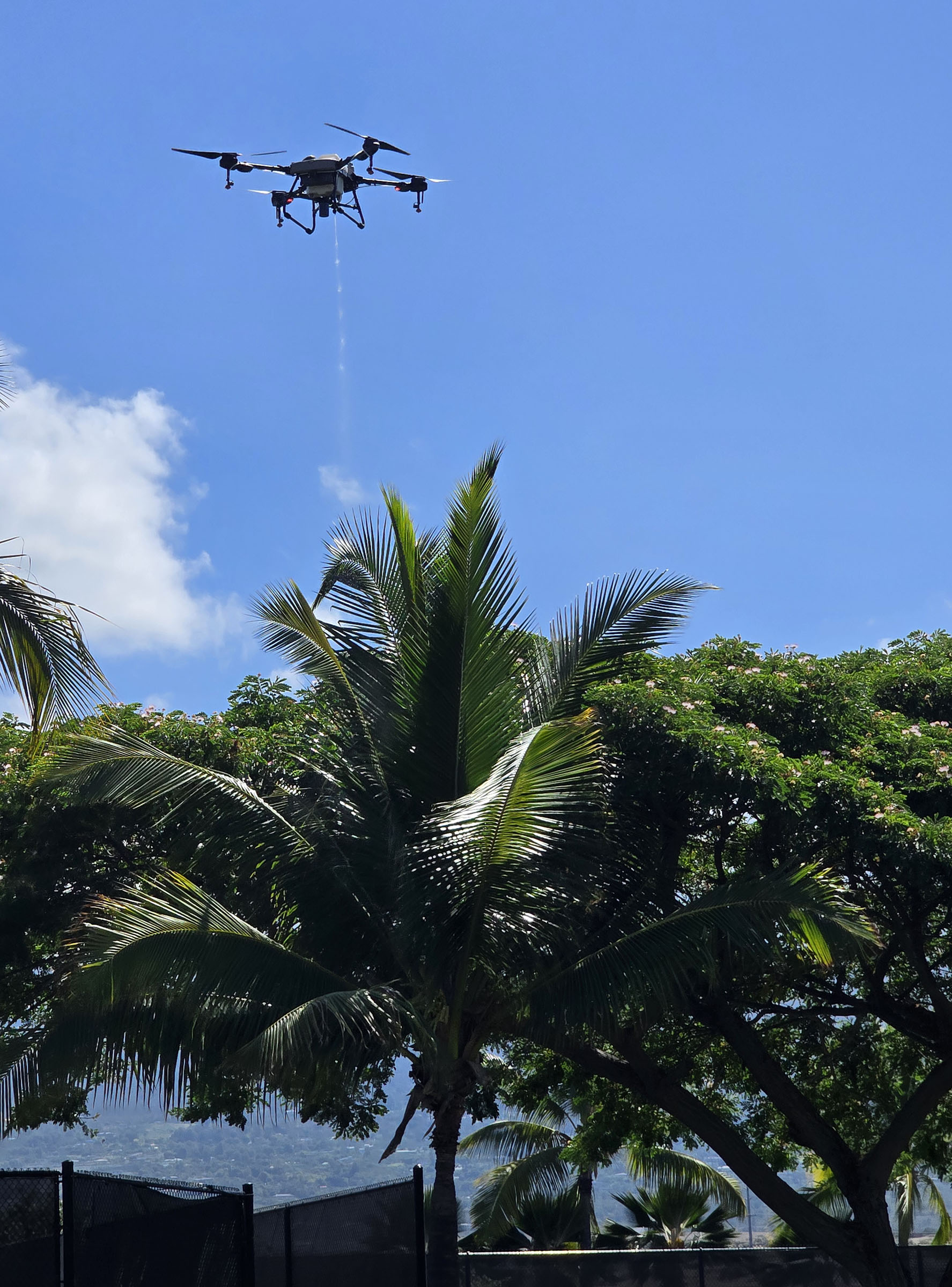
Additional coconut rhinoceros beetle detection traps have been deployed at Keāhole Agricultural Park, and increased surveillance and monitoring will continue in the surrounding areas. Also happening this week, the response teams are using drones to treat palm trees in the Kohanaiki area.
Suspected coconut rhinoceros beetle sightings on Hawai‘i Island should be reported immediately to the state’s toll-free pest hotline at 808-643-7378 or reported online at 643pest.org.