


Air ambulance services on Big Island growing with Life Flight Network to begin operations in November
Between Hawai‘i Island’s two largest hospitals – Kona Community Hospital and Benioff Hilo Medical Center – nearly 100 patients are being transported by air ambulance every month to O‘ahu hospitals for life-saving or higher-level care not available on the Big Island.
With no roads to O‘ahu, aircraft is the only way to transport critical patients.
For more than three decades, Hawai‘i Life Flight has been the sole air ambulance service on Hawai‘i Island with bases in Kona, Waimea and Hilo, and a fleet of two fixed-wing and one rotor aircraft that have the capacity to transfer up to three patients total between the three.
But more air ambulance service is needed as demand has grown, spokespeople for the Big Island hospitals say. In some cases, it has led to longer wait times for transports. In June, one patient waited 36 hours to be transported for life-saving care for sepsis.
To meet the growing demand, two more operations will transport patients from the Big Island to Oʻahu.
Oregon-based Life Flight Network, the largest nonprofit air ambulance in the country, will begin operating a helicopter out of Kona starting in November with plans to bring aircraft to Waimea and Hilo bases. These bases will be near the island’s three hospitals, which include Queen’s North Hawai’i Community Hospital.
Life Flight Network is in the process of getting licensed to serve Hawaiʻi County, according to an email Friday from the Hawai‘i Department of Health.
As of Sept. 1, O‘ahu-based Optimum Air expanded to interisland services with the addition of a Pilatus PC-12 air ambulance aircraft to its fleet, which can carry one patient. But Jon Rosati, chief strategy officer for the company, said Optimum Air does not have plans to establish a base on the Big Island at this time.
This month, Optimum Air transported one patient back to the Big Island. So far, they have not airlifted anyone from the Big Island to O‘ahu for care.
“Access to healthcare resources and definitive care is something we absolutely support,” Hawai‘i Life Flight spokesperson stated in an email. “We appreciate those who want to help Hawaiʻi and improve access to care.”
Currently, Hawai‘i Fire provides the only emergency air ambulance transportation within Hawaiʻi County, but medical care on its two helicopters is limited and not equipped to perform inter-island transfers, said Hawai‘i Fire Chief Kazuo Todd.
Recognizing the need for more air support for medical transfers, the Daniel R. Sayre Memorial Foundation raised $15 million for the new Airbus H145, which is currently being built in Mississippi and will be operated by the Life Flight Network.
Through the foundation, a partnership with the Life Flight Network and Hawai’i County was announced in March.
The Airbus H145, which can treat up to two patients, is designed for rapid response, equipped with cutting-edge avionics, and offers a spacious cabin optimized for critical care transport.
With the delivery date of the new helicopter expected sometime next year, Ben Clayton, Chief Executive Officer for Life Flight Network, recognized the immediate need of air ambulance services and announced to supporters and donors of the Sayre Foundation dinner in August that his company will bring two H145 aircraft and a Pilatus PC-12 from their mainland fleet to begin service on Hawai‘i Island in November.

Laura Mallery-Sayre, executive director of the Daniel R. Sayre Memorial Foundation, said the H145 helicopters are more than just a transport. They are flying intensive care units that can perform rescues in rural areas of the Big Island.
“Everybody realizes there is a critical need,” Mallery-Sayre said. “We should all be walking around with helmets on. We are up a creek without a paddle when it comes to trauma services.”
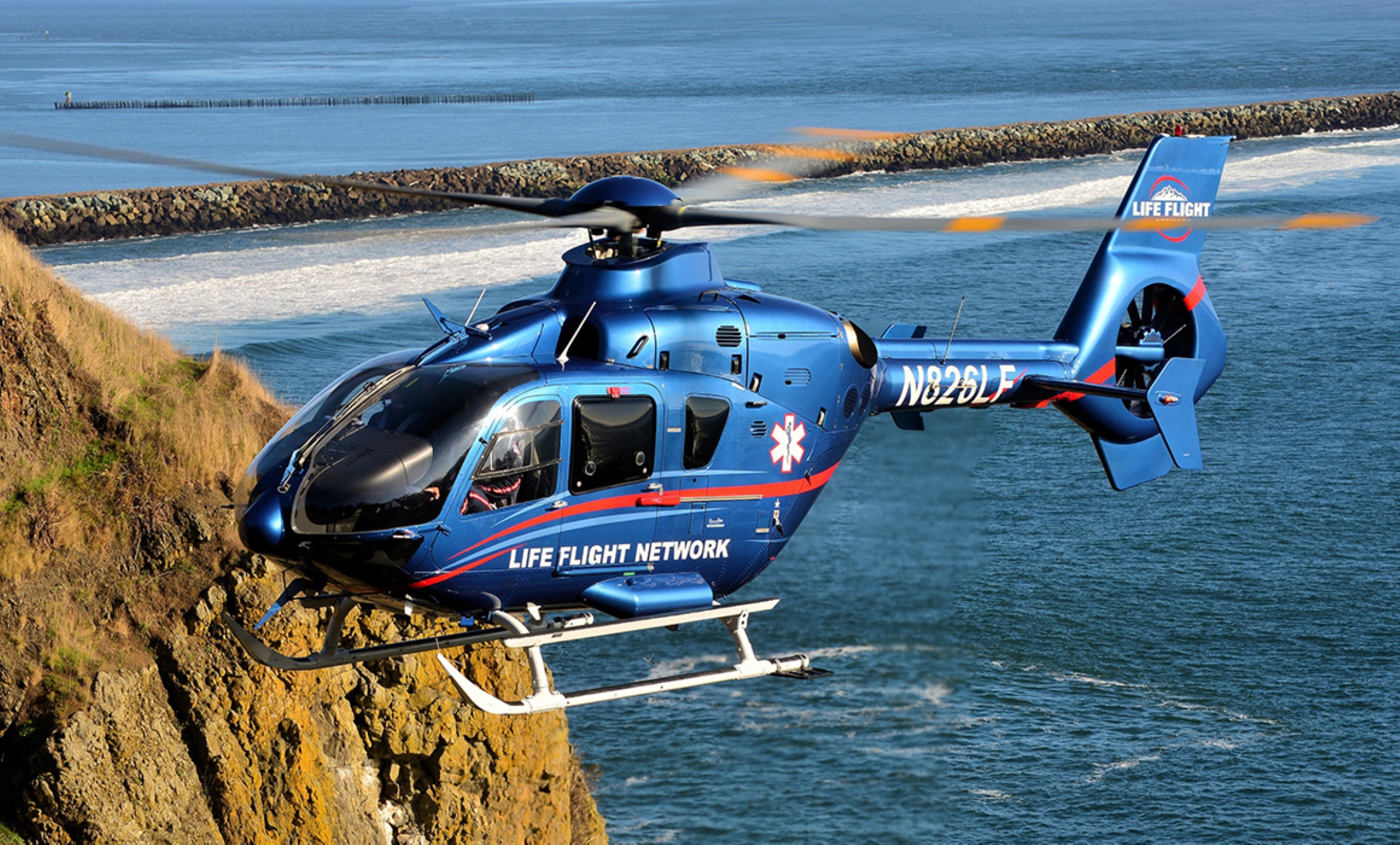
The Life Flight Network operates in rural areas with close to 60 aircraft across Oregon, Idaho, Washington and Montana.
Building on the Sayre Foundation’s investment, the Life Flight Network will invest an additional $27 million into its Hawai‘i operations, covering aircraft acquisition, medical equipment and facilities for three bases on the Big Island, expanding critical care access for residents and visitors, according to Life Flight Network’s website.
While the Big Island’s three major hospitals in Kona, Hilo and Waimea are Level III Trauma Centers, meaning medical professionals can perform resuscitation, stabilization, emergency surgery and intensive care of trauma patients, there are some specialty care for strokes, infections, like sepsis, and other medical procedures that these hospitals can not perform. Patients must be transferred to Queen’s Medical Center on O‘ahu, which is a Level I Trauma Center, the only facility in the Pacific region that offers this level of care.
So far this year, Queen’s Medical Center has accepted 527 patients, a combination of medivaced patients and regular transfers, from the Big Island, according to Sean Ibara, Corporate Communications Manager for Queen’s.
“Of all the neighbor islands, we accept the most patients from the Big Island,” Ibara said.
Regina Leon, director of critical care services at Kona Community Hospital, said patients needing an intervention with a specialty doctor, like a neurosurgeon, also need to be flown to Oʻahu.
“Over the last couple of years, those transports have increased along with regular patient volume,” Leon said.
An average of 2,000 patients a month are being treated in the emergency room at Kona Community Hospital, of which about 50 need to be transported to Oʻahu for necessary care, Leon said.
She said it is challenging to get care to patients when there are only so many beds available at Oʻahu hospitals and only so many people who can fly.
Leon said wait times to fly patients to Oʻahu are typically a couple of hours, “which isn’t horrible. We can safely provide care till they get to specialty hospitals.”
But there are cases where wait times are much longer at the three hospitals.
Ashley Lake was with her 78-year-old father in the emergency room at Queen’s North Hawai‘i Community Hospital for 36 hours, waiting for him to be medivaced to O‘ahu for specialty care after an infection following knee replacement surgery caused him to go septic.
“The infection happened fast,” Lake said. “His knee was swelling. I was really red. He couldn’t walk and he couldn’t move. He was in a lot of pain.”
The delay in getting Lake’s dad to Queen’s Medical Center on O‘ahu for potentially life-saving care was a two-fold problem. First, there wasn’t an available bed. Once a bed was secured, Lake said there were no flights available because crews were busy transporting patients who had even “more traumatic” cases.
At Kona Community Hospital, Leon said the medical personnel are equipped to take care of patients within the “golden hour,” which refers to the first 60 minutes after a serious medical event like a stroke.
But Leon said the additional aircraft will benefit the community in getting patients treated more quickly.
“We all just want to work together to get the patients the best care,” she added. “Transport is vital to the community.”
Arthur Sampaga, Jr., Chief Nurse at Hilo Benioff Medical Center, said for the past year, the hospital has had an average of 46 patients per month be transported to O‘ahu for additional care.
Sampaga said air transport for patients has limiting factors when one aircraft is down for maintenance, flight crew is timed out, bariatric (severely overweight) patient and bad weather.
“All of these factors cause delays in air transport to higher level of care,” Sampaga said.
With an increase in aircraft fleet and crews supporting Hilo, Sampaga said the staff can better serve patients and the community by providing expedited preparation and transports, decompress the emergency department from critical patients, and maximize air ambulance coverage for the entire Big Island and not just Hilo.
Clayton said Life Flight Network will begin services in November with an Airbus EC135P2+ in Kona and a fixed-wing plane in Hilo. Another helicopter will be brought in for Waimea in the spring.
Clayton said each aircraft can carry one patient, but he anticipates crews conducting multiple patient transfers to O‘ahu daily.
These aircraft will be replaced with two Airbus H145 helicopters, including the helicopter purchased by the Sayre Foundation, by mid-2026. Additionally, a Pilatus PC-12NG fixed-wing aircraft will be based at Hilo International Airport.
Clayton also attended the Sayre Foundation dinner to introduce himself to the community and build trust.
“We recognize that many of us in the leadership team are not local. That said, many of the people that we’ve already started hiring do live here on the island or on one of the other islands,” Clayton said.
The Life Flight Network will have a dispatch center in Honolulu, embedded at Queen’s Medical Center. It also will hire crews for the new bases, including pilots, paramedics, nurses and mechanics.
Todd, the fire chief, is optimistic about the growth of the air ambulance services.
“It’s my hope with more resources that patients will have a better chance of getting the care they need quickly and efficiently,” Todd said. “We want an efficient system that’s going to take care of the people of Hawai‘i.