


Hawaiʻi County increases support for coconut rhinoceros beetle eradication
A battle wages on to stop a potentially calamitous kind of invasive insect from conquering the Big Island, and Hawaiʻi County is stepping up its involvement in the conservation conflict
The county continues to increase support of efforts to stop the spread of the highly destructive coconut rhinoceros beetle, an invasive scarab first detected in October 2023 on Hawaiʻi Island in Waikōloa.
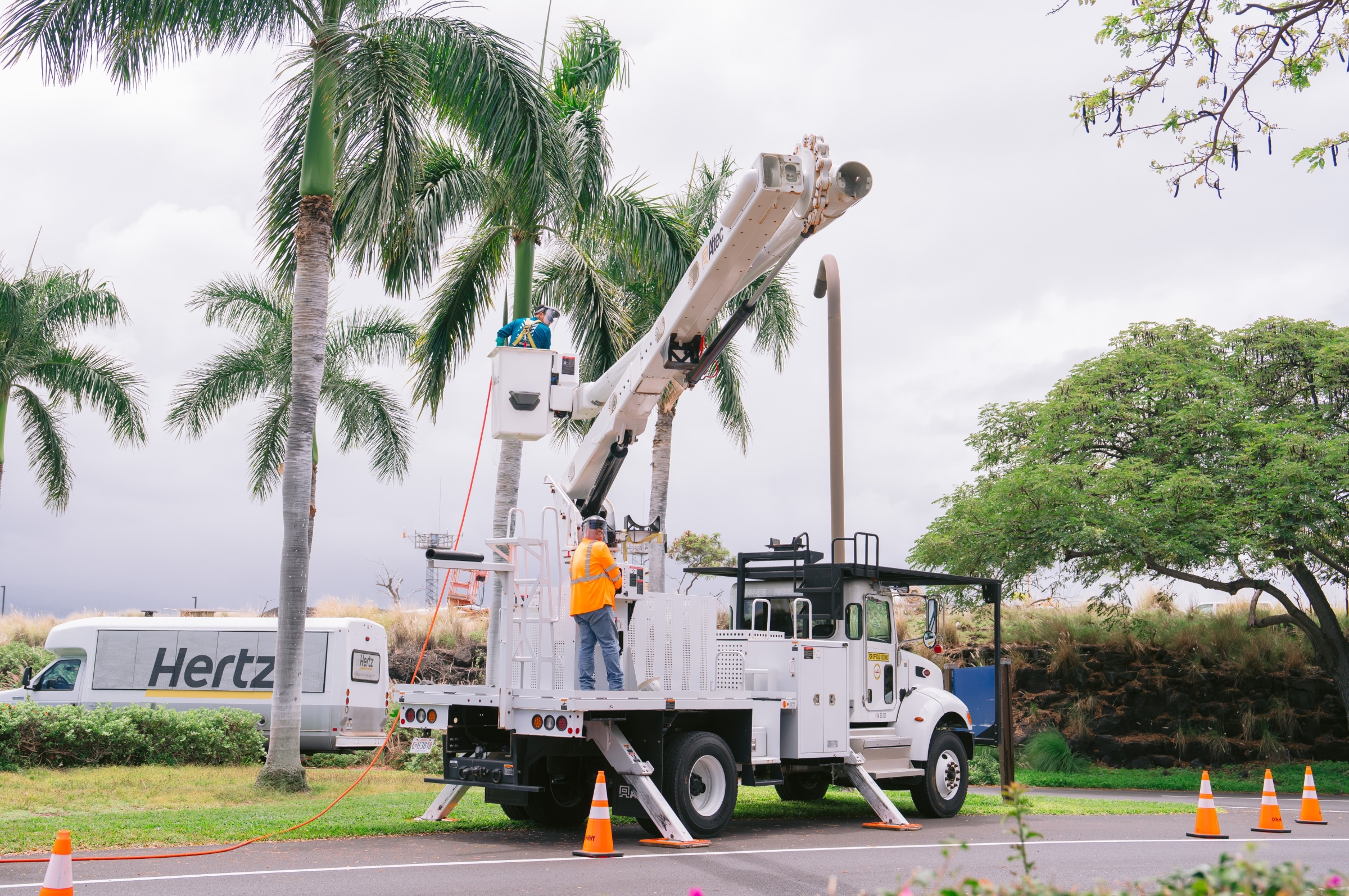
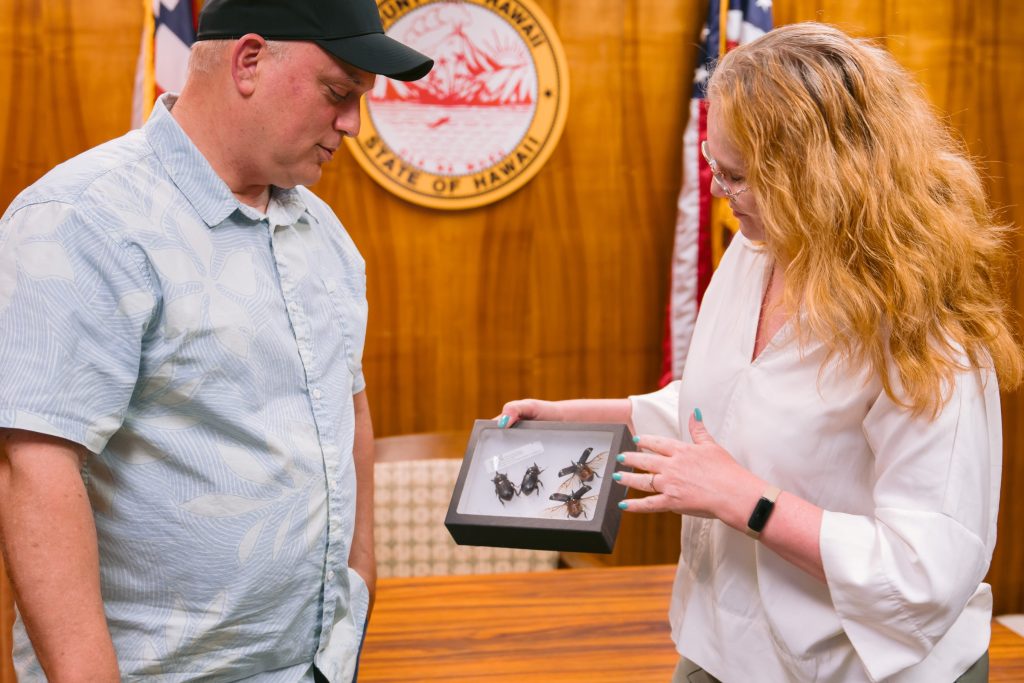
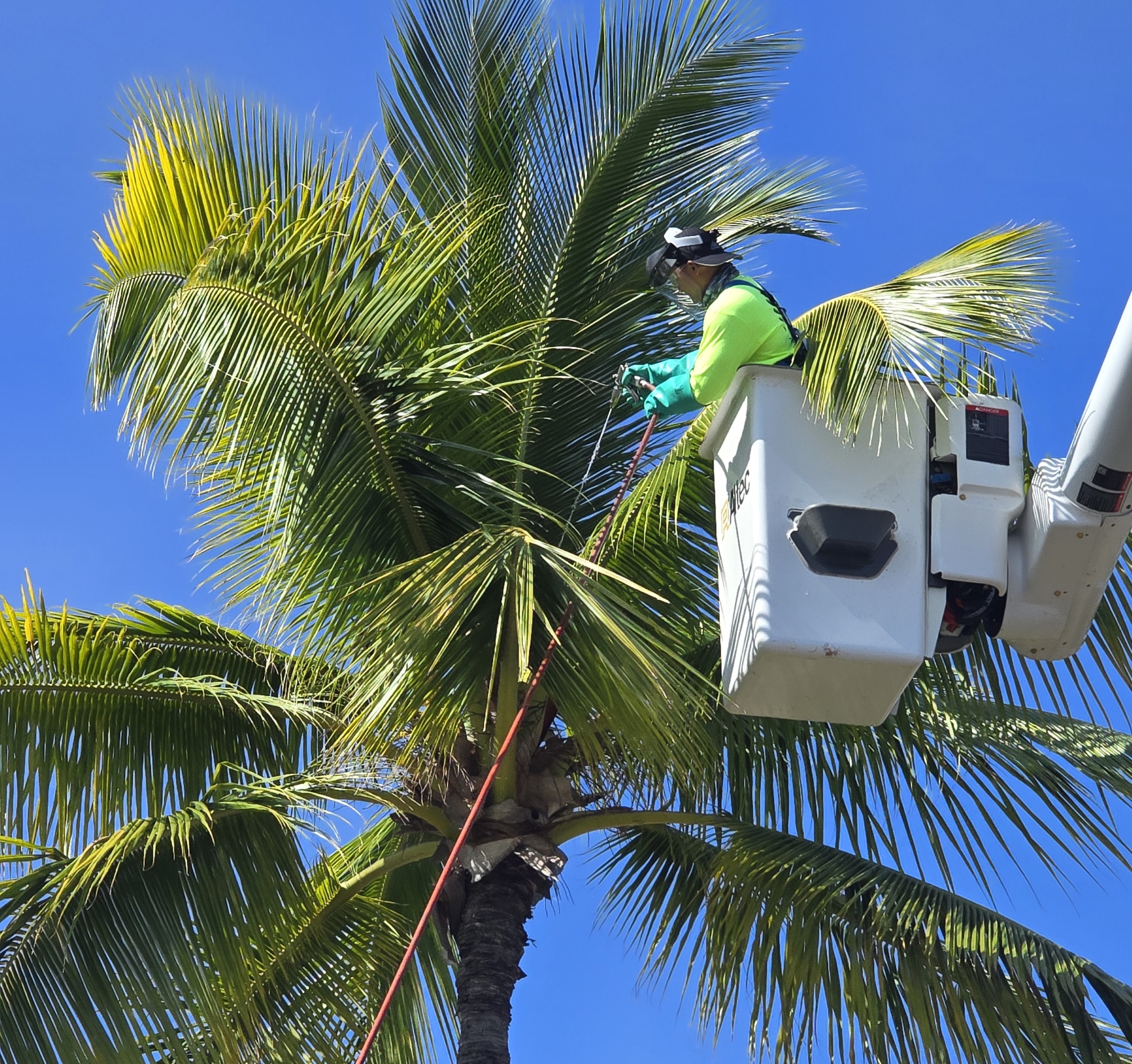
It recently awarded $250,000 to Big Island Invasive Species Committee to combat the beetle and other pests. In addition, the county is continuing to assist Hawaiʻi Department of Agriculture by providing the use of 75-foot boom trucks to treat palm tree crowns for coconut rhinoceros beetles.
“I am incredibly proud of this collaboration between the county, the Hawaiʻi Department of Agriculture and the Big Island Invasive Species Committee,” Hawaiʻi County Mayor Kimo Alameda said in an announcement about the grant and increased efforts. “By working across agencies and departments, we are ensuring that we are doing everything we can to stop the coconut rhinoceros beetle before it gets out of control on our island.”
The grant to Big Island Invasive Species Committee is provided by Hawaiʻi County Department of Research and Development, with funds supporting eradication of the invasive scarab and invasive plant species.
Efforts funded by the grant focused on the coconut rhinoceros beetle include supporting backyard surveys using a scent detection dog, palm and mulch surveys, a community-host trap program and public outreach and education efforts.
Big Island Invasive Species Committee Manager Franny Brewer said the organization’s focus remains on early detection of the invasive beetle and preventing it from becoming established on the island.
The grant from the county will provide dedicated funding for those ongoing efforts.
“This funding is key for supporting those efforts, from surveys and traps to community outreach in West Hawaiʻi so that we can raise awareness that this is a concern for these communities,” Brewer said in the county’s announcement.
Coconut rhinoceros beetle was first detected in Hawaiʻi in December 2013 on Oʻahu.
The beetle is not only deadly to palms and other plants in the islands, it also could be devastating to the state’s economy.
It’s already killed palms by the dozens on Oʻahu’s North Shore — with taro, banana and hala plants next on its hit list — and is now finding its way into urban Honolulu, plus threatening to cost the Pacific islands region an estimated $169 million a year by 2040 if its invasion is not curbed.
Coconut palms and other palm species are the invasive scarab’s preferred targets, but it will feed on other important crops such as ʻulu, banana and kalo when palm food sources are eliminated.
Since being found in October 2023 in Waikōloa, ongoing survey and trapping efforts recently discovered the invasive beetle at Keāhole Ag Park, ‘O‘oma, West Hawaiʻi Veterans Cemetery, Kohanaiki, Hawaiʻi Ocean Science and Technology Park and Ellison Onizuka Kona International Airport.
 Photo Courtesy: Hawaiʻi County/by Tracey Niimi
- Photo Courtesy: Hawaiʻi County/by Tracey Niimi
- Photo Courtesy: Hawaiʻi County/by Tracey Niimi
- Photo Courtesy: Hawaiʻi Department of Agriculture
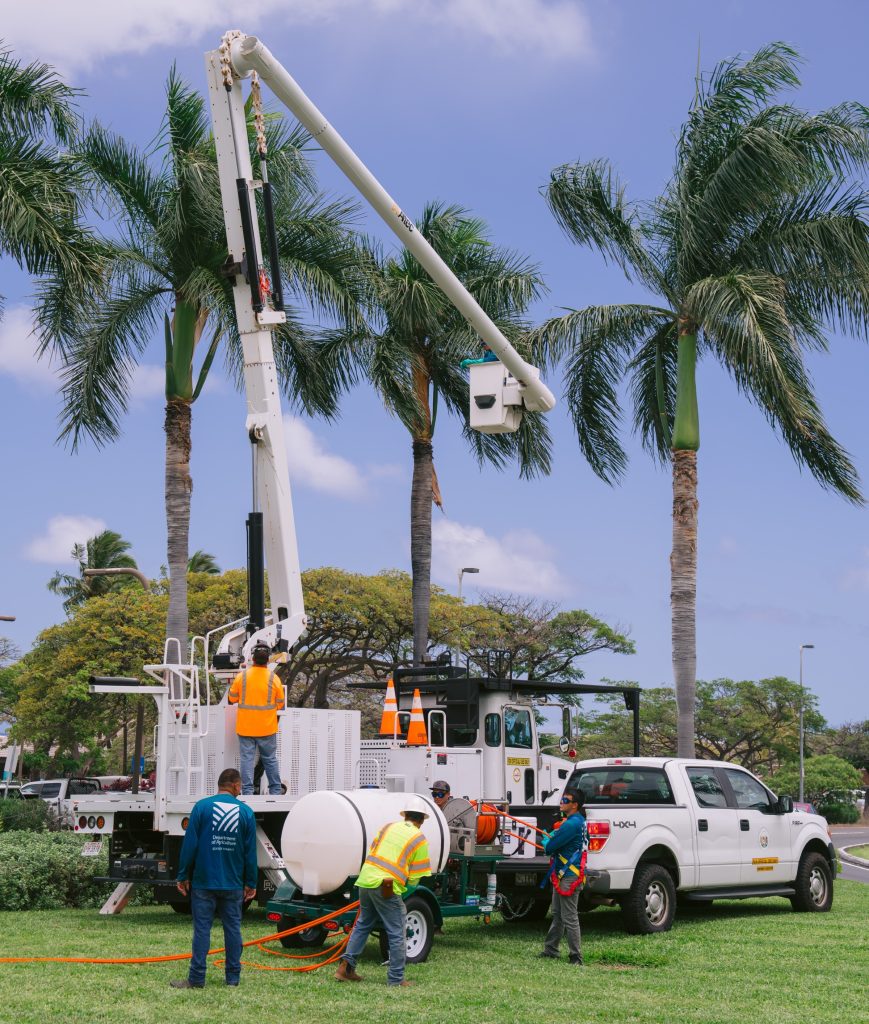
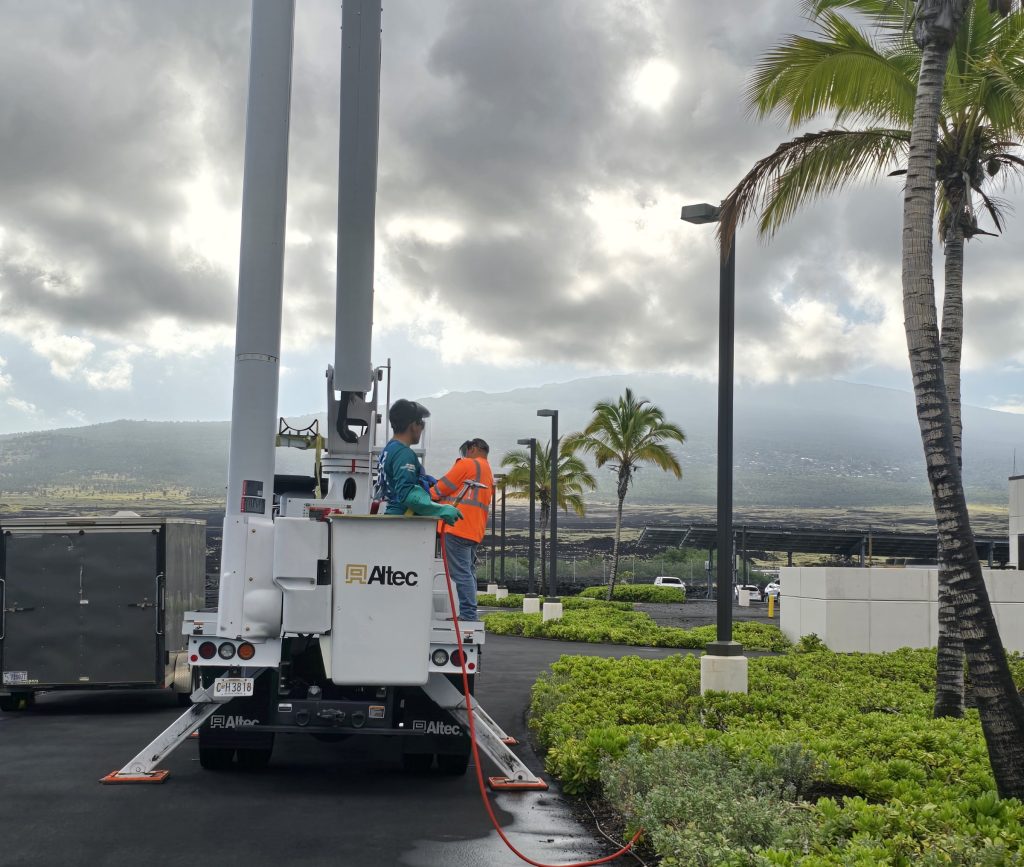
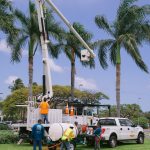
Hawai‘i Department of Agriculture, with the assistance of Hawai‘i County Public Works Department, on May 6 began another round of treatment of palm trees at the Kona airport in an effort to stop the invasive beetle from becoming established on the island.
It was a follow-up to treatment conducted last month at the airport.
“It really is ‘all hands on deck’ in West Hawai‘i, and all our partner agencies are dedicating everything they have to stop the establishment of [coconut rhinoceros beetle] on Hawai‘i Island,” Hawai‘i Board of Agriculture Chairperson Sharon Hurd said in an update from the board.
The county and state Agriculture Department have worked collaboratively since January after the beetle was detected in the Kona area. Hawai‘i County Public Works provided its boom trucks so crews can treat the tops of palm trees.
Here is a brief timeline of coconut rhinoceros beetle detections and treatments throughout West Hawai‘i:
- OCTOBER 2023: A Waikōloa resident found 6 coconut rhinoceros beetle grubs, or larvae, in a decaying palm tree stump. Increased surveillance continued around the island and more intensely on the west side.
- APRIL 2024: Big Island Invasive Species Committee reported that 4 adult beetles were found in three traps in the Waikōloa area.
- SEPTEMBER 2024: Hawaiʻi Department of Agriculture Plant Pest Control personnel found a single coconut rhinoceros beetle in a trap during routine monitoring in Waikōloa.
- JANUARY: Hawai‘i County offered its resources and assistance to the state Agriculture Department, including the use of its 75-foot boom truck, to treat the crowns of palm trees.
- JAN. 14: Waikōloa — Hawaiʻi Department of Agriculture and Hawaiʻi County teams treated a total of 38 trees via crown treatments and 24 via an injection system that provides systemic protection against coconut rhinoceros beetle.
- MARCH 3: Big Island Invasive Species Committee reported 1 adult beetle in a detection trap along the boundary of Ellison Onizuka Kona International Airport. A day later, the committee reported 2 more adult beetles were found in traps at the Natural Energy Laboratory of Hawai‘i.
- MARCH 14-19: Ellison Onizuka Kona International Airport — Hawaiʻi Department of Agriculture, Hawaiʻi County and Kona airport staff used two boom trucks to treat 123 trees on the airport grounds and injected 12 more that were inaccessible to the boom trucks.
- APRIL 7-8: Natural Energy Laboratory of Hawai‘i — Hawaiʻi Department of Agriculture and Hawaiʻi County crews treated the crowns of 44 trees and injected 14 more because of their close proximity to water.
- APRIL 15-16 and 21: Honokōhau Small Boat Harbor and Marina — Hawaiʻi Department of Agriculture and Hawaiʻi County crews treated 313 crowns and treated 50-plus more via injection because of their close proximity to water.
- APRIL 24: West Hawai‘i Veteran’s Cemetery — 13 crowns treated. Big Island Invasive Species Committee reported finding one wing of an adult coconut rhinoceros beetle. Although a full specimen was not found, the state Department of Agriculture treated all palms on the site as a precaution.
- MAY 6: Ellison Onizuka Kona International Airport — Hawaiʻi Department of Agriculture and Hawaiʻi County and Kona airport staff treated 86 palms via crown application.
- MAY: Treatment at the Keāhole Ag Park is being scheduled later this month.
- MARCH TO PRESENT: A total of 10 adult coconut rhinoceros beetles have been reported in the areas of Keāhole Ag Park, Natural Energy Laboratory of Hawai‘i, ‘O‘oma, Kohanaiki and Ellison Onizuka Kona International Airport.
- ONGOING: Surveillance for coconut rhinoceros beetle continues around Hawai‘i Island by Hawaiʻi Department of Agriculture, Big Island Invasive Species Committee, University of Hawai‘i, Hawai‘i County and Hawai‘i Department of Health Vector Control Branch.
Staff from Hawaiʻi Department of Agriculture’s Plant Pest Control and Pesticides Branches applied the treatments on tree crowns and via injection, when necessary.
All treated palms were tagged and surrounded with yellow tape. Coconuts from treated trees should not be consumed.
Questions regarding pesticide use can be addressed to the state Agriculture Department’s Pesticides Branch at 808-973-9402.
Residents on all islands are asked to be vigilant when purchasing mulch, compost and soil products. They should also inspect bags for evidence of entry holes.
Coconut rhinoceros beetles breed in decomposing plant and animal waste.
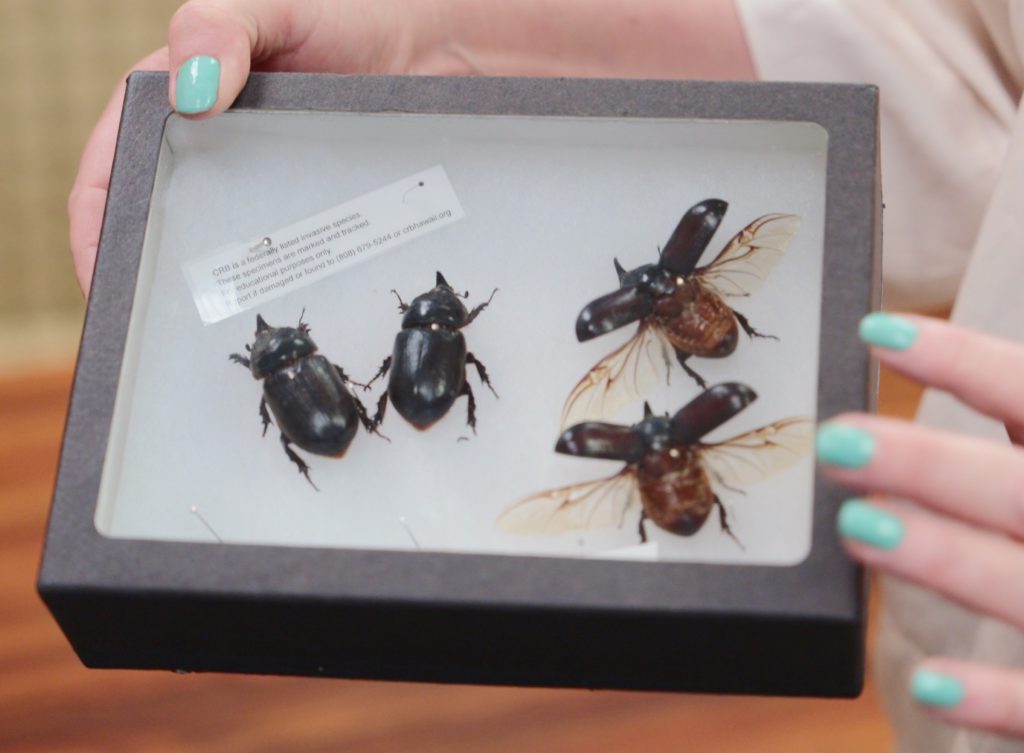
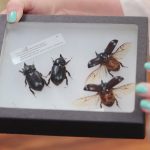
An adult beetle is about 2-inches long, all black and has a single horn on its head. The invasive scarabs leave distinctive V-shaped cuts and/or scalloped edges in palm leaves and bore holes that might be visible in tree trunks.
Hawai‘i County is providing access to coconut rhinoceros beetle surveys, traps and tree treatments at county parks and facilities.
For more information or to report coconut rhinoceros beetles, use these resources:
- Coconut Rhinoceros Beetle Response.
- Big Island Invasive Species Committee.
- State toll-free Pest Hotline at 808-643-PEST (7378) or online.