

Trump opens Pacific Islands Heritage Marine National Monument to industrial fishing after 16 years of protection
President Donald Trump issued a proclamation on Thursday to allow industrial fishing in the Pacific Islands Heritage Marine National Monument, which would mean scaling back protections from 50 to 200 nautical miles and opening up 408,000 square miles of the monument to industrial fishing extraction.
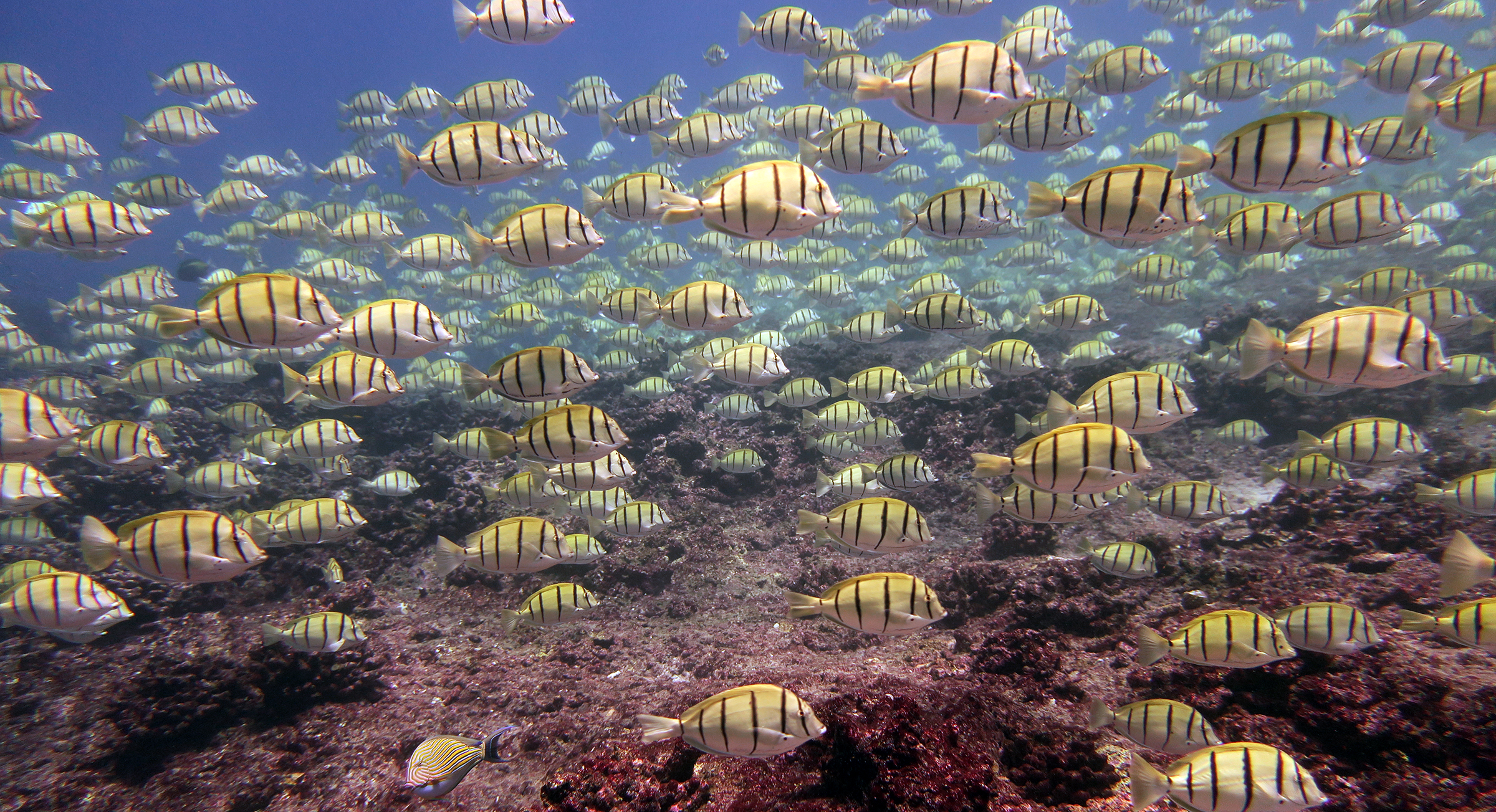
The move threatens to reverse decades of progress that have reduced overfishing and exploitation of one of the planet’s last wild, healthy ocean ecosystems and a place of cultural significance for Pacific Islanders.
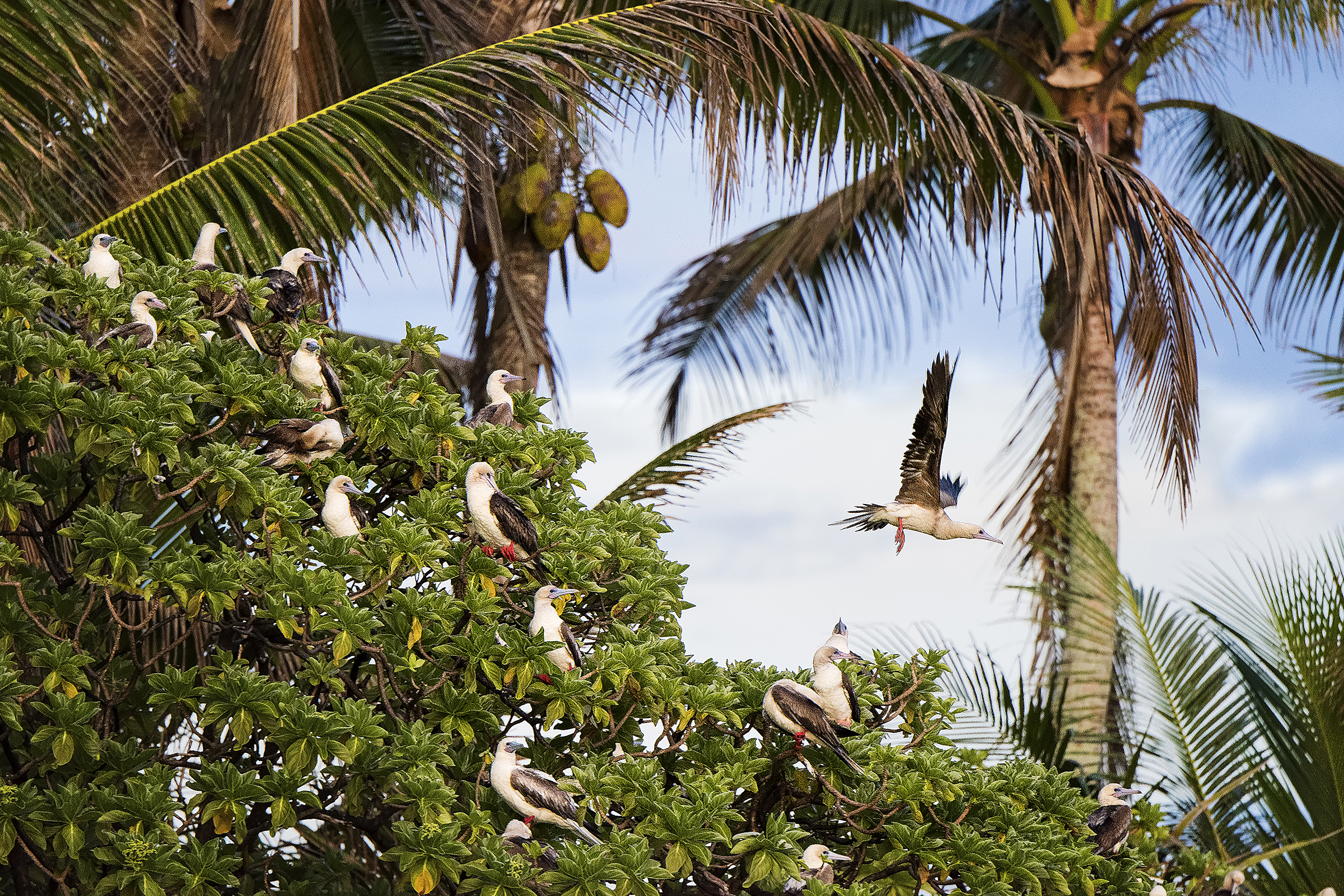
The monument is home to threatened, endangered, and critically endangered whales, sharks, rays, turtles, and seabirds; seamounts that serve as ecological hotspots for biodiversity; pristine coral reefs, and ocean ecosystems not found anywhere else on Earth.
Pacific Islands Heritage Coalition, a network working to protect and amplify the cultural, natural, and historical legacy of the area’s islands, atolls, and reefs, responded to the proclamation, stating they will not stand down to allow industrial fishers to exploit and raid protected ocean areas.
“The Pacific Islands Heritage Marine National Monument is a safe haven for endangered sea turtles, the feeding and breeding ground for millions of seabirds, and a refuge for endangered marine mammals,” said Dr. Douglas McCauley, professor at the University of California, Santa Barbara, and director of Benioff Ocean Science Laboratory. “Only three percent of our worldwide ocean is strongly protected today, and our monuments are a significant portion of this figure. In attempting to downgrade the protection of this unique monument, we are devaluing a critically important asset in America’s ocean wealth portfolio.”
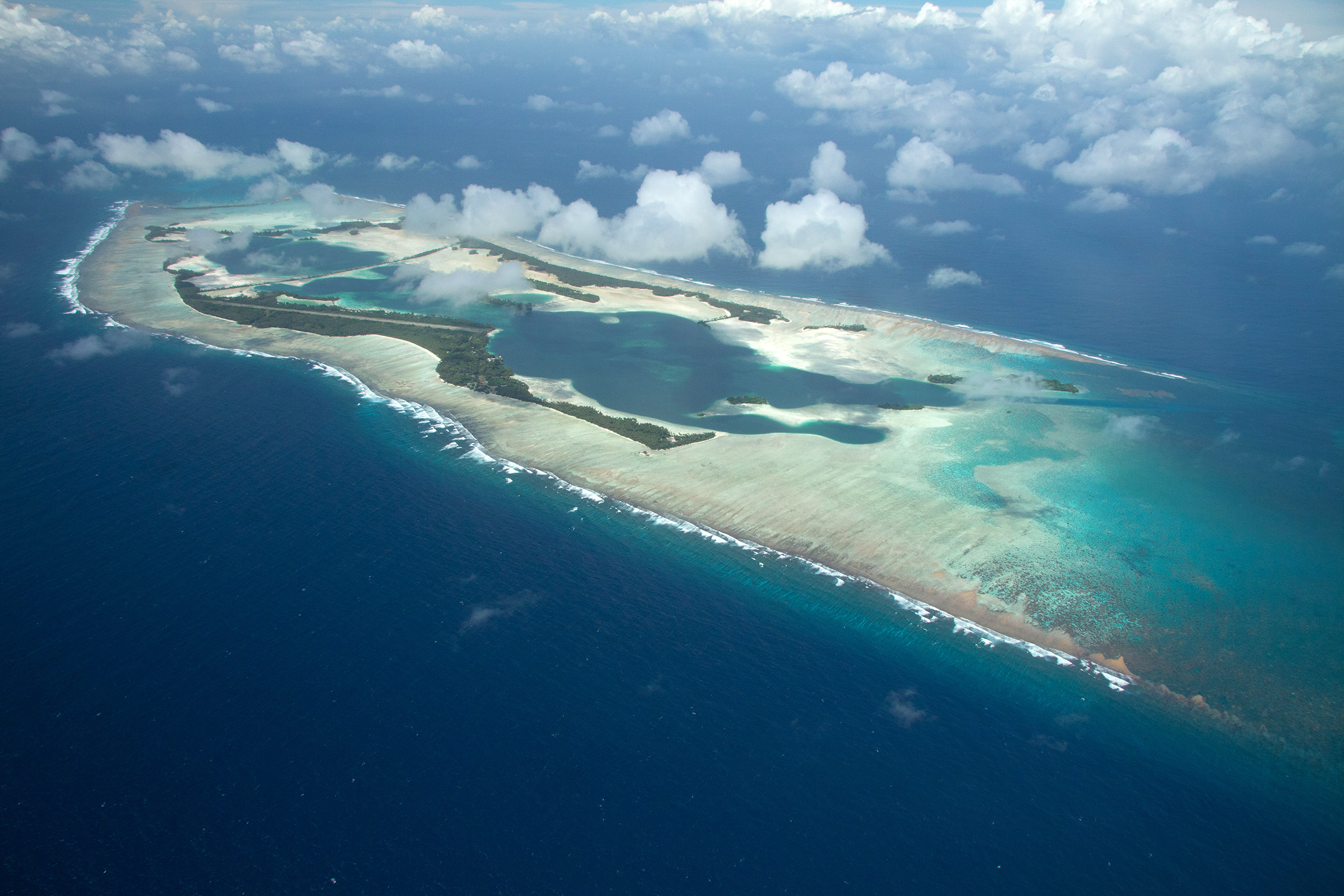
Former President George W. Bush, a Republican, established the Pacific Islands Heritage Marine National Monument, formerly Pacific Remote Islands Marine National Monument, in 2009 to protect the marine habitats of seven islands or atolls: Wake, Jarvis, Howland and Baker islands, Johnston Atoll, and Kingman Reef and Palmyra Atoll. The monument was expanded in 2014 to a total of approximately 495,189 square miles.
Presidents have the authority to designate national monuments under the Antiquities Act, not to modify or abolish them. Presidents from both parties have designated a total of 168 national monuments under the Antiquities Act.
“At a time when the climate crisis is threatening our fragile ocean ecosystem and costing us lives and livelihoods every year, President Trump’s response is to gut protections for some of our nation’s most important natural resources, including the Pacific Islands Heritage Marine National Monument,” U.S. Sen. Brian Schatz (D-Hawai‘i) said in a statement on Friday.
Schatz said that U.S. Commerce Secretary Howard Lutnick “was unequivocal when he assured me during his confirmation hearing that consultation would take place prior to any actions on fisheries in the Pacific. No such consultation occurred in advance of today’s executive order. The public deserves answers, and I expect him to come before Congress to explain this misguided decision.”
The area is significant for Indigenous Pacific Islanders with ancestral, historical, and cultural ties to its islands and atolls as they are the waterways of ancient and modern Indigenous navigators.
“The Pacific Islands Heritage Marine National Monument is more than a place for fishing, it is vital to the cultural heart of the Pacific peoples,” said Solomon Kahoʻohalahala, a native Hawaiian elder and chair of the Pacific Islands Heritage Coalition. “Opening this sacred place for exploitation is short-sighted and does not consider current or future generations of Pacific people who rely on a healthy ocean and know this special ocean space as our ancestral home.”
According to the proclamation, prohibitions on commercial fishing have caused American fishing fleets to lose access to nearly half of the United States’ Exclusive Economic Zone in the Pacific Islands and have driven American fishermen to fish further offshore in international waters to compete against poorly regulated and highly subsidized foreign fleets.
However, studies have shown that protected areas have spillover benefits that lead to increased catch rates for tuna fisheries operating outside their boundaries. Specific to the area, a study published in “Nature Communications” shows that after the expansion of the Pacific Remote Islands area, the Hawaiʻi-based longline industry has been catching more fish, while the distance the fleet travels has remained unchanged.
According to the Hawaiʻi Longline Association, 85% of the Hawaiʻi longline fleet’s fishing effort occurs in international waters and amongst foreign vessels competing to catch tuna. These foreign fleets are subsidized by their flag countries and are comprised of large-scale freezer vessels that conduct fishing trips lasting 12 months or more – transshipping their catch at sea to carrier vessels.
Hawaiʻi longline vessels land only ice-chilled tuna and billfish and make fishing trips lasting 25 days or less.
“U.S. fishing vessels need relief from foreign competition. Access to Exclusive Economic Zone waters around Johnston Island is important for the long-term continuity of the Hawaii longline fleet,” said Sean Martin, Hawaiʻi Longline Association President. “In 2023, the United Nations adopted a new convention that provides a framework for high seas marine protected areas. This convention did not exist when the (Pacific Islands Heritage Marine National Monument) was expanded nor when Papahānumokuākea Marine National Monument was expanded to the full economic zone.”
“The combination of high seas closures under the UN convention and full closures of (Exclusive Economic Zone) waters severely disadvantages US vessels as we’d have nowhere to fish,” Martin continued.
According to the Hawaiʻi Longline Association, the Hawaiʻi longline fishery is among the largest food producers in the State of Hawaiʻi as residents consume seafood at twice the national average.
“Fishing is my livelihood and I’m proud to produce fresh ahi for Hawaii and my community,” said Kawai Watanabe, a Native Hawaiian longline vessel captain. “We’re a highly monitored and regulated fishery. We know what we catch and we need to be able to fish in U.S. waters away from large-scale foreign fleets.”
President Trump also noted federal protections under current laws and agency management designations will protect the area’s natural resources, vulnerable marine species, and unique habitats despite commercial fishing.
“This is yet another attempt by President Trump to undermine decades of work to protect and preserve public lands and waters, endangered species, and cultural heritage in favor of commercial interests,” said David Henkin, an attorney in Earthjustice’s Mid-Pacific Office. “This is one of the most pristine tropical marine environments in the world that already faces dire threats from climate change and ocean acidification.”
Henkin said Earthjustice will do everything in its power to protect the Monument.
According to the Pacific Islands Heritage Coalition, industrial fishing methods can catch and entangle marine wildlife—including endangered whales, dolphins, sea turtles, sharks, and seabirds—and cause harm to fragile corals. Commercial fishing also removes large numbers of fish and top predators, which disrupts ecological food webs and degrades ecosystem function.
The coalition is urging supporters to stand together and fight to protect the ocean that everyone relies on. Petitions, volunteer opportunities and more information can be found on the Pacific Islands Heritage Coalition website.
Editor’s Note: This story was updated with comments from U.S. Sen. Brian Schatz and David Henkin, an attorney in Earthjustice’s Mid-Pacific Office.