

Hurricane Lala prompts Hawai‘i County Council to explore ways to proactively manage vegetation
The County Council is urging the governor and mayor to prioritize and fund proactive vegetation management to mitigate trees falling over power lines and roadways during natural disasters.
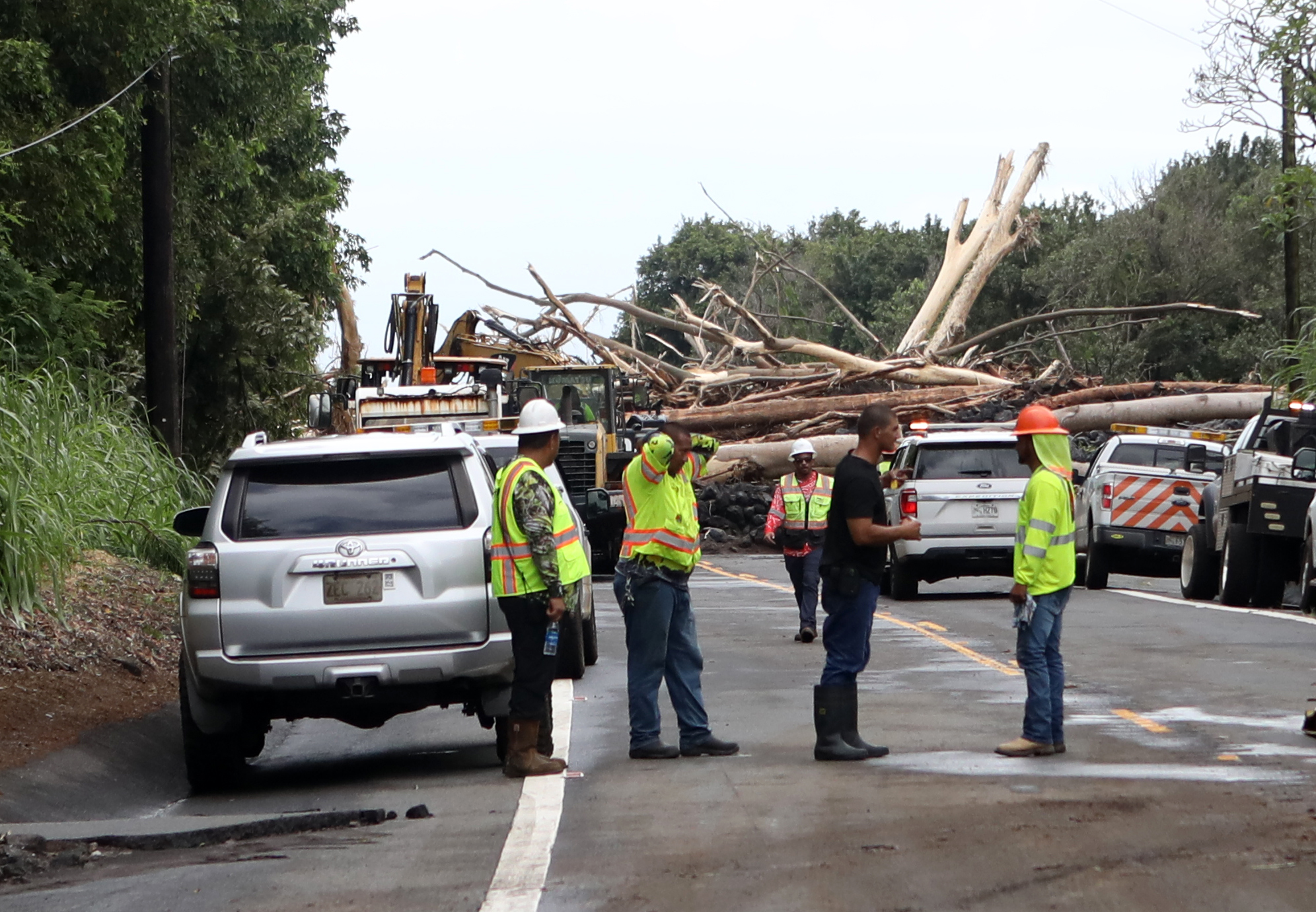
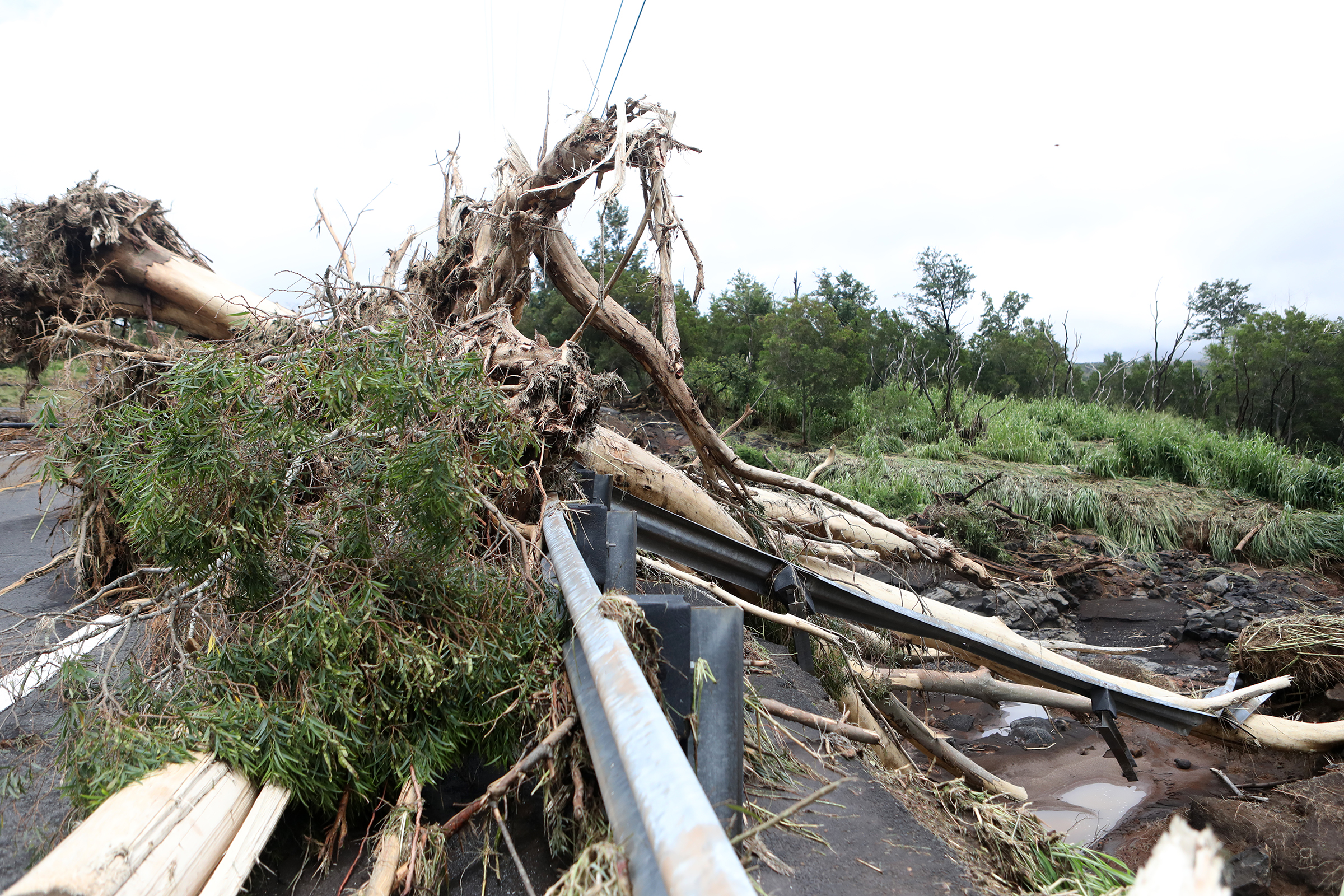
Category 1 Hurricane Lala, which struck two months ago, wreaked havoc on communities islandwide with winds and heavy rain downing trees on power lines and roadways, causing power outages and blocking access to communities for days and, in some cases, weeks.
The Aug. 15 storm knocked out electricity for more than 65,700 Hawaiian Electric customers.
“Whenever something like this happens, we spend an enormous amount of time, money and resources responding to that damage when, in some cases, a lot of it could have been prevented or reduced,” said Hawai‘i County Council Member Ashley Kierkiewicz during a committee meeting on Tuesday.
As the State and County develop upcoming legislative and budget priorities, Kierkiewicz co-introduced with Council Member Holeka Inaba Resolution 706-26 during the Committee on Governmental Operations and External Affairs. The resolution urges the governor and mayor to prioritize and fund proactive vegetation management to mitigate potential destruction caused by natural disasters.
The nine-member council gave it a positive recommendation and it will move forward to the full council for further consideration and adoption.
“This kind of work requires sustained attention, maintenance and funding,” Kierkiewicz said. “This resolution is being introduced at a very strategic time.”
She said the resolution requires the county administration to develop a county-wide vegetation management action plan to be delivered to the council in 180 days.
The action plan is to be created in collaboration with state, utility and community partners.
The resolution said the plan should include:
- Priority county roadways, properties, emergency access routes and critical infrastructure.
- Estimated mitigation and ongoing maintenance needs.
- Opportunities for interagency coordination and funding.
- Strategies for addressing hazardous vegetation on private property.
- Options for assisting residents who lack the financial means to undertake necessary mitigation.
- Recommendations to existing ordinances and enforcement procedures that address hazardous vegetation on private, vacant and absentee-owned property.
Kierkiewicz also cited the destruction brought by Tropical Iselle in 2014 when albizia trees were uprooted by the storm, blocking roads and isolating communities in Puna.
Albizia trees present a particularly significant hazard because of their rapid growth, brittle branches and susceptibility to failure during high winds and heavy rainfall, the resolution said.
After Iselle, Kierkiewicz said representatives of Hawai‘i Electric, Hawai‘i County, the State Department of Transportation, the Big Island Invasive Species Committee and other stakeholders came together to develop an albizia mitigation plan.
“More than 10,000 trees were treated along priority corridors in 2016 and 2017, so we know that it’s possible for there to be coordinated action across stakeholders,” she said.
The priority corridors treated during that time were at Black Sands and Keau‘ohana Forest, which showed the benefits of coordinated action among government agencies, utilities, community organizations and residents.
The partners revisited the mitigation plan in 2023, again recognizing the need for continued vegetation management and funding. The resolution doesn’t note that the plan was updated.
Inaba, who represents North Kona, had constituents who experienced significant damage in Kaloko because of downed trees and storm debris. Some residents were out of water and/or power for two weeks.
He said during the meeting that this plan isn’t starting from scratch.
“We have those plans back from 2015 that could simply be amended,” he said. “The proactive, responsible method is probably the way we should be going, which is what this resolution is calling for, rather than a reactive all-hands-on-deck approach trying to address damage island-wide.”
Hawai‘i County Council Member Matt Kaneali‘i-Kleinfelder said a key part of the resolution for him is finding a way to assist private landowners in addressing vegetation. He said he hopes the measure can find middle ground between the cost that a homeowner would incur to remove vegetation and the benefit that the entire county and community receives by doing so.
“The reality is someone who owns an acre to 100 acres to 500 acres, if they have a fronting road on their private property, that they are required to remove 10 to 100 trees,” Kaneali‘i-Kleinfelder said. “The average homeowner doesn’t have that much funds. It’s going to cost a fortune. So there has to be something in place to assist the landowner in providing the safety mechanisms for the community.”