


Two Kaʻū condo communities deserted after Lala damaged private Punaluʻu utility servicing water, sewer
"This has rendered our homes uninhabitable," John and Tammy OʻBanion wrote in a Sept. 20 letter to the Public Utility Commission.
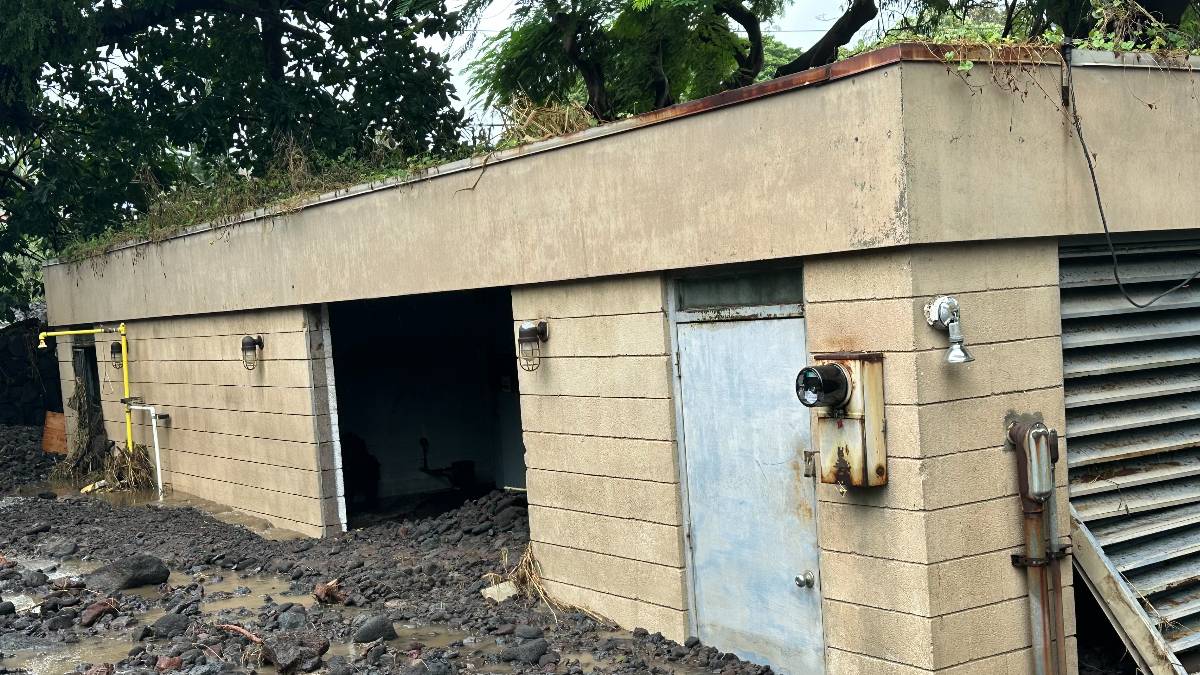
The condo communities of Colony I and Kalana Estates in Kaʻū look like a ghost town.
The nearly 100 units in the remote, southern part of the Big Island survived Hurricane Lala. But , the private utility Punaluʻu Water and Sanitation that services their drinking water and sewer did not.
“You can’t do your dishes,” said Jeff Silva, a 27-year resident of Kaʻū who has owned a condo in Colony 1 since 2013. “Even if you have this nice condo, you have to use the port-a-potties, and you can’t bathe easily.”
And the list goes on. So after five weeks of no water, Silva, president of the Colony I Association of Apartment Owners, finally left his condo and was staying with a friend in Hilo. Most of the other full-time residents already had left.
The communities electricity also was out after Lala, but it was restored weeks ago. It now has been seven weeks and counting since the units have had drinking water and sewer.
Colin B. Sakumoto, attorney for Punalu‘u Water and Sanitation, said the utility, which is owned by Black Sand Beach, a limited liability corporation whose principal owner and developer is Eva Liu, is hopeful to have the wastewater plant fully operational shortly. But he couldn’t give an exact date.
Restoring the drinking water? That has turned out to be a much bigger challenge and will take many months, he said.
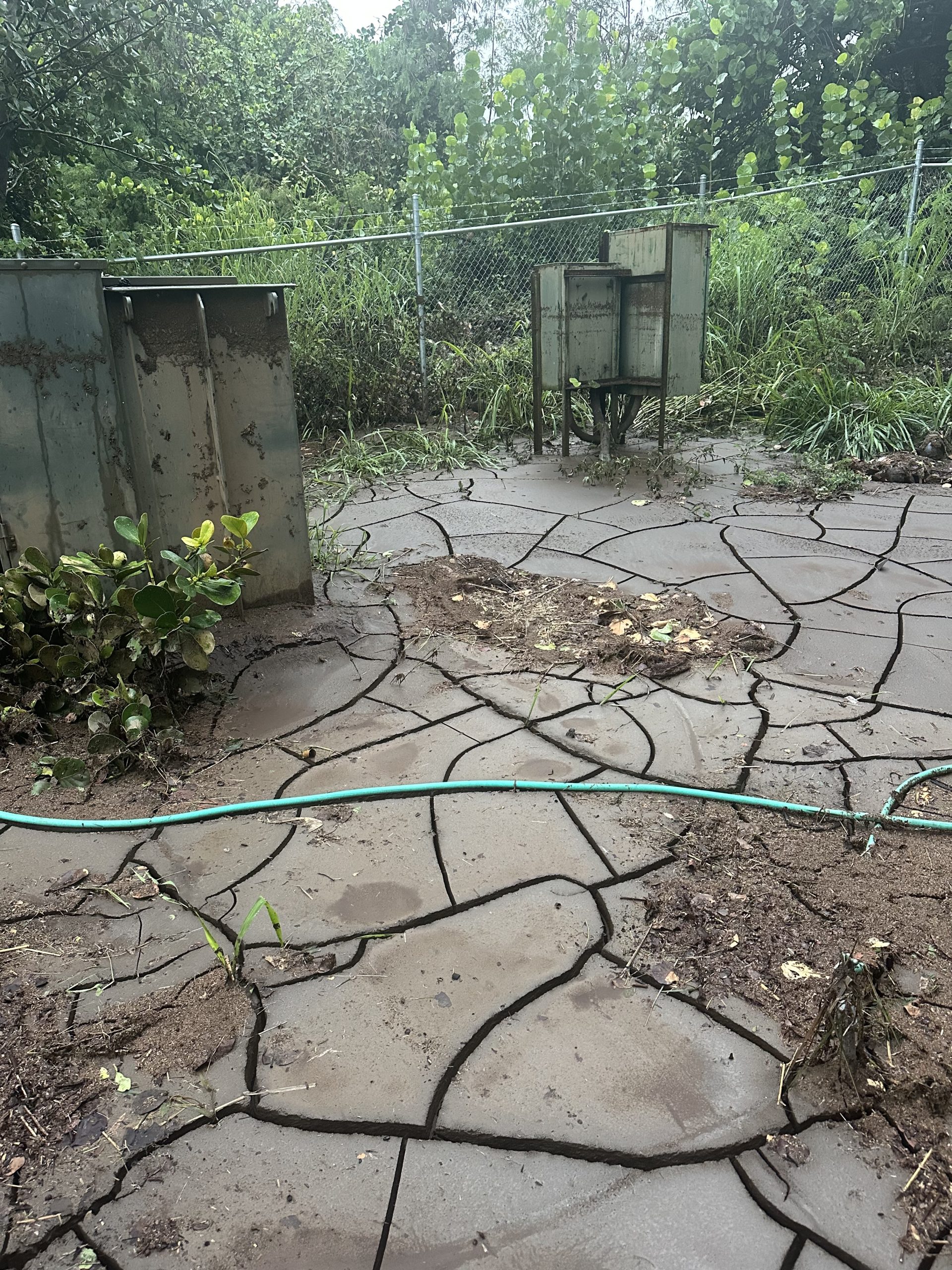
Debris and mud carried by Lala’s floodwaters engulfed the potable water well site and took out the well’s motor and pump. And even if the water utility was able to obtain all the necessary replacement parts from places on the island, Sakumoto said it still would take two to three months to restore water to the well site.
“All of this factors into being a very expensive repair job, which we’re putting together the quotes and estimates for,” Sakumoto said. “So while we think we can definitely get the wastewater treatment plant back online, restoration of the potable water system from the well site is going to be a long-term problem.”
Liu purchased 433 acres near Colony I seven years ago with big plans to develop the area. The water system appears to be in financial trouble, according to filings with the state Public Utilities Commission requesting major rate increases.
Sakumoto said building a new well site is not a possible solution.
“The quickest possible route to get a permit to do the drilling is nine months,” he said. “Additionally, it’s like one and a half million just to do the necessary exploration to find the water site. That’s not even counting the drilling.”
For now, Sakumoto said the water utility has begun waiving water bills that were owed for August.
Affected customers have been raising concerns with the Public Utilities Commission about the outages, with the first documented complaint filed Aug. 17, just two days after the storm devastated the Kaʻū District.
Thomas Mizikar wrote he was formally notifying the Consumer Advocate and the Public Utilities Commission of the complete failure of the Punaluʻu Water and Sanitation System.
“This situation has resulted in a total loss of service to affected residents and poses a serious public health and safety concern,” Mizikar stated. “Given the severity and duration of the outage, I respectfully request that the Commission compel the system’s owners to initiate immediate restoration efforts and provide a clear timeline for resuming service.”
John and Tammy O’Banion sent a letter to the commission on Sept. 20 expressing their “extreme concern and frustration at the unresponsive and irresponsible behavior of Punalu‘u Water and Sanitation.”
The letter added: “This has rendered our homes uninhabitable.”
Five days after Lala struck, Silva said he used his personal credit card to buy two 1,500-gallon tanks and get them set up in the 76-unit Colony I, near Punaluʻu Black Sand Beach, and 20-unit Kalana Estates. Most of the units are vacation rentals, but residents live their, too.
Silva said the water in the tanks he provided was not drinking water, but provided prople with access to water for bathing and doing dishes.
“In theory, they can boil it for cooking, but most people were just using gallon bottles of drinking water for that,” Silva said.
The commission staff and Commissioner Naomi Kuwaye visited the Ka‘ū District on Aug. 28 and observed the lack of access to drinking water and wastewater services for Punalu‘u Water and Sanitation customers.
At that time, Kuwaye verbally directed the utility operator to provide the commission with near-term and long-term plans for resuming essential services as soon as possible.
On Oct. 1, the commission filed a copy of an email it sent to Sakumoto indicating that Punaluʻu Water and Sanitation had not yet provided information on those near-term and long-term plans to restore service.
The commission is working to schedule a public meeting as soon as possible and hopes to hold this meeting by the end of October, if not sooner.
Sakumoto did file a response to the Public Utilities Commission for another request. This one asked for the water utility’s plan to prepare for Hurricane Nolo and how they planned to protect their equipment.
During Lala, the utility’s maintenance shed, wastewater plant and lift station were flooded. To prevent further flooding, the utility created berms around the plant that were successful in keeping the majority of water out during Nolo, the response said.
Sakumoto said Punalu‘u Water and Sanitation was required to file with the Hawai‘i Department of Health Safe Water Drinking Branch a notice that water services would not be provided on a temporary but ongoing basis.
The water utility was also required to submit notice to the state department’s Wastewater Branch.
Sakumoto said the priority is to get the wastewater plant repowered.
“There is currently an electrical issue, namely the water in the conduits, the electrical conduits, that is preventing Hawaiian Electric from turning it back on,” he said.
After Lala, Sakumoto said the utility did a decent job cleaning up most of that water, but without power out there and with limited portable generators, the removal of the water in the conduits has been going quite slowly.
“We were able to minimize the water intrusion as a result of Nolo,” Sakumoto said. “We’re in the final stages now of drying it out and getting it turned back on.”
Punaluʻu Water and Sanitation is now discussing with the Department of Health that the wastewater system could be back online by the state department’s next inspection, which is slated for around Oct. 15.
The real challenge is restoring the potable water well, which is located about 30 yards off Hawai‘i Belt Road at the intersection of Ninole Loop Road.
“We learned that as a result of Lala, when it floods, the debris will come racing across the highway and right onto the well site,” Sakumoto said. “The ideal way of preventing this is to build a wall and essentially prevent the debris from engulfing the well site. The problem is if we build a wall that would prevent that type of debris from falling down, it would block the highway.”
Sakumoto said the working wellhead was severed by road crews from the Hawai‘i Department of Transportation while trying to clear debris off the highway.
Also, after speaking to the potable water operator employed by Punaluʻu Water and Sanitation, Sakumoto said there is a concern that the well site may have been contaminated.
“When the well site is contaminated, getting the levels using chlorine back to the correct amounts can take an additional three months,” the lawyer said.
The private utility is working to implement some temporary potable water solutions.
Sakumoto said they have secured a 3,000-gallon potable water tank, which is certified for drinking water, but they haven’t been able to fill it because Hawai‘i County hasn’t provided access to their potable water sites.
“We’ve spoken to at least two different administrators and two different attorneys with Corporate Counsel,” Sakumoto said. “The response we get is always the same: ‘We’ll look into it.’ ‘We’ll pass the message along.’ But they never do anything.”
Sakumoto said the loss of potable water to its customers is a deep concern for the utility.
“Every day, I am taking phone calls, meetings, emails, trying to address the problem,” he said.
Silva disagrees, saying the utility has done almost nothing to address the damage or protect the well from Nolo. He also disagrees with Sakumoto’s characterization of the county being unwilling to help the utility.
“All the clearing and realigning of the gulch and berm work to protect the wellhead, that was all done by the Department of Transportation and State of Hawai‘i,” Silva said.
Silva, who worked as an operator and advisor for Hawaiian Beaches Water Company and Wood Valley Water and Farm Cooperative, both potable water service companies for communities on Hawai‘i Island, said it’s standard practice not to allow any truck to connect to a certified drinking water system.
Silva said this is the kind of agreement that water systems make in advance, before disaster strikes.
“You run a risk of what’s called cross-connection and contaminating the system,” Silva said. “For a certified potable drinking water truck to connect to a certified potable water system, they have to apply, and they have to purchase a water meter and a backflow prevention device that they can connect.”
Silva said Punuluʻu Water and Sanitation was caught flat-footed despite being asked by the condo association and residents to develop a real and meaningful emergency response plan for the past seven years.
“Now we’re six weeks out from the storm, and they’re just finding out we can’t just have water hauled. Yeah, no duh,” Silva said.
Hawai‘i County Mayor Kimo Alameda said on Thursday that the Department of Water Supply has been in contact with the property owner’s representative and they are finalizing the remaining details for approvals to allow the utility temporary service from a county-approved hydrant located in Pāhala, providing drinking water to their customers.
“The requested volume is 15,000-20,000 gallons per week,” Alameda said.
Alameda is hopeful everything will be processed by the end of business day on Friday, adding Punalu‘u Water and Sanitation’s hauler still needs to come in and apply for the temporary service, “but we communicated our consent via email.”
The county also has been involved with Liu over 6.8 acres of land she owns at Black Sand Beach Park, a popular recreation area that county has been leasing for decades. Last month, negotiations for a new lease with Liuʻs Black Sand Beach, LLC, ended without an agreement.
In the meantime, the residents of the two condos wait.