

Mobile medical van with 4-wheel drive serves rural Kaʻū after Hurricane Lowell shutters health center
After Hurricane Lala left Kaʻū communities in disarray, Healthy Mothers, Healthy Babies, with support from Direct Relief, has stepped up with mobile medical services, offering essential care to isolated residents.
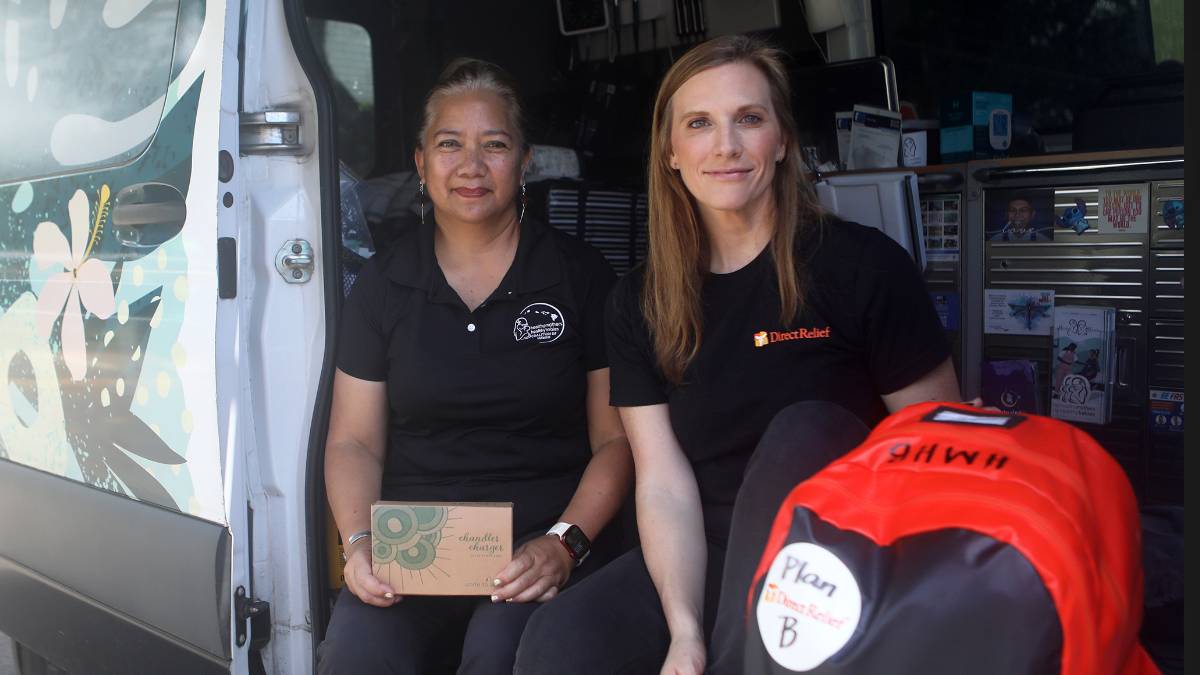
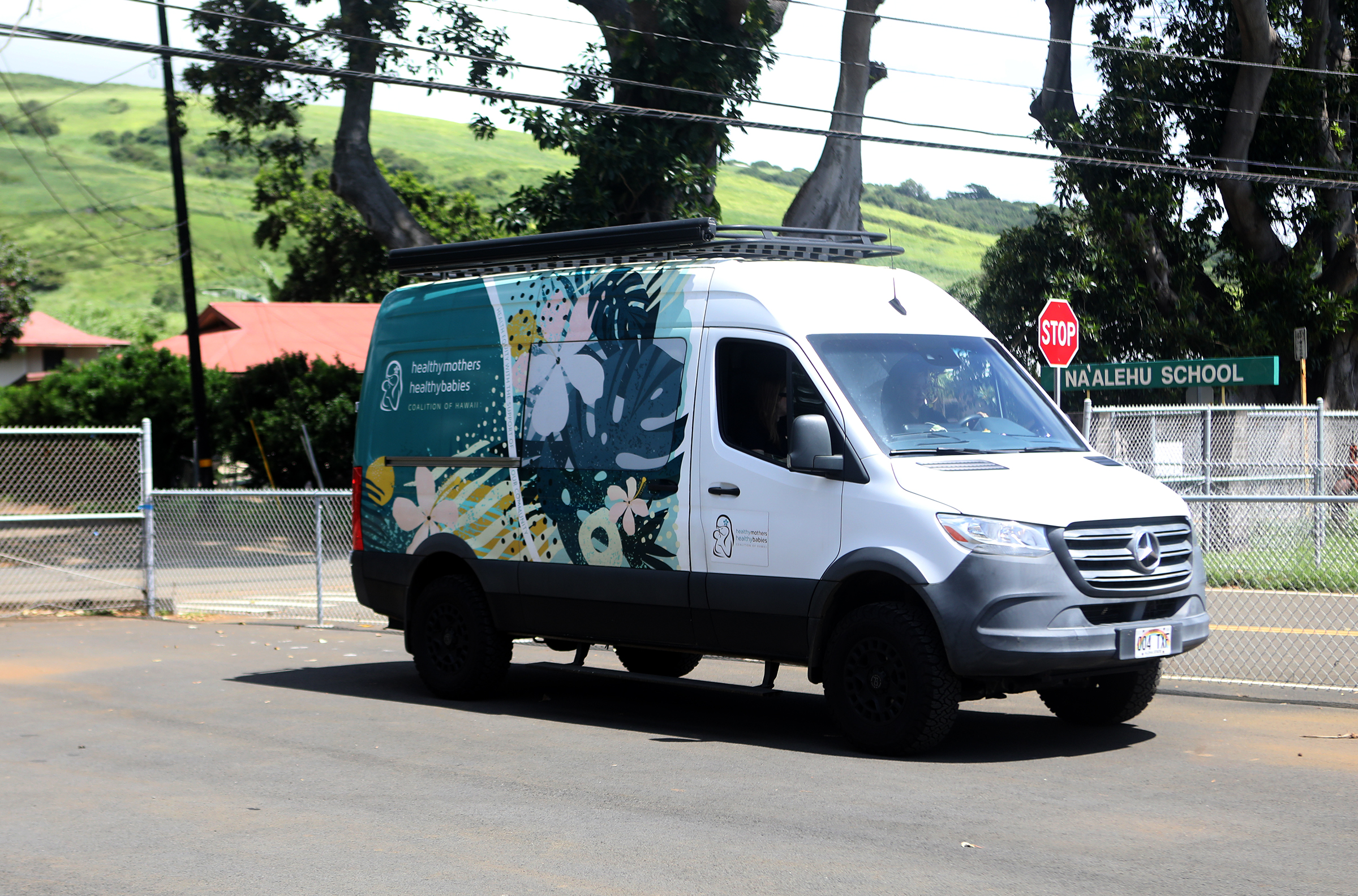
Three days after Hurricane Lala pummeled the rural Kaʻū District of the Big Island, community health nurse Pōhai ʻAʻarona from Healthy Mothers, Healthy Babies arrived in Nāʻālehu in a four-wheel-drive, fully stocked medical van to help people in need of health care.
For the next two weeks, ʻAʻarona served people in that hard-hit community with medical care, resource information and even a place to charge their phones.
She could relate to the devastation of a natural disaster having lost her own home in Kapoho during the 2018 lava flow from Kīlauea.
“At first I was emotional, but then I remembered that it wasn’t about me,” she said upon seeing the damage done by Lala. “It was about the community, and I needed to be able to support them. I opened the doors of the van and began the work.”
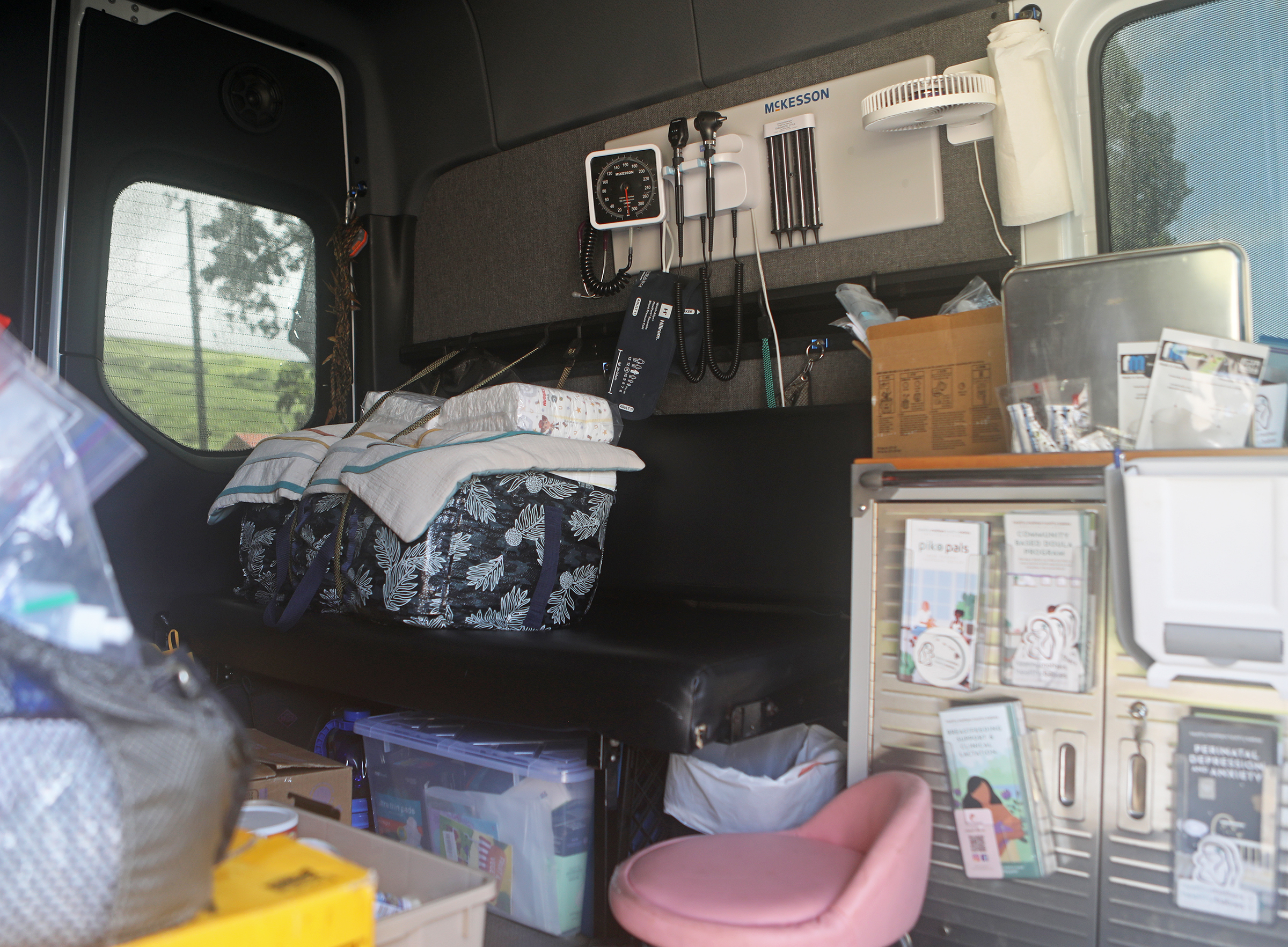
Despite the name, Healthy Mothers, Healthy Babies is dedicated to providing health care to anyone in need. The clinic on wheels can fit two patients at a time and has been retrofitted with a patient bed, hand-washing station, toilet, shower and vaccine refrigerator. It also has fetal monitoring and ultrasound capabilities.
The mobile unit also is equipped with solar and battery power and other technological capabilities so that staff can traverse the rugged terrain on Hawaiʻi Island.
In Nāʻālehu, access to health care services and essential supplies was limited before the storm. Lala only made it worse.
Residents were isolated since Highway 11 was closed in both directions for the first two days, and the town’s main source for care — Hawaiʻi Island Community Health Center — was shut down due to damage from Hurricane Lala. The center still is closed.
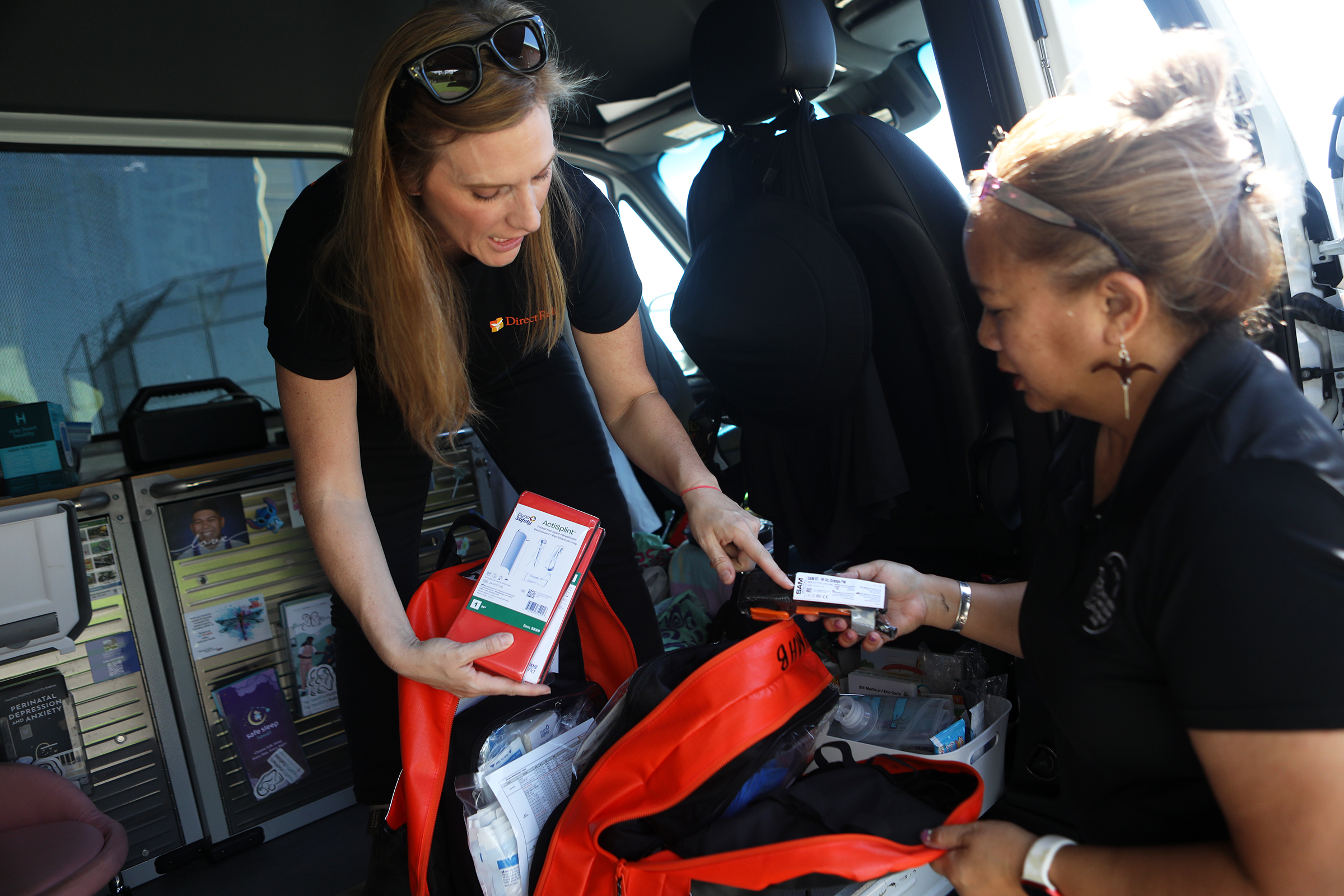
To support the increased needs of the community, Healthy Mothers, Healthy Babies partnered with the humanitarian aid organization Direct Relief, which equipped them with medical resources and other essential supplies.
“Direct Relief is working to empower local organizations to help local communities,” said Brea Burkholz, communications director with Direct Relief. “They are the ones doing the work, and we’re here to get resources into the hands that need them.
“We are most known for disaster response, but we work 365 days a year in every state to bolster the U.S. safety net. Here in Hawaiʻi, we’re making sure community nonprofits and community health centers have everything they need to serve their clients and communities.”
With the influx of people in need of health care after the Kona Lows, Hurricane Lala, Hurricane Lowell, and Hurricane Noho, Direct Relief has been working with nonprofits and organizations across the state to donate medical resources and provide services.
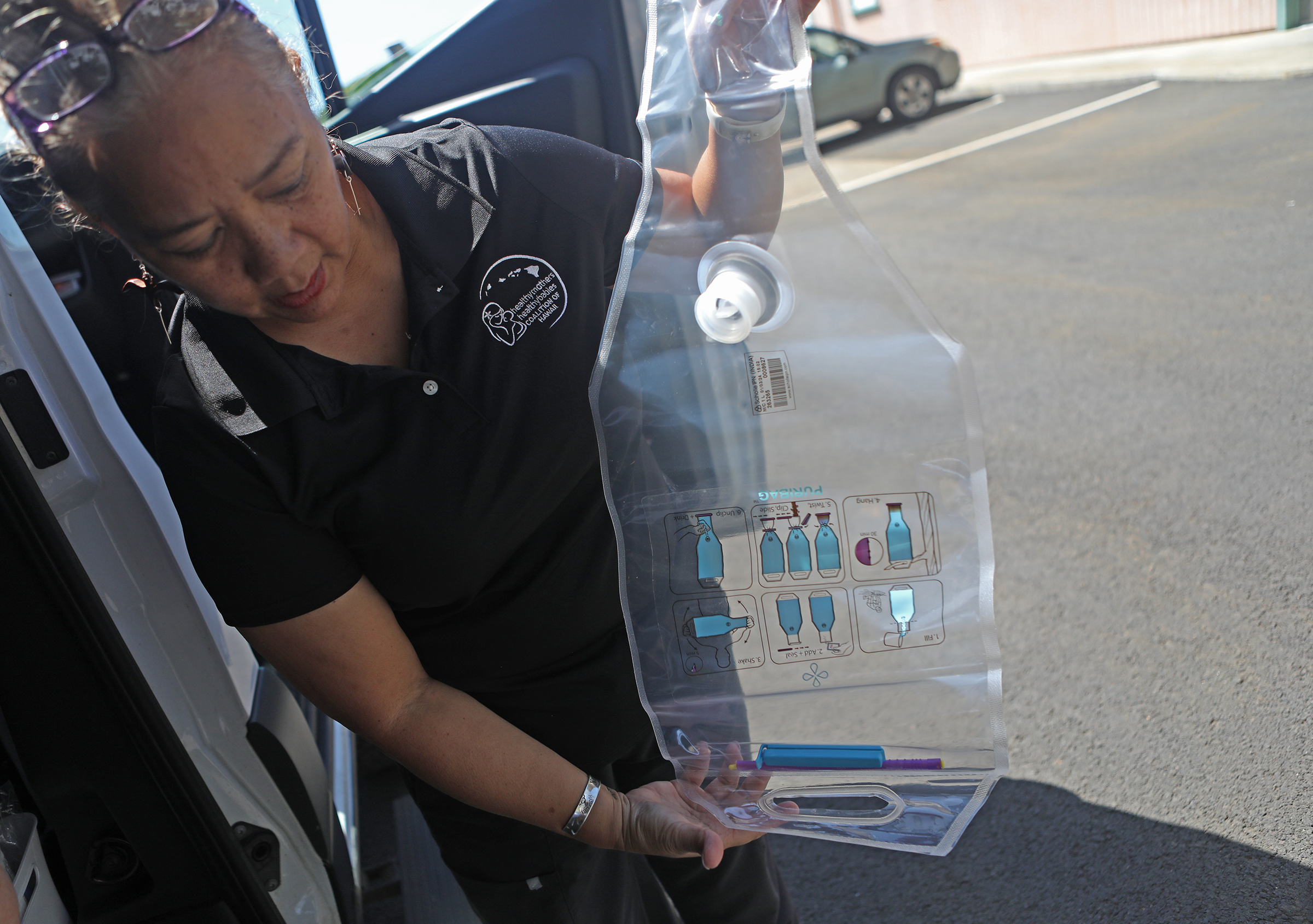
In the days following Hurricane Lala, Aarona said that residents needed power to charge their phones, medications requiring refrigeration, and filters to purify water.
“We set up at the Nāʻālehu community hub for the first two weeks, and we were able to provide the basic necessities that you don’t think about in a disaster situation,” Aarona said. “We connected them to power, and Direct Relief gave us hundreds of hygiene bags to give out. It is amazing to see what a world of difference these things make for someone when you are isolated or without power.”
ʻAʻarona drives the Healthy Mothers, Healthy Babies van nearly every day to provide medical care to clients and to be open for anyone to walk up and find the health care they need.
While the needs were more physical and tangible in the initial disaster response, six weeks after Hurricane Lala, the needs have changed for Kaʻū.
“The adrenaline from disaster response has gone down, and many people are coming to terms with their new normal,” Burkholz said. “There is more of a need for talking, for mental health care. Some people’s lives have completely changed, and there are tough decisions being made. We want to alleviate the immense pressure people are feeling in any way we can.”
On Tuesday, the first call ʻAʻarona received was from a woman looking for mental health services.
“Along with the clinical care, we are also making sure people are getting connected to the resources and social services that they need,” ʻAʻarona said. “We have to ask the right questions to get them where they need to go.
“Access to care has to be consistent and persistent because sometimes it takes people a while to ask for help. But I am so grateful that this community has been accepting of us into this space as they recover.”
According to ʻAʻarona, connecting people with mental health services can be difficult at times because there is a cultural stigma attached to these issues.
“Culturally, it is not appropriate to talk about mental health struggles, but I know many people are feeling them,” she said. “Once you are done with the initial cleanup, there is mold left behind in the home, and I feel that is a good comparison to how we feel individually in these situations.
“The moment you feel you’ve gotten somewhere, there is a whole host of things you didn’t know about under the surface if that makes sense.”
ʻAʻarona added: “Luckily for me, I don’t have shame when it comes to asking for help, and I try to make others feel the same way. … I will be here to help as long as it’s needed.”
Currently, Healthy Mothers, Healthy Babies is offering free vaccinations, and with support from Direct Relief, still has access to essentials such as solar chargers, solar lights, water purifiers, and other safety and health equipment.
While ʻAʻarona and the first mobile vehicle are located on the east and south sides of Big Island, Healthy Mothers, Healthy Babies also has a second mobile vehicle in North Hawaiʻi and a physical office at 75-5722 Kuakini Highway, Suite 212, in Kona.
For more information on health care services and available resources on the Big Island, call 808-452-0338, email pohaia@hmhb-hawaii.org, or visit the Healthy Mothers, Healthy Babies website.
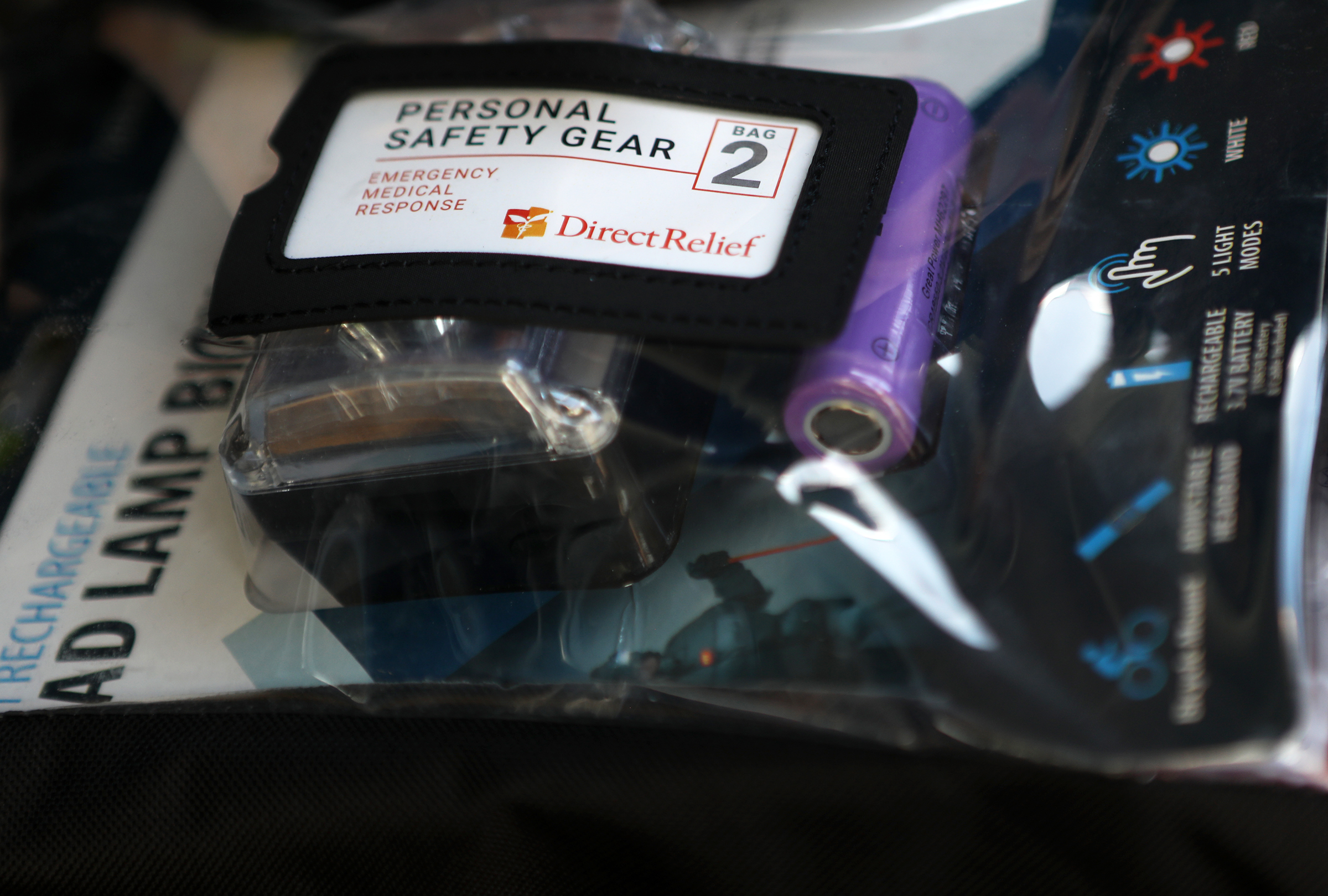
When Hurricane Nolo threatened the Big Island, Direct Relief prepared with rushed emergency shipments containing emergency medical aid, chronic disease medications, field medic packs, solar lights, and water purification for those affected by the third close hurricane this year.
Since the Kona Low in March, Direct Relief has provided more than $820,000 in medical aid across the state, the nonprofit said.
Direct Relief plans to continue to monitor weather patterns for Hawaiʻi and work with its partners in preparation and response efforts.
“Regardless of future storms, we will continue to show up for our state and be here to work 365 days a year,” Burkholz said.
Visit the Direct Relief website to learn more about its work as an international humanitarian aid organization.