


Big Island officials, residents relieved after Hurricane Nolo passes without causing major damage
"I would say we're very fortunate on this one," said Darryl Oliveira, acting administrator for Hawai‘i County Civil Defense Agency. "It could have been a lot worse."
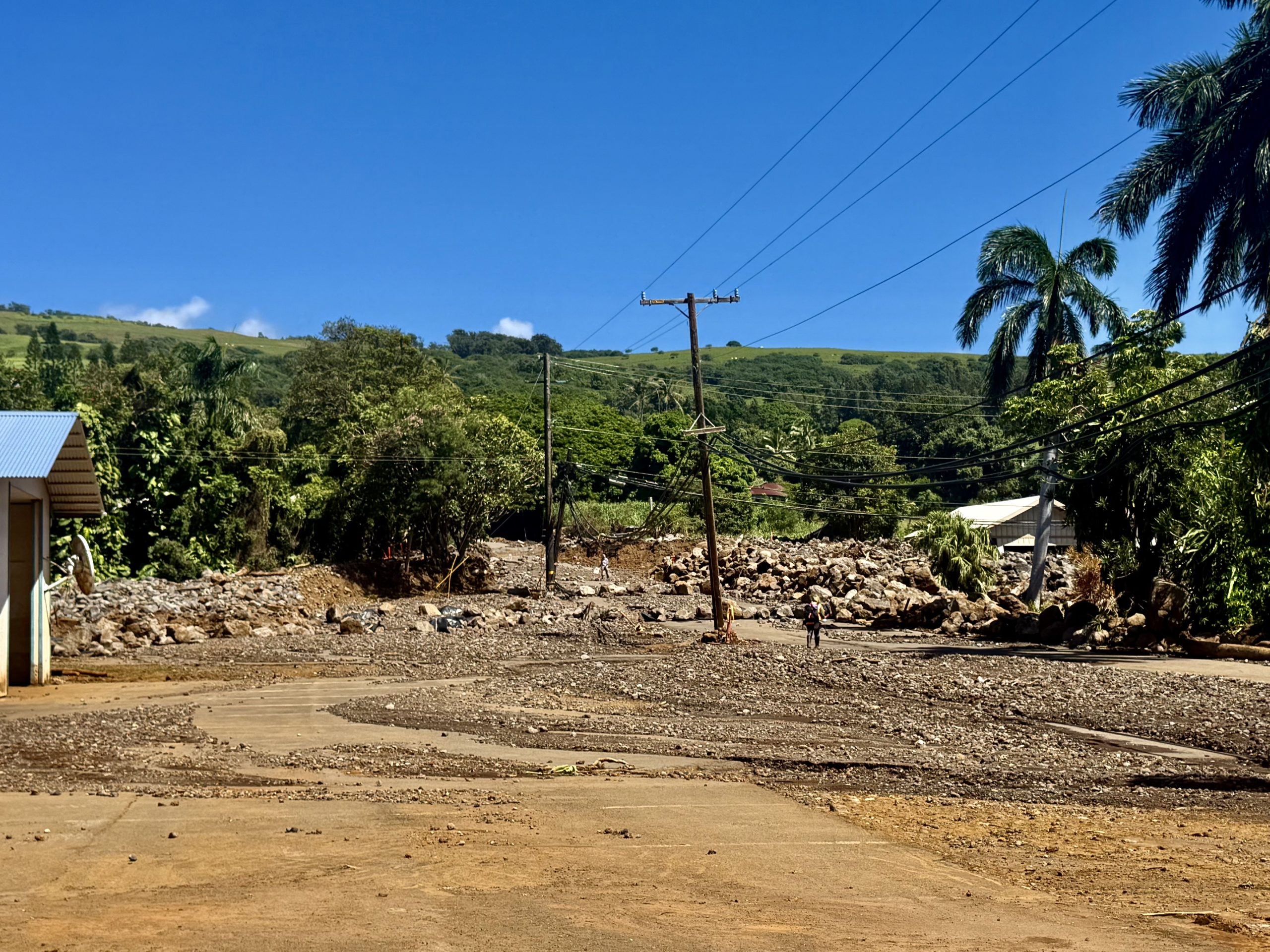
For awhile, Hawai‘i county officials and community members were concerned that Hurricane Nolo was on a path to do more damage than Hurricane Lala, which just over a month earlier caused flash flooding, mudslides, destroyed homes, eroded roads, power outages, busted water systems, unearthed graves and two deaths.
But after churning in place for hours, about 145 miles south of South Point, Nolo turned west and passed the Big Island, causing minor flooding and leaving minimal damage in its wake.
“I would say we’re very fortunate on this one,” said Darryl Oliveira, acting administrator for Hawai‘i County Civil Defense Agency. “It could have been a lot worse. Fortunately, because the system hugged a little further south than was originally forecast, to a certain degree that spared the southern communities from the wind.”
That was a big sigh of relief to the county and residents in the rural Ka‘ū District who are still recovering from Hurricane Lala, which pummeled the area on Aug. 15
While there was a wind advisory issued during Nolo for the Kohala communities, Oliveira said he wasn’t aware of any “wind-related events” such as downed trees.
Oliveira said the archaeological team went out to the Nā‘ālehu Cemetery for the first time since Nolo to see if recent rain and flooding disturbed additional graves after Lala washed several headstones away and unearthed caskets.
As of Monday afternoon, Oliveira said he hadn’t heard of any further impacts to funeral plots, which “I’m taking as a good sign.”
Keith Okamoto, manager and chief engineer for the Hawai‘i County Department of Water Supply, said there was one leak found in pipes above South Point. Water use is limited to essential use only for Nā‘ālehu, Wai‘ōhinu, Discovery Harbor and South Point until further notice.
“We’re hauling water from Pāhala to fill that tank,” Okamoto said.
The outer rain bands of Nolo arrived on Saturday. Fortunately, Okamoto added that not as much debris came down with the floodwaters over the weekend as it did with Lala.
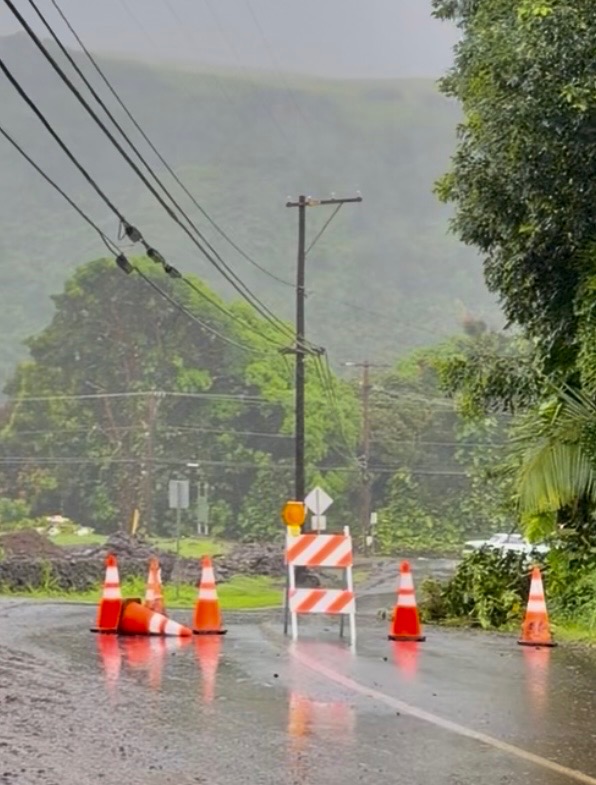
County crews from the Department of Public Works, Fire, State Highways and the Hawai‘i National Guard were monitoring the flood channels on Saturday and were in the field as water started to flow on Ka’alaiki Road in Nā‘ālehu as well as in several places on Highway 11 by Wai‘ōhinu, Kawa Flats and Honu‘apo.
Oliveira said the county was able to track floodwaters in real time after installing traffic cameras at Ka’alaiki Road and at the intersection of Kama’oa Road and Highway 11 in Wai‘ōhinu.
“We were able to have real-time imagery of what the water flow was looking like, so we could track that,” he said. “We weren’t seeing a heavy flow or a lot of water coming down with this particular event.”
At one point, Oliveira saw on camera Fire Department and National Guard personnel wading in almost knee-deep water with little effort.
There was ponding by the Punalu‘u Bake Shop, but it was gradual.
In 24 hours on Saturday, the Ka‘ū District saw anywhere from 2 to almost 6 inches of rain. It was far less than earlier forecasts of up to 30 inches of rain in the highest elevations.
The county provided messaging early about Nolo, encouraging Ka‘ū residents to leave before the rain started.
On Saturday, Oliveira said fire, police and members of the National Guard were going door-to-door in the Ka‘ū communities doing welfare checks and letting people know to expect rain and possibly wind over the weekend.
“They were encountering situations where, as they described to me, many families were already prepped and ready,” Oliveira said. “They had go bags.”
There also were residents who had already left the area to stay with family in other parts of the island.
On Saturday night, there were 14 people in the Nā‘ālehu Shelter, one in Pāhala and three who stayed at Yano Hall in South Kona.
Oliveira feels many residents took proactive measures ahead of Nolo, adding, “I commend the community for doing that.”
While there is a weather disturbance far to the east of the Hawaiian Islands, meteorologists say there are no immediate threats to the Big Island for at least the next 10 days.
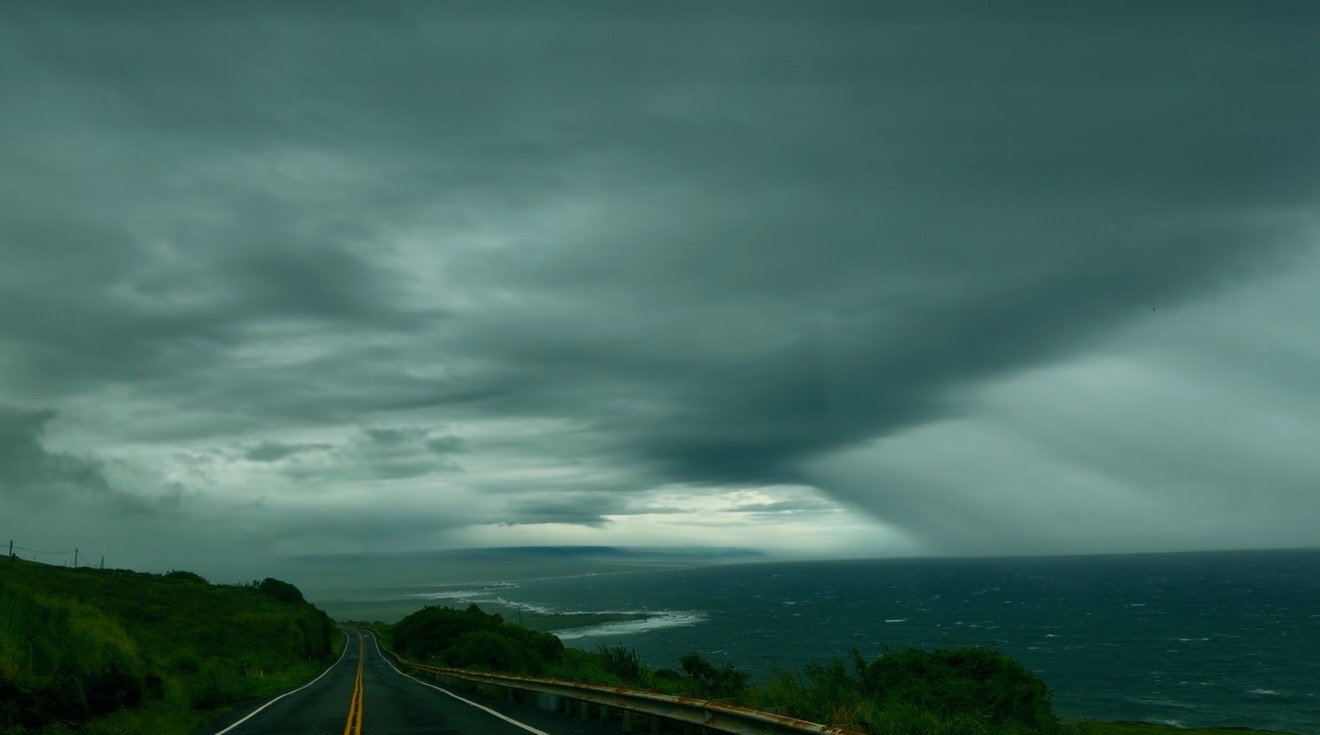
“Obviously, we’re all watching these other systems as they’re possibly developing far off to the east,” Oliveira said.
Christine Inserra, a Wai‘ōhinu resident, waited out the storm at her post-and-pier home. She said everyone she knew in a flood area had evacuated from Ka‘ū before the storm.
Inserra said she lost power and water for a period of time on Sunday. Her power has been restored.
Inserra said one of the biggest concerns residents had was flooding on Ka’alaiki Road by the bakery and where the cemetery is located.
The debris brought down with the floodwaters during Lala and buried that road in several feet of mud, boulders and logs. Crews were back on Sunday to continue clearing the road, with big trucks there all night and all day, Inserra said.