


UH Mānoa to build unique clean energy research facility with $1M federal grant
The new Tunable Photoionization Chemical Dynamics Facility will help researchers better understand chemical reactions and could advance cleaner energy technologies in the future.
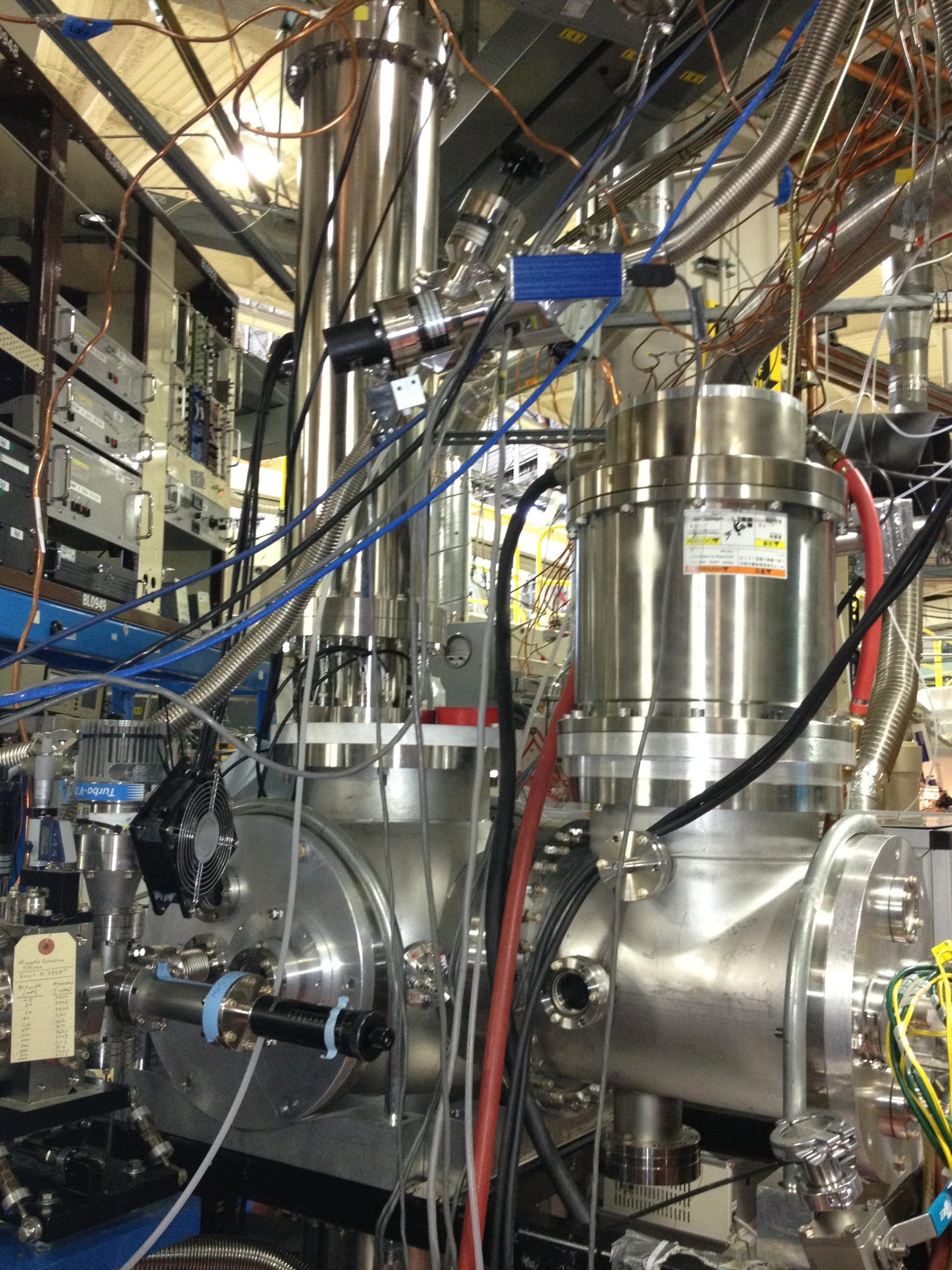
The University of Hawaiʻi at Mānoa has been awarded nearly $1 million from the U.S. Department of Energy to build an innovative facility that could help advance cleaner energy technologies.
The new Tunable Photoionization Chemical Dynamics Facility will help UH researchers better understand how and why chemical reactions occur. It is knowledge that could lead to future scientific discoveries.
“The research center is the first-of-its kind in the U.S.,” said Ralf I. Kaiser, a UH Mānoa Department of Chemistry professor. “This facility gives us the ability to ask questions that are extremely difficult to answer with conventional approaches.”
The new facility will bring together key chemical technologies under one roof, including tunable high-power lasers, which are used to precisely study molecules.
Kaiser is leading the first major research project, which has implications for cleaner energy technologies by tackling a fundamental question: How does hydrogen help break strong carbon–sulfur (C–S) bonds in sulfur-containing compounds widely found in petroleum-derived fuels?
Breaking strong C–S bonds could help improve cleaner fuel production, but scientists still do not fully understand how hydrogen helps break them.
Researchers will investigate this process using precisely controlled clusters of titanium, aluminum and boron. By combining laboratory experiments, computer simulations and machine learning, the team aims to understand not just whether these bonds break, but why and how different chemical pathways make the reactions possible.
“We are building the experimental capability first, and that opens the door to discoveries that go beyond the initial research problem,” Kaiser said.
The new facility will expand advanced scientific infrastructure and provide undergraduates, graduate students and postdoctoral researchers with hands-on training in molecular reaction dynamics, laser-based experimentation, photoionization, molecular-beam science, chemical microreactors and computational chemistry.
UH Mānoa is collaborating with the Department of Energy’s Ames National Laboratory in the development of the new facility.
The project will not only build new instrumentation but the scientific workforce needed to use and advance it, the university said in a news release.