


Sky-high careers: Hawaiʻi Community College secures nearly $1M for drone training expansion
Hawaiʻi Community College continues to reach new heights in training students for future drone careers, with a new nearly $1 million federal grant to expand education using tools such as drone-mounted sensors to collect data throughout the state.
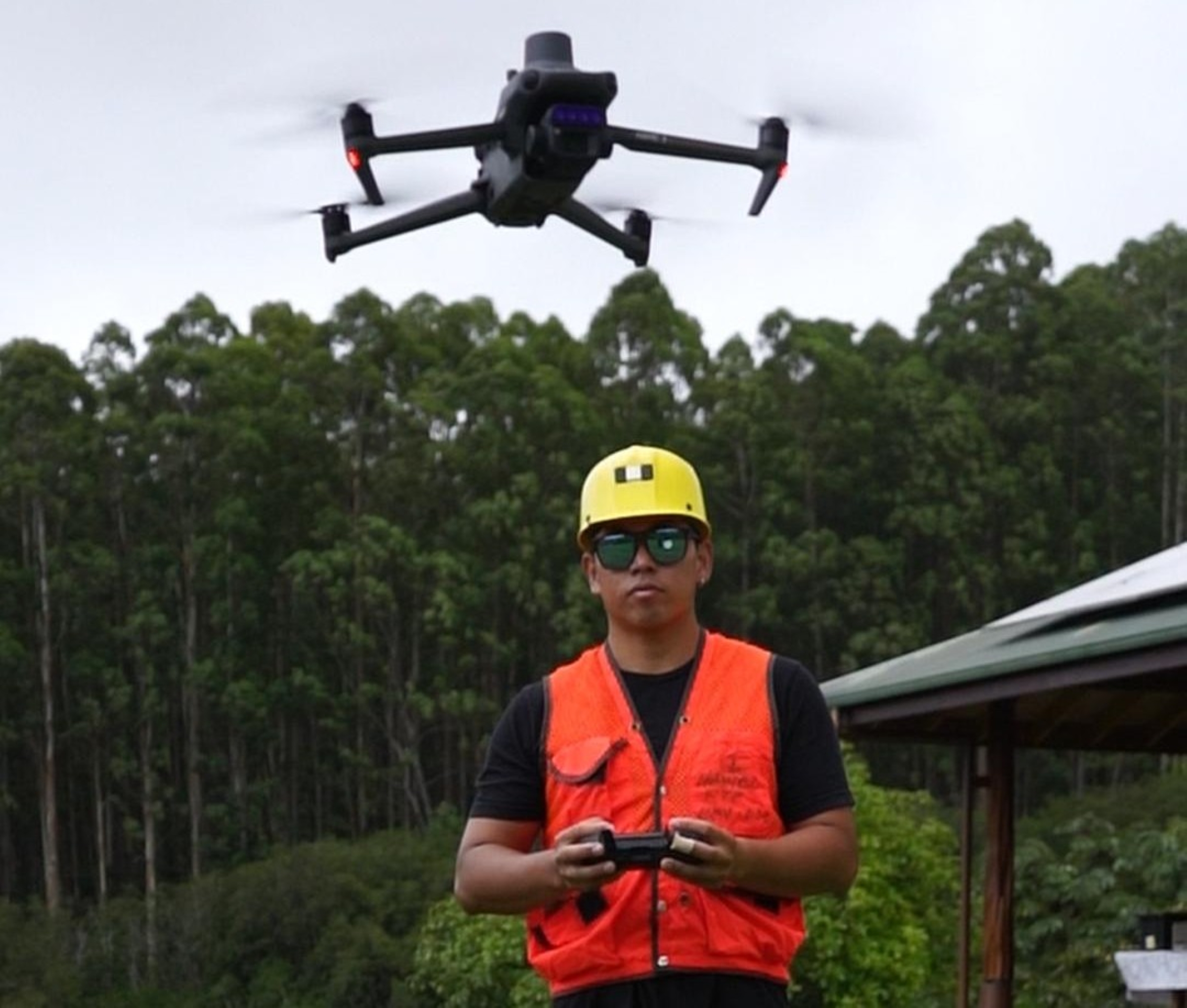
The 3-year project was awarded a $920,238 grant from National Science Foundation and builds on the success of the Big Island college’s drone certification program. It is aimed at meeting workforce demand or stackable credentials for use in utilities, civil engineering, agriculture and environmental hazard mitigation.
Expanding the Impact of Geospatial Remote Sensing in Hawaiʻi leverages Hawaiʻi Community College’s existing drone education credentials.
It introduces advanced 2- and 3-dimensional surveying; lidar technology (light detection and ranging), a remote sensing technology that measures distances using laser pulses; and powerful computational tools to train students not only to fly unmanned aerial vehicles but also process and analyze complex data.
Students will conduct local projects in several engineering technology, forestry management and surveying courses with directly integrated cutting-edge technologies that will lead to a certificate in geospatial remote sensing.
“This new award represents a massive leap forward for our local students,” said associate professor of agroforestry and Principal Investigator Orlo Steele. “By introducing mapping training at our Pālamanui campus in West Hawaiʻi, we are opening doors for students across the island and partnering with other Pacific Islands to build a truly regional tech workforce.”
The project also aims to expand access to high-tech career pathways for all students and increase their qualifications to be competitive in the rapidly growing drone economy.
Strengthening pathways from high school to community college to 4-year institutions, while also providing upskilling opportunities for incumbent workers in utilities, agriculture, public safety and natural resource management is also a project goal.
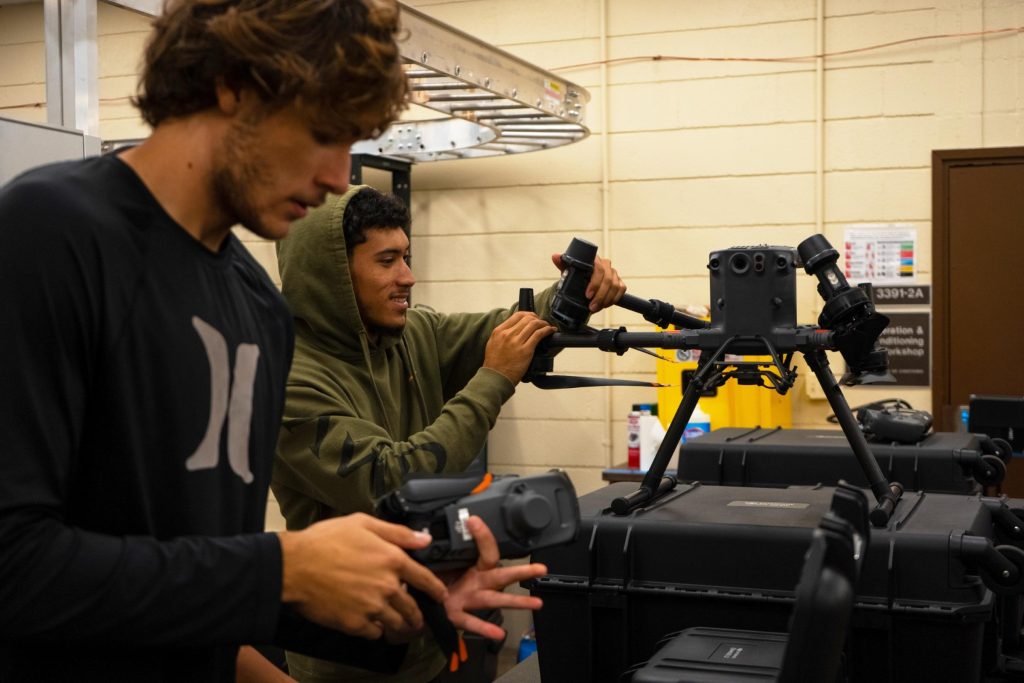
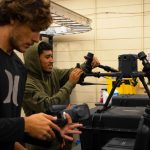
 Hawaiʻi Community College drone program students work with unmanned aerial vehicle equipment. (Courtesy Photo: Hawaiʻi Community College)
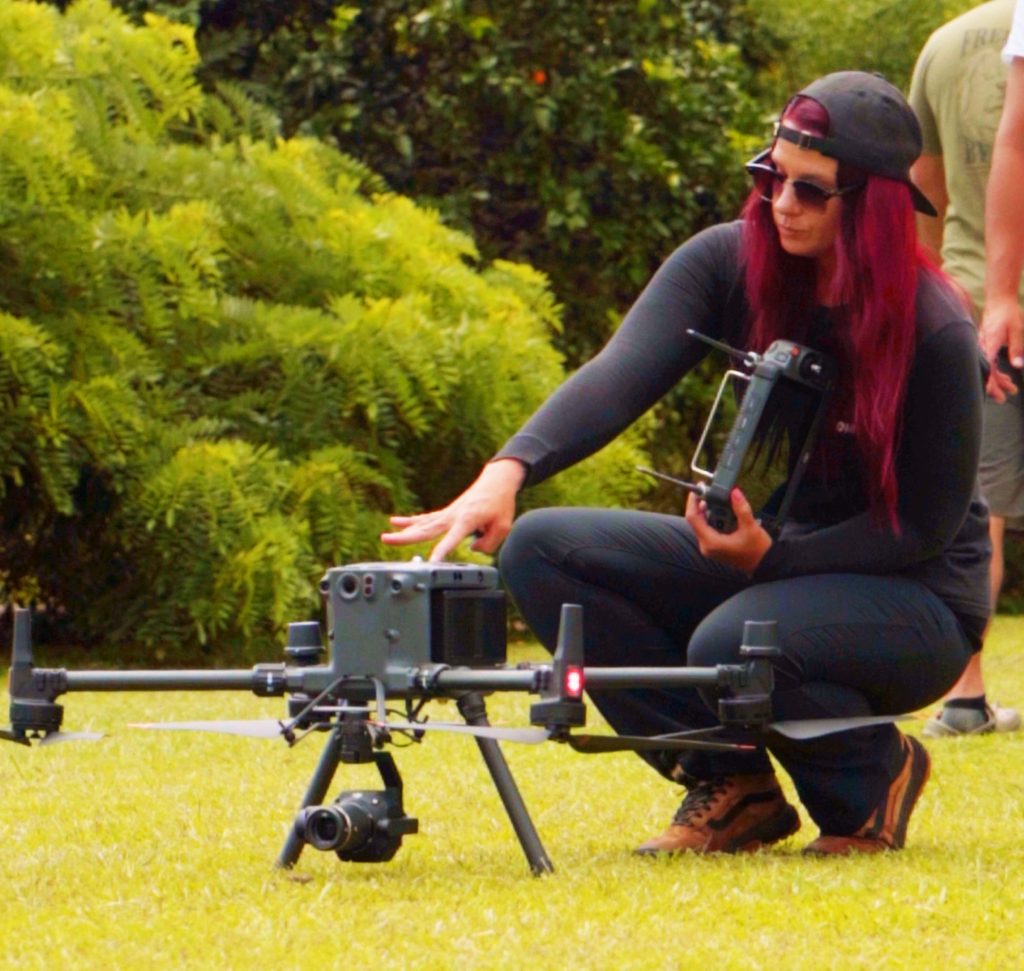
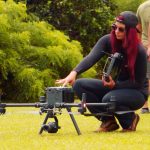
- A student of the Hawaiʻi Community College drone program prepares a drone for flight. (Courtesy Photo: Hawaiʻi Community College)
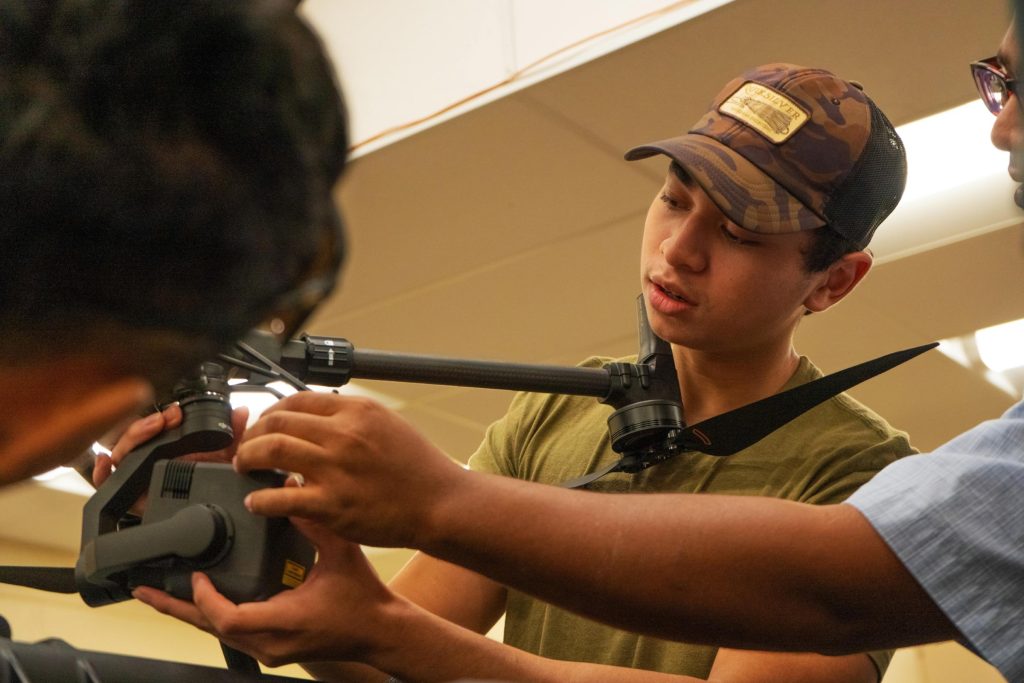
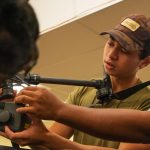
- A student of the Hawaiʻi Community College drone program works on an unmanned aerial vehicle part. (Courtesy Photo: Hawaiʻi Community College)
“We are focusing deeply on student outcomes and workforce readiness,” explained associate professor of engineering technology and Co-Principal Investigator Donna Pacheco. “We want to ensure our graduates understand how to apply their skills in the field, making them highly competitive for high-paying positions within private, state and federal engineering and environmental agencies.”