

Briefs for Sept. 10: University of Hawaiʻi research, student program and outreach events
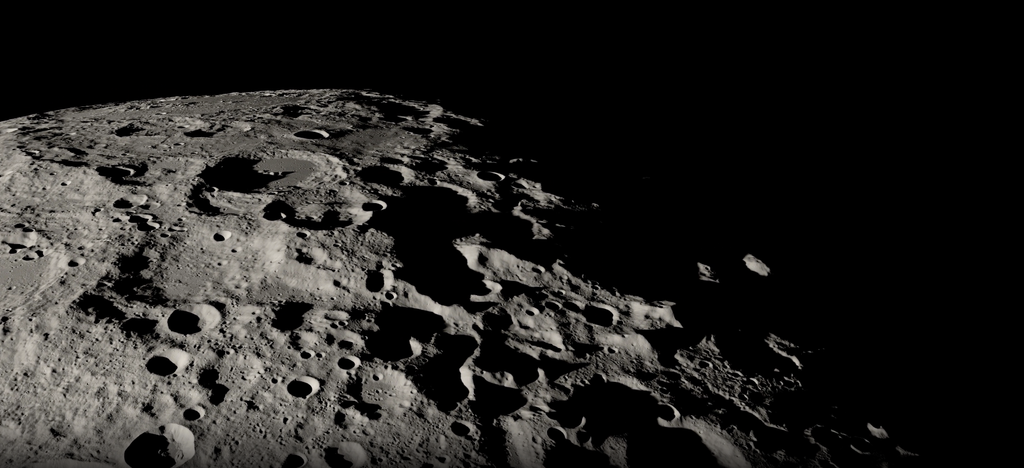
Moon soil reads as cosmic time capsule for exploding stars
When a star reaches the end of its life, it culminates in a bright, powerful explosion called a supernova, scattering material across the universe.
A new study led by a University of Hawai‘i at Mānoa researcher reveals that the Moon’s mixed soil functions as a cosmic time capsule for exploding stars.
Emily Costello, research scientist at the Hawai‘i Institute of Geophysics and Planetology in the University of Hawaiʻi at Mānoa School of Ocean and Earth Science and Technology, and her team have developed a mathematical model to decode the history recorded in the lunar surface.
“Deep-sea deposits on Earth preserve interstellar debris, but only up to about 10 million years,” Costello said. “The lunar regolith, however, acts as a long-term cosmic archive that can preserve history spanning 80 to 100 million years or more. Understanding the physics of regolith mixing ensures that when future astronauts return with deeper cores, we can accurately read the scrambled layers to reconstruct the history of our solar system’s journey through the galaxy.”
Costello and her co-authors devised a specialized mathematical model that unscrambles “impact gardening,” the continuous process where crater-forming impacts flip, mix, and redistribute the Moon’s surface soil over time. This highly random process is driven by meteorites ranging in size from microscopic grains of dust to giant asteroids.
“Our mathematical model treats lunar impact gardening as a competition between forces burying the soil and impacts digging it back up,” Costello said. “It also accounts for the radioactive decay of the star remnants while mapping exactly when and where new stardust was delivered by episodic supernovas.”
Based on radioactive isotopes in deep-sea sediments on Earth and in lunar soil samples returned by Apollo missions, it is known that supernova explosions hundreds of light-years away scattered radioisotopes across the Earth and Moon. However, once the radioisotopes arrived, they began mixing into the lunar surface through impact gardening.
The team discovered that the model can accurately predict the depth-concentration profiles of iron found in Apollo regolith samples. They extended the model to predict how other heavy elements, such as plutonium, iodine, hafnium, and curium, are buried over time.
A primary goal of the study was to provide guidance for future core samples that will be collected on the Moon. In the near future, NASA’s Artemis Program will return humans to the Moon, and they will bring back new samples of lunar regolith that preserve the history of stardust.
“These future samples taken from the Moon, when considered in conjunction with our gardening model, could reveal new insights into an untold chapter of supernova history,” Costello said. “It’s fascinating that the remains of past stars can be used to navigate the vast history of our Earth-Moon neighborhood, provided we know how to read the stardust.”
Hawaiʻi Sea Grant fellows connect to resilience, ʻāina and community
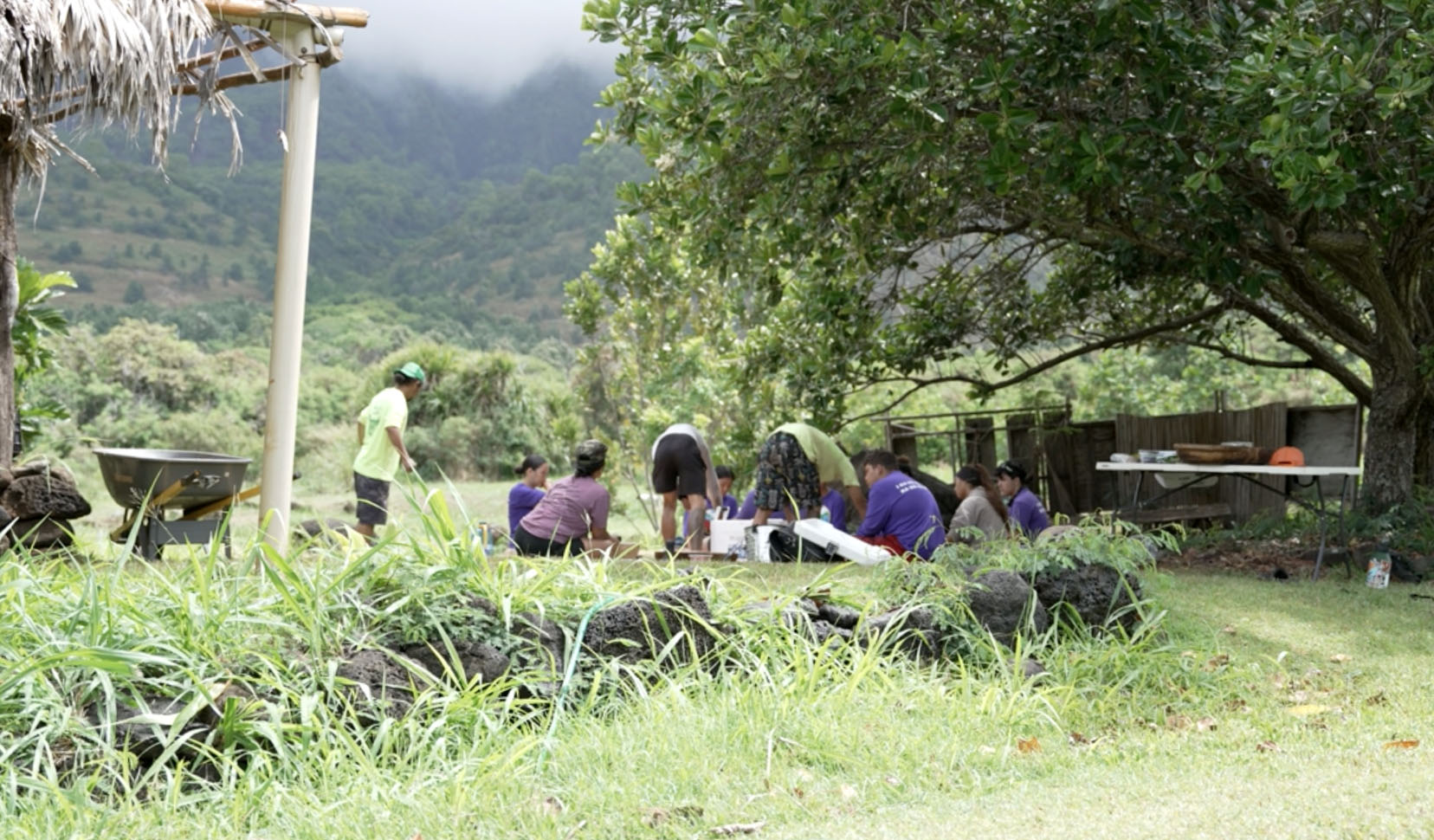
From wildfire mitigation in Waiʻanae to dry forest restoration in Molokaʻi, four Hawaiʻi students spent their summer learning how caring for ʻāina can help build more resilient communities.
In August 2026, the Peter J. Rappa Resilient and Sustainable Coasts Fellows wrapped up their summer projects, sharing their work in final presentations at the University of Hawaiʻi at Mānoa. The fellowship honors the legacy of longtime coastal sustainability extension agent Peter Joseph Rappa of the UH Sea Grant College Program, known as the Hawaiʻi Sea Grant.
“The fellowship is made in Peter’s vision for outreach and extension work in Hawai‘i, which is interdisciplinary and place-based,” said Maya Walton, associate director for research, fellowships, and administration at Hawaiʻi Sea Grant. “He believed that individuals from different academic disciplines should work together on the most pressing coastal questions.”
“I think the fellowship is an exceptional opportunity for students who are just starting their careers and want to learn more about the possibilities available,” said Rappa Fellow Near-Peer Mentor Oli Carbi.
This year’s cohort, Marley Kong-Mercado, Ila Nako, Shaelaree Pelekane-Manosa, and Haya Stein, were paired with mentors from Pili Nā Moku, a five-year project dedicated to developing and implementing holistic resilience initiatives from mauka to makai.
Focused on five moku—Waiʻanae on Oʻahu, Kona Kauaʻi, Central Maui, Molokaʻi, and Kohala on Hawaiʻi Island—the project aims to strengthen adaptive capacity and build a more resilient future for Hawaiʻi.
“I think something special about the fellowship was that we were all working on such different projects, yet we were able to connect each one to create a comprehensive approach to helping our community in many different ways,” said Stein.
Kong-Mercado and Nako were based in Waiʻanae, where they focused on wildfire mitigation and the role native vegetation and restoration can play in reducing risk. The fellows collaborated with Firewise, Kaʻala Farm, and Mālama Learning Center. Nako also traveled to Molokaʻi to work with ʻĀina Pulapula at the Hoʻolehua Homestead, where she learned about growing the plants needed for future outplanting.
Also on Molokaʻi, Pelekane-Manosa worked with community members Uncle Bobby Alcain and Kaipu Makani. She utilized historical research, community interviews, and mapping to trace changes in sedimentation, land use, water, and the coastline over time.
For Stein, the summer was about using storytelling to connect people with the work happening across Hawaiʻi, while also collaborating with her fellow Rappa Fellows. In Waiʻanae, she documented Kong-Mercado and Nako’s wildfire mitigation efforts.
In the other moku, she learned about the landscapes, listened to the moʻolelo of place, and met with partner organizations working to care for their communities and ʻāina.
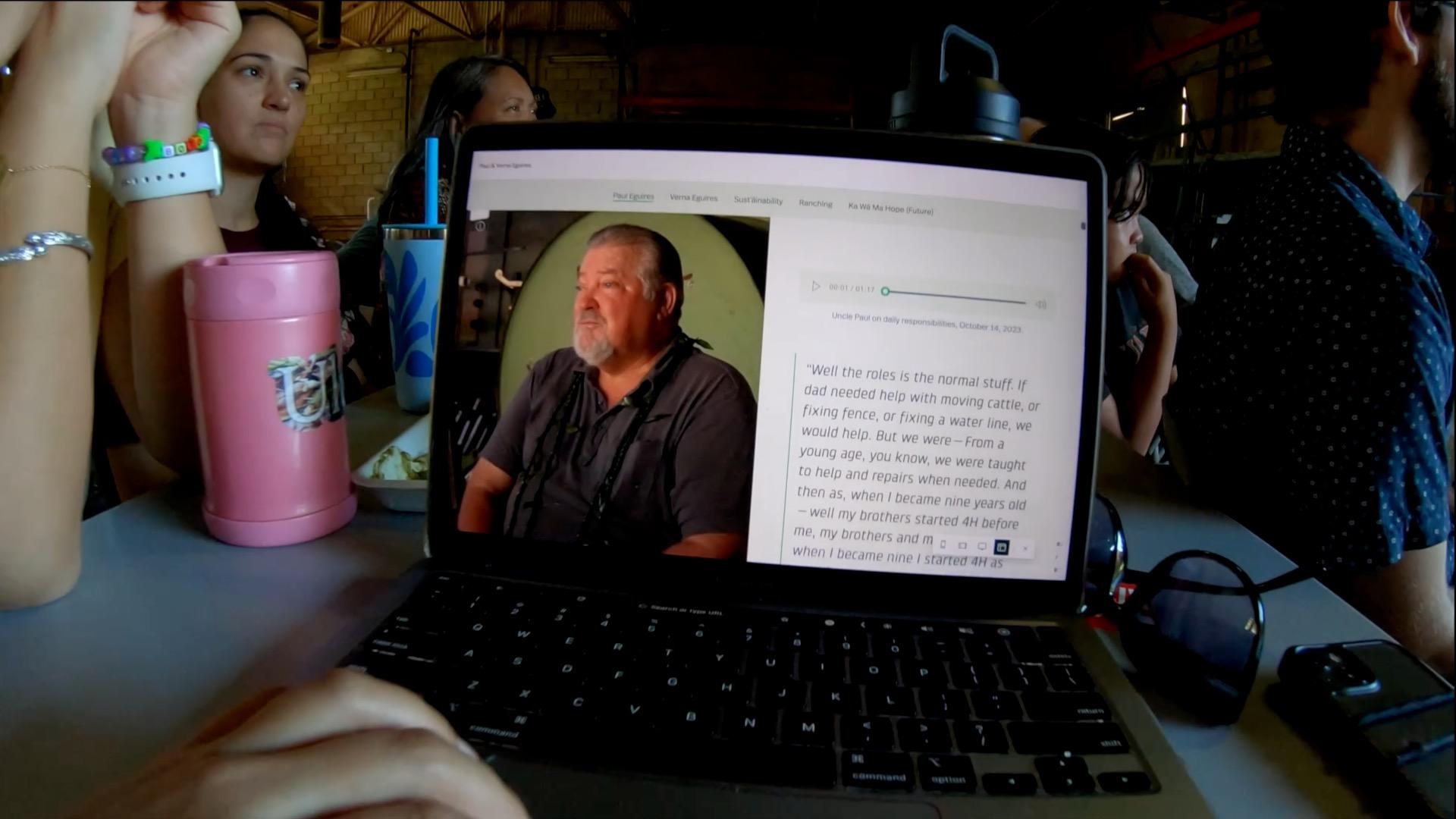
University of Hawaiʻi at Mānoa’s Center for Oral History marks 50th anniversary with statewide events
The Center for Oral History in the University of Hawaiʻi at Mānoa’s College of Social Sciences is marking its 50th anniversary, commemorating five decades of preserving the state’s history through first-person accounts.
Since its founding, the center has archived more than 1,200 personal, multi-ethnic accounts from Native Hawaiian and local populations, encompassing historic events, cultural traditions, and everyday life.
As one of the nation’s oldest oral history institutions, Center for Oral History serves as a critical bridge between generations. Its collection features documented accounts of how past generations navigated major environmental, social, and economic shifts.
Today, this archive provides unique insights for policymakers, educators, and youth addressing contemporary island challenges such as food security, shoreline preservation, and cultural sustainability. The archive can be found on the Center for Oral History website.
“Our textbooks offer facts, but it is the recorded voices of our kūpuna that capture the true resilience and spirit of Hawaiʻi,” said Mary Kunmi Yu Danico, Center for History director. “As our islands evolve rapidly, preserving this collective memory ensures that future generations have a cultural and historical roadmap to guide them.”
To celebrate its 50th anniversary milestone, the center is hosting a series of educational workshops and outreach events across the state. The events open to the general public include:
- Oral History community consultation meetings from Aug. to Nov.
- Livestreaming of Museum of Korean Emigration Exhibit in Incheon, South Korea, on the Korean Prisoners of War at Honouliuli on Sept. 22
- October 16, 2026: 4–9 p.m. Livestreaming of the 50th Anniversary Celebration. Music, art, poetry, and talk story from 4 to 9 p.m. on Oct. 16
- Late October/Early November Kahoʻolawe Aloha ʻĀina Oral History Project launch and a public talk in conjunction with the Protect Kahoʻolawe ʻOhana’s 50th anniversary in late Oct. or early Nov.
- Kauaʻi 1924 Hanapēpē Strike Event in Nov.
- Oral History talks and workshops including a video streamed on YouTube regarding Kosovo-Fulbright Specialist award from Nov. 9 to Nov. 22
To ensure these vital preservation efforts continue, Center for Oral History is inviting the community to make a gift and support the ongoing collection, digitization, and maintenance of the archive—effectively preserving the past for the future.
To ensure these vital preservation efforts continue in perpetuity, Center for Oral History is inviting the community to make a gift and support the ongoing collection, digitization and maintenance of the archive—effectively preserving the past for the future.
For more information about the upcoming anniversary events, visit the Center for Oral History website.