


Hawaiʻi County Council defers bill to increase monthly sewer rates, create new hotel class to pay for rising wastewater costs
A 2026 sewer rate study by wastewater consulting service FG Solutions found that the annual revenue from monthly sewer fees amounts to only about 52% of the Hawaiʻi County wastewater division's costs to maintain and operate the system.
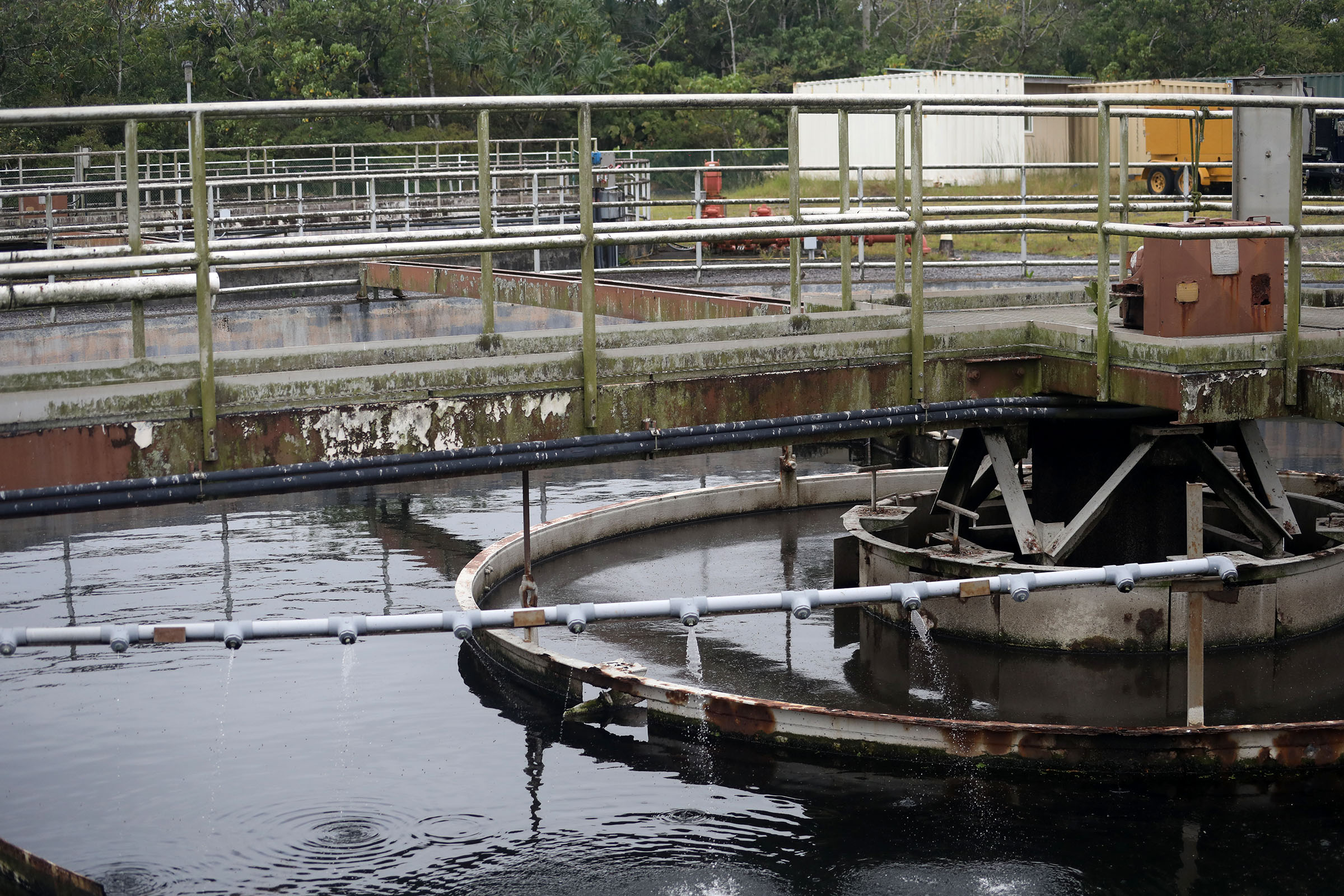
The Hawai‘i County Council is contemplating a bill to increase sewage treatment costs over the next five years and establish a new customer class for hotels to provide more funding for wastewater operations and maintenance.
A 2026 sewer rate study by wastewater consulting service FG Solutions found that the annual revenue from monthly sewer fees amounts to only about 52% of the county wastewater division’s costs to maintain and operate the system. And, the cost of maintenance is expected to increase by about $6 million over the next four years.
To address this shortfall, Bill 183 proposes a sewer rate schedule that would increase customers’ monthly sewer bills by 21% in January, from $52 to $63 per month, with step increases bringing monthly bills to $125 by 2031.
During the Hawai‘i County Council’s Policy Committee on Environmental and Natural Resource Management meeting on Tuesday, Daniel Girvan, director of the Department of Environmental Management, answered questions following a presentation of the rate study by FG Solutions.
“Right now the only reason we can pay our bills is because we get money from the general fund,” Girvan said. “By 2031, the revenue from the rate increases would amount to 100% of our operating costs.”
The County Council voted to defer voting on Bill 183 to the next Policy Committee on Environmental and Natural Resource Management meeting on Sept. 15.
But the council has known for years that something needs to be done.
In 2019, the Hawai‘i County Council passed a bill to increase sewer rates, which was supposed to allow the Department of Environmental Management to stop using tax dollars from the general fund to pay its bills. However, the department required transfers from the general fund every year, and most recently transferred over $6.8 million for its operating budget in 2025.
A difference between Bill 210 in 2019 and Bill 183 is the creation of a new customer class for hotels, which would be billed at a higher monthly rate than other commercial and residential ratepayers.
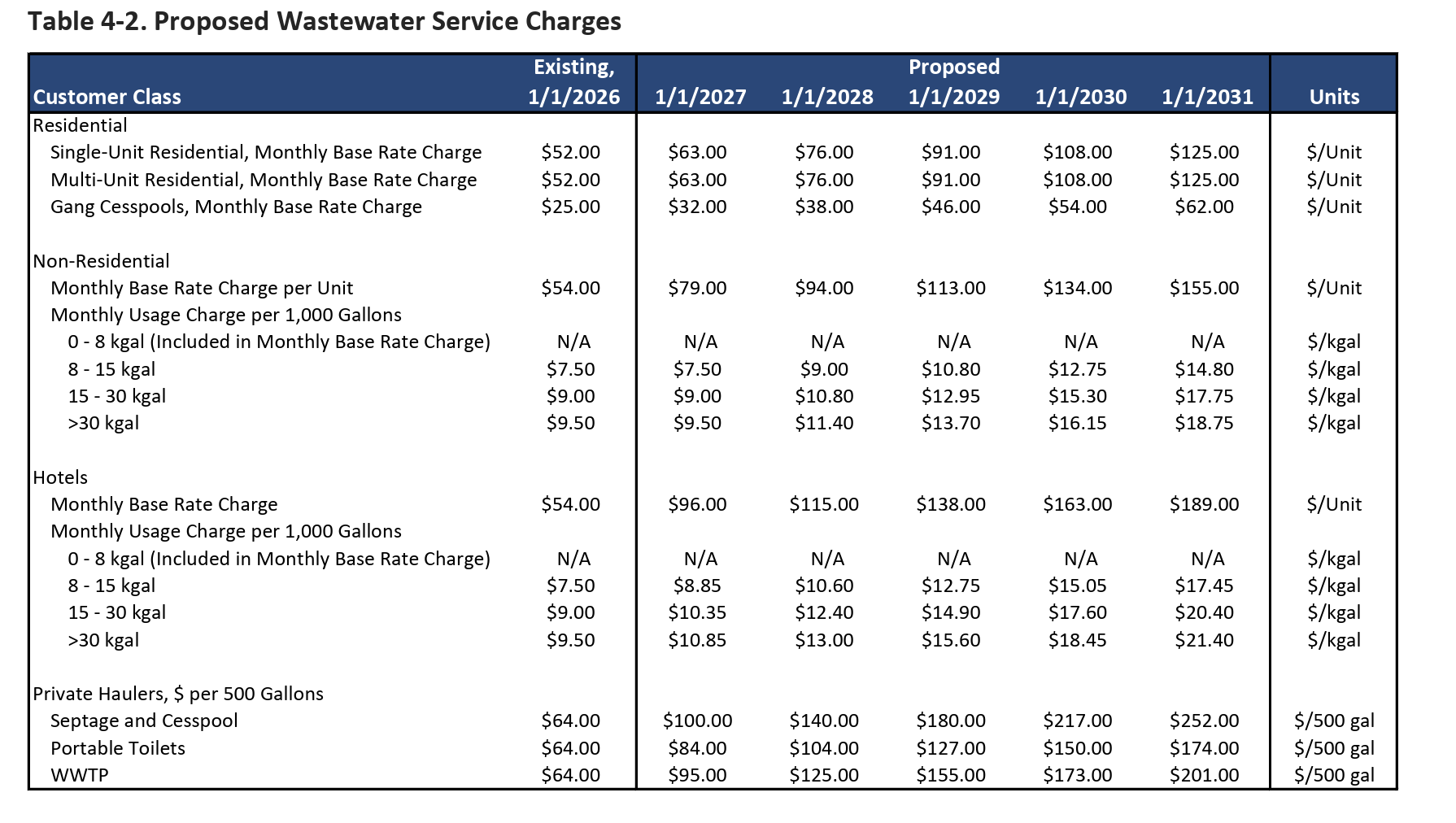
The proposed rate schedule would nearly double monthly hotel rates in January from $54 to $96 per unit, with increases bringing monthly bills to $189 per unit by 2031.
Representatives from the hospitality industry opposed these costs with public testimony during the committee meeting.
Niklas Dahm, general manager of the Grand Naniloa Hotel Hilo, said the hotel supports the concept of a fair, transparent and data-driven rate structure. However, they do not support the framework that places a substantially greater financial burden on hotels because they are among the largest and most easily identifiable users.
“We believe it is fundamentally unfair to impose a rate structure that effectively requires hotels to absorb a disproportionate share of the county’s wastewater funding needs,” Dahm said in written testimony. “We are concerned with a proposal that appears to focus heavily on increasing rates for hotels rather than developing a broader, more equitable funding model.”
Outrigger Resorts spokesperson Kekoa McClellan said the rate spikes would threaten operational stability and generational employment for Big Island families.
“Generations of families have supported their households through careers at Outrigger Kona,” McClellan said. “Fee escalations compound existing cost pressures, which would erode the resources used to reinvest in the workforce and workplace.”
McClellan also addressed the real property tax and county transient accommodations tax that generates revenue to support municipal services and capital improvements.
“Hotels on Hawai‘i Island already generate millions of dollars annually, so layering an artificial, elevated wastewater category on top of those contributions penalizes compliant, high-efficiency properties,” McClellan said.
Girvan explained that the creation of a new hotel class is based on the biological oxygen demand, the weight of solids in wastewater, and the volume of wastewater.
“In the wastewater business, time is money, and the more time wastewater takes in the digestion system, the more electricity, which is a bigger electric bill and is all tied to the costs of operation,” Girvan said. “I am sensitive to the idea that the price is higher, but what it means is that we have been undercharging for that grade of customer. We are comfortable with creating this new class; the numbers are supportable. We believe it is the correct number.”
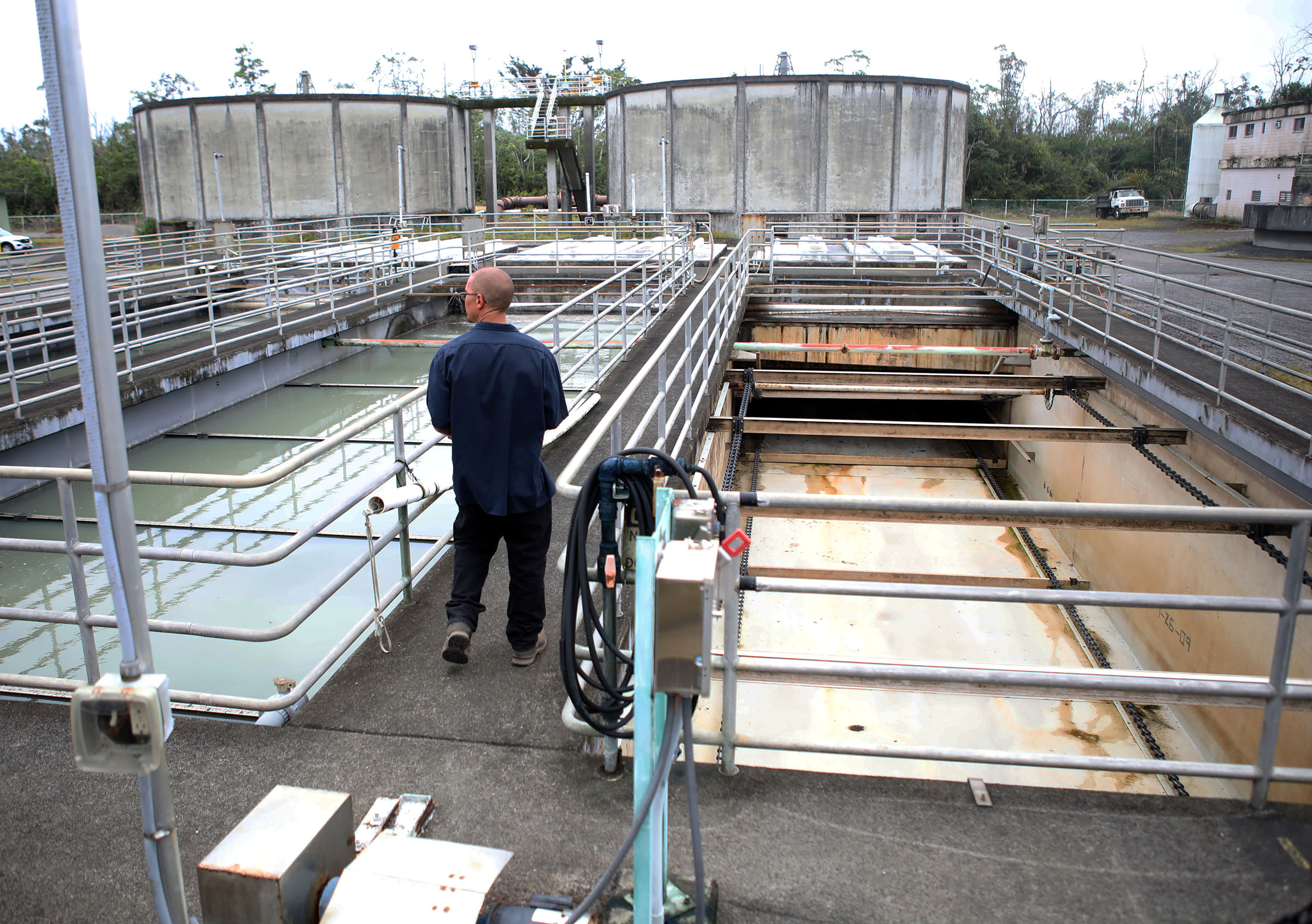
Currently, the Wastewater Division services 14,800 customers, according to the 2026 wastewater rate study. The island mostly relies on cesspools and has nearly 50,000 of them. However, the state has mandated the closure of all cesspools by 2050.
As cesspools are converted to septic tanks, more customers will naturally be added to the sewer system, producing more revenue but also increased operating costs.
Girvan said there is currently no money for the county to extend its existing collection systems, especially as the county takes on significant debt to renovate its long-neglected wastewater treatment plants.
During the committee meeting, Hawai‘i County Chair Hoʻoleka Inaba said he would not support moving the bill forward that day because the Department of Environmental Management did not submit the rate study to the council in time or provide a calculator showing how each number was calculated for the rate classes.
The sewer rate study by FG Solutions is available for the public to view on the Department of Environmental Management website.