

Board of Land and Natural Resources rejects proposed rules for aquarium fish collection, keeping current ban in place
Currently, the long standing Hawaiʻi rules — which have a pre-approved "whitelist" of 40 species that can be collected with no limits — clashes with the statewide indefinite temporary ban.
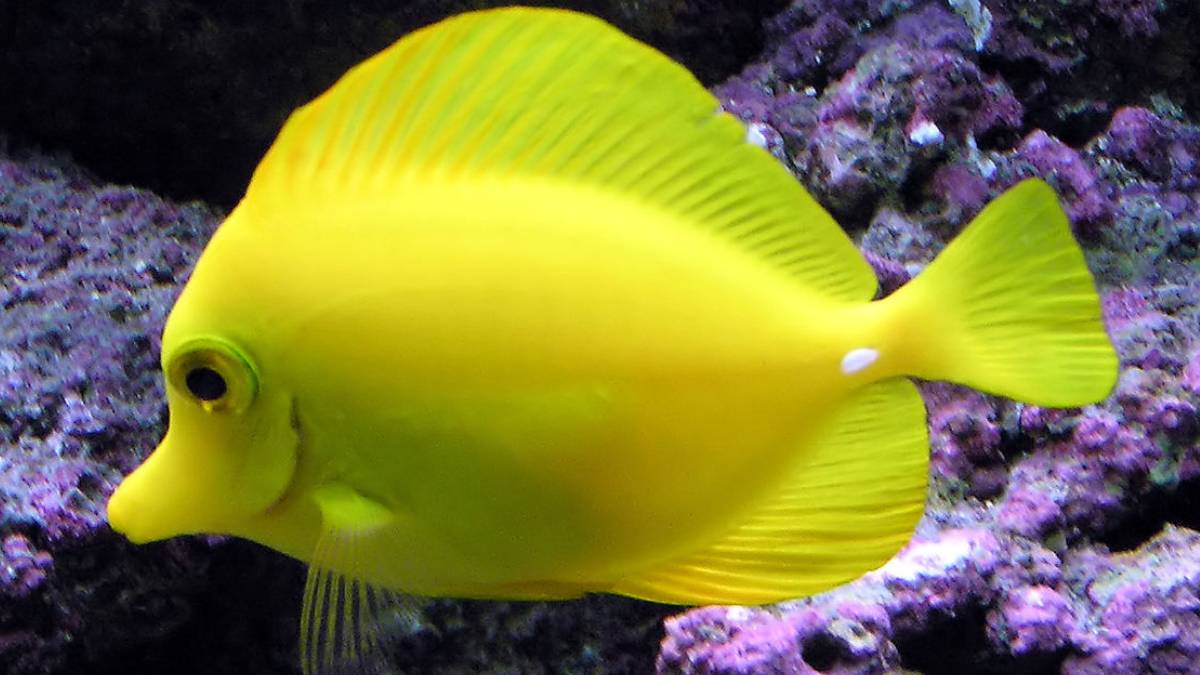
Aquarium fish collection continues to be banned for now in Hawai‘i waters.
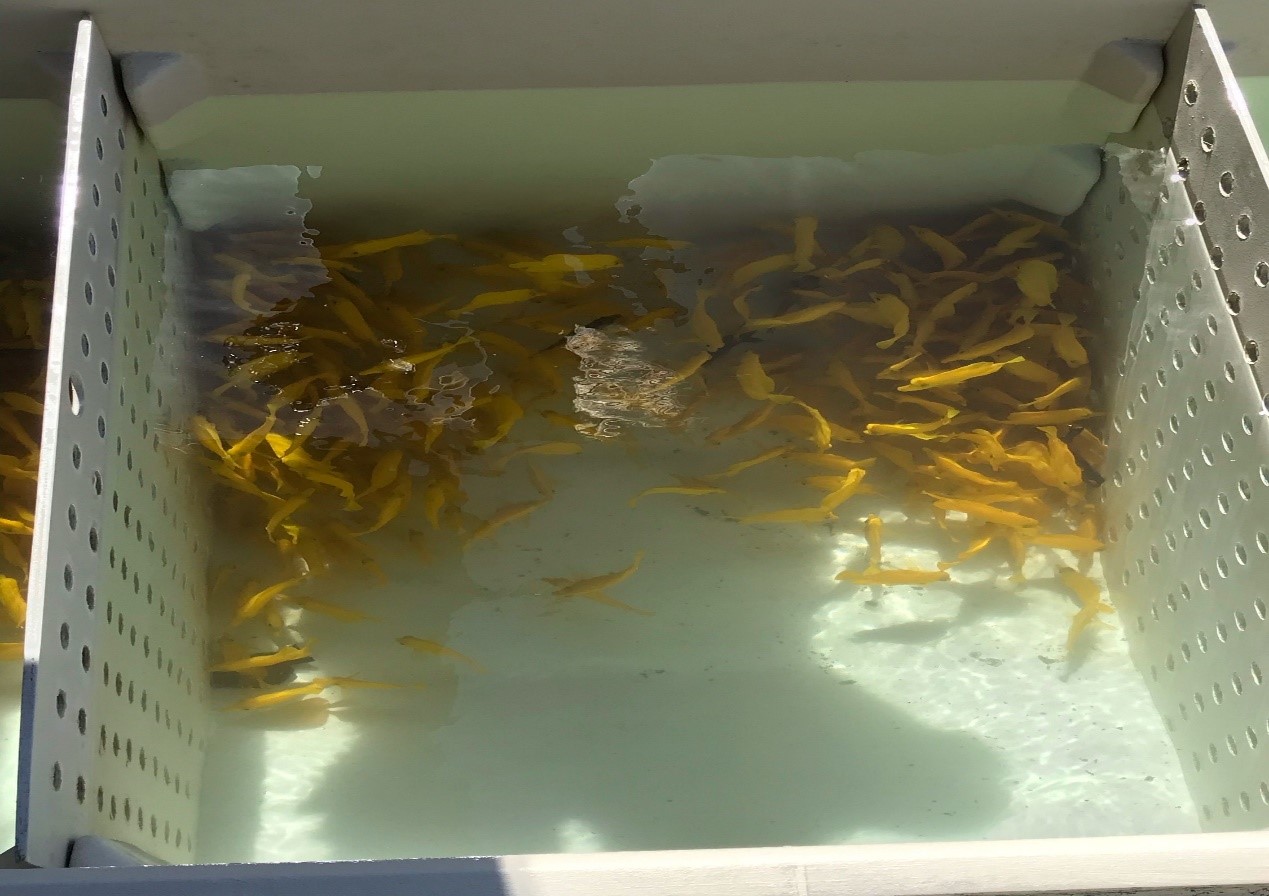
The Board of Land and Natural Resources on Friday rejected the state Division of Aquatic Resources’ latest proposal to reopen aquarium fish collection with new rules that would have amended 40 pre-approved species with no limits to just five species with limits.
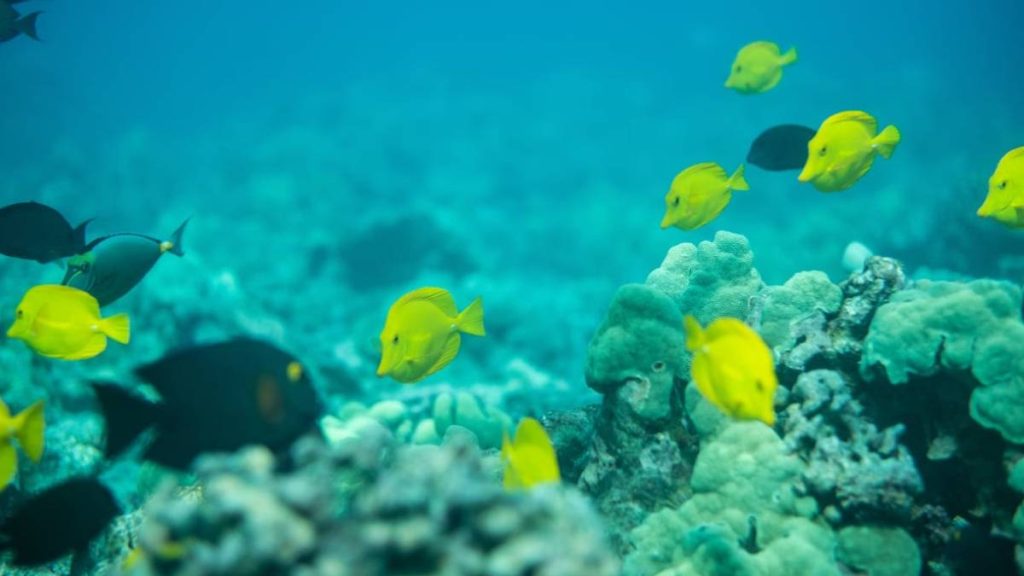
Commercial aquarium collection was temporarily banned in the West Hawai‘i Regional Fishery Management Area on the Big Island in 2017 and statewide in 2020.
In December 2023, the Board of Land and Natural Resources unanimously approved a community-led petition requesting rulemaking to permanently prohibit commercial aquarium collection.
The state attorney general at that time advised the Board that it could not adopt a ban through administrative rulemaking. However, an Environmental Court ruling earlier this year confirmed that the Board has statutory authority to enact a statewide prohibition on commercial aquarium collection through administrative rules.
With the decision from the court regarding the Board’s power to ban aquarium fish collection, members have directed the state Division of Aquatic Resources staff to further consider alternatives to commercial collection, look at matters raised in testimony received Friday and determine whether the commercial collection aligns with the state’s constitutional public trust obligations and duty to protect Native Hawaiian traditional and customary practices.
Currently, the long standing Hawaiʻi rules — which have a pre-approved “whitelist” of 40 species that can be collected with no limits — clashes with the statewide indefinite temporary ban..
“I applaud the Board for standing with Hawai‘i’s communities and rejecting a proposal rooted in the Territory-era fiction that reef fish taken for aquariums are neither food nor valuable,” longtime Hawaiian cultural advocate Charlie Young of Keālia said in a press release. “Nearly all of these species are traditional food sources, and our constitution puts subsistence fishing, public trust resources and the rights of future generations ahead of private commercial gain.
“Keeping these fish on the reef strengthens our food fisheries, sustains the ecosystem and upholds Hawaiian values.”
This decision recognizes the will of Hawai‘i’s people, said Mahesh Cleveland, an attorney with Earthjustice’s Mid-Pacific Office, which has represented Nakachi, Young and other advocates in years of advocacy and litigation over commercial aquarium collection.
“Again and again, communities have turned out at public meetings to oppose this trade,” Cleveland said in a press release. “We hope the Department will return with rules that protect Hawai‘i’s reefs and marine life from the harms of an extractive, profit-driven industry.”
During the state’s presentation of the rules on Friday, David Sakoda, fisheries program manager with the Division of Aquatic Resources, said the division proposed a new whitelist of just five species with annual catch limits. They are:
- Lau ipala (Yellow Tang)
- Potter’s Angelfish
- Malii (Brown Surgeonfish)
- Hinãlea ‘l’iwi (Bird Wrasse)
- Thompson’s Surgeonfish
During the public meeting on Friday with hours of testimony, the seven-member board instructed the division to “consider alternatives under the public trust and cultural landscape analysis” and to address technical and legal issues with the proposed rules before returning to the board at a later date. The board did not provide more details about their instructions to the Division of Aquatic Resources.
Five members voted to reject the proposed reopening, with Wesley “Kaiwi” Yoon abstaining and Riley Smith absent.
After listening to testimony on Friday, Yoon said he took a poll of the testifiers in support and against the proposed rules.
“It’s overwhelmingly opposed,” he said. “But I’m actually trying to find the alternative, a pono solution. I’m actually trying.”
Some aquarium fish collectors testified in support of the rules package. Jerry Isham, a second-generation fisherman, told the board he didn’t understand the difference from taking aquarium fish or food fish to earn a living.
“Both put food on local family tables,” he said.
Eric M. also testified in support of the rules saying he’s been diving in Hawai‘i for more than 20 years and believes the proposed rules are a path forward to sustainable fishing as the fishermen would be restricted to the number of fish the would be allowed to take.
“We just have to get to the right number,” he said. “We’re not bad people.”
During the meeting, an aquarium fish collector accused Yoon of being biased, which he disagreed with, and said he would abstain from the vote to prove it.
“But when our children look at us and they see us fighting over something that should be so shared between us as human beings, it hurts me,” he said.
Yoon noted that aquarium fish collection is not unlike the sugar industry, a once booming industry that was the livelihood of many families. Yoon noted that with the end of the sugar industry there were abandoned flumes, water diversions, poor soil conditions and cloudy land titles.
“I’m not saying it’s the same, but the AQ industry, overwhelmingly, we heard today, there are yet unrealized possible harm to our natural resources, but 100% harm to cultural resources,” Yoon said.
Elsa Dedman, a Ka‘ū resident on Hawai‘i Island, spoke against the proposed rules. She asked the board to permanently prohibit commercial aquarium collection throughout Hawai‘i’s waters.
“I witnessed a decline in our West Hawai‘i coastal waters,” Dedman said. “Reefs are dead, and the sacred, colorful, prized reef fish are now rare to see or not seen at all. Removal of live endemic reef wildlife for pet industry disrespects our ‘āina from ahupua‘a to the kai.”
As a young child, Dedman said she would follow her ancestors who were fishermen and fisherwomen. Fishing, she added, is a birthright to food sovereignty and a healthy lifestyle.
“We always shared our catch with relatives and neighbors,” Dedman said. “We never sold for harvest or commercialization or cash dollars. Instead, we fed the village.”
When the reef fish disappear, Dedman said the ocean web of life disappears. She said eliminating “poachers” that are a direct threat to traditional, customary subsistence of hunting and gathering requires enforcement.
Hawai‘i County Council Member Holeka Inaba traveled to Oʻahu to testify against the proposed rules in person. He pointed out that the council adopted a resolution in 2025 urging the Hawai‘i State Legislature to issue a complete ban.
“Each council across the state has also passed a resolution urging the same thing,” Inaba said. “And I recognize that the proposed rules before you today include permits, catch limits, enforcement requirements, but at the end of the day, we know that that is a burden on the Division (of Aquatic Resources), and we question whether the division really has the ability to carry out that enforcement.”
Inaba went on to say that state legislators have tried to address aquarium fish collecting on numerous occasions and have not been able to get a bill across the finish line.
The Office of Hawaiian Affairs also lauded the board’s decision to reject the proposed rules.
“Reef fish — our iʻa — are not simply commodities,” OHA Board of Trustees Chairperson Kaialiʻi Kahele said in a press release. “They are an integral part of Native Hawaiian traditional and customary practices, our relationship with ʻāina and kai, and the health and abundance of the ecosystems that have sustained our people for generations.”
He said the state board’s decision “recognizes that protecting these resources must take precedence over removing Hawaiʻi’s reef wildlife for ornamental display. It supports the work being done by communities across our pae ʻāina to perpetuate traditional practices, strengthen food security and ensure healthy, resilient nearshore ecosystems for generations to come.”