


Staff at long-term wing in Honoka‘a Hospital dealing with COVID-19 outbreak of nearly half its patients
"No one is incredibly sick," said Denise Mackey, Honoka‘a Hospital's administrator. "People have some symptoms just like you would have with any cold or flu. But everybody seems to be doing well as far as patients and staff at this point."
Honoka‘a Hospital is addressing a COVID-19 outbreak among its long-term care patients and staff that was first identified on Aug. 15, the day Hurricane Lala hit Hawai‘i Island.
Denise Mackey, administrator of the facility in the Hāmākua District, said three people initially were identified with COVID symptoms. As of Monday, 26 out of 59 patients in the long-term wing and 12 of the wing’s staff tested positive for the virus.
“No one is incredibly sick,” Mackey said. “People have some symptoms just like you would have with any cold or flu. But everybody seems to be doing well as far as patients and staff at this point.”
So far no patients or staff in other parts of the hospital have tested positive, Mackey said.
For now, hospital healthcare workers are letting the illness run its course following mitigation guidelines established by the Centers for Disease Control for Medicare and Medicaid Services, Mackey said. Those guidelines include facility-wide testing of staff and residents, wearing N95 masks, isolating affected patients, reinforcing handwashing and other good hygiene practices.
Staff are required to stay home if they are sick.
Mackey said the facility has reported the outbreak to the Hawai‘i Department of Health, which is protocol for cases of COVID-19 or flu in the building. Mackey said the health department is supportive of their mitgation efforts.
“The unfortunate piece was this was a perfect storm, and I’m not being funny with a pun there,” Mackey said.
After the first three initial cases were identified on Aug. 15, the day the Category I hurricane skirted the southern portion of the Big Island. Mackey said the facility lost power at 7:50 a.m. that day and it wasn’t restored for three days.”
“During all of this, we’re working with no power” and without air conditioning,” she said.
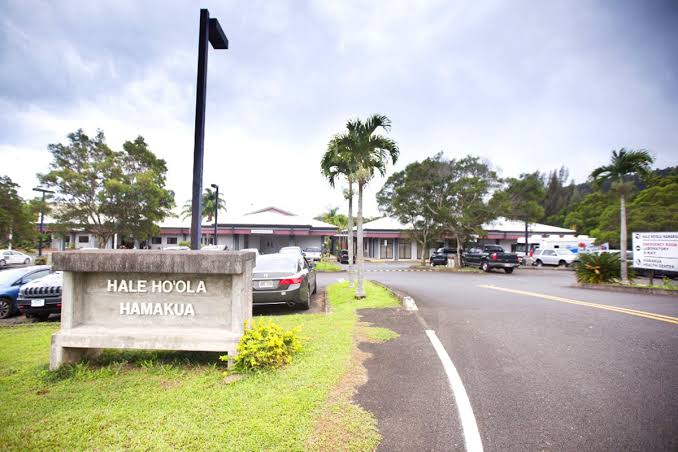
Honoka’a Hospital, a 77-bed critical access hospital, was operating on a generator.
Its 66-bed long-term care unit “offers a home-like environment while providing our kūpuna and makua with specialized nursing and rehabilitation services. Many of our residents reside here on a long-term care basis, enjoying an array of daily activities, ʻohana style dining, and much more,” the hospital’s website said.
Because of the outages, including at Clinical Labs where the hospital sends its labs to be tested, Mackey said it took longer than usual to get results back for the COVID tests.
The Department of Health said testing was delayed due to logistical challenges of transporting specimens to labs for processing during Hurricane Lala. But the hospital was able to monitor the outbreak by using point of care tests and reported the outbreak in a timely manner.
“If you don’t get results back, you don’t know who’s positive,” Mackey said, adding staff shut down their day room early on in an effort to try to keep the spread under some level of control.
“Normally we get results in 24, maybe at most 36 hours,” Mackey said.
But due to the storm, it took about four days after the first symptoms were identified before they got results back.
Staff conducted more rapid testing as a result. Mackey said it is not quite as accurate and can sometimes produce false positives.
“But we wanted to kind of get a handle on this spread,” she said. “Anybody with symptoms, of course, was being tested readily, but we were trying to figure out if there were any asymptomatic folks that were positive that we needed to isolate right away.”
Mackey said health professionals consider COVID-19 to be endemic in the population, meaning “it’s ever-present at this point.”
Mackey said there’s been an increase in COVID-19 on Hawai‘i Island and in the Hāmākua community over the last month or so.
Mackey said the facility is in a good place with protocols in place and this is “not something that’s in my mind out of the ordinary.”
“We deal with flus and colds and COVID at this point, and it is really not a whole lot different from a flu or a cold,” she said. “It just spreads rapidly. So anytime we have any of those things, we have a lot of processes and procedures that we put into place.”
Mackey said the outbreak has been reported to families and visitations have not been restricted.
“We don’t want people to unknowingly expose themselves if they’re high risk,” she said. “We advise they stay home, but it’s not like we forbid visitation.”
Mackey said she also had to inform a few prospective patients coming from Hilo Medical Center about the COVID cases.
“We’ve spread the word because that’s part of what we do,” she said. “We’re trying to keep people safe. But again, that’s also a normal process. Anytime we have anything like that, we try to let folks know.”
According to the Department of Health, there are one to two COVID-19 outbreak reports per month reported in the state.
Outbreaks of COVID-19 at long-term care facilities are required to be reported to the Department of Health as soon as possible. DOH also receives COVID-19 outbreak reports from various other congregate settings such as schools and shelters.
The state also tracks respiratory illnesses. According to the health department, those illness numbers are low, but increasing.
“While current activity is much lower than what Hawaiʻi experienced during the early stages of the pandemic, COVID-19 remains a circulating respiratory virus in our community,” officials stated. “For that reason, people should continue to take reasonable precautions, particularly those at higher risk for severe illness.”
COVID-19 fatality risk is lower than it was at the height of the pandemic (2020) due to immunity and improved care, but severe outcomes still persist, especially for those at high risk. The risk remains highest for older adults, nursing home residents, immunocompromised, and those with underlying medical conditions.
The Department of Health encourages the public to stay current on COVID-19 vaccine recommendations, stay home when they are sick, and consider wearing a mask around others when they are ill or recovering from an illness.
“Even though COVID can be mild illness for many, just as with influenza there is risk of complications and severe outcomes, especially for vulnerable populations,” officials stated. “Because of this, we should all take prevention of respiratory viruses seriously.”
The state Department of Health, as part of the West Coast Health Alliance, aligns with immunization recommendations of the American Academy of Pediatrics.