


Lala Recovery: 6 bridges not destroyed as feared, but plenty of damage to repair, debris to cleanup
"The Ka‘ū District is actually going to become accessible in just days instead of weeks or months like some people had worried," Hawaiʻi County Mayor Kimo Alameda said.
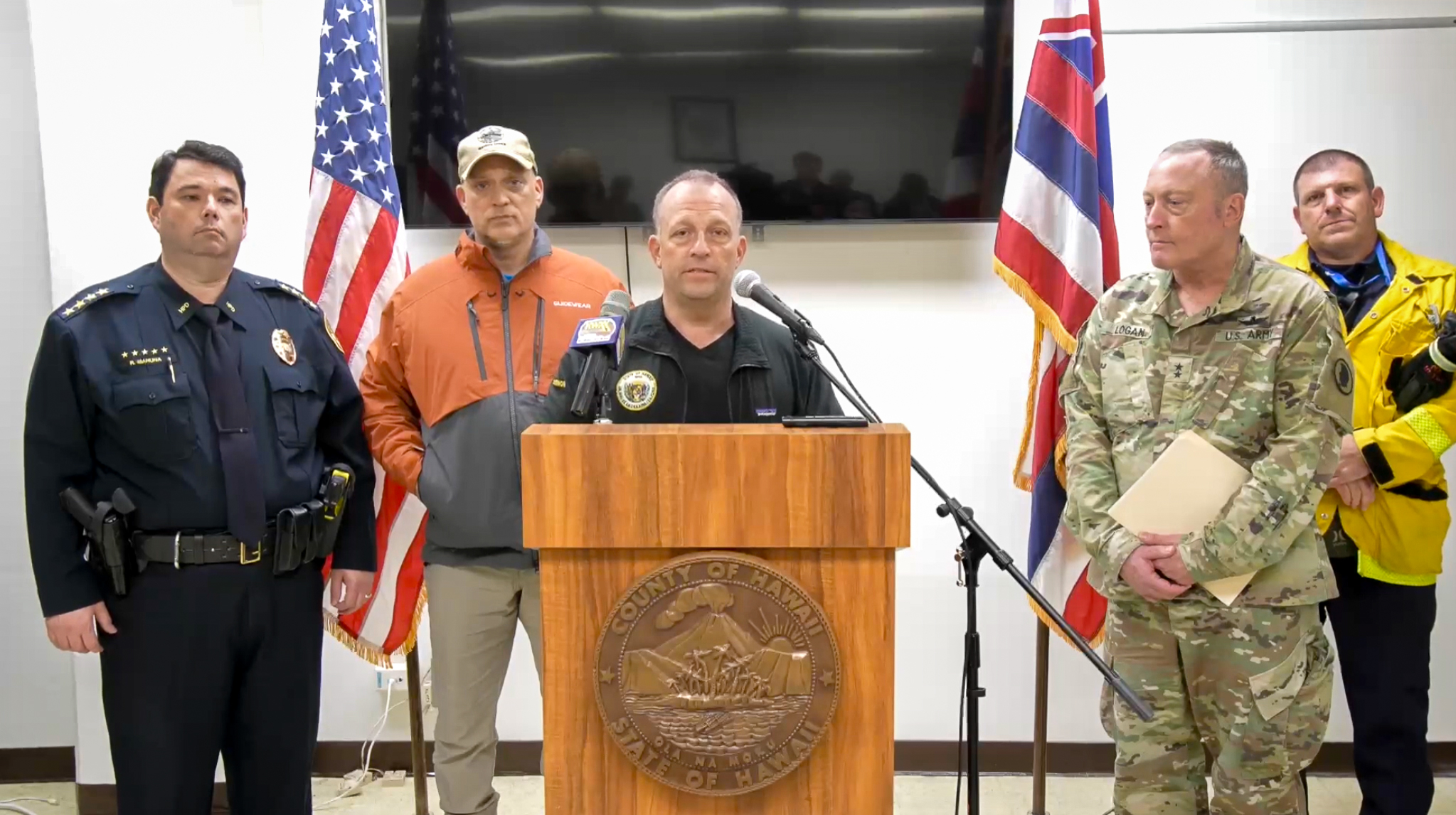
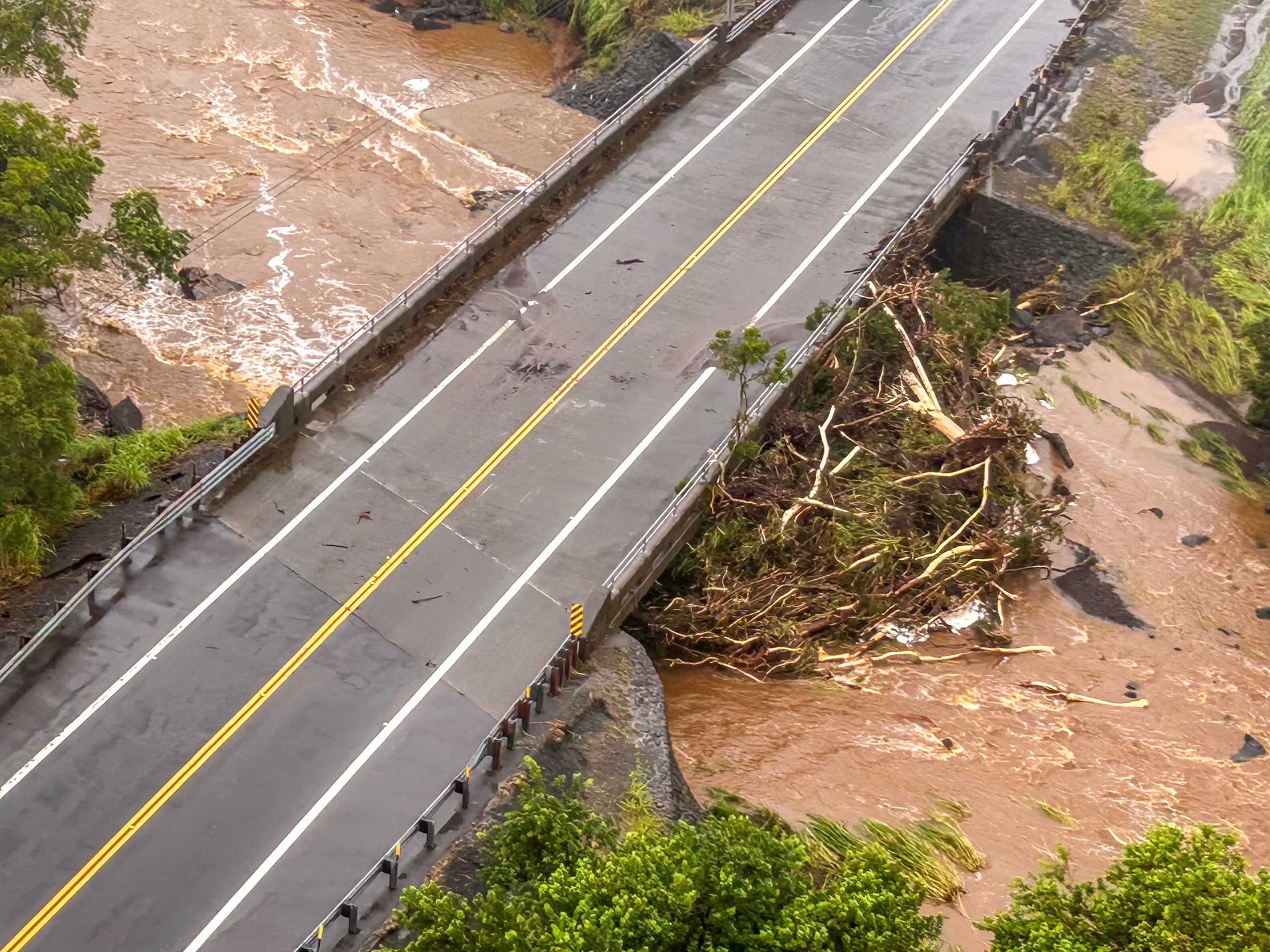
After work crews cleared more mud, boulders and other debris from roads in the hard hit Kaʻū District of the Big Island, the six bridges that appeared to be destroyed Sunday by Hurricane Lala are not as badly damaged as originally thought, Hawaiʻi County Mayor Kimo Alameda said Monday.
On Monday morning, Alameda was joined by Hawaiʻi Gov. Josh Green to fly over and do a walk through of Nāʻālehu.
“The damage is not as catastrophic as we had worried,” Green said Monday during a press conference in Hilo.
“We could see that they structurally looked pretty sound,” he said of the bridges. “They’re, of course, going to have to do engineering tests to make sure. But we don’t think the community will remain isolated for long.”
Alameda said it is a big relief: “After imagining what it would be like to have six bridges need to be fully replaced, that would be a devastating long-term recovery. But now that we’ve seen what the county and the state were able to do to clear, it looks pretty good. We’re even hopeful that we won’t have to do full replacements of bridges.”
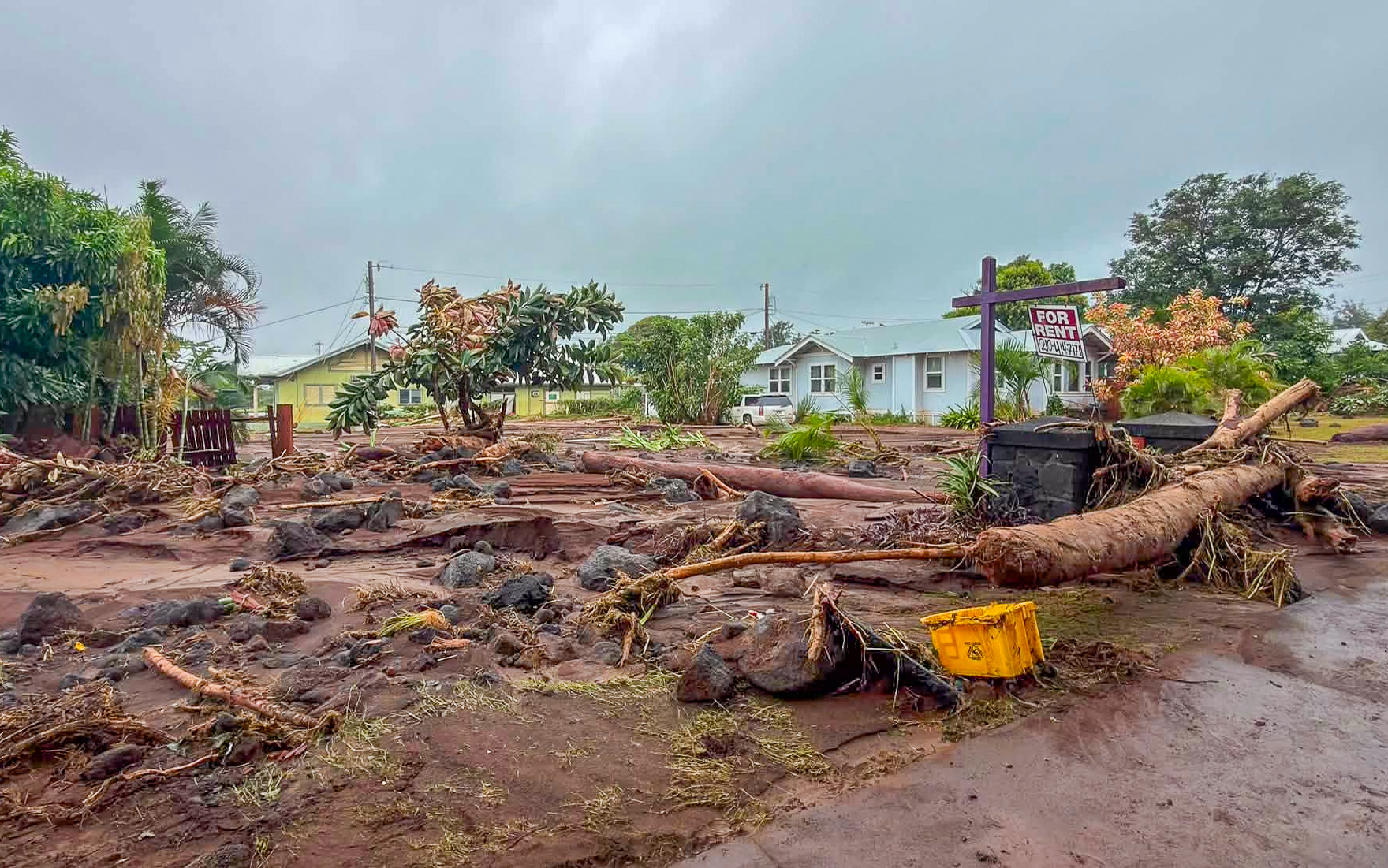
The flooding damage from the hurricane had cutoff some communities and the Kaʻū Hospital from the rest of the Big Island. Workers were able to create a path on Highway 11 for emergency responders and staff to get to the hospital, which now has 17 patients.
“The Kaʻū District is actually going to become accessible in just days instead of weeks or months like some people had worried,” Alameda said.
Alameda began the press conference by saying: “We’re here to share with you some of what we saw, and also provide some hope. We did see some sadness, no doubt. We also saw some inspiration. So we’re all in this together.”
Green said providing help to the Kaʻū District was the state’s priority after the hurricane because it was the hardest hit, and also because it is personal to him.
“I’m flooded with emotion because that’s where I was given the honor to be the doctor when I first came to Hawaiʻi,” he said. “I literally saw dozens of my old patients and embraced them years after being their doc, and now I was their governor. So it was a very … emotional time together.
“We’re going to do everything possible to help everyone down in Kāʻū.”
Since the storm subsided, search and rescue efforts have been conducted with crews going door-to-door in the hardest hit areas of the Big Island, Hawaiʻi County temporary fire chief Daniel Volpe said.
Personnel with the National Guard found the first known fatality of the storm, a 98-year-old former elementary school teacher who had been reported as a missing person.
Volpe said the search for any other people who are trapped or need help will continue until the hard hit areas are cleared. This includes help from some of the 60 National Guard personnel who have been working on the Big island.
“We brought an additional 13 last night, and this is a whole of government approach. They flew in on U.S. Coast Guard aircraft.” said Major General Stephen F. Logan, director of the Hawaʻi Emergency Management Agency and adjutant general of the Hawaiʻi National Guard. “So we’re augmenting what the county is already doing. We’re going to be here until it’s over.”
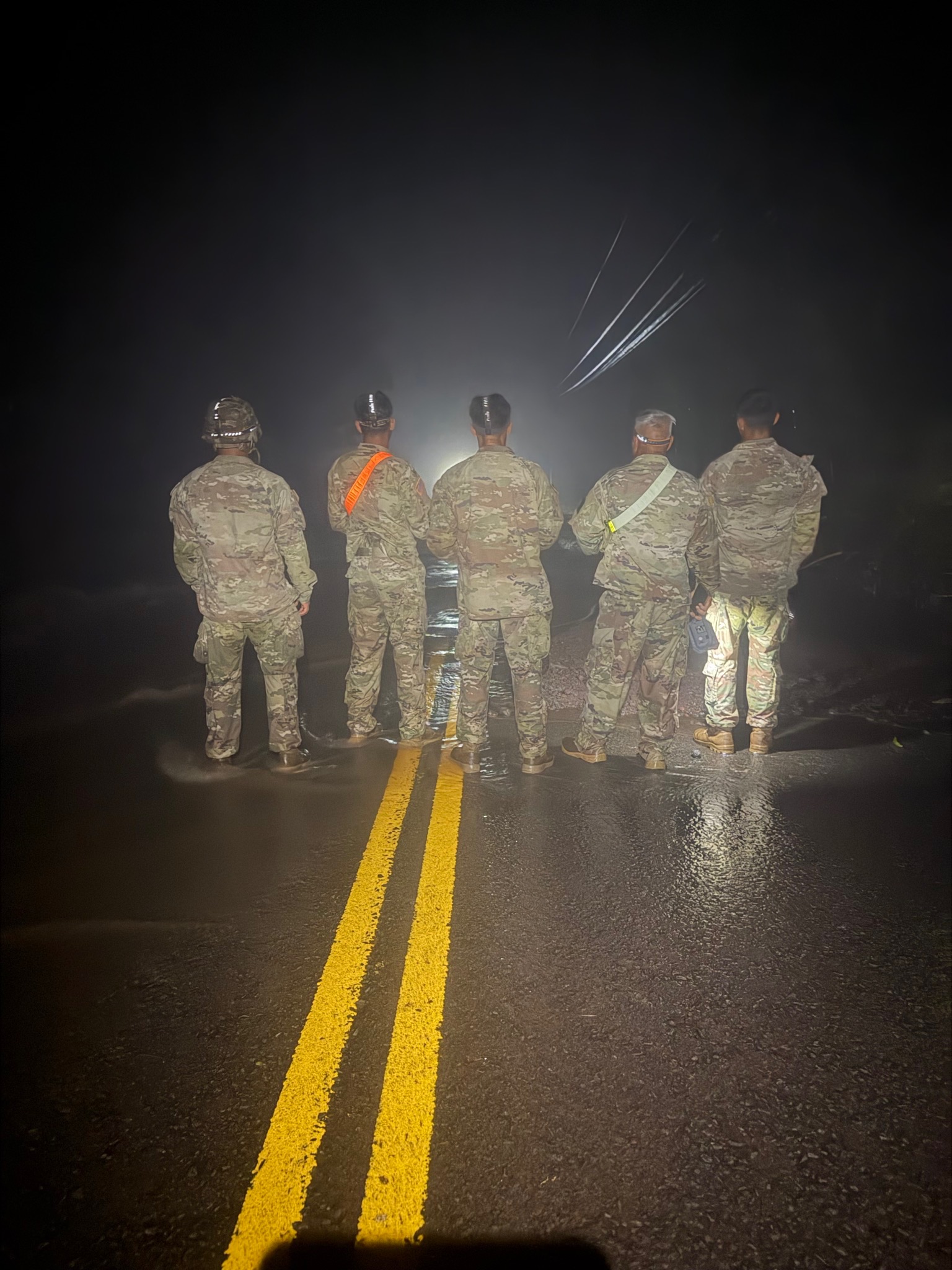
The National Guard’s efforts included rescuing two county medical personnel who were trapped in their ambulance that was caught in flooding waters.
County and state public work crews have been working round the clock to clear roads of the mud, boulders, fallen trees and other debris. At the same time, crews with Hawaiian Electric have been working to restore power to tens of thousands of people.
At 7 a.m. on Sunday, the utility reported about 58,000 customers were without power on the Big Island. As of 4 p.m. on Monday, Hawaiian Electric had made some progress, but approximately 39,730 customers are still without power, partly because of the difficulty restoring downed lines and transmission lines in the rural area with many roads still impassable.
To describe the challenges, Darryl Oliveira, the acting administrator of the Hawaiʻi County Civil Defense Agency, said: “We have a situation up on Kaloko that’s a critical site for communications and telecommunications. There’s no less than 30 sections of line down on just that one road, which gives you an idea of how many sections or stops and impediments there are in all these different sections of roadway.”
To make it easier for road and utility crews to do their work, Green annouced that “Big Island will remain closed” on Tuesday. This includes all public schools, and state and county offices.
“You can also expect that the schools down in Nāʻālehu and Kaʻu are going to be closed for some time,” Green said.
This includes a school in Pāhala that “looks a lot like the Konawaena school after the Kona Low, if I can be blunt,” Green said
Alameda added that the closures will help speed up the restoration efforts “so that we can get back to normalcy. … So that you can stay home. If you have a checklist, a honey-do list, now’s the time.”
The state Department of Human Services is working on obtaining places for displaced people to stay, “some Airbnbs, short-term rentals if necessary,” Green said.
“There are a lot of people that we believe were living in probably unpermitted structures that are pretty badly destroyed,” Green said. “We’re going to have to do a lot to do public assistance for individuals that are dislocated.”
On Sunday night, there were about 100 families in shelters, down from 400, Green said. “There were only a handful of people in shelters or in the shelter this afternoon down in Pāhala.”
Green added that the state also will help with life-sustaining things like food and water.
Already private organizations are working on these necessities. The Salvation Army has organized distribution of food. And the nonprofit Vibrant Hawaiʻi has set up nine distribution sites for water.
But there is a lot of damage to state, county and private property.
“It’s the flood damage that’s caused the most damage, more than the wind,” Green said.
Two houses came off their foundations, one being pushed by the raging flood waters about a 100 yards, and other homes and businesses were badly damaged or destroyed. Roofs were damaged. Trees blown all over the place. County parks were a big mess.
“It’s the flood and the mud and the rock that poured through Nāʻalehu, Pāhala, Waiʻohinu,” Green said. “These communities have a lot of cleanup to do, and they’re going to need a lot of support.”
Green said: “The Bay Clinic, an organization that both Mayor Alameda and I work for interestingly, ties our paths together in a very positive way, looked pretty good. But we’re waiting to see how much mud damage they have.”
But he added that the old health center, located in a historic building and where he first worked as a doctor in Kaʻū, appears as if it will have to be demolished.
Green said if people want to donate to help the people on the Big Island, “please give to the Red Cross, please give through the Hawaiʻi Community Foundation.
He also said there was a $3 million anonymous gift of clothing that will be distributed to the hard hit areas and the Office of Hawaiian Affairs will be making an announcement soon about providing major gift cards to support people in need.
And for those who lost their SNAP cards to purchase food, Green said those will be able to be replaced.