


Curious case of a conspicuous cloud lights up social media
Was it a contrail or 'chemtrail'? Long, thin, white cloud stretched across the Big Island sky on the afternoon of Aug. 11 creates a buzz with possible impending tropical cyclone poised to impact the islands.
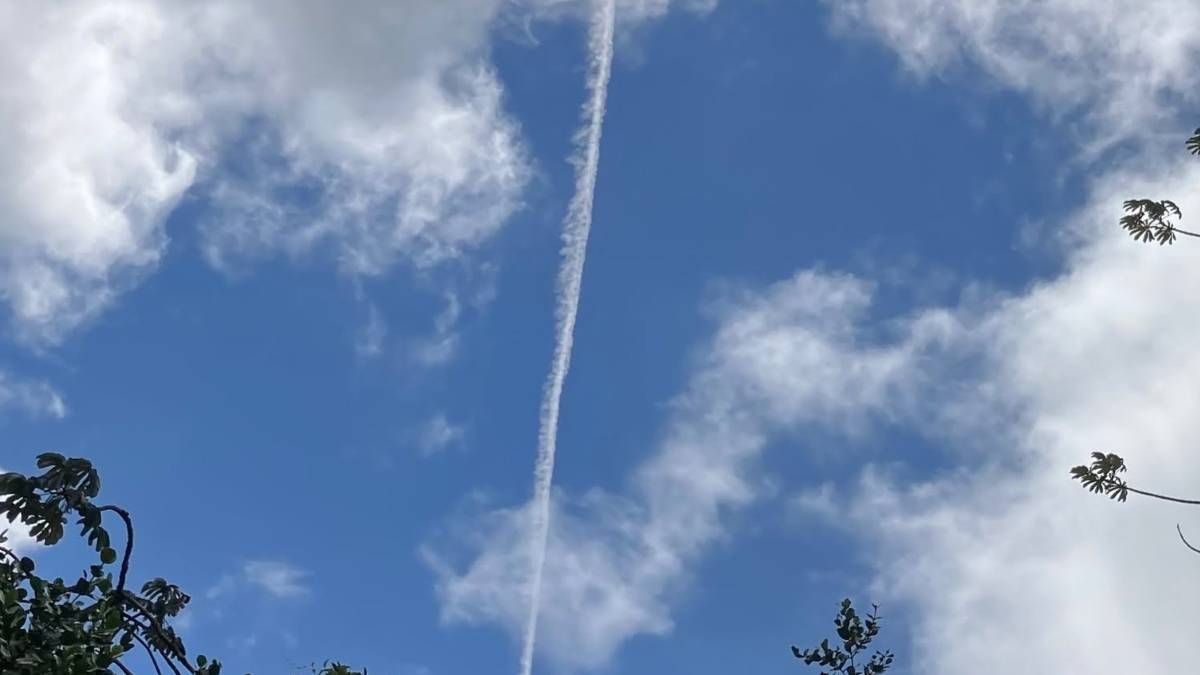
A possible tropical cyclone poised to impact the island and an unusual cloud — what some even might consider odd — lingering in the sky over the Big Island. It’s a combination ripe for speculation, debate and nearly viral social media status.
“Hi, can you share what this was in today’s sky?” asked Caroline Segalla in an email Aug. 11 to Big Island Now. “[It was] visible from Pāhoa around 2:20 p.m. It’s all over Facebook, and there are those who think it’s a contrail and others who think it’s a ‘chemtrail.'”
Segalla shared a link to a Facebook post with a photo of a long, thin, white cloud that stretched across the sky in nearly a straight line. That post — and several others — were accompanied by comment after comment from people conjecturing what it was and offering explanations.
Some even said they had never seen a cloud like it since living on the Big Island.
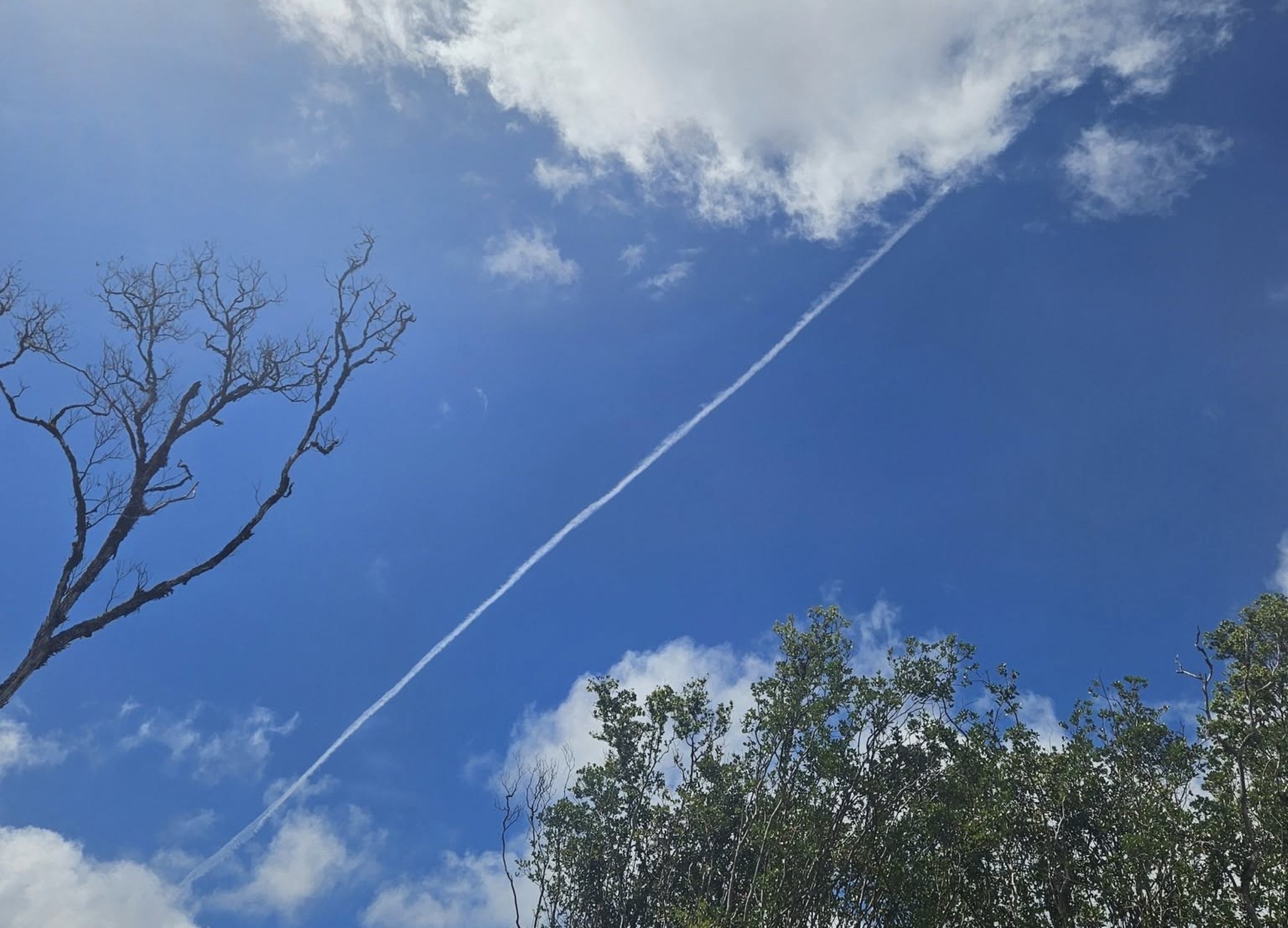
The mystery — and debate — received some clarity later that day from an official meteorologic standpoint.
“Just looks like it would be from an airplane to me,” said Thomas Vaughan, a senior forecaster with the Honolulu forecast office of National Weather Service, after seeing a couple of posted photos featuring the conspicuous cloud. “Does not look like anything meteorological.”
Vaughan’s comment leans toward the most likely answer: a contrail, or the line-shaped exhaust cloud that can be visible behind jet aircraft.
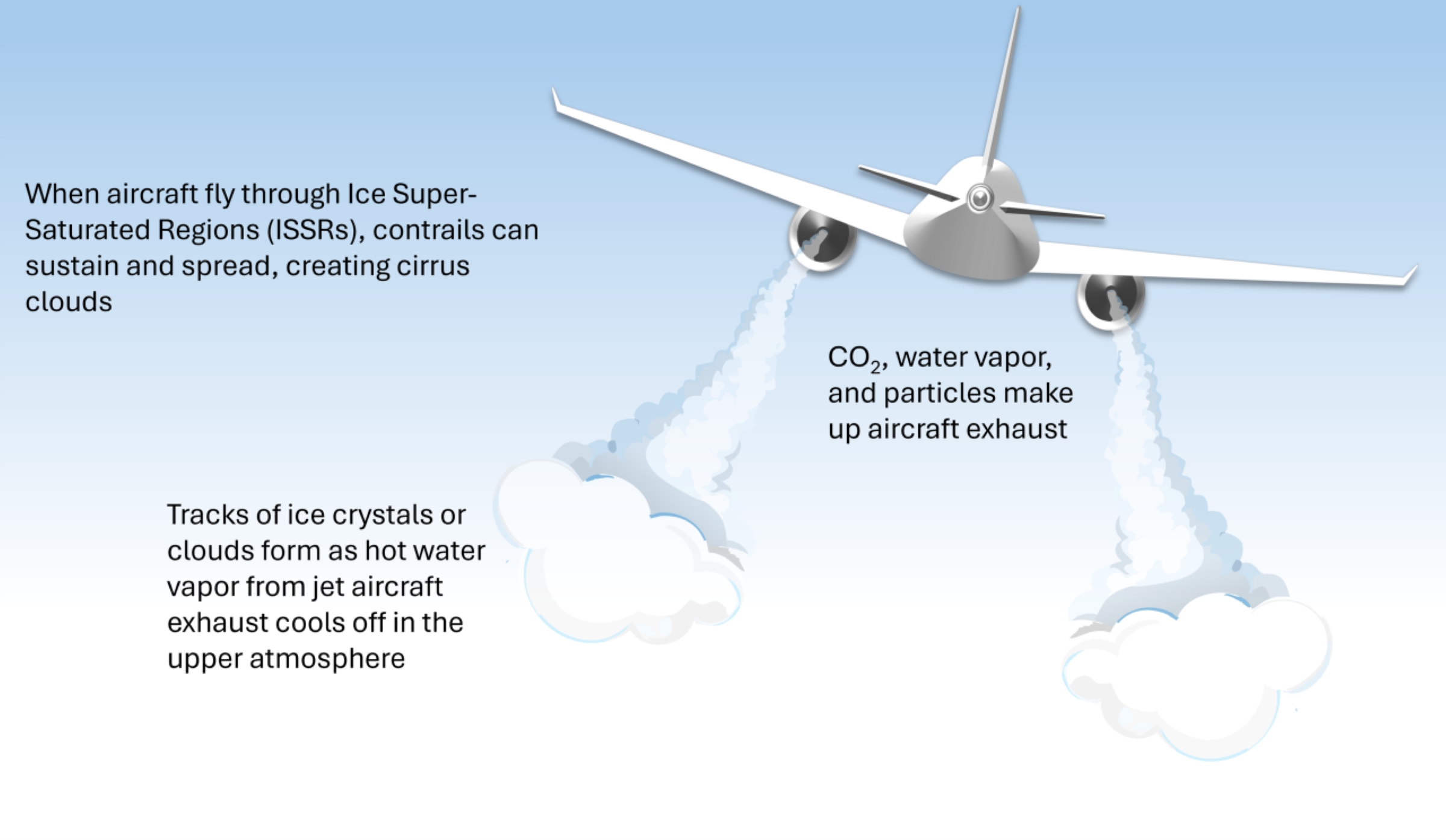
The exhaust of an aircraft engine is composed of water vapor, carbon dioxide and other emissions commonly found when fuel is burned. Since jets typically fly at high altitudes — where it is very cold — that hot exhaust reacts with the cold air to form a contrail.
“Jet aircraft form contrails under these atmospheric conditions for the same reason that you can see the exhaust from your vehicle or your own breath on a cold day,” says the U.S. Environmental Protection Agency.
These curious exhaust clouds are normal and have been since the earliest days of air travel.
Humidity and air temperature are the keys to their formation.
If the humidity is high enough — and air temperature low enough — water vapor can condense on particles in an aircraft’s exhaust and surrounding air to form tiny water droplets. Those droplets freeze into ice crystals at low temperatures.
Contrails evaporate quickly if humidity is low at the aircraft’s altitude. They can, however, persist and grow if humidity is high. Conditions favorable for contrail formation happen frequently at high altitudes.
“It is also important to note that the humidity and other atmospheric conditions at high altitudes may be very different from the conditions we experience on the ground,” the U.S. Environmental Protection Agency explains. “For example, there may be high humidity conditions at high altitudes, but low humidity conditions at ground level.”
“Chemtrails,” or “chemical trails,” on the other hand is a term some people use to inaccurately claim contrails release dangerous chemicals or biological agents at high altitudes for a variety of “nefarious purposes,” among them attempts to geoengineer Earth and — a topic mentioned by people on social media in relation with Tuesday’s curious cloud — weather modification because of the possible incoming tropical cyclone.
Yes, chemicals can sometimes be intentionally sprayed from aircraft for legitimate reasons, including firefighting — as locations throughout the state have experienced — or crop dusting in farming operations. These purposes are well-documented, regulated and used for specific reasons.
They also are made by low-flying propeller aircraft or helicopters, not high-altitude jets.
Furthermore, U.S. Environmental Protection Agency proactively works with other federal agencies to monitor air traffic for any and all potentially dangerous activities.
Federal officials are aware some members of the public are concerned about unusual contrails or reports about geoengineering and dangerous chemicals being sprayed at high altitudes. Some even show concern about crop dusting.
Officials report that the federal government is not aware of a contrail ever being intentionally formed over the United States for the purpose of geoengineering or weather modification.
Additionally, such activities are strictly regulated by Federal Aviation Administration, with other federal agencies closely overseeing the types of chemicals used.
Some commenters Tuesday also argued the cloud lasted longer then what might be expected of a typical contrail: “20 minutes later … didn’t hear or see anything go by,” one person wrote.
Many contrails are short-lived, forming and evaporating in a matter of seconds to minutes; however, there are “persistent contrails” that result when airplanes fly through layers of high humidity.
“They can last for a few minutes or longer than a day,” says U.S. Environmental Protection Agency, adding this form of contrail also can interact with wind and other clouds to form thin, wispy cirrus clouds at high altitudes.
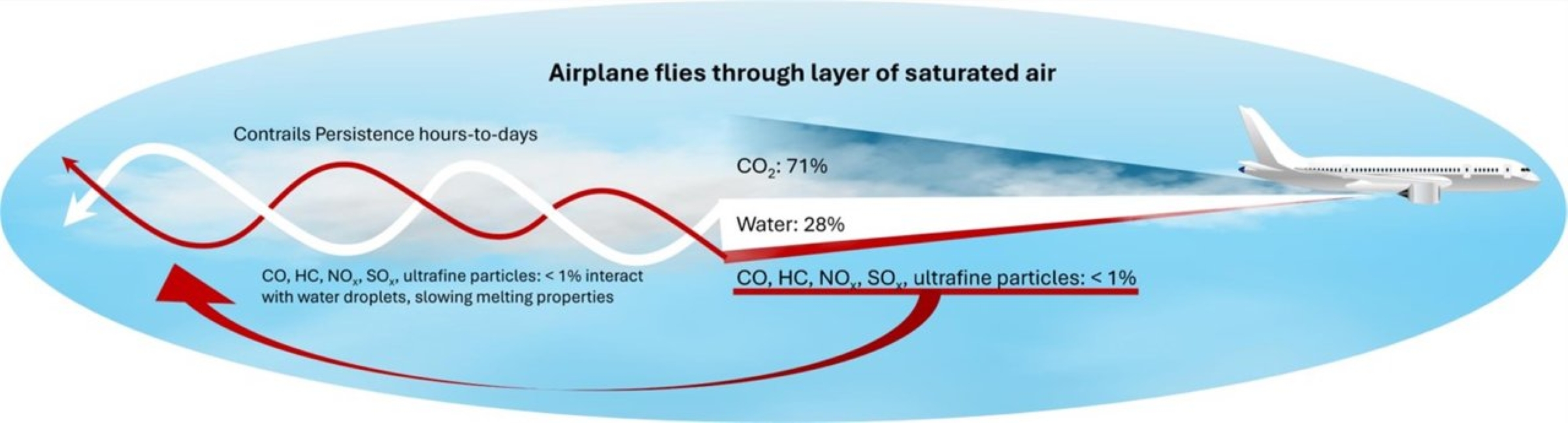
Contrails can even take different shapes and appearances — including the usual suspect straight line, a grid or cross pattern, twisted or spiral, curved and fragmented — depending on weather conditions and an aircraft’s flight pattern.
If contrails persist long enough to widen and spread out, it becomes difficult to even distinguish them from naturally occurring cirrus clouds.
Persistent contrails, while they, too, might cause public concern, do not indicate harmful chemicals were dispersed into the atmosphere.
Officials reassure the public that U.S. Environmental Agency and Federal Aviation Administration would take appropriate actions to address any substantial claims of unauthorized chemical spraying.
Many people likely will stand by their own explanation of Tuesday’s curious cloud formation that took social media by storm, but at least now they can weigh it against the word of a National Weather Service forecaster as well as data and information from environmental and aviation agencies.
You can dive even deeper with these additional resources: