

Banyan Drive revitalization could become a reality after a decade of effort
A collaboration between state, county, and community leaders brings new energy into the revitalization of the historic shoreline road.
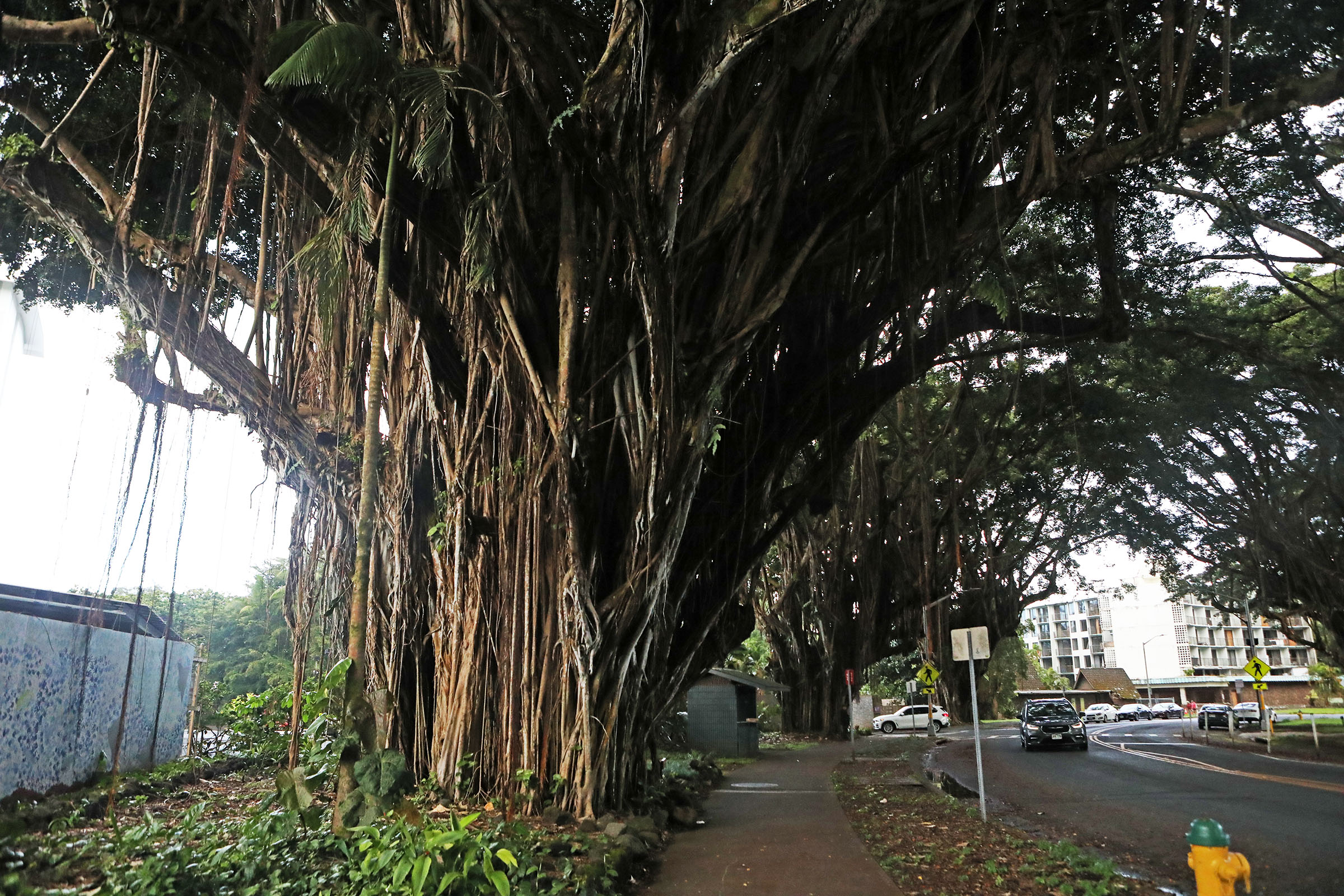
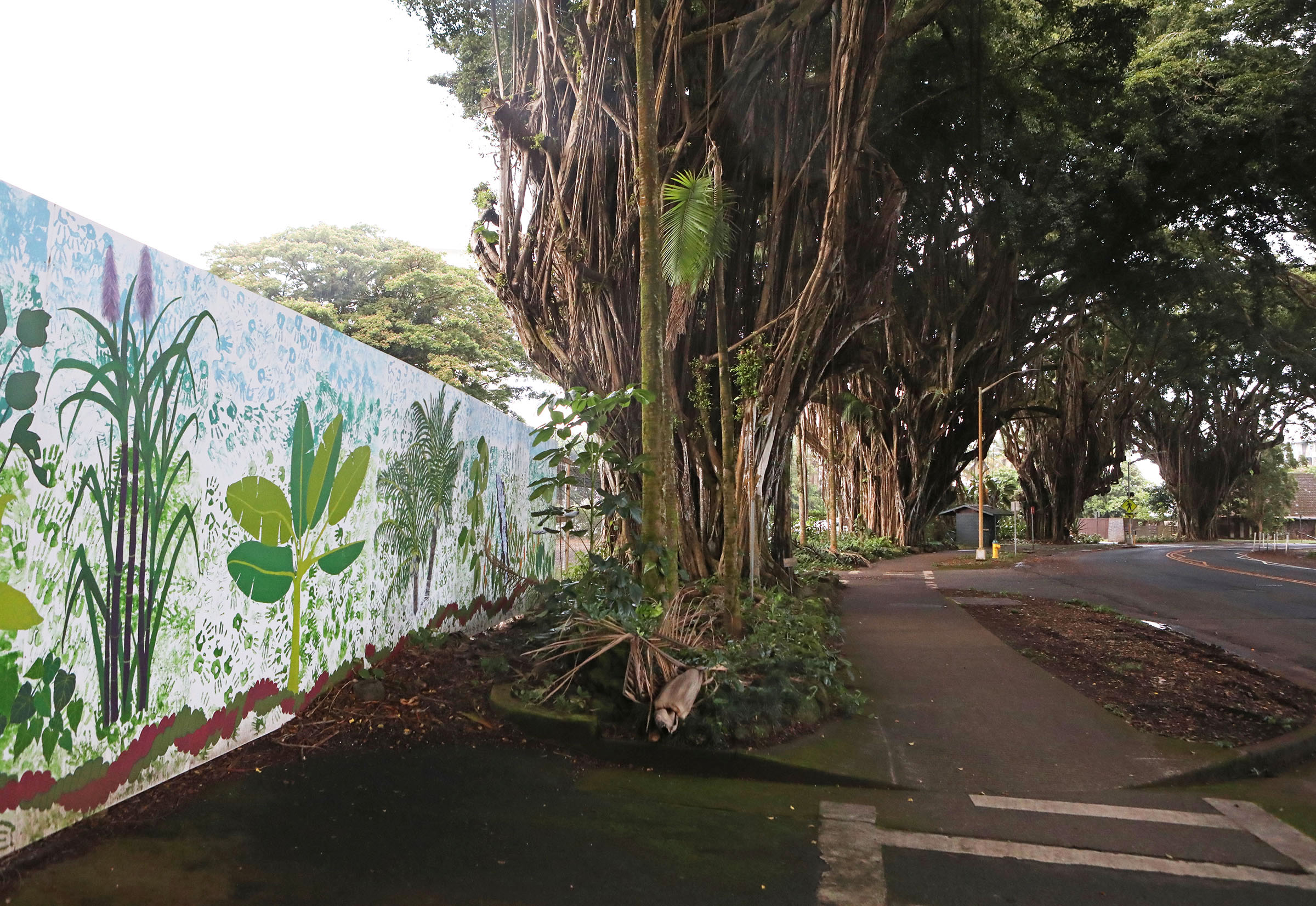
The Waiākea Peninsula and Banyan Drive, with its iconic trees named after celebrities, hotels, restaurants and prime location by Hilo Bay, the cruise ship terminal and cultural landmarks was once a big tourist draw to Hilo and the Big Island.
But for decades it has steadily declined with underinvestment, aging infrastructure, rotting trees, crime and fragmented land management.
Finally, after years of state lawmakers advocating for funding to revitalize the area that is managed by the state Department of Land and Natural Resources, there now is action taking place.
This May, the Hawaiʻi State Legislature passed Senate Bill 2001 that was signed into law. It establishes the Waiākea Community Development District, which enables coordinated redevelopment through the public entity, the Hawaiʻi Community Development Authority.
“In the past, the people working to revitalize Banyan Drive were all very Honolulu-based and with this bill, community stakeholders can now sit shoulder to shoulder with everyone else and their voices will be heard when it comes to the master plan for revitalization,” said state Rep. Sue Keōhokāpu-Lee Loy from Hilo. “By creating a community development district, there can be series of conversations about the vision for Banyan Drive that can turn into action.”
The new law, introduced by Hawaiʻi Island state senators, also involves creating an action committee to oversee development on the peninsula. Keōhokāpu-Lee Loy and state Rep. Chris Todd have been working on starting this for at least a year.
The action committee has received $1 million from the state to complete a feasibility study and hire a consultant to create a master plan for the peninsula.
But the state also has provided funding to take care of some needed projects while the plan is being created.
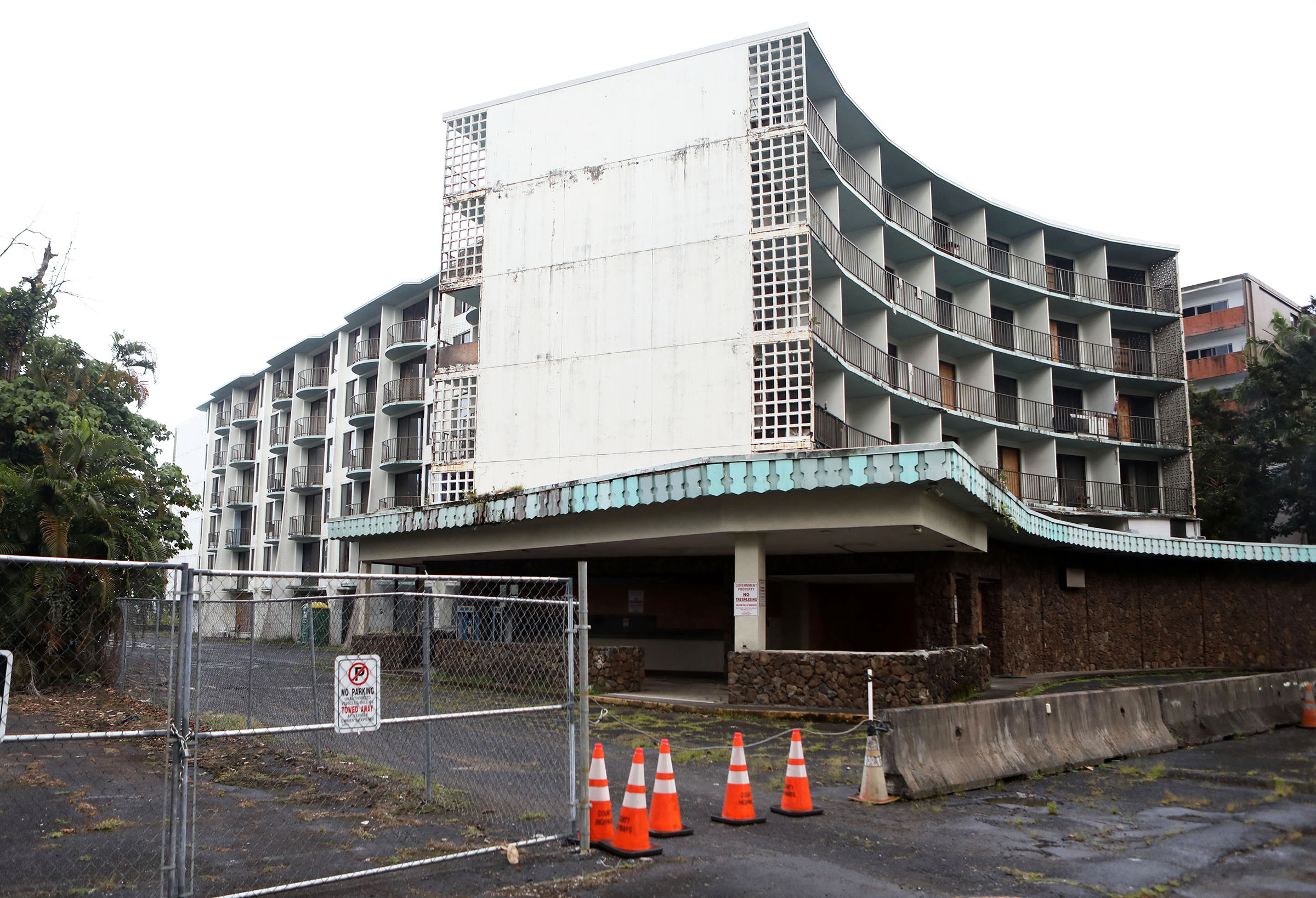
The state budget for the 2026-2027 fiscal year, which recently was signed by Gov. Josh Green, includes a $14 million appropriation for the demolition and removal of the former Country Club Condominium Hotel building on Banyan Drive in Hilo.
An additional $1.2 million was appropriated to plan the razing of the building and site remediation, along with another $1.5 million for the plans, design, construction and equipment needed for the closure of a large capacity cesspool.
“After the demolition of Uncle Billy’s, we’ve learned that it may take a little bit more money to complete this task, but we should have an idea of total cost and timeline soon,” Keōhokāpu-Lee Loy said. “Those funds will be put to the side to use for the demolition when we are ready.”
The state budget also included $150,000 in capital improvement project funds to be allocated to the Department of the Attorney General and the Board of Land and Natural Resources to execute eminent domain condemnation of the Naniloa Golf Course on Banyan Drive.
“One critical path for revitalization we’re looking into is acquiring the golf course, especially with the sea level rise that we predict to see in the future,” Keōhokāpu-Lee Loy said.
Condemnation allows the state to bypass failed lease negotiations. The $150,000 covers the associated legal costs, appraisals and legal proceedings conducted by the Hawai’i Department of the Attorney General.
Todd and state Sen. Lorriane Inouye have stated that the golf course land is the future of Banyan Drive. It could be used for future hotel construction, commercial properties, housing or an open space that could be used for markets, cultural activities or as an outdoor venue.
“Acquiring the golf course also gives us the option to create a connection between the harbor and the cruise ships and downtown Hilo,” Keōhokāpu-Lee Loy said. “There are so many ideas and options. I’ve heard them all. That’s why creating the action committee was so important, because we have great individuals looking at the bigger picture for East Hawaiʻi.”
The action committee held its first meeting on June 25. It was closed to the media and the public.
Lilinoe Keliʻipō-Young, a lineal descendant and a member of the action committee,” told Big Island Now: “We went over our purpose, individual and collective roles, and planned future meeting dates. Our discussions will be deemed confidential until the final report is done sometime in 2027.”
The goal is to lay out the future of the area and provide consistent oversight so that hotel, commercial, public and cultural uses can coexist.
“In the past, the first question everybody asks about Banyan Drive is about what will be there in the future — hotels, housing, open space — so now the community can tell us what they want to see,” Keōhokāpu-Lee Loy said. “This action committee is eager and engaged in the work. They will discuss possibilities of redeveloping the area around what is feasible to achieve and generate a long-term plan. If they do have a goal, they look into what would it take to achieve that goal.”
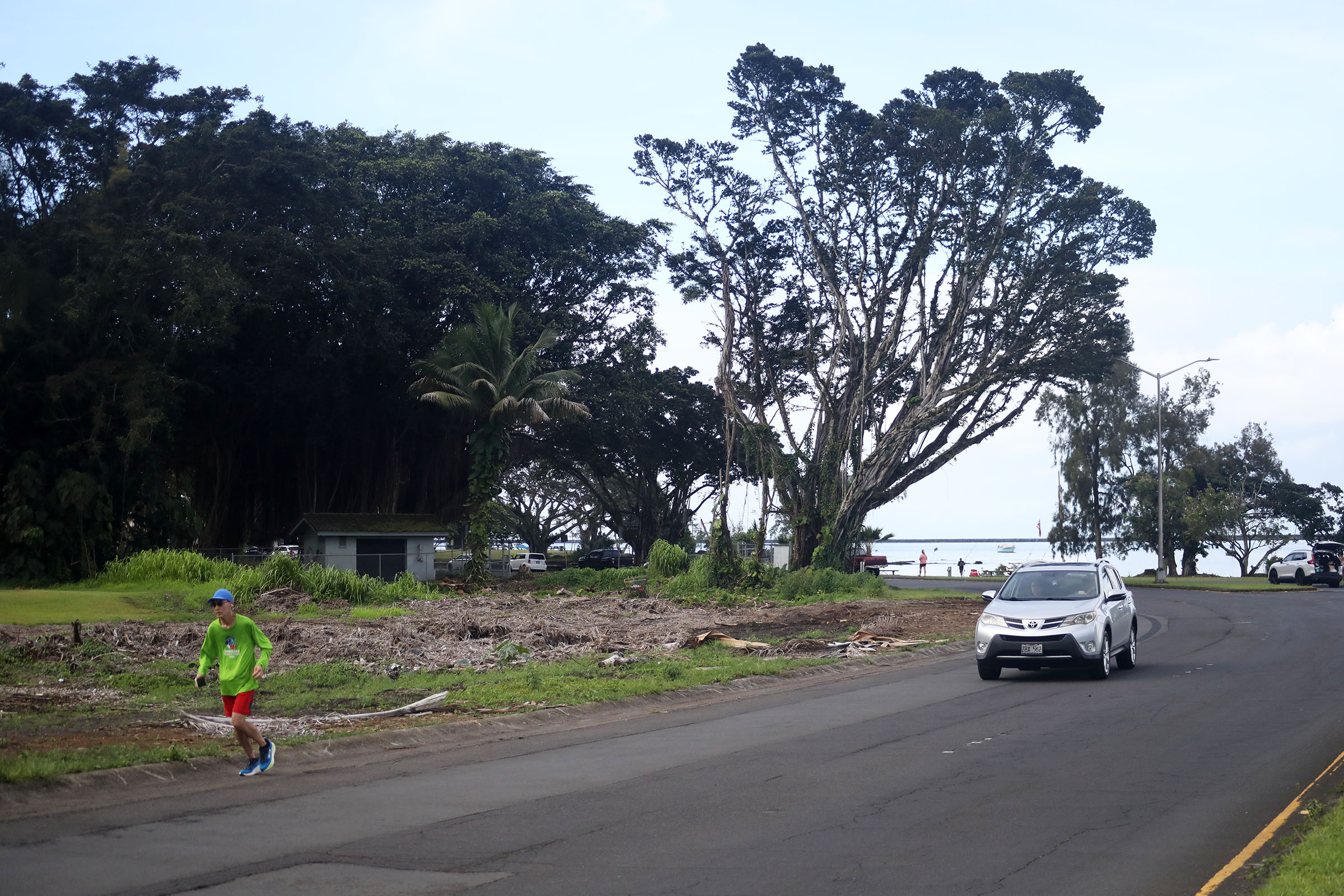
Since the completion last year of the final phase of demolitionr of Uncle Billy’s, a once iconic hotel that opened in the 1960s by William “Uncle Billy” J. Kimi Jr., the land has become a green space. But it remains closed to the public.
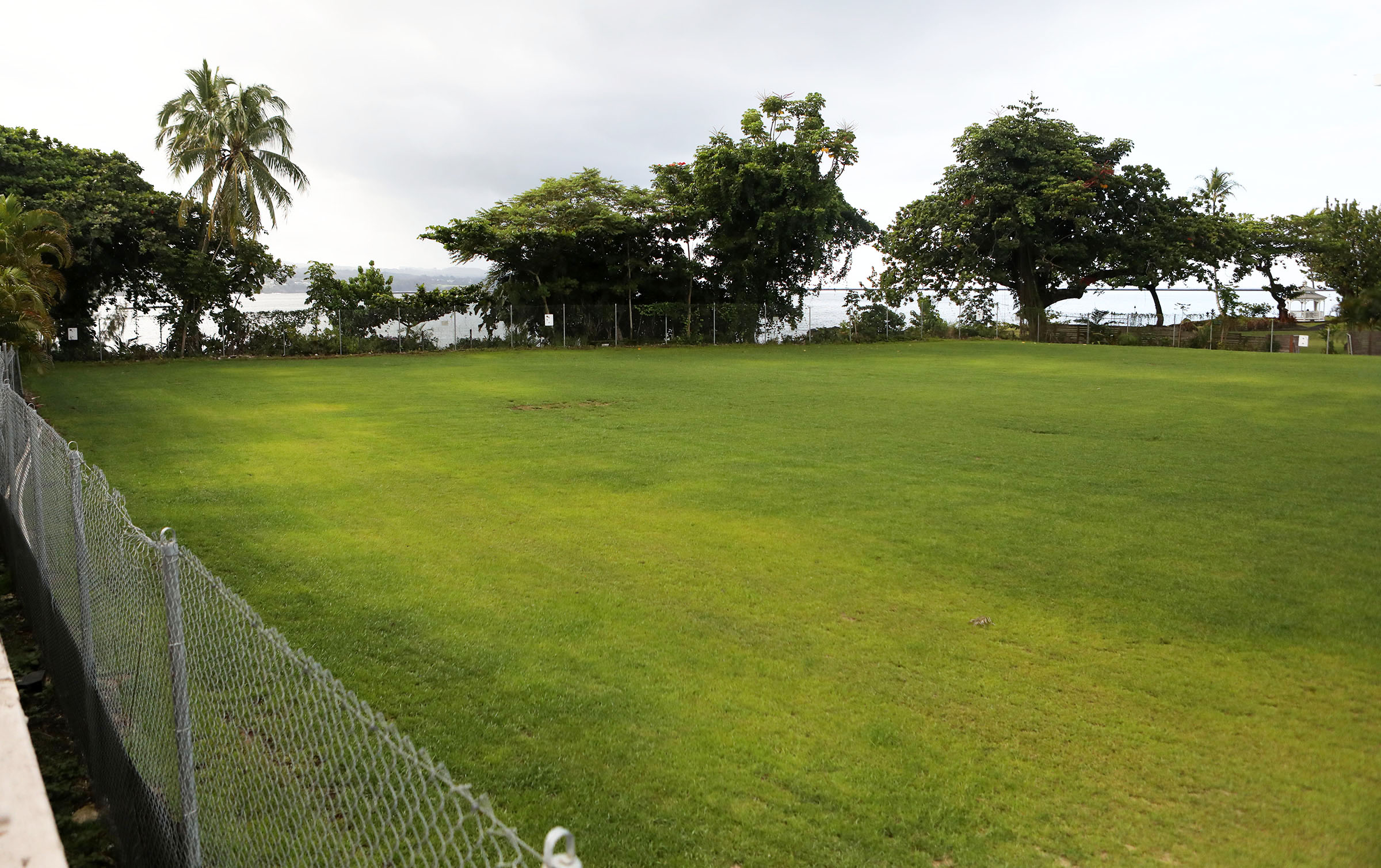
Hawaiʻi County Mayor Kimo Alameda said in his State of the County address this year that he wants that space to open as a park. Todd and Keōhokāpu-Lee Loy say that is a possibility.
“I think, because of sea-level rise, we’re all in lockstep that space should not be developed,” Todd said. “Find out the best use, the best community benefit, and if that means collaborating with the county and having them manage that site, then that’s the angle.”
Banyan Drive now is managed by the Department of Land and Natural Resources, which acknowledged the frustration over the current state of the area and recognizes the need for revitalizing and redeveloping the area.
Keōhokāpu-Lee Loy said she has encouraged the state department and Hawaiʻi County to create a memorandum of understanding to co-steward the area, because there isn’t enough money on either side.
“We have seen a transformation of Banyan Drive by the county that is so impressive to me with the trimming of the trees and maintenance work they’ve been doing,” Keōhokāpu-Lee Loy said. “Banyan Drive is coming back to life and I think they would manage the Uncle Billy’s spot well.”
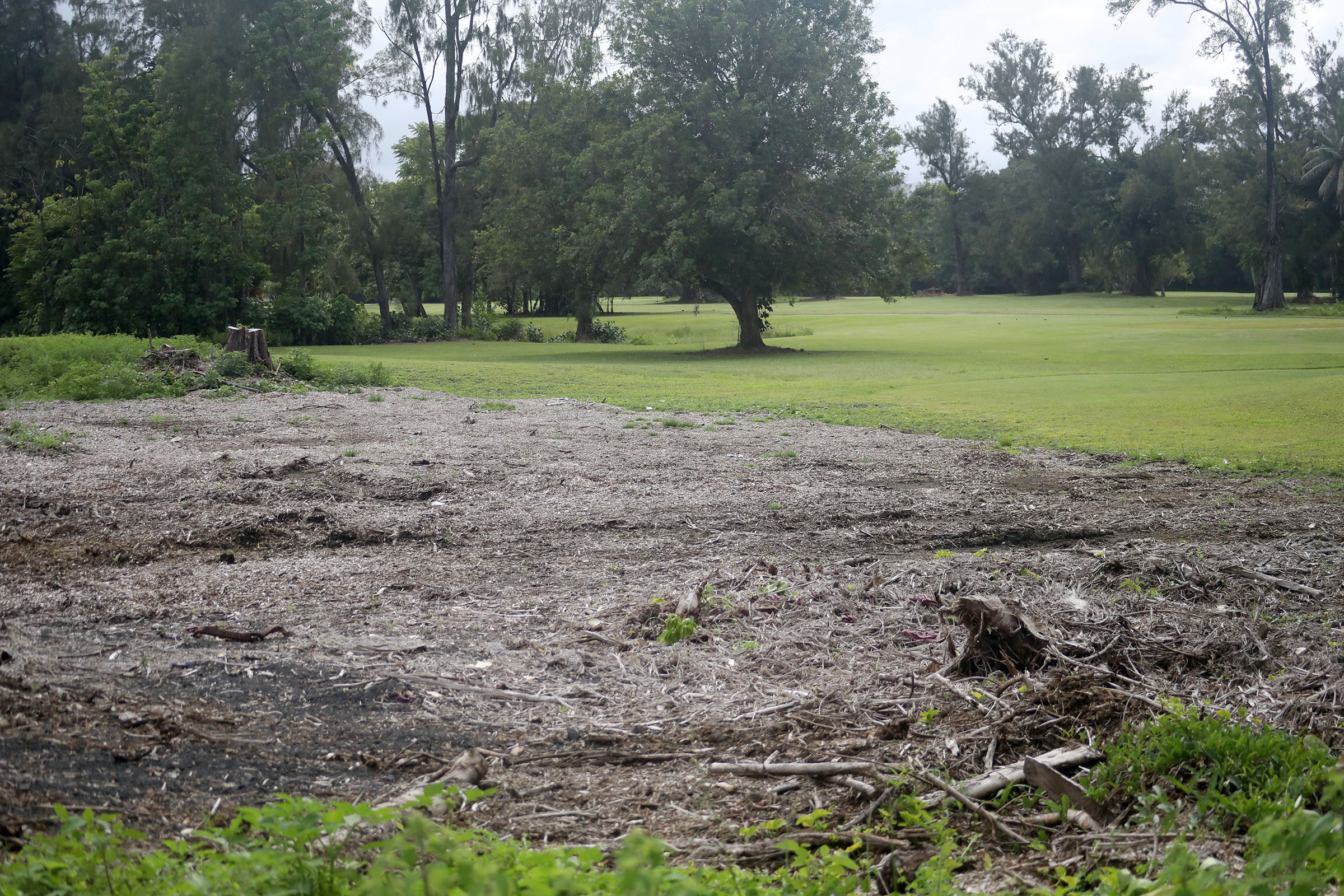
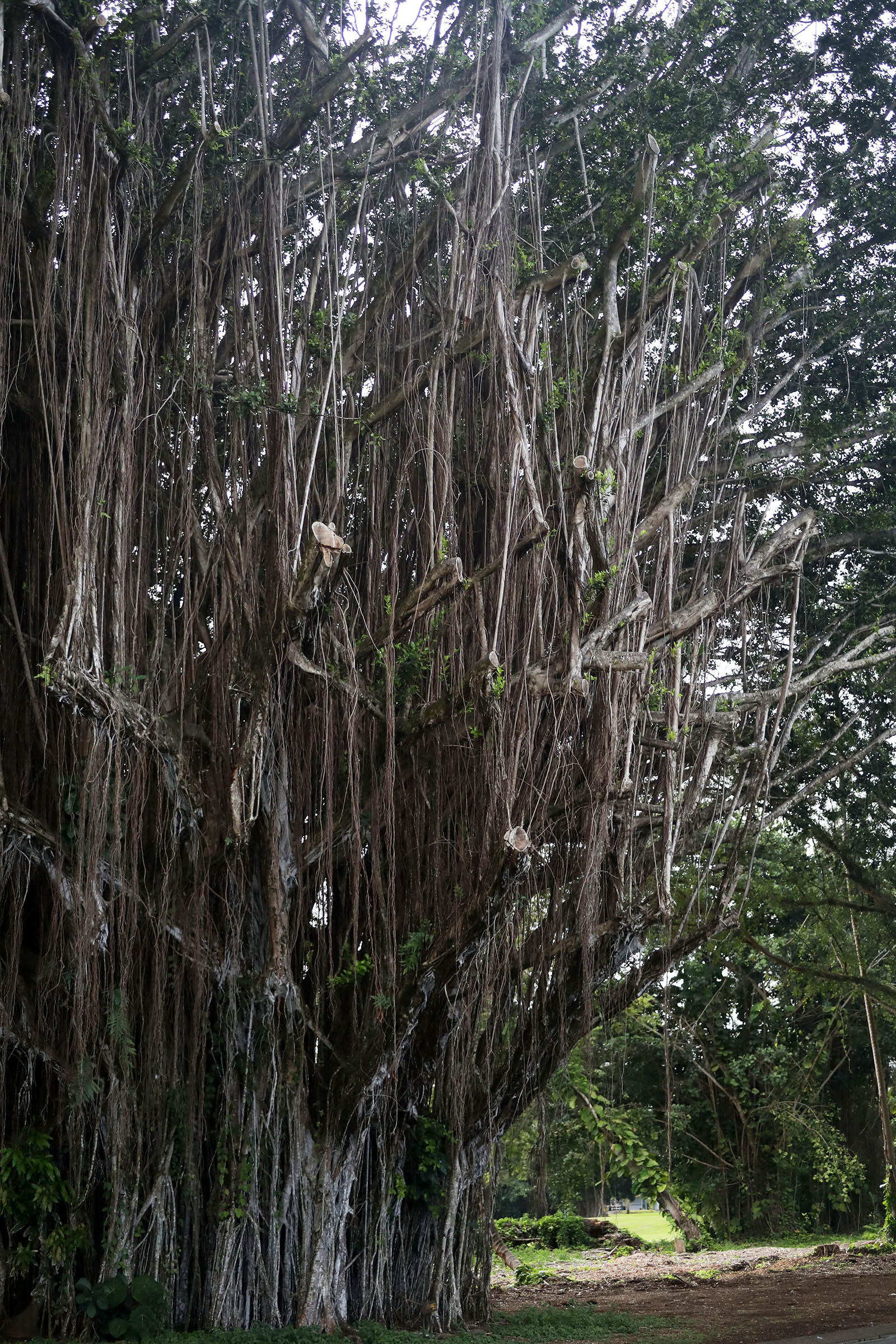
Hawaiʻi County crews have removed one banyan tree and some invasive plant species and overgrowth along the golf course. Under a contract with the Department of Public Works, tree trimmers continue maintaining the banyan trees to enhance their health and the area’s beauty.
Under the new state law, Hawaiʻi Community Development Authority will be coordinating the development of the Waiākea Community Development District once a plan is in place. The authority must include representatives of the district, including a lineal descendant of the Waiākea Ahupuaʻa. These representatives will come from the action committee.
“Over the next two years, there will be (action committee) meetings partly driven by a committee of local residents who will work together to determine the future of the area,” Todd said.
Keōhokāpu-Lee Loy emphasized the importance of local stakeholders sharing their perspectives and employing a community-centered approach to make redevelopment discussions more productive.
The Hawaiʻi Community Development Authority said its work should result in economic and social opportunities and aim to meet the highest needs and aspirations of Hawai’i’s people.
“We are thrilled to be headed somewhere after such a long time,” Keōhokāpu-Lee Loy said.
According to the bill, the action committee and the Hawaiʻi Community Development Authority must follow guidance policies for development on Banyan Drive, which include:
- Promoting cultural activities, providing community facilities and fostering sustainable economic growth.
- Preserving and protecting Hawaiian archaeological, historic and cultural sites.
- Coordinating land use and redevelopment activities with existing state and county policies.
- Planning and developing public facilities to support district development policies.
- Considering the impacts of climate change in the design and siting of buildings.
- Including mobility solutions in development plans.