


Free Maunakea observatory tour for Hawaiʻi residents shows up-close work of astronomers, scientists
As residents explore the summit through the exclusive Kamaʻāina Observatory Experience they learn firsthand from experts about groundbreaking space research.
Maunakea, a volcano that resemble’s a warrior’s shield resting on the ground, soars 13,803 feet high, creating a majestic sight for those who live on the Big Island.
Its summit — due to the altitude, remote location in the middle of the Pacific Ocean, and latitude — has lured 10 independent institutions that formed Maunakea Observatories, with a mission to steward and protect the natural, cultural and scientific resources while studying the vast universe.
But many people living on Hawaiʻi Island have not seen up close the work done by the astronomers, physicists, engineers and technicians from around the world.
The Kamaʻāina Observatory Experience, which is offered through a collaborative effort from Maunakea Observatories, makes the summit observatoires accessible for 28 Hawaiʻi residents on the first Saturday of every month, excluding December and January due to winter weather.
“I’ve been to the summit before and ever since, I have wanted to know more about what the astronomers are doing up here and what that research is because I have no idea,” said Kona resident Aurora Allen on the way up to the summit a week ago. “I want to know everything I can about space because there is just so much we don’t know. It’s such an exciting part of life.”
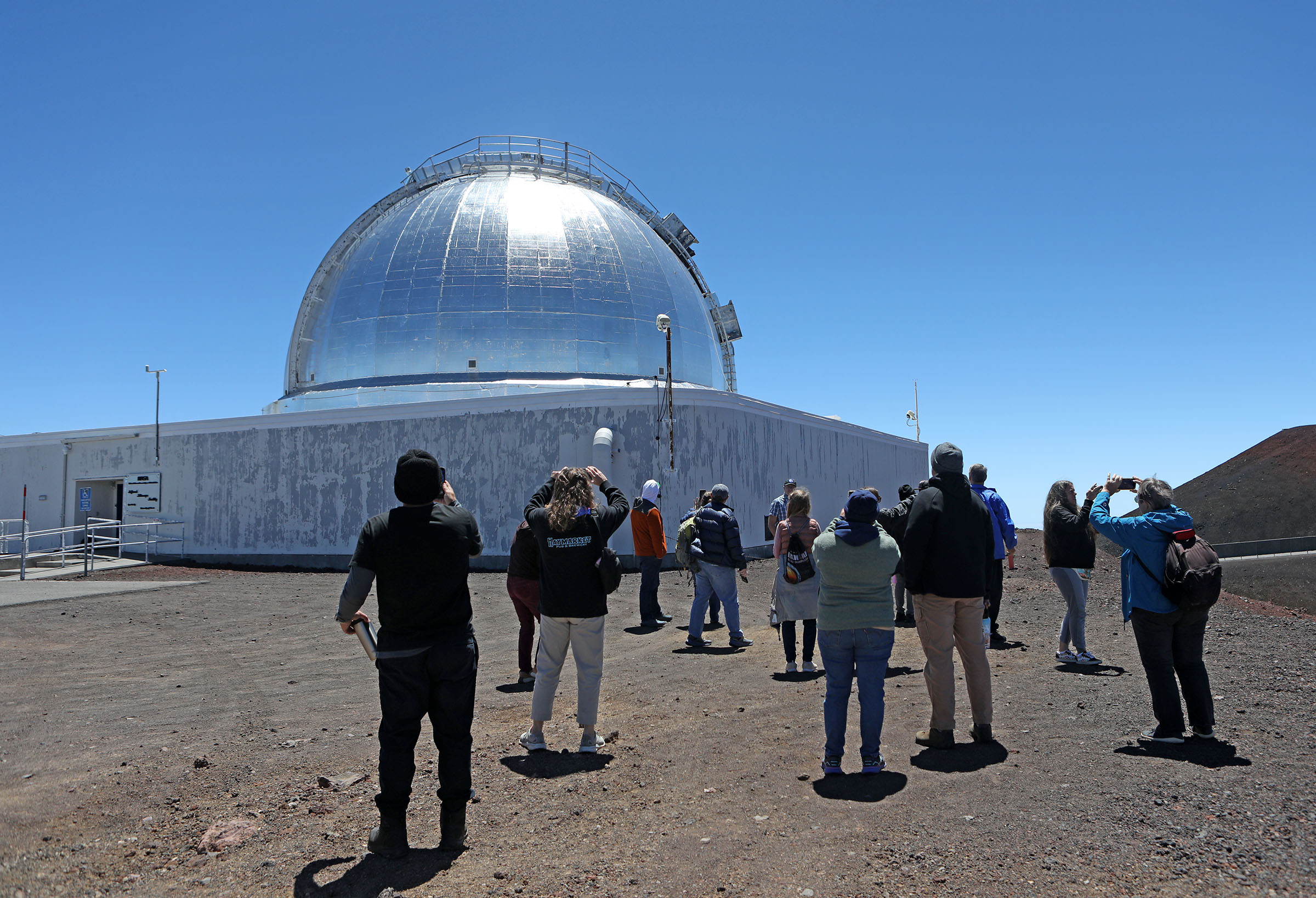
The Kamaʻāina Observatory Experience is a free 5-hour tour that includes breakfast, lunch, presentations and a telescope tour. It began in 2016 and was paused during the COVID-19 pandemic in 2020, but officially restarted in March 2025.
“This tour is our way to foster a connection between the community and the work done at these world-class facilities on Maunakea,” said telescope operator Callie Matulonis. “Everyone on the tour is excited to learn more about how things work up here and what specific subjects in space we are all researching. And vice versa, we all want to know what residents are most curious about.”
On June 6, the tour participants were greeted by the high altitude, cold air and volunteers with Maunakea Observatories . People were split into two groups of 14, with each group visiting one telescope facility that switches each month. Telescope assignments are done at random. On this day, the facilities were the NASA Infrared Telescope Facility and Gemini North Telescope.
While the observatories look similar from lower elevations, the facilities use different technology for their telescopes that often measure different parts of space. Astronomers, scientists and others from around the world work at the observatories, which are owned by several countries, including Canada, France and the United Kingdom.
“We collaborate more than we compete because all the observatories and telescopes on Maunakea specialize in different things,” Matulonis said. “We all have a niche that we fill. While some are looking at the furthest objects in the sky such as black holes and quasars, some specialize in solar system science, such as monitoring asteroids, comets and our nearby planets.”
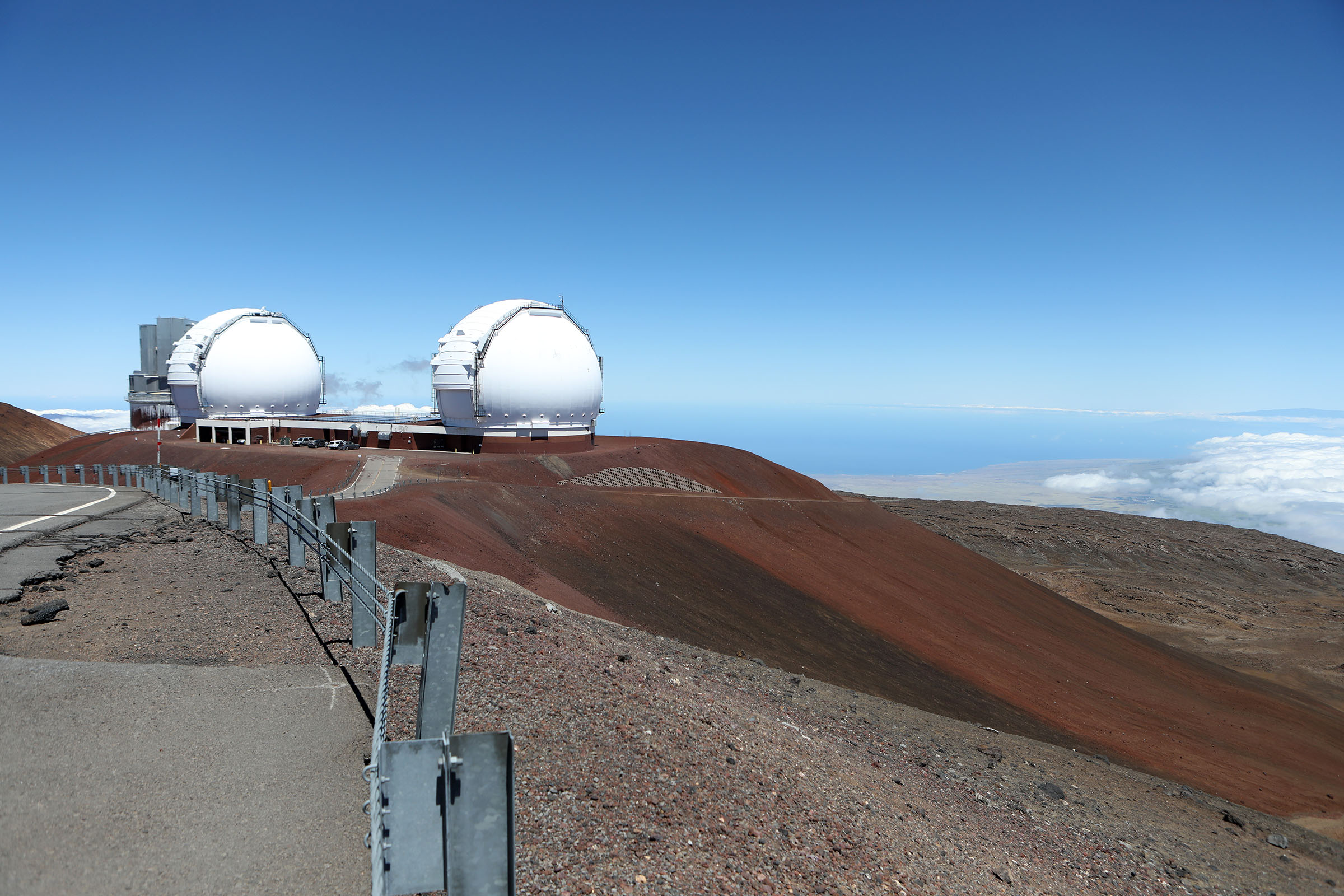
(See below the list of Maunakea Observatories)
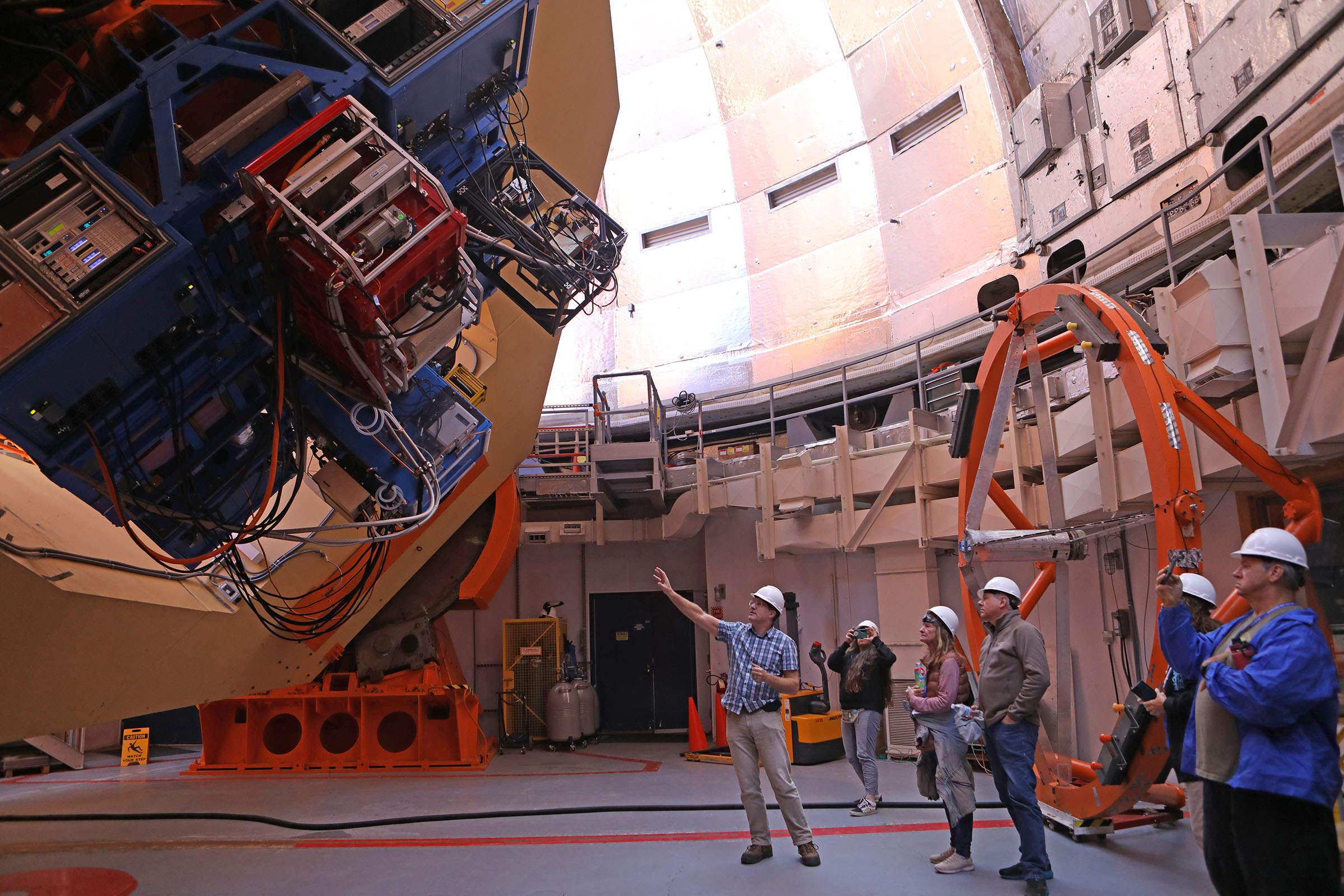
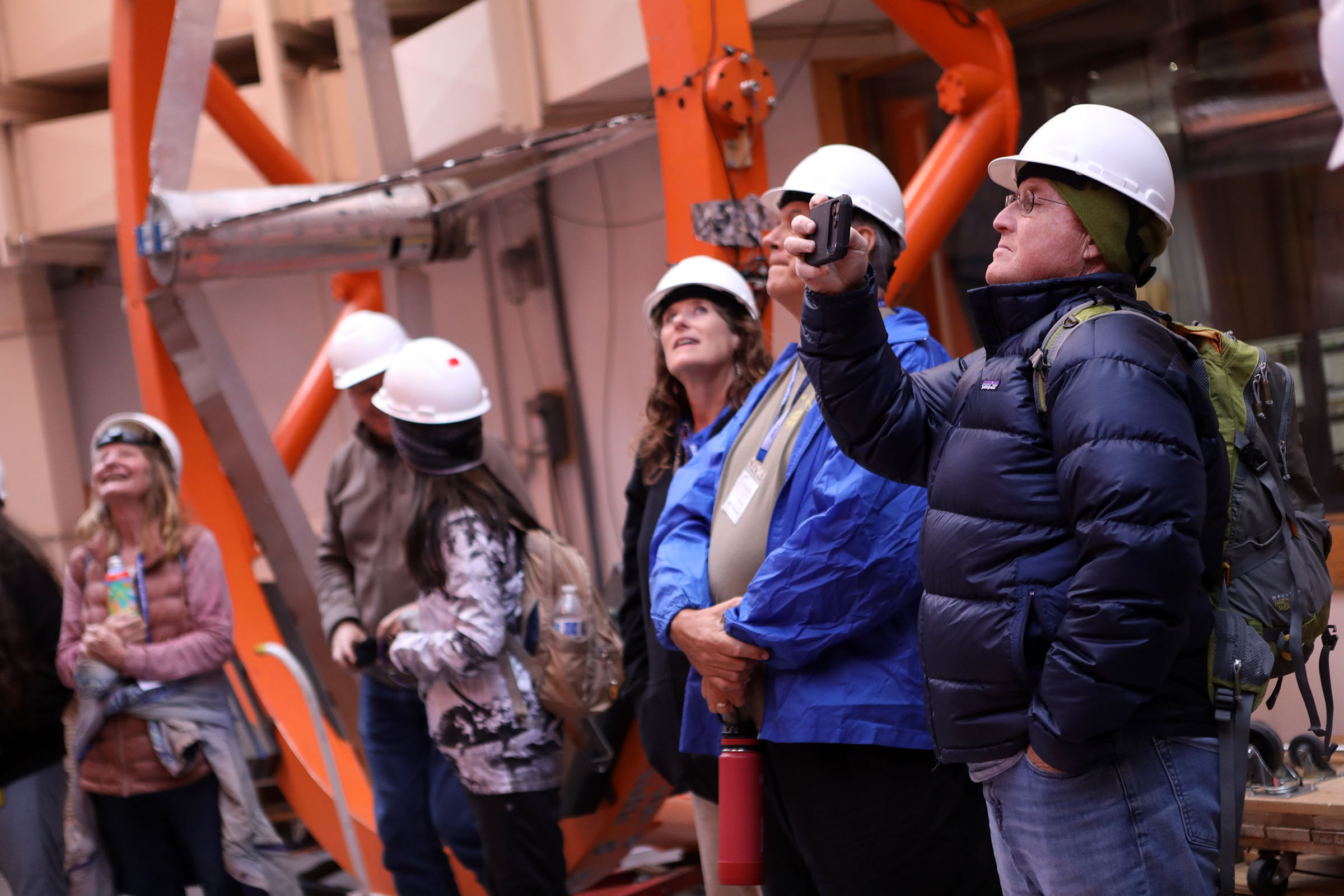
During the tour, half the participants saw the NASA Infrared Telescope Facility up close and personal, learning about the different instruments. The facility features a 3.2-meter telescope optimized for infrared observations, which measure wavelengths of infrared light ranges.
The NASA facility has the only telescope on the summit that includes technology for daytime viewing. The tour participants were able to see Jupiter through the lens of the telescope.
Once used to support the Voyager missions, the instrumentation now is used to help track potential planetary threats like asteroids.
“While other facilities find where an asteroid would land, we use our instrumentation to characterize whether it is metallic or not, or if it’s a solid lump or a bunch of rocks,” said Warren Skidmore, the deputy director of the NASA Infrared Telescope. “Astronomers in Italy and California then discuss the potential consequences and feed all the information to emergency management agencies.”
Along with potential planetary defense, the NASA facility also offers blocks of observing time to the entire astronomical community. While 50% of the observing time is reserved for studies of solar system objects, astronomers can operate the telescope remotely around the world by working with research support and telescope operator, Dave Griep, over Zoom.
Griep has been working at the telescope for 44 years and is the longest-standing operator on the summit of Maunakea.
“We have Dave here who has been working for over four decades along with one of our newest operators, Akinyele Gilbert, who just graduated from the University of Hawaiʻi at Hilo,” Matulonis said. “There is an incredible collaboration of scientists working at NASA Infrared, but also at all the telescopes and observatories on Maunakea.”
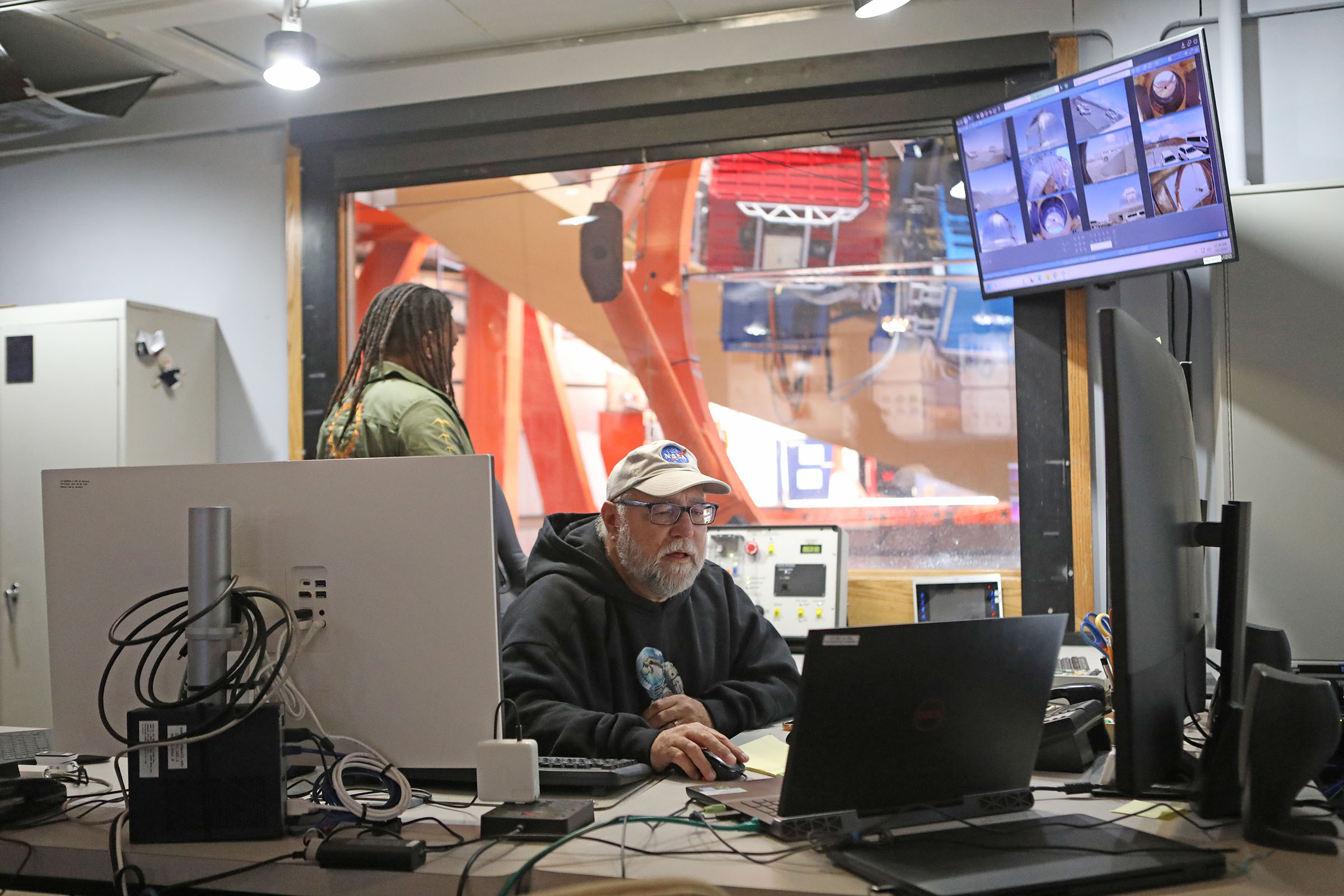
According to Maunakea Observatories, Maunakea has become the most scientifically productive and impactful site in ground-based astronomy.
“Astronomy is a global enterprise that most everyone has an interest in,” Skidmore said. “However, I can count on one hand the few places on Earth that are portals to the universe and this is one of them.”
The future of astronomy on Maunakea is up in the air as the University of Hawaiʻi will hand over management of the mountain to the Mauna Kea Stewardship and Oversight Authority, which is the state governing body for Maunakea, in 2028.
Protests over the telescopes at the summit of Maunakea have happened for years and the university has been criticized about its handling of the mauna through the years. The observatories had a history of chemical leaks and leaving trash on the summit and a 1998 state audit faulted the University of Hawaiʻi for failing to hold the observatories accountable.
Protests blew up again in 2019 with demonstrations in opposition to the construction of the Thirty Meter Telescope, one of a new class of extremely large telescopes that allows astronomers to see deeper into space and observe cosmic objects with unprecedented sensitivity and detail.
Lawmakers created the authority in 2022 to help resolve issues over Mauna Kea that had been simmering for 60 years.
The University of Hawaiʻi currently leases more than 11,000 acres of Maunakea summits for $1 for astronomy. As a condition of the master lease, all observatories on Maunakea are legally bound to decommission their facilities and fully restore their sites to natural conditions by the end of 2033 if they cannot negotiate further land use.
However, Gov. Josh Green signed Act 053 into law, which allows the Authority to extend existing leases and subleases for up to 10 years before the master lease transfer in 2028. Extensions will not need approval of the Board of Land and Natural Resources and the Land Use Commission.
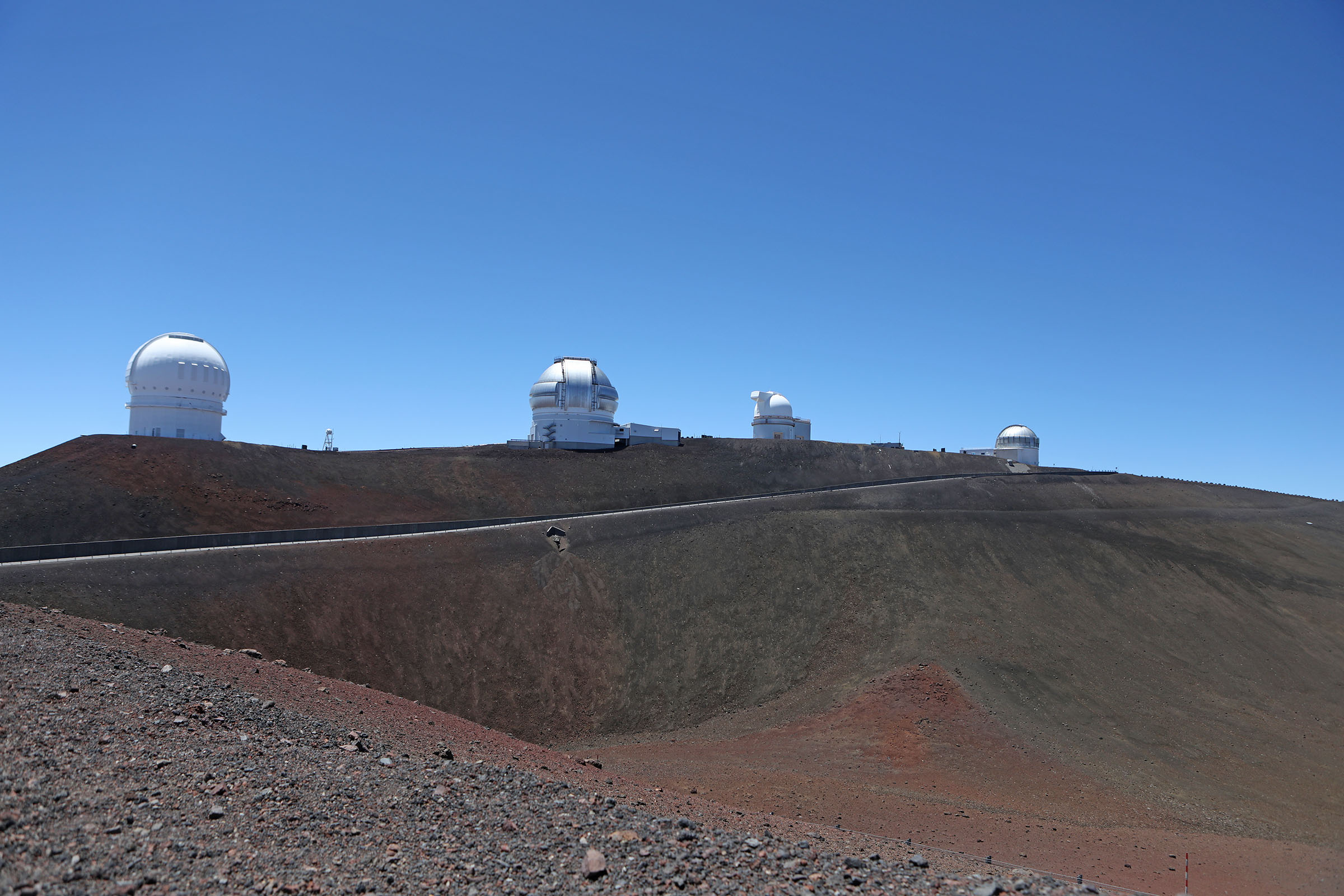
Many residents and Native Hawaiians remain concerned about the environmental protections for the fragile ecosystem and public oversight on Hawaiʻi’s sacred ancestor.
While many people in the public are against the telescope and observatory lease extensions, some believe in the intentional practice of using the summit for astronomical research as long as there is respect and honor given to the sacred space.
“We are not capable of living in that high of elevation,” said cultural practitioner Kumu Micah Kamoʻhoaliʻi in a Maunakea introduction video. “The summit is the physical realm of the wao akua (gods) and is the origin point of ancestral genealogies. It is sacred to us because it connects Earth to the heavens. The message is to travel with respect for the ʻāina, along with good intentions and with humility and a sense of responsibility.”
For those interested in touring a telescope through the Kamaʻāina Observatory Experience, visit the NOIRLab website.
The list of Maunakea Observatories:
- Canada-France-Hawaiʻi Telescope
- International Gemini Observatory
- James Clerk Maxwell Telescope
- NASA Infrared Telescope Facility
- Submillimeter Array
- Subaru Telescope
- United Kingdom Infrared Telescope
- University of Hawaiʻi 2.2-Meter Telescope
- Very Long Baseline Array
- W.M. Keck Observatory