


Residents urged to stay alert after invasive coconut rhinoceros beetles detected on Maui
Three dead adult coconut rhinoceros beetles were collected from two detection traps in Waikapū by staff from the Hawaiʻi Department of Agriculture and Biosecurity late Thursday afternoon on June 4.
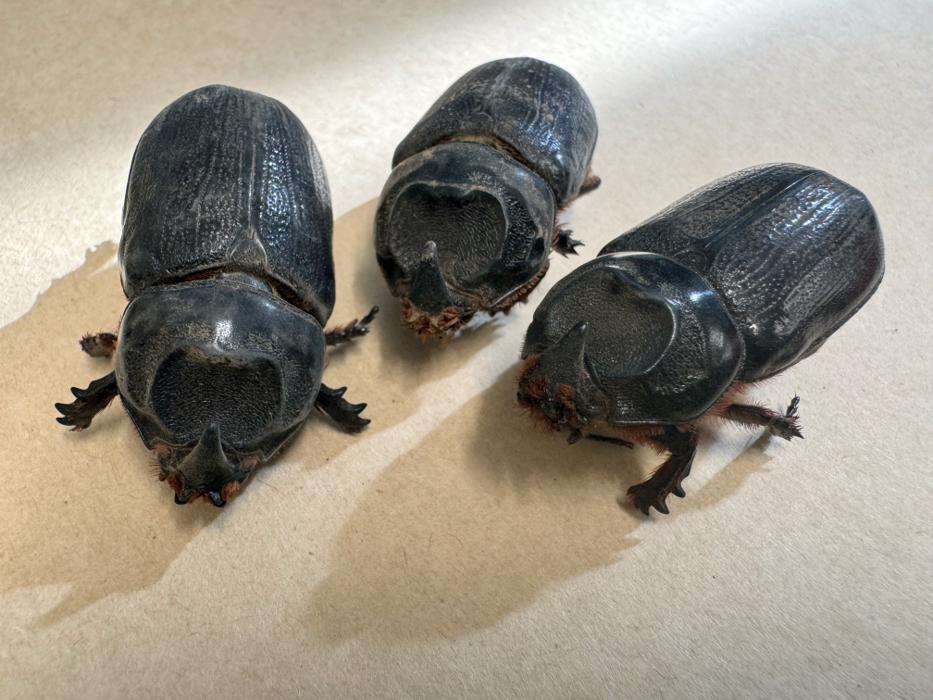
No other coconut rhinoceros beetles were detected in the remaining traps checked in the area. The dead beetles were sent to the Department of Agriculture and Biosecurity’s taxonomist in Honolulu for official confirmation and were confirmed to be three dead female coconut rhinoceros beetles.
On June 5, Department of Agriculture and Biosecurity staff conducted surveys in the area looking for sites that may harbor coconut rhinoceros beetles such as piles of green waste, compost, or decaying coconut material. Surveys for feeding damage on surrounding palms have also begun.
Since the prior detection of a dead coconut rhinoceros beetle at Kahului Airport in early April, no live adult beetles or larvae have been detected on Maui. The traps where the beetles were found had previously been checked by the Department of Agriculture and Biosecurity staff on May 15, and none were detected.
Adult coconut rhinoceros beetles damage palm fronds as they bore into a palm to feed; however, it can take months before damage to palm fronds is visible. Because they pose a direct threat to local food security, it is critical to detect beetles as early as possible, should they be present elsewhere on Maui.
Department of Agriculture and Biosecurity staff returned to the area on June 8 and collected two additional dead coconut rhinoceros beetles from two detection traps.
Residents, businesses, and landowners in Maui are asked to check coconut palms or other large palm species for possible signs of beetle feeding damage and to identify and report piles of green waste that could harbor these beetles.
Residents should also be vigilant when purchasing or moving mulch, compost, and soil products, and avoid purchasing bags with damaged packaging or holes, as they could be infested with beetles.
With early detection, residents can avoid island-wide infestation and prevent long-term economic and agricultural damage.
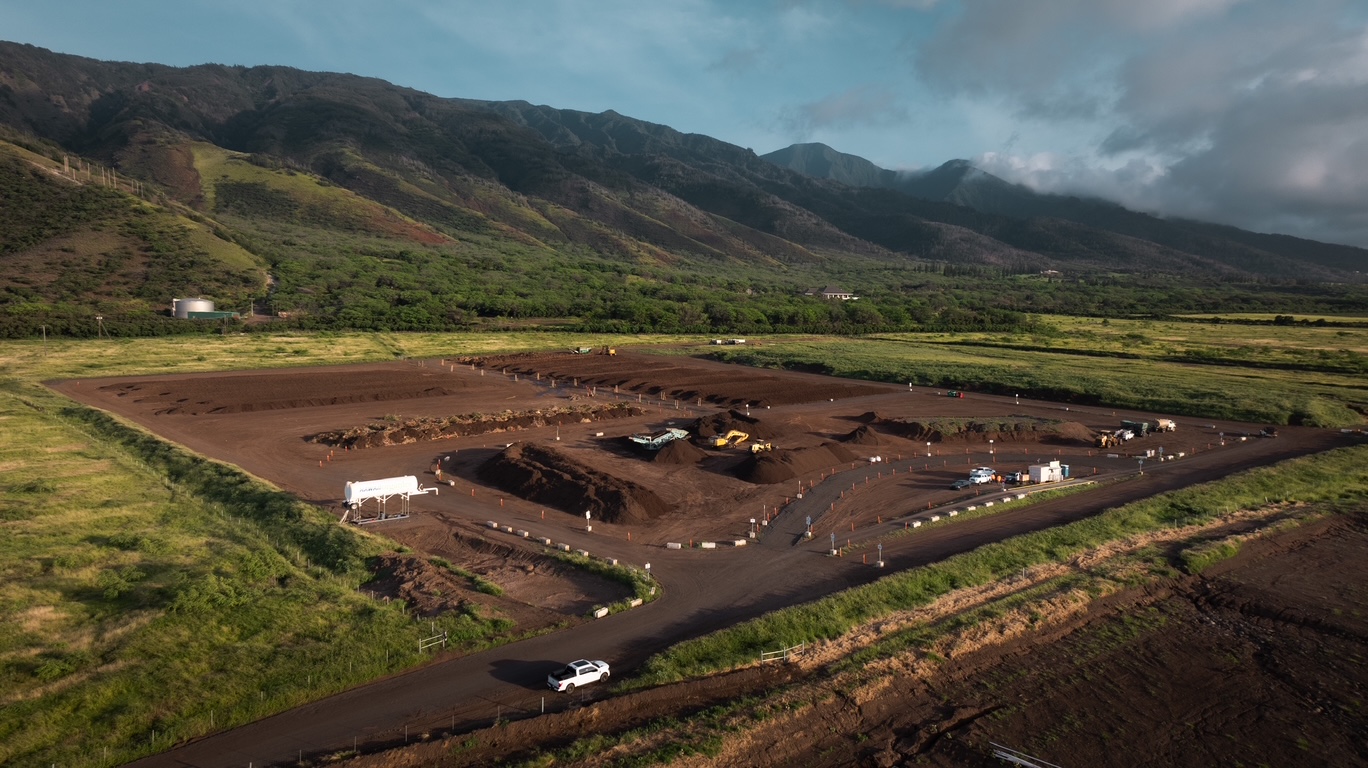
Monitoring Coconut Rhinoceros Beetles
Ongoing monitoring efforts on Maui highlight the importance of active green waste management and composting as part of broader strategies to reduce potential breeding habitat for the pest.
Hawaiʻi Organics Compost is working closely with the Hawaiʻi Department of Agriculture and Maui County agencies as part of monitoring, inspection, and mitigation efforts at its Waikapū facility.
Recent detections of coconut rhinoceros beetles during routine monitoring activities have prompted additional coordination between facility operators and state officials, who continue to evaluate and implement response measures aimed at limiting the pest’s spread across Maui.
According to state officials, Hawaiʻi Organics Compost remains compliant with current operating requirements and continues to maintain conditions designed to support the prompt, proper, and safe processing of green waste. Compost temperatures are monitored throughout the facility to ensure adherence to established management practices.
Unlike unmanaged green waste stockpiles, actively managed composting systems generate sustained elevated temperatures unfavorable for beetle survival and reproduction. As a result, hot composting is recognized as one of several important tools to help reduce potential breeding habitats.
Coconut rhinoceros beetles begin to die around 115 degrees Fahrenheit, but a 131-degree Fahrenheit core temperature is a good target to ensure even the colder spots are at least 115 degrees.
At the Waikapū facility, compost windrows undergoing processing routinely maintain temperatures between 131 degrees and 160 degrees. Finished compost piles maintain internal temperatures above 120 degrees during curing and storage. These temperatures are a key component of the facility’s management practices.
As an additional precaution, compost distributed from the facility is sourced from the interior of finished compost piles, where temperatures remain consistently elevated. The facility continues operating under ongoing monitoring and in coordination with state agencies as response efforts continue.
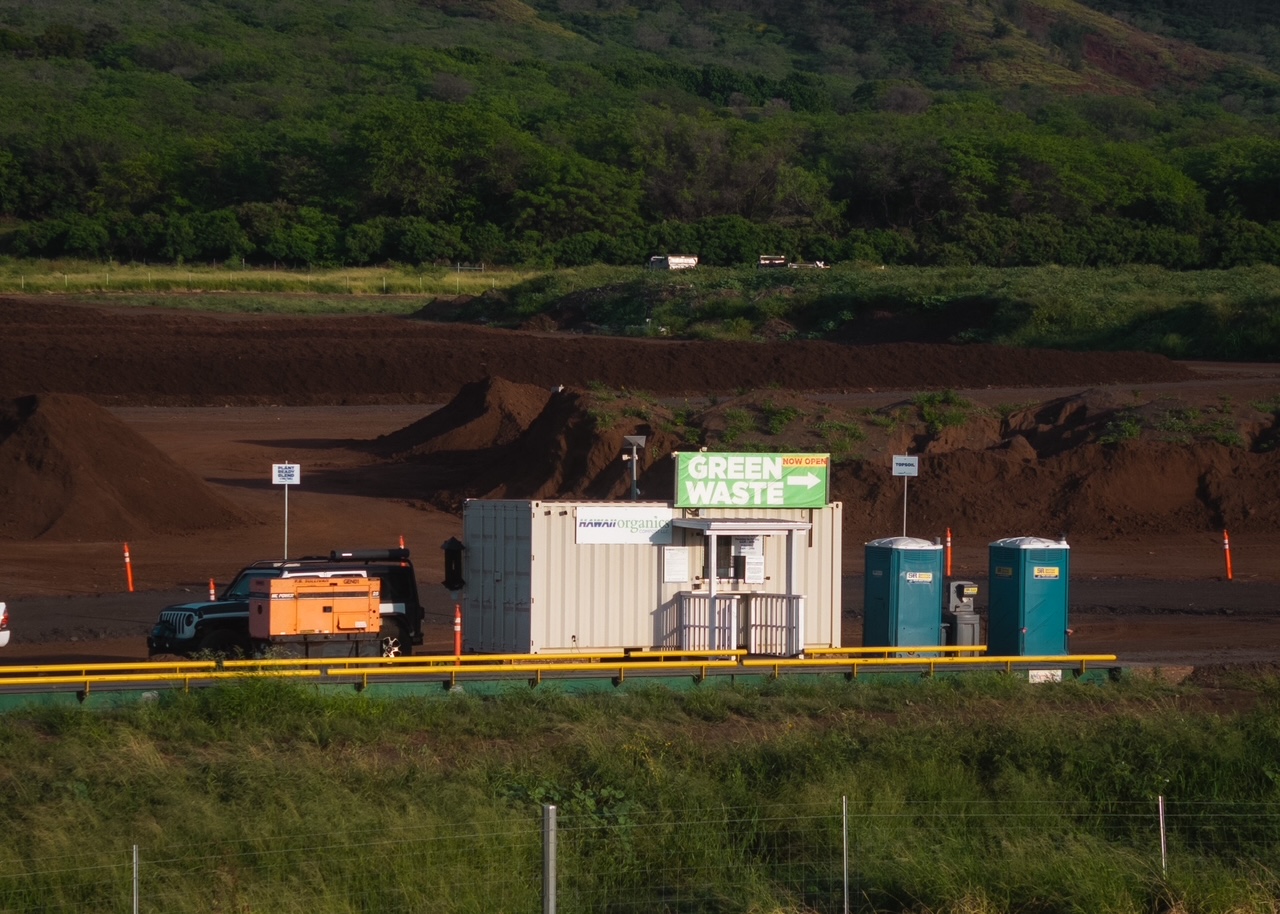
State and county agencies encourage residents, landscapers, contractors, and property owners to remain vigilant, report suspected beetle activity, and utilize approved green waste processing facilities whenever possible.
Prompt processing of green waste remains important in reducing potential breeding habitats and supporting island-wide mitigation efforts.
The Maui Coconut Rhinoceros Beetles Working Group urges Maui residents to:
- Limit green waste movement as a protective measure.
- Check all compost piles and decaying coconut material for larvae. Beetles can be recognized by their large size, up to 4 inches in length.
- Collect any suspected larvae in a sealed hard-sided container, such as a glass jar, with host material.
- Do not dispose of larvae until identification has been confirmed.
- Photograph or video and report any feeding damage, appearing as V-shaped cuts on palm fronds, as soon as detected to 643PEST.org. Reports can also be made by phone to the state’s toll-free Pest Hotline at 808-643-7378.
Go to the coconut rhinoceros beetles response website to learn more about how to detect the signs of coconut rhinoceros beetles damage and how to identify coconut rhinoceros beetles life stages.
Feeding damage, visible as V-shaped cuts on palm fronds, can be photographed and reported to 643PEST.org. Reports can also be made by phone to the state’s toll free Pest Hotline at 808-643-7378.