


5 fatalities on Daniel K. Inouye Highway this year prompt state to declare traffic emergency zone
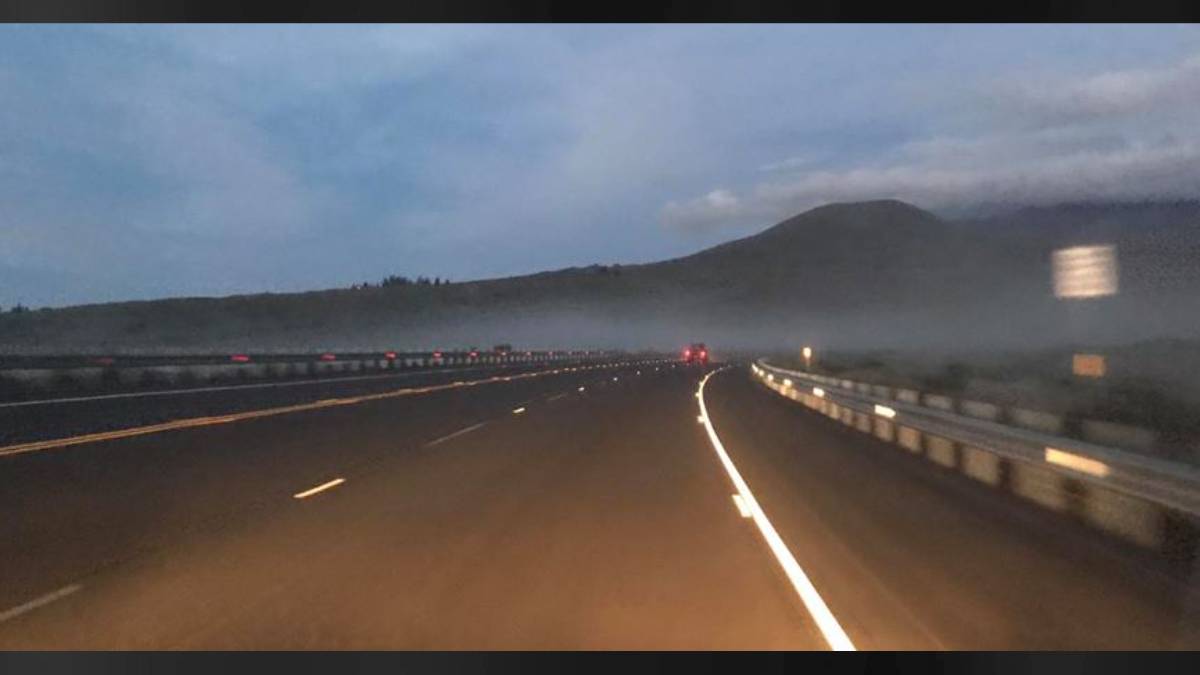
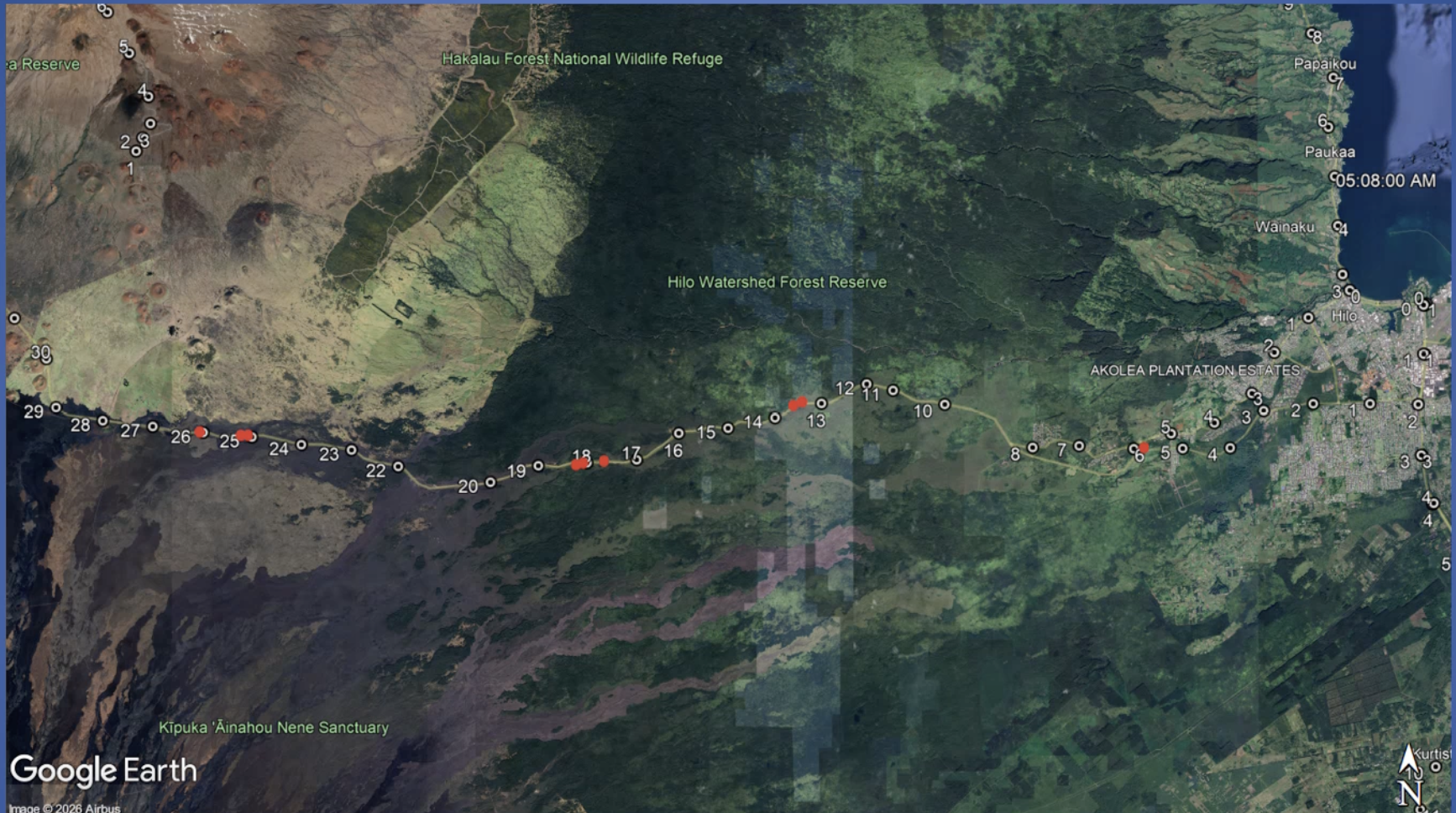
Just one day after the third fatal crash and fifth person killed on Daniel K. Inouye Highway this year — and with data showing some speeders driving in excess of 100 mph — the Hawaiʻi Department of Transportation declared a traffic emergency zone between mileposts 5.5 and 28.
Through this declaration, the Department of Transportation can expedite additional safety measures — including rumble strips, striping that can be seen in wet weather and and speed trackers — on the highway that is the main road between the Big Island population centers of Hilo and Kailua-Kona.
While transportation officials were matter-of-fact about the reasons for the emergency action, residents who participated in the online hearing Friday afternoon were emotional.
“Lives were lost again,” Hilo resident Matthew Pekelo-Chang said on social media. “There have always been issues up on Saddle Road with people getting in trouble, but why are there so many deaths within a couple months? Blame the road all you want, it is not the only factor.”
Often, driver behavior is a major reason.
The Hawaiʻi Police Department said nine of the 10 most recent traffic fatalities on the Big Island involved one or more unsafe driving behaviors, including speeding, being impaired, not wearing seat belts and distractions.
“Our data has shown that people are driving up to 109 miles per hour on Daniel K. Inouye Highway,” Kunishige said. “When we install the speed safety cameras, we will be doing a seven-day speed study to get more information on how fast people are driving on the highway.”
But some frequent drivers on Daniel K. Inouye Highway, also known as Saddle Road, also have expressed frustration with slow drivers who don’t reach the speed limit or pull over to let people pass, often causing impatient drivers to overtake the slower vehicles when it is unsafe to do.
Wet roads or rainy weather conditions also have been a factor in five of the 10 fatal crashes on Daniel K. Inouye Highway, also known as Saddle Road, Kunishige said.
For the most recent collision on Thursday, law enforcement determined that a 2003 Toyota 4-Runner traveling westbound hydroplaned on a curve into the eastbound lane. The vehicle was then broadsided by a 2024 Ford F-450 commercial truck. The person who died has not been publicly identified.
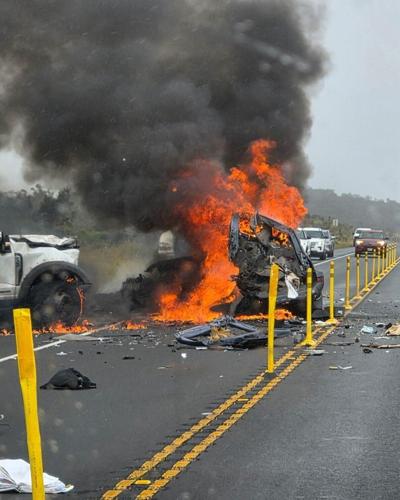
Just last month, four people were killed in two fatal crashes.
On May 15, a driver of a truck lost control around a wet curve and crashed head-on into another truck. Two people were killed — 29-year-old troy Rasse of Pāhoa and 24-year-old Jadelyn Cariago of Hilo — and four people were injured, including to who had serious injuries and were medevacked to Oʻahu.
On May 5, a sedan was trying to pass a vehicle ahead of it and crashed head-on into a utility truck killing 34-year-old Zachery Winston of Newport News, Virginia, and 70-year-old Todd Matsushita of Hilo.
The road has been dangerous for years. From 2021 to now, there have been 10 fatal crashes resulting in 13 fatalities and numerous injured people between mileposts 6 and 27, according to Shelly Kunishige, spokesperson for the Department of Transportation.
Crews already have conducted sight-distance studies, closed multiple passing zones between mileposts 8.3 and 27.25, posted electronic signs with safety messaging, and recently installed thermoplastic curbs and delineators between mileposts 16.7 and 19.
As part of the emergency declaration, additional planned work for the short-term includes:
- In-lane thermoplastic rumble strips and additional chevron signs ahead of curves and downhill areas to provide drivers with warnings about road changes.
- An open-graded, high-friction surface course in areas between mileposts 6 and 19 where surface water runs on the roadway and can make it slippery.
- Wet weather road striping.
- Installation of speed safety cameras to issue warnings to those traveling more than 11 mph over the posted speed limit.
- An engineering study on long-term improvements, which could include full divided highway conversion, installation of medians within the existing right of way, and/or alternate passing lanes.
Beginning on Monday, crews with the Department of Transportation will begin installing the open-graded high-friction surface course, which is a porous, permeable asphalt overlay that is primarily applied to entire sections of high-speed highways. The course prevents water from pooling on the surface, resulting in better traction for motorists.
Clifford Corpuz, an engineer with the transportation department, said the work will take about one month to complete and will be done in two sections, beginning with the portion of road between mile markers 16 to 19 followed by the road between mile markers 10 to 16.
Crews will then work on restriping the road with wet reflective pavement markings, which are highly specialized road markings designed to remain visible and reflective during rain, from mile markers 5.5 to 28. This will take two weeks up to a month.
The short-term improvements will cost approximately $15 million in state funding and the engineering study on potential long-term solutions is expected to take about four months, Corpuz said.
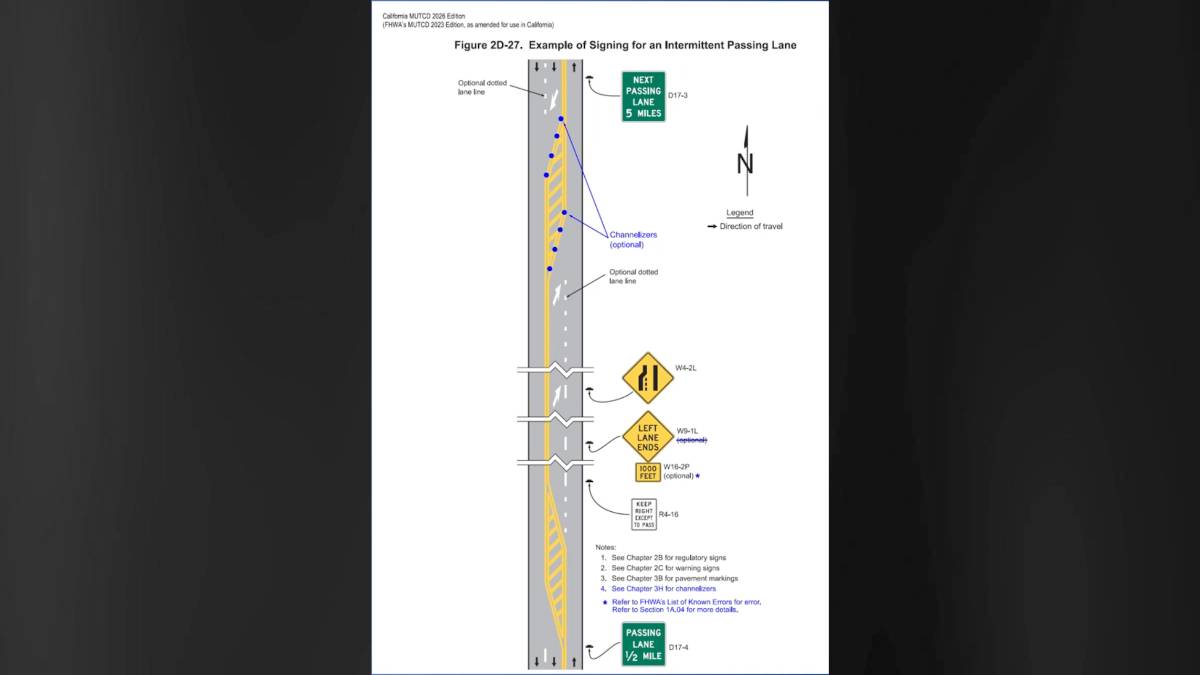
For potential long-term solutions that the Department of Transportation will be considering:
- Convert the corridor to a fully divided four-lane highway (two lanes in each direction) with a physical median separation
- Add an additional lane to maintain two lanes in each direction, but it would be undivided
- Install a concrete barrier with minimal widening by narrowing lanes/shoulders
- Install cable barrier in median/center separation area
- Restripe the number of lanes in each direction, periodically alternating between one and two, so each direction has passing lanes
- Narrow travel lanes and provide striped median for separation
- Install future speed camera enforcement, targeted enforcement zones and dynamic speed feedback systems
For now, the Department of Transportation has requested an increase in local police enforcement operations along the highway, focusing on identifying and addressing hazardous violations such as speeding, impaired driving, distracted driving and seat belt violations.
On Thursday, the police department announced it was ramping up enforcement on the highway.
The Hawaiʻi Police Department also encourages the public to report dangerous driving behaviors by calling 911 in emergencies or the department’s nonemergency line at 808-935-3311.
Community members can anonymously request a violation letter be sent to a vehicle’s registered owner by emailing leanne.matsuo@hawaiipolice.gov. Requests should include a description of the violation, vehicle description, license plate number, date and time of the incident, and location of the violation. Motorists will not be fined or cited from an anonymous report.