


Governor pushes back against Hawaiian Homes lawsuit, says state will fight it ‘with everything we have’
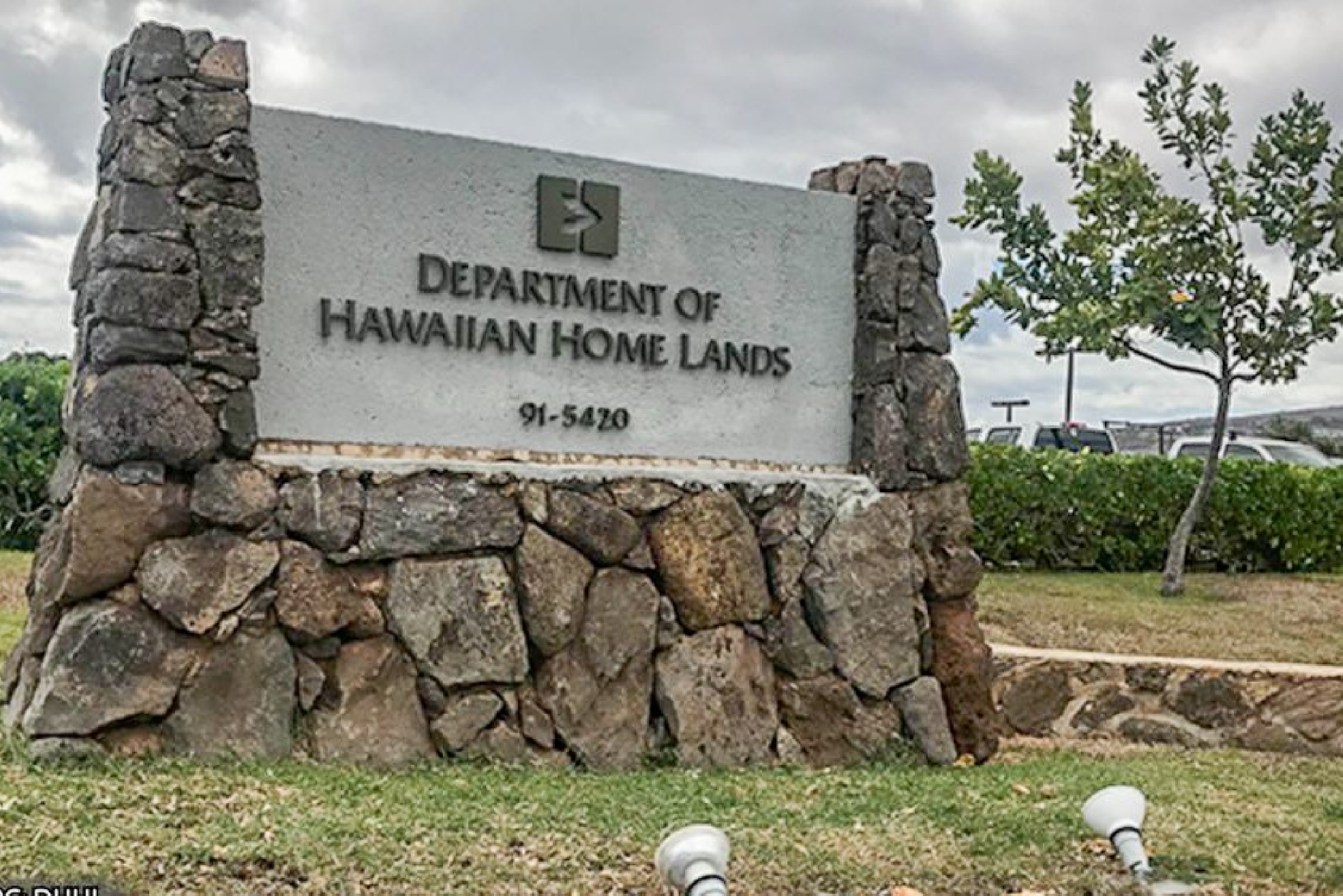
Hawaiʻi Gov. Josh Green pushed back sternly Wednesday, June 3, against a class action lawsuit filed in U.S. District Court by a non-Native Hawaiian resident of Oʻahu because he was denied after applying online for a lease by Department of Hawaiian Home Lands based on its blood quantum requirement.
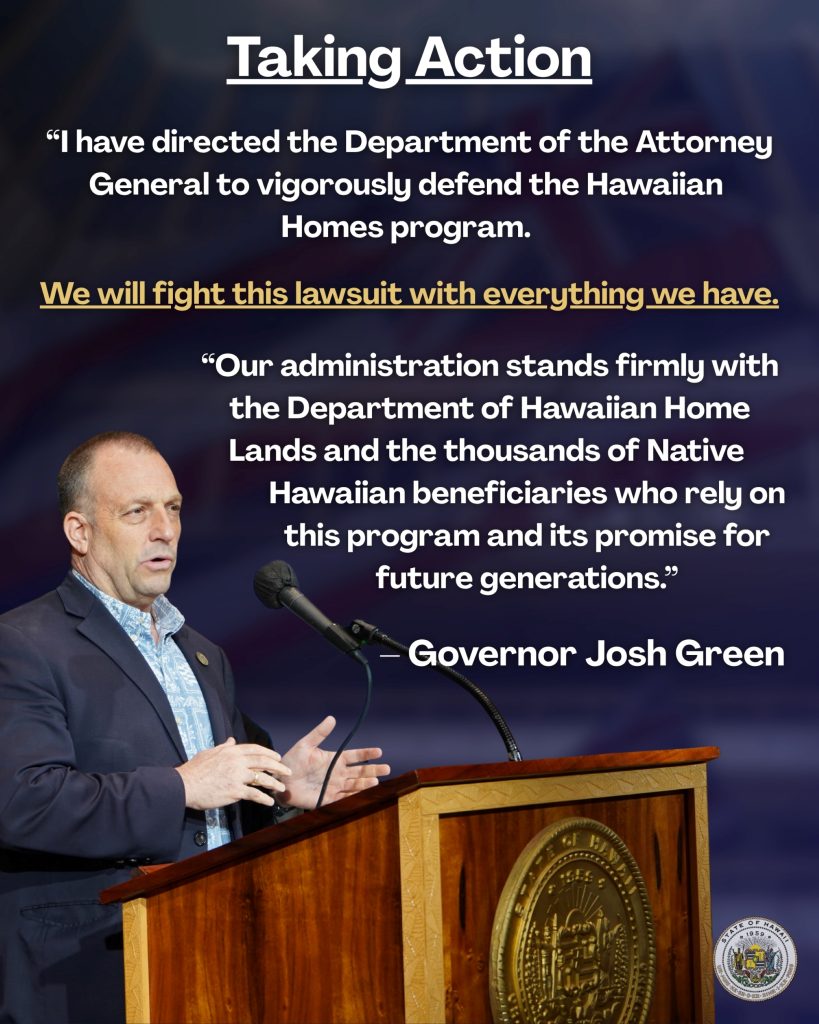
“We will fight this lawsuit with everything we have,” Green said in a statement.
Hawaiʻi Attorney General Anne Lopez also sounded off against the lawsuit.
“This lawsuit seeks to dismantle a program that has provided opportunities, stability and hope to generations of Native Hawaiian beneficiaries,” said Lopez in a statement Wednesday.
Eric Ryan’s suit — filed Monday, June 1, by attorneys — challenges the constitutionality of the blood quantum mandate, alleging it violates the Equal Protection Clause of the 14th Amendment and Due Process Clause of the 5th Amendment of the U.S. Constitution.
The Oʻahu man — a resident of Hawaiʻi who has lived in the islands for most, if not all, of his life, but is not of Hawaiian ethnicity -— claims the ancestry-based 50% Native Hawaiian blood quantum requirement establishes a “permanent government mandate for state officials to engage in outright racial discrimination, perpetuates stereotypes and limits housing opportunities for most Hawai‘i residents.”
“The core message of this case is that it’s plainly unconstitutional for the government to benefit one group over another based on nothing more than ancestry,“ Pacific Legal Foundation Senior Attorney Caleb Trotter told Hawaiʻi News Now on Tuesday, June 2.
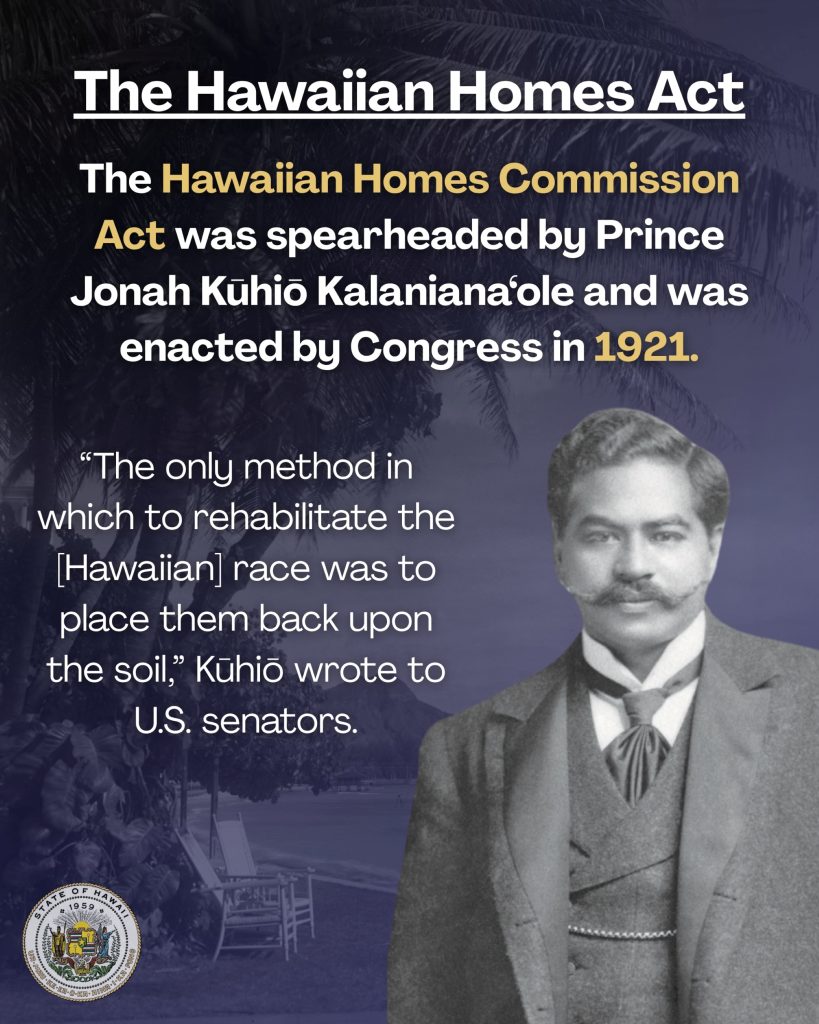
Ryan’s suit challenges the eligibility requirements within the Hawaiian Homes Commission Act, which was spearheaded by Prince Jonah Kūhiō Kalanianaʻole and enacted in 1921 by U.S. Congress.
The federal act provides Native Hawaiians with 99-year leases to land allocated under the Hawaiian Home Lands Trust and aims to expand access to affordable housing, preserve cultural heritage sites, safeguard natural resources, revitalize and preserve the Hawaiian language, traditions and practices while nurturing resilient communities.
“The only method in which to rehabilitate the [Hawaiian] race was to place them back upon the soil,” wrote Kalanianaʻole to U.S. senators while the Hawaiian Homes Commission Act was making its way through the legislative process.
He was the only royal-born member of U.S. Congress, serving a non-voting delegate for the Territory of Hawaiʻi from 1903 until his death in 1922.
“The Hawaiian Homes Commission Act was established to address the historic dispossession of Native Hawaiians and reflects a longstanding commitment to them by both the federal government and the state of Hawaiʻi,” said Green. “This lawsuit threatens that commitment.”
He said his administration stands firmly with the Department of Hawaiian Home Lands and its thousands of Native Hawaiian beneficiaries who rely on it now, as well as its promise for future generations.
Green directed Hawaiʻi Department of the Attorney General to vigorously defend the Hawaiian Homes program.
Lopez said in her statement that the state has a legal and moral obligation to uphold the commitments embodied in the Hawaiian Homes Commission Act.
Hawaiʻi Solicitor General Kalikoʻonālani Fernandes has extensive experience handling complex constitutional litigation on behalf of the state. She will lead the state’s legal team in defending against Ryan’s legal challenge.
“We are prepared to vigorously defend the Hawaiian Homes program and the promises it represents,” Lopez said.
The Department of Hawaiian Home Lands under Gov. Green’s administration accelerated delivery of homestead opportunities and expanded pathways to homeownership for Native Hawaiian beneficiaries.
More than 2,500 lease awards were offered in 2025 alone, plus the agency continues to advance major housing projects including Hale Mōʻiliʻili on Oʻahu, which will provide 278 affordable rental units for beneficiaries.
“These efforts reflect the administration’s commitment to reducing wait times, strengthening Native Hawaiian communities and fulfilling the promise of the Hawaiian Homes Commission Act,” said Green’s statement.
Department of Hawaiian Home Lands Chairperson Kali Watson told Hawaiʻi News Now that it’s really unfortunate that Ryan took on this particular effort to “undermine what is a really good program.”
Ryan’s lawyer Trotter doesn’t see the lawsuit as another attack on indigenous land rights. Rather, it’s an effort to ensure equal access to lands.
Watson disagrees.
“I definitely consider it an attack because what he’s saying is the trust would be dissipated by expanding the eligibility as access to our trust, resources for non-Hawaiians. Yeah, I definitely view that as an attack,” Watson said.
There now are more than 29,000 people waiting for leases, more than a century since the act was established, which Watson told the O’ahu media outlet means there is still a justified need for the Department of Hawaiian Home Lands.
“We’re gonna remain diligent,” he told Hawaiʻi News Now; both sides are digging in for a long legal battle. “We’ve been working with the attorney general’s office and we’ll take whatever steps needed to protect the trust.”